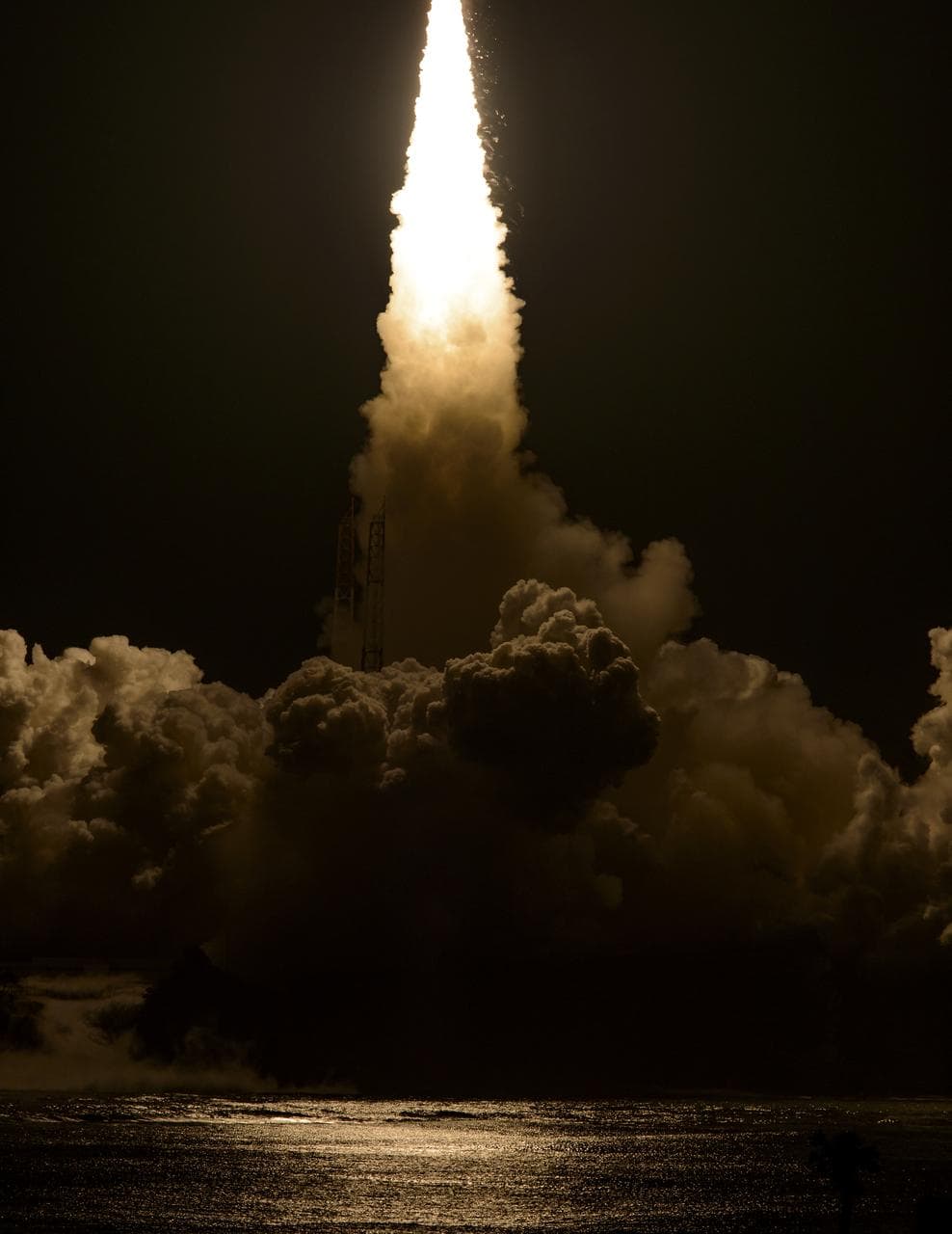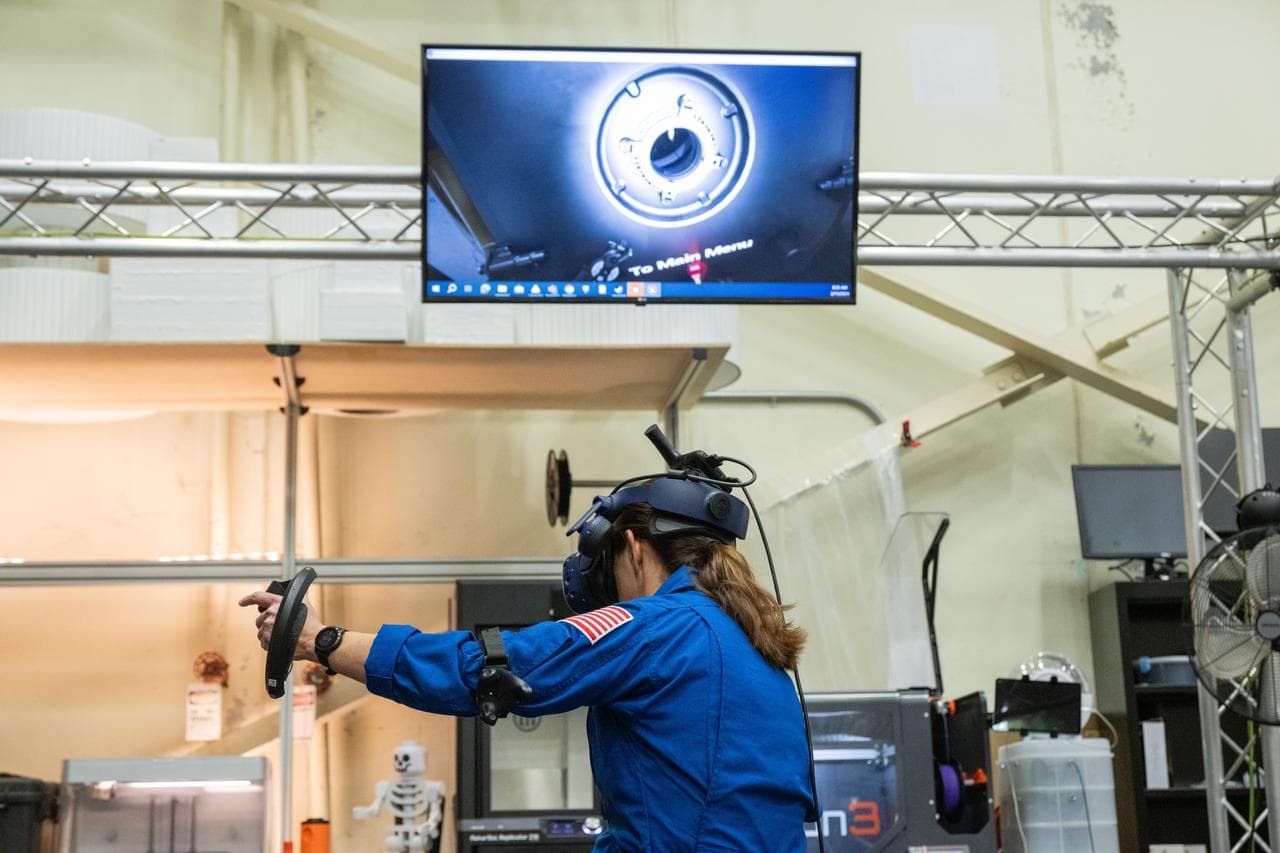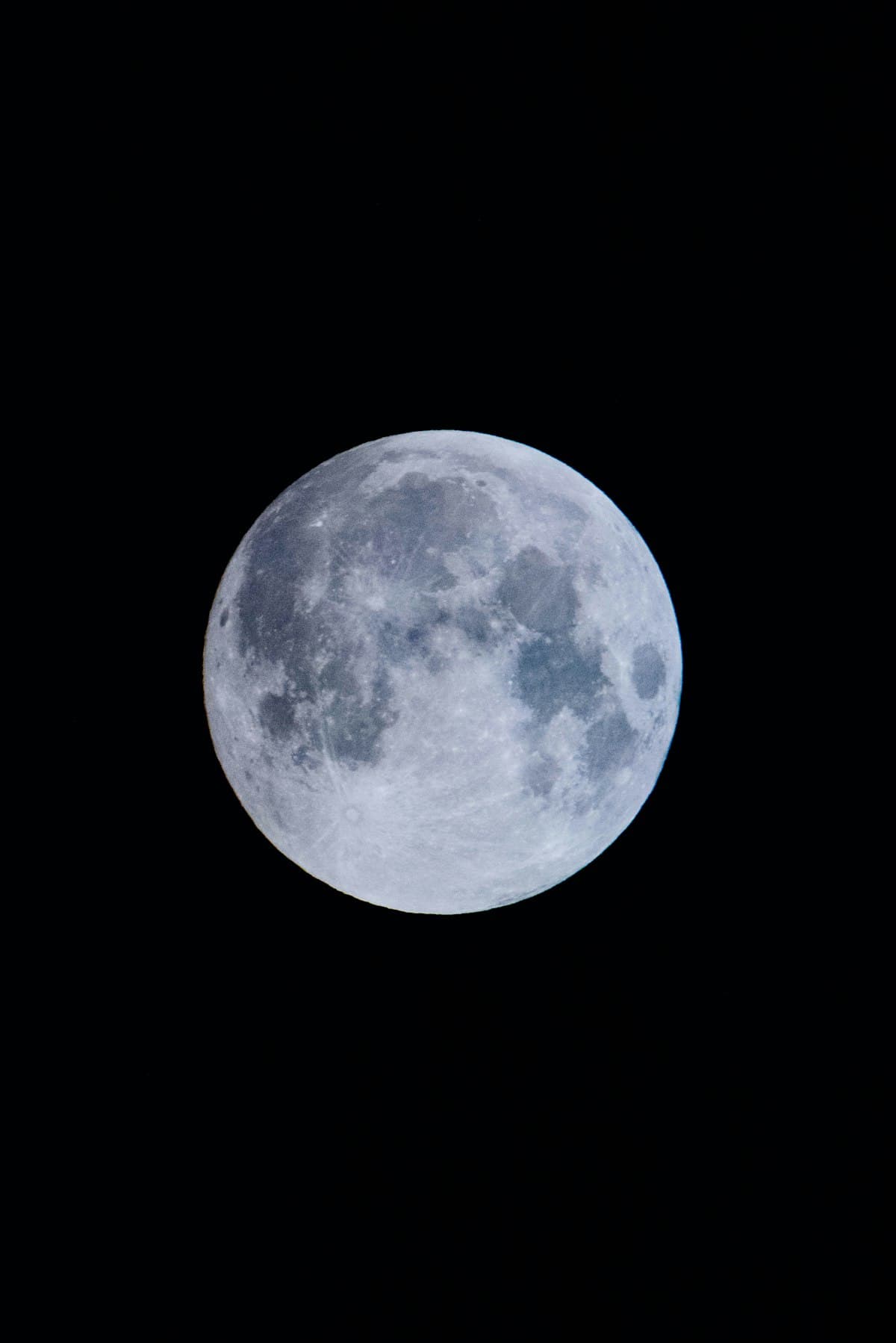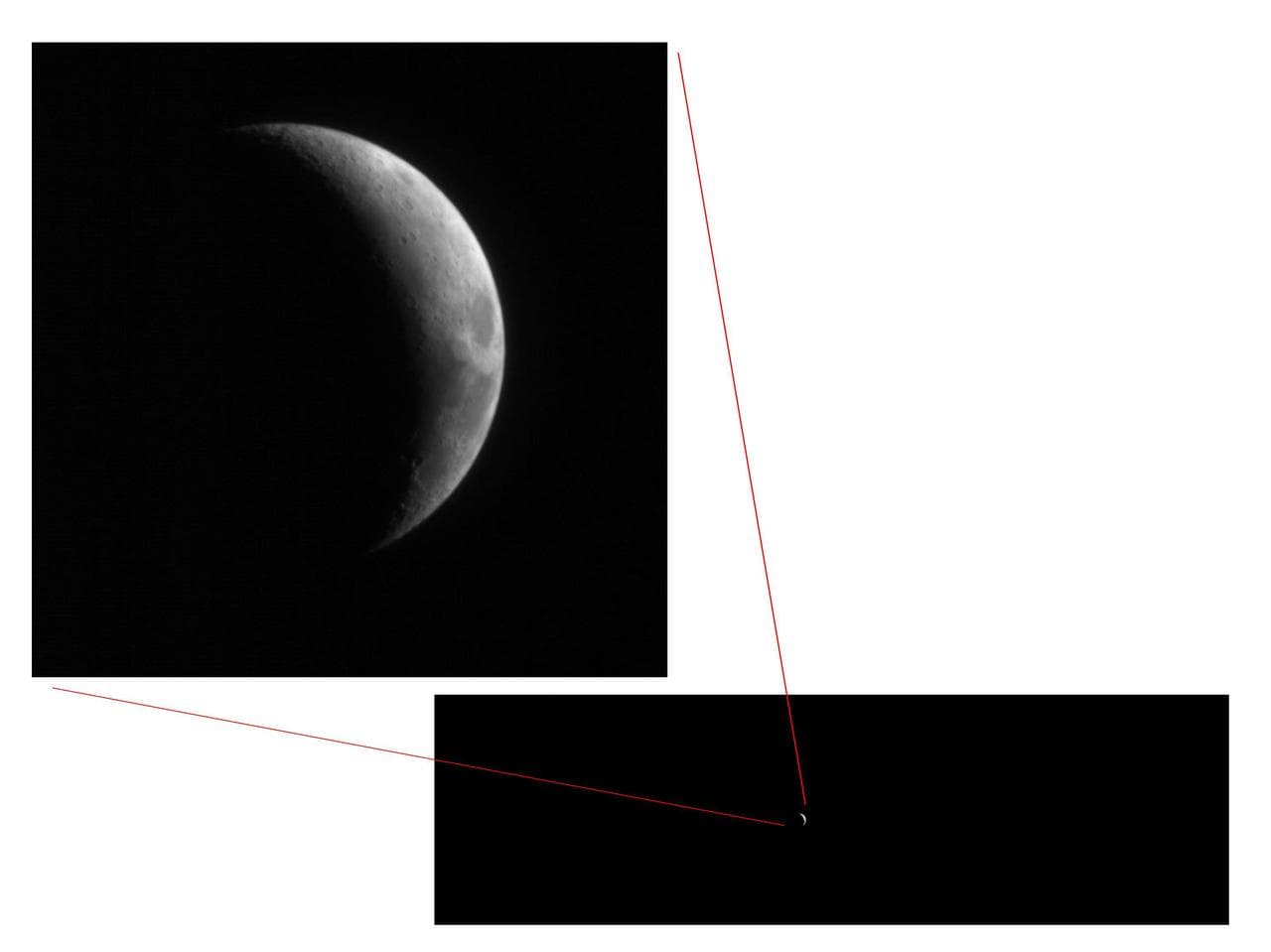
On January 19, 2024, a Japanese spacecraft weighing less than a compact car touched down on the lunar surface just 55 meters from its intended target — roughly the length of half a football field. SLIM, the Smart Lander for Investigating Moon, had earned its nickname: the Moon Sniper. It landed upside down, its main engine pointing at the sky, yet still managed to deploy two miniature rovers and return science data. Japan had become the fifth nation to soft-land on the Moon, and it had done so with a precision that no previous lunar mission, from any country, had ever demonstrated.
The landing was a distillation of how Japan does space. Not the loudest. Not the most heavily funded. But methodical, elegant, and frequently first in ways the world only notices afterward. Japan returned asteroid samples to Earth years before NASA. Japan orbited Venus after a five-year rescue mission that ranks among the greatest saves in spaceflight history. Japan built a cryogenic rocket engine with a radically simplified cycle that Western engineers had studied in theory but never dared to fly.
This is Part 1 of a two-part series on Japan's space program, tracing the arc from Hideo Itokawa's 23-centimeter pencil rockets in 1955 through the H-II revolution, the Hayabusa asteroid missions, the SLIM Moon landing, the science fleet, and the new H3 rocket. Part 2 will cover Japan's private space sector — ispace, Astroscale, Synspective, and the commercial ambitions transforming a government program into an ecosystem.
Pencil Rockets and the Father of Japanese Rocketry (1955-1970)
The Japanese space program did not begin with a military mandate or a Cold War ultimatum. It began with a professor, a horizontal launch rail on a university campus, and rockets the size of pencils.
Hideo Itokawa was an aeronautical engineer at the University of Tokyo's Institute of Industrial Science who had spent World War II designing fighter aircraft, including contributions to the Nakajima Ki-43 Hayabusa — the Army Type 1 Fighter whose name, meaning "peregrine falcon," would echo through the Japanese space program for decades to come. After Japan's defeat and the Allied occupation's ban on aviation research, Itokawa pivoted to rocketry. In April 1955, he and his students fired the first "pencil rockets" — solid-fueled devices just 23 centimeters long and 1.8 centimeters in diameter — horizontally along a test rail at the Kokubunji campus in western Tokyo. They were, by any honest assessment, glorified fireworks. They were also the seed from which every Japanese launch vehicle would grow.
The pencil rockets scaled fast. By the end of 1955, Itokawa's team had progressed to "baby rockets" roughly 1.2 meters long. By 1958, they were launching sounding rockets above 50 kilometers. In 1962, the program moved to the Uchinoura Space Center on the coast of Kagoshima Prefecture in southern Kyushu, chosen for its southerly latitude and ocean-facing launch azimuth.
The institutional structure that grew around Itokawa's work was unusual. The University of Tokyo's rocket group evolved into the Institute of Space and Astronautical Science (ISAS) — a research institution run by academics, funded through the Ministry of Education, and oriented toward pure science. ISAS built solid-fuel rockets, answered to professors, and valued elegance over scale.
But Japan also wanted to launch large communications and weather satellites, which required liquid-fuel technology and an industrial engineering culture. In 1969, the government established the National Space Development Agency (NASDA), modeled on NASA, funded through the Science and Technology Agency, and oriented toward applied technology. NASDA built liquid-fuel rockets and answered to bureaucrats and industrialists.
For more than three decades, Japan ran two parallel space programs with separate budgets, separate rockets, and separate launch sites. ISAS launched from Uchinoura. NASDA launched from the Tanegashima Space Center, built in 1969 on a subtropical island 115 kilometers south of mainland Kyushu. The two agencies cooperated when necessary and competed when possible — a dynamic that produced both remarkable innovations and remarkable inefficiencies.
ISAS got to orbit first. The Lambda 4S, a four-stage solid-fuel rocket standing 16.5 meters tall, was perhaps the most improbable orbital launch vehicle ever built. It had no active guidance system. Its trajectory was controlled entirely by the spin of the rocket body — the same principle that stabilizes a rifle bullet. The first four launch attempts, between 1966 and 1969, all failed. On the fifth attempt, on February 11, 1970, Lambda 4S successfully placed the Ohsumi satellite — a 24-kilogram sphere named after the peninsula on which Uchinoura sits — into a 337-by-5,141-kilometer orbit.
Japan became the fourth country in history to launch a satellite into orbit using its own rocket, after the Soviet Union, the United States, and France. China would follow two months later, in April 1970, with Dongfanghong-1. The fact that Japan's first orbital rocket used no guidance system at all — achieving orbit through spin-stabilization and precise pre-launch trajectory calculations — remains one of the more quietly extraordinary technical achievements of the early Space Age.
The H-II Revolution: Building Independent Launch Capability (1975-2003)
While ISAS refined its solid-fuel scientific rockets — progressing from Lambda through Mu-3S to the capable M-V — NASDA pursued liquid-fueled vehicles large enough to place heavy satellites into geostationary orbit. The route NASDA chose was pragmatic and deliberately derivative.
The N-I rocket, first flown in 1975, was built under license from the United States, based on the McDonnell Douglas Delta. The N-II (1981) had improved upper stages but the same American lineage. The H-I (1986) replaced the Delta-derived first stage with a domestically built Mitsubishi Heavy Industries engine but still relied on licensed American technology above. Each generation moved Japan closer to indigenous capability, but each still contained American DNA.
The H-II, first launched on February 4, 1994, broke that chain entirely. Every component — the LE-7 liquid-oxygen/liquid-hydrogen main engine, the solid rocket boosters, the LE-5A cryogenic upper-stage engine, the guidance system, the avionics — was designed and manufactured in Japan. The LE-7 was a staged-combustion-cycle engine, the same architecture used by the Soviet RD-170 and the Space Shuttle Main Engine, making Japan only the third country to master this demanding engine cycle. The H-II could loft roughly 4,000 kilograms to geostationary transfer orbit.
The H-II was a triumph of engineering independence and an economic disaster. Each launch cost approximately $190 million — roughly twice the price of a comparable Ariane 4 mission. The eighth flight, on November 15, 1999, suffered an LE-7 engine failure and was destroyed by range safety. The failure, combined with the prohibitive cost, ended the H-II program after just seven flights.
NASDA responded with the H-IIA, which simplified manufacturing, replaced the LE-7 with the more producible LE-7A engine, and halved launch costs to roughly $90 million. The H-IIA first flew on August 29, 2001, and over two decades achieved a success rate exceeding 98 percent across more than 50 flights, with only a single failure. That record places the H-IIA alongside the Ariane 5 and Atlas V in the small club of vehicles that have maintained near-perfect reliability over sustained operational careers.
The year 2003 also brought the most important structural reform in Japanese space history. On October 1, ISAS, NASDA, and the National Aerospace Laboratory (NAL) were merged into the Japan Aerospace Exploration Agency, or JAXA. The three-decade experiment of running parallel space programs was over. JAXA inherited ISAS's scientific heritage, NASDA's launch infrastructure, and NAL's aeronautics research. The merger was not without friction — cultural differences between the university-rooted ISAS scientists and industry-oriented NASDA engineers persisted for years — but it gave Japan, for the first time, a single institutional voice in space.
Hayabusa: The Impossible Asteroid Mission (2003-2010)
No mission in the history of space exploration has survived more near-death experiences than Hayabusa. The spacecraft was built to do something no one had ever attempted: travel to an asteroid, collect a sample of its surface material, and return that sample to Earth. By the time it limped home seven years after launch, it had lost two of three reaction wheels, sprung a fuel leak, suffered a thruster explosion, lost communication with Earth for seven weeks, and been given up for dead more than once. It completed its mission anyway.
Hayabusa launched on May 9, 2003, from Uchinoura aboard an M-V solid-fuel rocket — the last of the ISAS lineage that traced back to Itokawa's pencil rockets. Its target was asteroid 25143 Itokawa, a 535-meter-long peanut-shaped near-Earth asteroid that had been named in honor of Hideo Itokawa following his death in 1999. The spacecraft carried four xenon ion engines — a propulsion technology that had been tested in space by NASA's Deep Space 1 in 1998 but never used as a primary propulsion system for a round-trip interplanetary mission.
The ion engines worked beautifully. The rest of the spacecraft did not.
In July 2005, three months before arrival at Itokawa, one of Hayabusa's three reaction wheels failed. A second reaction wheel failed in October, just as the spacecraft entered proximity operations around the asteroid. With only one reaction wheel remaining, the attitude control system relied increasingly on chemical thrusters — thrusters that were consuming fuel at an unsustainable rate.
On November 19, 2005, Hayabusa made its first touchdown attempt. A last-minute abort command caused the spacecraft to hover before settling onto the asteroid without firing its sampling mechanism. On November 25, a second touchdown was attempted. The sampling horn made contact, and the pyrotechnic projectiles were commanded to fire — but telemetry was ambiguous about whether they actually did.
Seconds after the second touchdown, a chemical thruster began leaking hydrazine. The leak sent Hayabusa tumbling. On December 8, 2005, communication was lost entirely. For seven weeks, the ISAS mission control team at Sagamihara sent commands into the void. On January 23, 2006, a faint signal was detected. Hayabusa was alive but barely functional — tumbling, leaking, with only one reaction wheel, no chemical thrusters, and degraded ion engines. The team spent the next year stabilizing the spacecraft using its ion engines alone for attitude control, a technique never before attempted. Two of the four ion engines had failed, so engineers devised a method to cross-wire the functional components of two damaged engines into a single working unit — a fix performed entirely through software uploads from 300 million kilometers away.
The return journey took three years longer than planned. On June 13, 2010, Hayabusa re-entered Earth's atmosphere over the Woomera Prohibited Area in the Australian outback. The spacecraft itself burned up, but its sample return capsule survived re-entry and landed by parachute in the red desert.
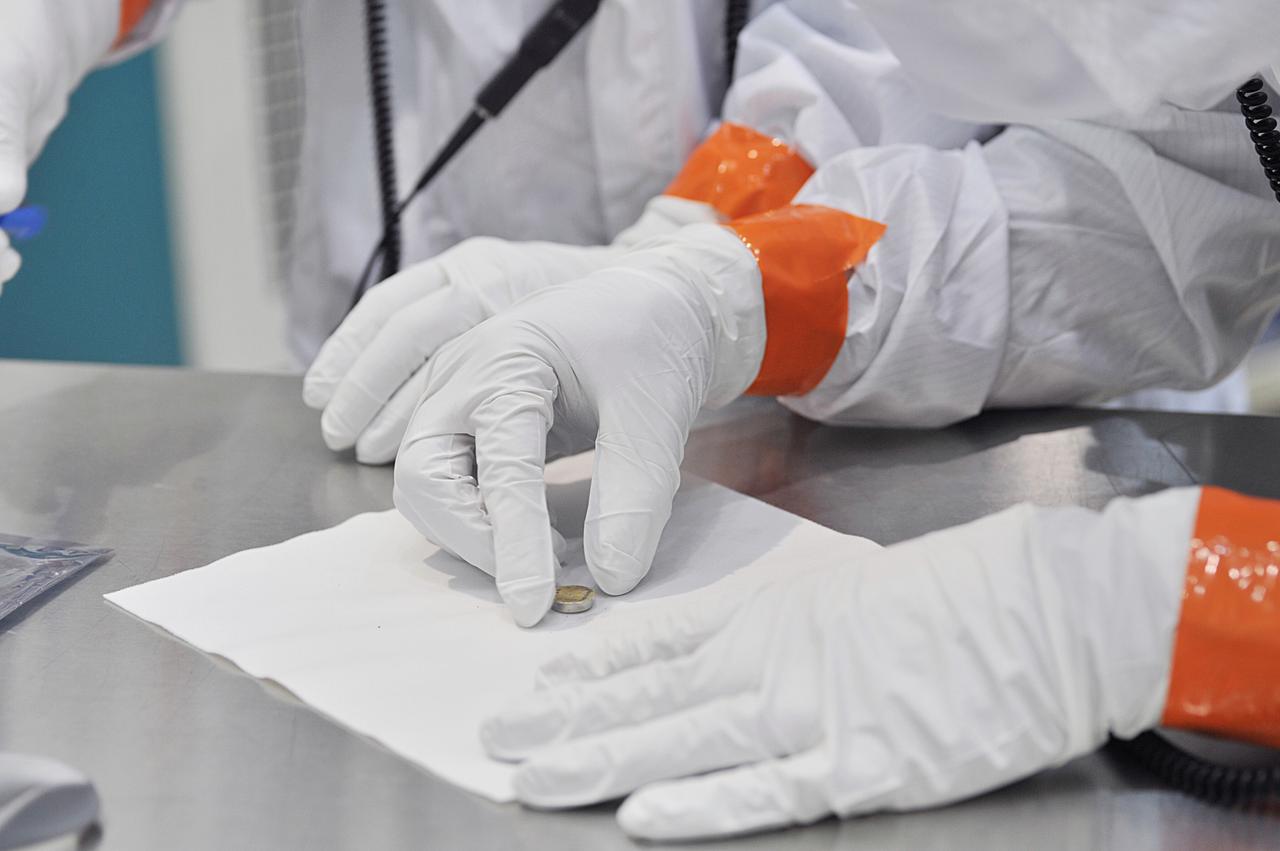
JAXA scientists found approximately 1,500 microscopic grains of material from asteroid Itokawa inside the capsule. The sampling projectiles had failed to fire, but physical contact between the sampling horn and the asteroid's gravelly surface had kicked up enough dust to enter the collection chamber. It was, by any measure, the thinnest of margins.
Hayabusa had achieved the first asteroid sample return in history — a milestone NASA's OSIRIS-REx would not match until September 2023, thirteen years later. The mission transformed Japan's reputation in planetary science and became a cultural phenomenon: two feature films, an IMAX documentary, and a dedicated exhibit at Tokyo's National Museum of Nature and Science followed. The grains revealed that Itokawa was not a solid body but a "rubble pile" — a loose aggregate held together by gravity alone — reshaping models of asteroid formation.
Hayabusa2: The Perfect Sequel (2014-2020)
Where Hayabusa had been a survival story, Hayabusa2 was a masterclass in execution. The second asteroid sample-return mission was designed from the beginning to avoid every failure mode that had nearly destroyed its predecessor — and to attempt things that Hayabusa had never been equipped to try.
Hayabusa2 launched on December 3, 2014, from Tanegashima aboard an H-IIA rocket. Its target was asteroid 162173 Ryugu, a roughly 900-meter-diameter carbonaceous near-Earth asteroid — darker, more primitive, and scientifically more valuable than the stony Itokawa. Where Itokawa was an S-type asteroid, Ryugu was a C-type body, a relic of the early solar system expected to contain organic molecules and water-bearing minerals.
The spacecraft arrived at Ryugu on June 27, 2018. The surface turned out to be far rougher than expected — a jumble of boulders with almost no flat terrain. In September 2018, Hayabusa2 deployed two MINERVA-II1 rovers — small cylindrical robots that hopped across the surface in microgravity, becoming the first rovers to operate on an asteroid. The German-French MASCOT lander followed in October, operating for 17 hours on battery power.
The first sampling touchdown came on February 22, 2019. The spacecraft descended to a designated point, fired a 5-gram tantalum projectile into the regolith at 300 meters per second, and collected the material thrown up by the impact — the entire sequence autonomous and lasting less than a second.
Then came the mission's most audacious maneuver. On April 5, 2019, Hayabusa2 deployed the Small Carry-on Impactor (SCI) — a 2-kilogram copper projectile backed by a shaped charge. The SCI detonated while the spacecraft sheltered behind the asteroid, excavating an artificial crater approximately 14.5 meters wide — the first artificial crater ever created on an asteroid. On July 11, Hayabusa2 descended into this crater and collected subsurface material shielded from space weathering for billions of years.
The sample return capsule re-entered Earth's atmosphere on December 6, 2020, landing in Australia's Woomera area with 5.4 grams of Ryugu material — more than one hundred times the mass recovered from Itokawa, and the largest extraterrestrial sample returned since Apollo and Luna brought back Moon rocks.
The scientific returns have been extraordinary. Analysis published in Science and Nature between 2022 and 2025 revealed more than 20 types of amino acids in the samples. Hydrated minerals confirmed liquid water on Ryugu's parent body billions of years ago. Isotopic analysis showed that Ryugu's water has a hydrogen-deuterium ratio consistent with Earth's oceans, strengthening the hypothesis that carbonaceous asteroids delivered water to the early Earth.
Hayabusa2 itself is not finished. After releasing its capsule, it set course for asteroid 1998 KY26, a 30-meter body rotating once every 10.7 minutes. The extended mission will fly past asteroid 2001 CC21 in 2026 and arrive at 1998 KY26 in July 2031.
SLIM: The Moon Sniper (2024)
For decades, Japan had explored everything except the Moon's surface. Kaguya had orbited it. Hiten had tested lunar-orbit trajectories as early as 1990. But landing — actually setting hardware down on the regolith and having it survive — was a challenge Japan had never attempted until SLIM.
SLIM was not primarily a lunar science mission. It was a technology demonstration with a single objective: prove that a spacecraft could land within 100 meters of a pre-selected point on the Moon. Previous landers typically aimed for ellipses measured in kilometers. SLIM was designed to shrink that to the width of a city block.
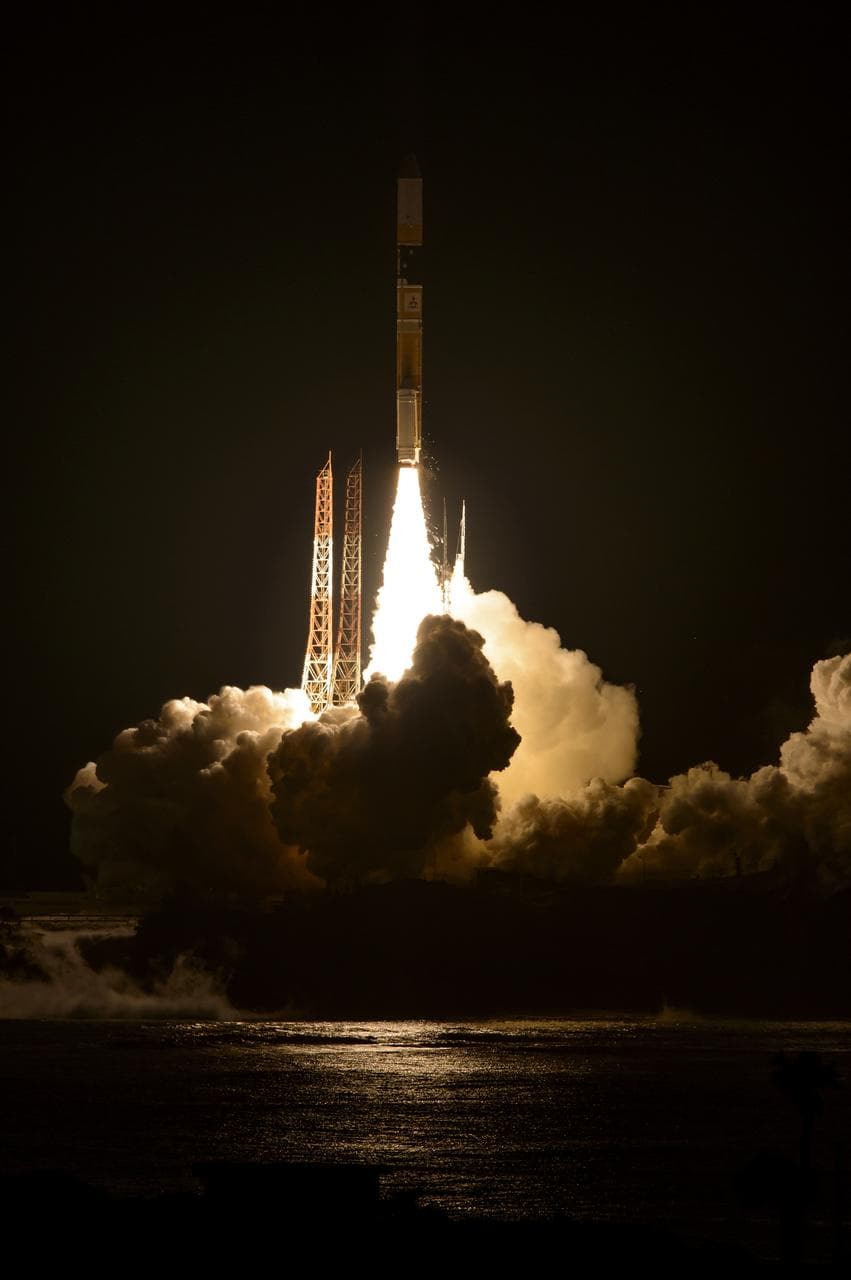
The spacecraft launched on September 7, 2023, aboard an H-IIA from Tanegashima, sharing the ride with the XRISM X-ray satellite. It followed a low-energy transfer orbit that took four months, arriving in lunar orbit on December 25, 2023 — saving fuel at the cost of time, consistent with the mission's modest $120 million budget.
On January 19, 2024, SLIM began its powered descent toward Shioli crater near the lunar equator. The lander's vision-based navigation system matched surface features in real time against a pre-loaded database of orbital imagery, determining position with far greater accuracy than inertial navigation alone.
The descent proceeded nominally until the final moments. At approximately 50 meters altitude, one of SLIM's two main engines lost thrust from a nozzle malfunction. The spacecraft touched down just 55 meters from its target — well within the 100-meter goal — but tipped over, coming to rest with its engines pointing skyward and its solar panels facing west.
Japan had become the fifth country to soft-land on the Moon. The 55-meter precision was an order of magnitude better than any previous lunar mission.
The inverted orientation meant SLIM's solar panels could not catch sunlight initially. The spacecraft operated on battery for about two hours, transmitting data, then went silent. But as the Sun's angle changed over the following days, sunlight reached the west-facing panels. On January 28, SLIM re-established contact and resumed science operations.
Before its batteries died, SLIM had deployed two miniature rovers. LEV-1, weighing 2.1 kilograms, was a hopping robot that communicated directly with Earth. LEV-2, designated SORA-Q, was a baseball-sized spherical rover weighing just 250 grams — co-developed by JAXA, Doshisha University, Sony, and the Japanese toy manufacturer Takara Tomy. SORA-Q split into two hemispheres on the surface and crawled using a rocking motion. It took the iconic photograph of SLIM resting on its side — one of the most shared space images of 2024.
The precision landing technology has implications well beyond this single mission. Future lunar exploration will require landing beside specific craters, outcrops, or pre-placed cargo. SLIM proved that vision-based pinpoint landing works, and every future JAXA lunar mission will build on its algorithms.
Kaguya, Akatsuki, and Japan's Science Fleet
Japan's space program has never been defined by a single flagship. Its strength lies in a fleet of specialized science missions, each modest in budget, often remarkable in execution, and occasionally the beneficiary of the most creative rescue operations in the history of spaceflight.
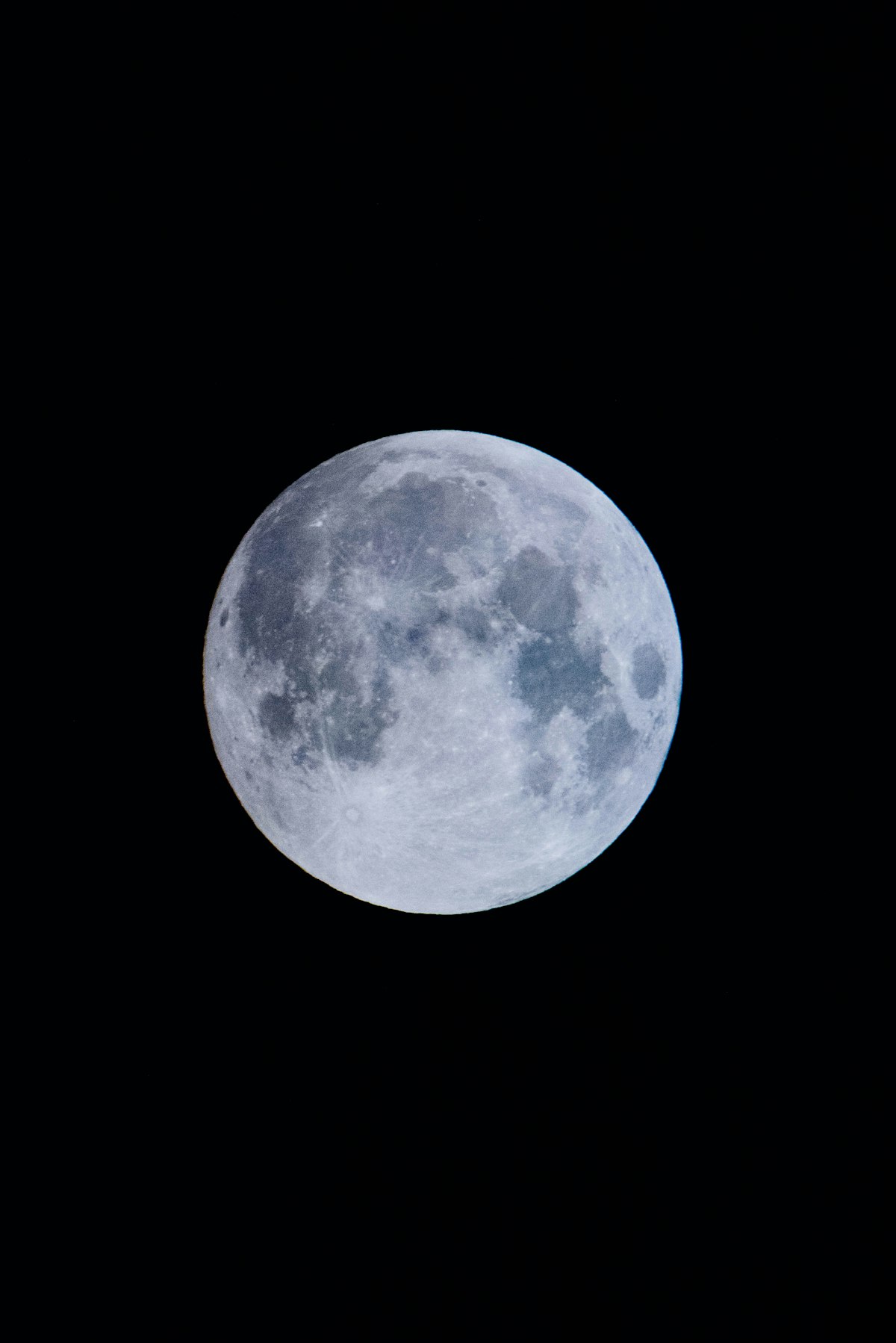
SELENE, better known as Kaguya — after the Moon princess of Japanese folklore — launched on September 14, 2007, and spent 20 months conducting the most comprehensive lunar remote-sensing survey since Apollo. Its two small relay satellites enabled gravity-field measurements of the far side, and its HD camera returned the first high-definition video of the lunar surface, including an iconic "Earthrise" sequence. The gravity data produced a detailed mascon map that informed landing-site selection for missions years later.
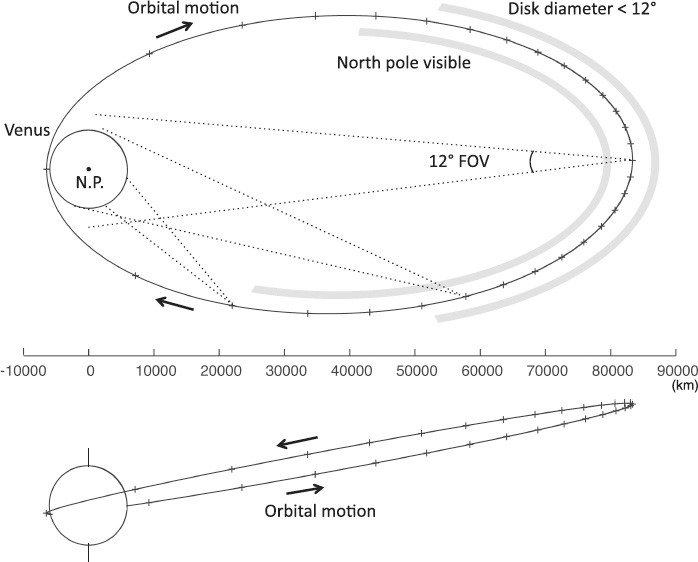
Akatsuki, Japan's Venus Climate Orbiter, is arguably the most improbable success story in interplanetary exploration. Launched on May 20, 2010, the spacecraft was designed to study Venus's thick, sulfuric-acid-laden atmosphere using a suite of infrared and ultraviolet cameras. On December 7, 2010, Akatsuki fired its orbital-insertion engine to enter Venus orbit. The engine failed. A fuel-pressurization valve had malfunctioned, causing the ceramic thrust-chamber liner to break apart. The main engine was destroyed. Akatsuki sailed past Venus and into a heliocentric orbit.
For most space agencies, this would have been the end. JAXA spent the next five years — five years — devising a rescue plan. The main engine was gone, but Akatsuki still had its small attitude-control thrusters, designed for minor orientation adjustments, not orbital mechanics. Mission planners calculated a new trajectory that would bring Akatsuki back to Venus in December 2015 and designed a thruster-firing sequence using the attitude-control system to achieve orbit insertion at a fraction of the delta-v the main engine would have provided. On December 7, 2015 — exactly five years to the day after the original failure — Akatsuki fired its attitude-control thrusters for 20 minutes and entered a highly elliptical orbit around Venus.
The rescue worked. Akatsuki has been orbiting Venus ever since, returning data on atmospheric super-rotation (the phenomenon in which Venus's atmosphere circles the planet 60 times faster than the planet itself rotates), thermal tides, and cloud-level dynamics. It has operated for more than a decade beyond its original two-year design life, on a mission that its own propulsion system had, by any conventional assessment, rendered impossible.
Japan's X-ray astronomy program has been equally persistent. Suzaku (2005-2015) studied black holes and galaxy clusters for a decade. Its successor, Hitomi, launched in February 2016 with the most advanced X-ray microcalorimeter ever flown. Hitomi returned 37 days of groundbreaking data on the Perseus galaxy cluster before a cascading attitude-control failure caused it to spin apart. That single Perseus observation — revealing far less turbulence in the intracluster medium than predicted — generated multiple high-impact papers and reshaped models of galaxy-cluster dynamics. JAXA responded by building XRISM, launched in September 2023 aboard the same H-IIA that carried SLIM. XRISM carries a rebuilt version of Hitomi's microcalorimeter and has been delivering spectroscopic data since early 2024.
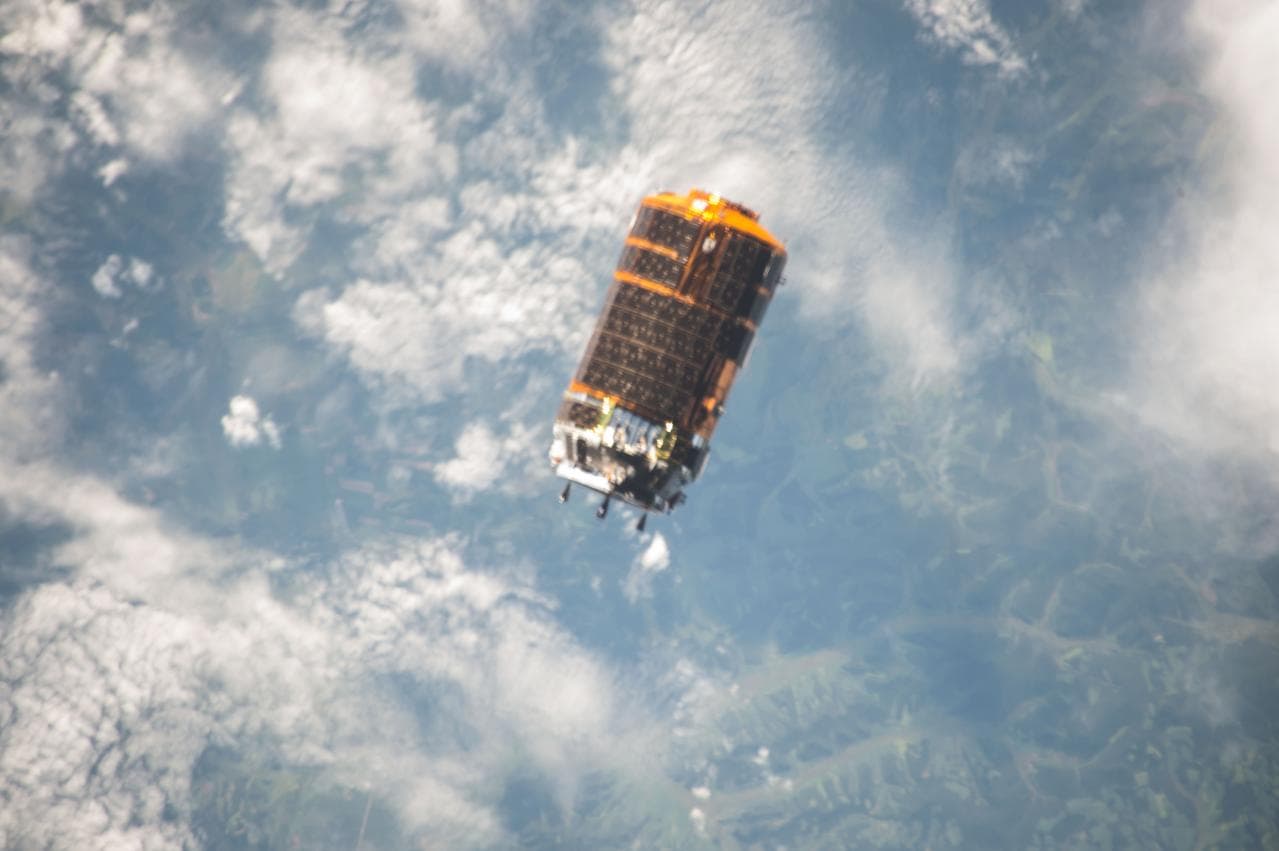
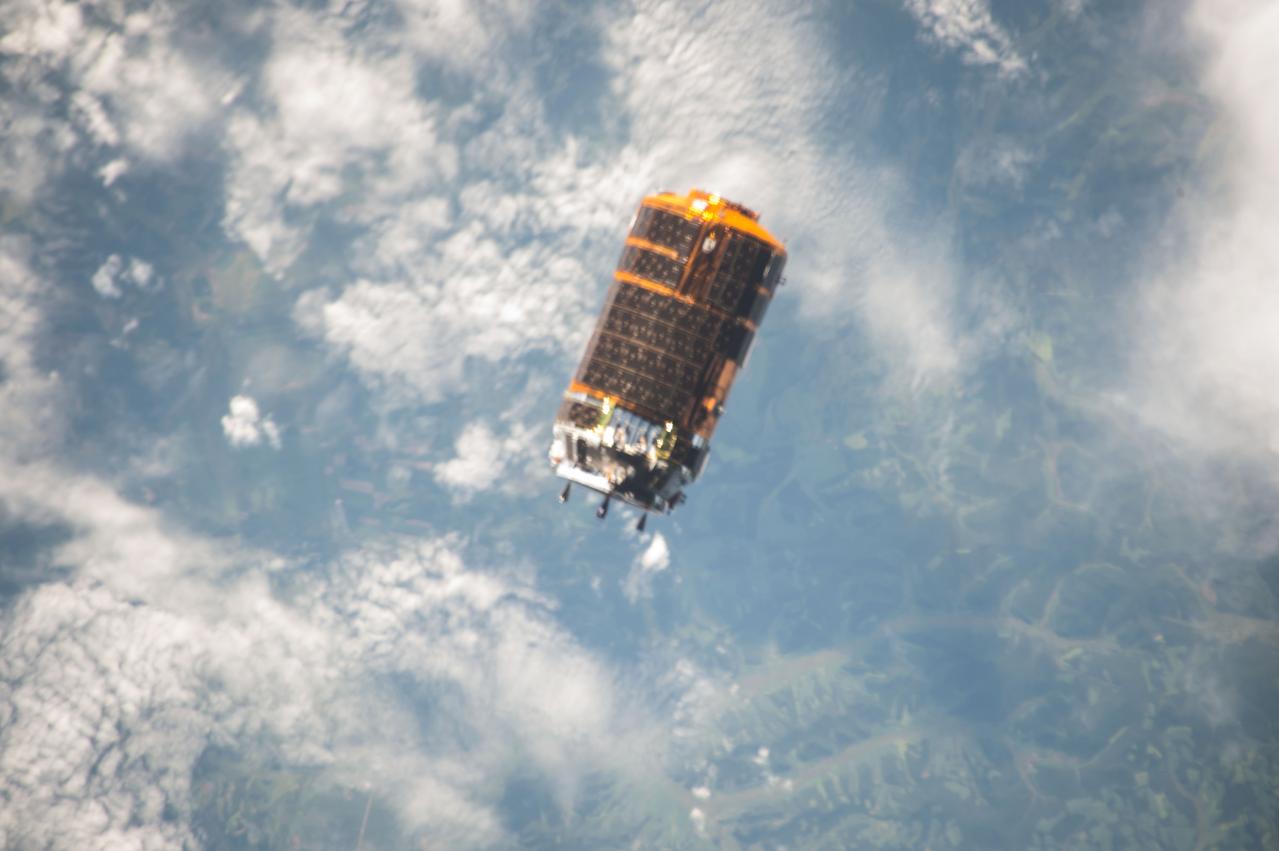
The HTV Kounotori ("white stork") was Japan's ISS cargo vehicle. Between 2009 and 2020, nine missions delivered approximately 42 tonnes of cargo — including large external payloads that could not fit through the station's docking ports. The program demonstrated Japan's capacity for routine orbital operations and informed the next-generation HTV-X vehicle, currently in development.
Looking ahead, JAXA's most ambitious planetary mission may be MMX — the Martian Moons eXploration mission, targeting a launch in 2026. MMX will orbit Mars, survey both Phobos and Deimos, and then land on Phobos to collect a surface sample of at least 10 grams. If successful, it will return the sample to Earth in 2031, making Japan the first country to return material from the Martian system. The scientific stakes are high: Phobos may be a captured asteroid, a fragment of Mars blasted into orbit by an ancient impact, or an accretion of material from both sources. A sample would resolve a debate that has persisted since the Mariner and Viking eras.
H3: Japan's Next-Generation Rocket and Launch Economics
For all the elegance of its scientific missions, Japan's space program has labored under a persistent structural disadvantage: cost. The H-IIA, at roughly $90 to $100 million per launch, was reliable but expensive — particularly after SpaceX's Falcon 9, with its reusable first stage, drove commercial launch prices below $67 million for comparable payloads and as low as $30 million for internal Starlink missions. JAXA and Mitsubishi Heavy Industries, which manufactures the H-IIA and its successor, recognized that Japan would be priced out of the commercial launch market unless it built a fundamentally cheaper rocket.
The H3 is that rocket. Designed from the outset to cut launch costs by 50 percent relative to the H-IIA — targeting approximately $51 million per flight — the H3 represents the most radical rethinking of Japanese launch-vehicle design since the H-II went fully indigenous in 1994.
The heart of the H3 is the LE-9, a first-stage engine using an expander bleed cycle — hydrogen fuel is heated in the combustion chamber's cooling channels, and the resulting hot gas drives the turbopumps before being exhausted overboard. The cycle is inherently simpler than the staged-combustion architecture of the LE-7A: no oxygen-rich preburner (the most common failure source), fewer moving parts, fewer welds. The trade-off is a modest reduction in specific impulse — roughly 422 seconds versus the LE-7A's 440 — but the gains in manufacturing simplicity and reliability are intended to more than compensate through lower production costs and higher flight rates.
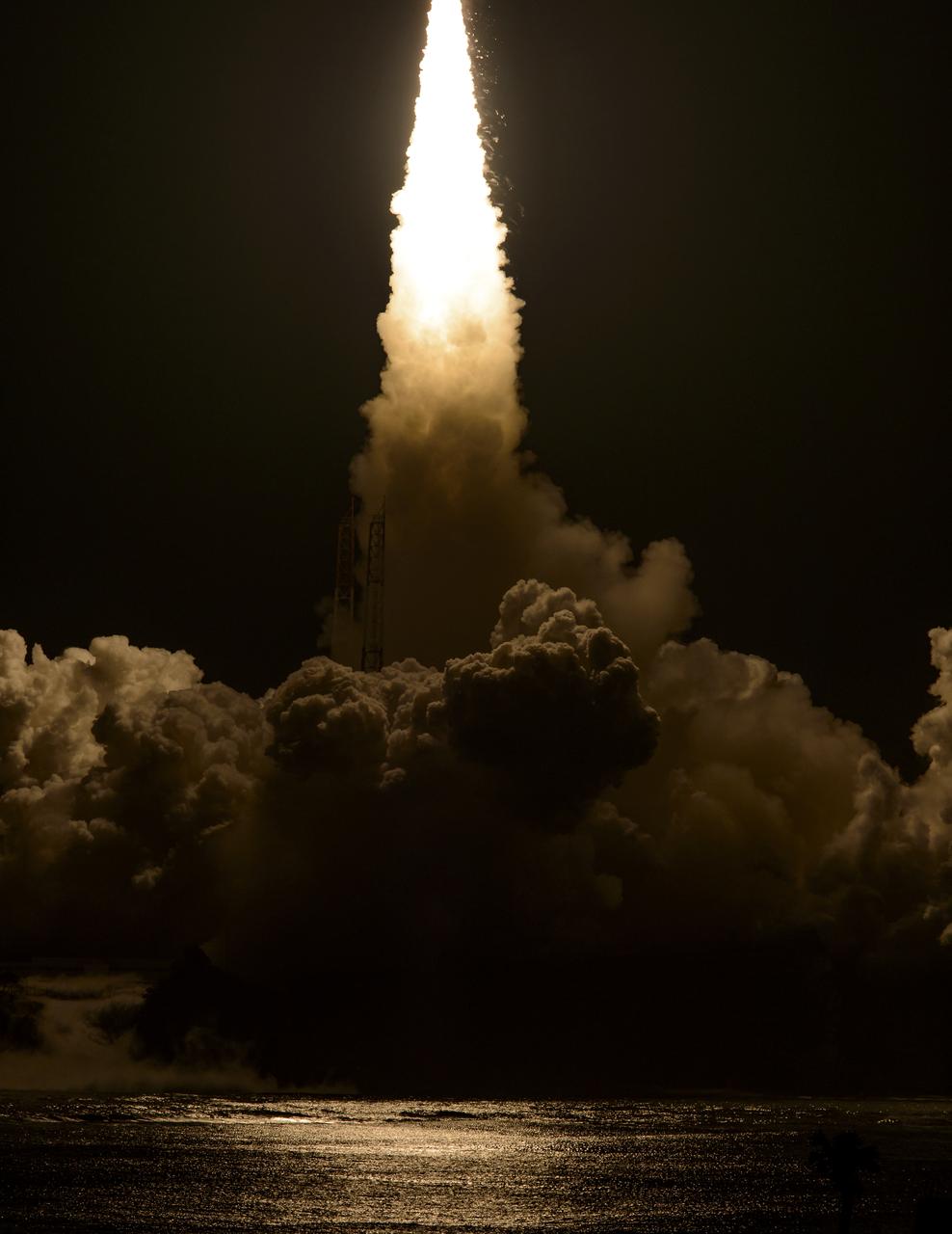
The path to operational status was not smooth. H3 Test Flight 1, launched on March 7, 2023, ended in failure when the second-stage LE-5B-3 engine failed to ignite. An electrical overcurrent protection circuit had tripped prematurely, cutting power to the ignition system. The vehicle was destroyed by range safety, along with the ALOS-3 Earth-observation satellite.
JAXA and MHI spent nearly a year investigating and redesigning the circuit. H3 Test Flight 2, on February 17, 2024, was a complete success, placing a verification payload and two CubeSats into orbit. The LE-9 engines performed nominally and the redesigned ignition system functioned without incident.
With the second test flight validated, H3 entered operational service. At approximately $51 million per launch, it is competitive with SpaceX's Falcon 9 for customers requiring dedicated launches. The H3's capacity — roughly 6,500 kilograms to geostationary transfer orbit, over 16,000 kilograms to low Earth orbit — positions it in the medium-to-heavy-lift segment that generates the majority of global launch revenue.
The H3 also introduces configurability: customers can choose two or three first-stage engines and zero, two, or four solid rocket boosters, tailoring the vehicle to payloads from light government satellites to heavy commercial missions. JAXA targets six or more H3 launches per year to amortize costs and sustain the pricing that justifies the vehicle.
The JAXA-Mitsubishi Heavy Industries partnership on H3 reflects a broader shift. Where earlier rockets were government-developed vehicles manufactured under contract, the H3 program gives MHI greater authority over production and launch operations — moving toward the commercial model in which the manufacturer assumes market risk in exchange for revenue.
Part 2 Coming Next
Part 1 has traced the arc of Japan's national space program — from Hideo Itokawa's pencil rockets to the H3's commercial ambitions, from the impossible Hayabusa mission to the pinpoint Moon Sniper landing, from the two-agency era to a unified JAXA. It is a story of a nation that has rarely been the loudest in the room but has consistently been among the most creative, the most persistent, and, in key domains like asteroid sample return and precision landing, genuinely first.
But the story of Japanese space in the 2020s extends well beyond JAXA. Part 2 will examine the private-sector transformation: ispace and its Hakuto-R lunar lander program, Astroscale and its pioneering debris-removal missions, Synspective and its SAR Earth-observation constellation, the emerging small-launch sector, and the regulatory and investment ecosystem that is turning Japan from a government space program into a space economy. For a country that started with 23-centimeter rockets on a university test rail, the trajectory has been remarkable — and it is accelerating.