The Sniper That Hit Its Mark -- Then Flipped Over
On January 19, 2024, at 12:20 AM Japan Standard Time (January 20 local time), Japan's Smart Lander for Investigating Moon -- known as SLIM -- touched down on the sloped wall of Shioli crater, a small impact feature approximately 300 meters in diameter near the larger Mare Nectaris region on the Moon's nearside. With that landing, Japan became the fifth nation in history to successfully soft-land a spacecraft on the Moon, joining the Soviet Union, the United States, China, and India.
But SLIM did not just land on the Moon. It landed almost exactly where it intended to, achieving a touchdown accuracy of approximately 55 meters from its target point -- earning the mission its nickname: the "Moon Sniper." In a field where previous missions considered landing within several kilometers of their target a success, SLIM demonstrated a precision that could reshape how humanity approaches lunar exploration.
There was, however, one catch. SLIM landed upside down.
Why Precision Landing Matters
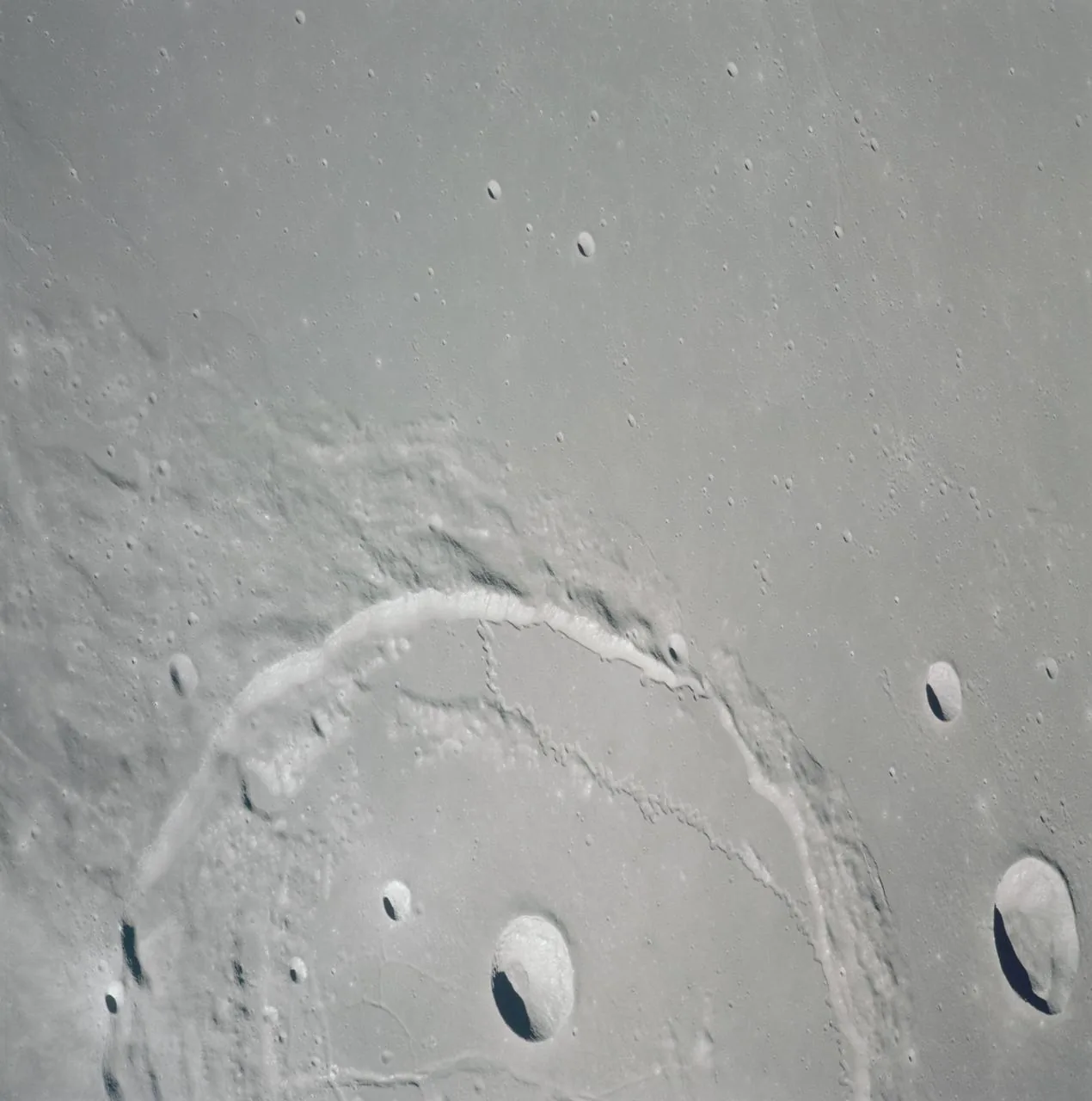
To understand why SLIM is so significant, you need to understand how Moon landings have traditionally worked. Apollo missions targeted broad, flat landing zones several kilometers across. China's Chang'e landers used large designated areas. Even the most recent landers -- Chandrayaan-3 and Odysseus -- had landing ellipses measured in kilometers.
This approach works when you are targeting open plains with few hazards. But the most scientifically interesting sites on the Moon are often not flat and featureless. Crater walls, rilles, lava tubes, and the edges of permanently shadowed regions all hold geological secrets that scientists are desperate to access. These targets require landing within meters of a specific point, not kilometers.
Consider a future mission to sample exposed bedrock on a crater wall, or a lander that needs to set down on a specific ridge near a permanently shadowed region to deploy equipment into the shadows below. For such missions, precision is not a luxury -- it is a requirement. SLIM was designed to prove that such pinpoint landings are possible.
How SLIM Found Its Spot
SLIM's precision landing system relied on a technique called vision-based navigation. During descent, the lander's onboard cameras captured images of the approaching surface and compared them in real time against a database of crater patterns derived from orbital imagery -- essentially a map of distinctive features that SLIM could recognize and use to determine its exact position.
This approach is fundamentally different from traditional inertial navigation supplemented by radar altimetry. Rather than simply knowing its altitude and velocity and hoping the trajectory hits the right spot, SLIM actively identified landmarks and adjusted its descent path accordingly. The navigation system processed images to recognize specific craters, compared their observed positions against expected positions from orbital maps, and computed real-time corrections to the descent trajectory.
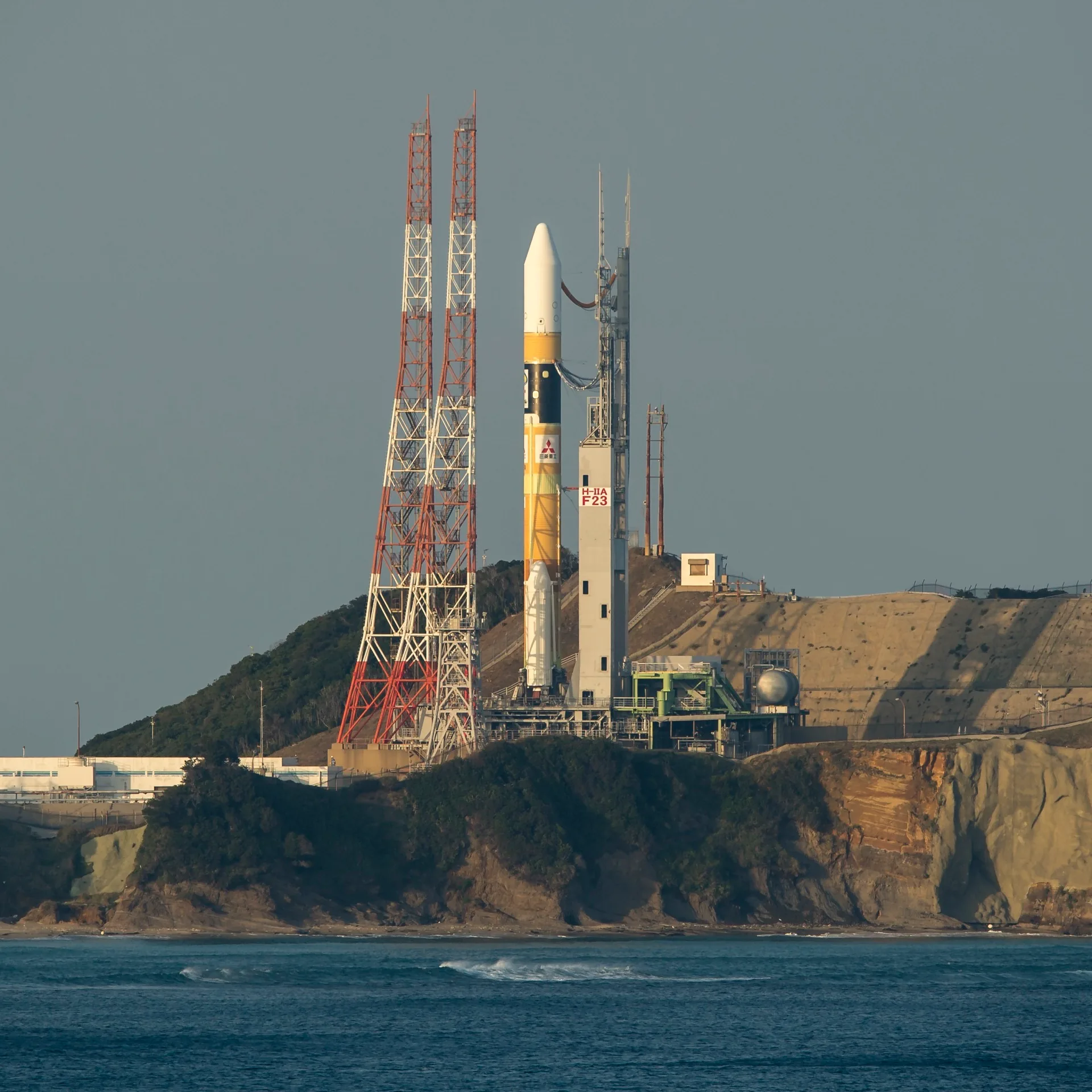
The spacecraft was launched on September 6, 2023, aboard a Japanese H-IIA rocket from Tanegashima Space Center, sharing the ride with the XRISM X-ray astronomy satellite. SLIM followed a fuel-efficient trajectory to the Moon, arriving in lunar orbit on December 25, 2023 -- a Christmas gift to the JAXA team. After several weeks of orbital operations and descent preparation, the landing sequence began on January 19, 2024.
The target was deliberately challenging: a specific patch on the sloped surface of Shioli crater, chosen because exposed rocks on the crater wall could reveal the composition of material from beneath the Moon's surface layer. SLIM aimed for a spot between two specific boulders that the team had nicknamed "Toy Poodle" and "Saint Bernard" after dog breeds -- a whimsical touch that belied the extreme precision required.
The Upside-Down Landing

SLIM's descent went almost perfectly -- almost. During the final moments of the landing, at an altitude of approximately 50 meters, one of the spacecraft's two main engines appears to have lost thrust. JAXA's post-landing analysis indicated that a nozzle on one engine likely broke off during the descent, degrading the lander's ability to control its attitude in the final seconds.
Despite this anomaly, SLIM's navigation system had already guided the spacecraft to within 55 meters of its target point -- an extraordinary achievement. But the engine failure caused the lander to tip forward during touchdown. SLIM came to rest with its nose on the surface and its main body angled upward, essentially standing on its head relative to its intended orientation.
This inverted position meant that SLIM's solar panels, mounted on its top surface, were pointed away from the Sun rather than toward it. The lander was running on battery power alone, and the battery was draining fast.
The Mini Rovers That Saved the Day
In a stroke of brilliant mission design, SLIM carried two tiny rovers that were ejected just before touchdown: LEV-1 and LEV-2.
LEV-1 (Lunar Excursion Vehicle 1), developed by JAXA, the Japan Toy Association company Takara Tomy, Sony Group, and Doshisha University, was a roughly 2.1-kilogram hopping robot equipped with a radio antenna, cameras, a thermometer, and a radiation monitor. LEV-1 could communicate directly with Earth, serving as an independent relay.
LEV-2, nicknamed SORA-Q, was even more remarkable. Weighing just 250 grams and about the size of a tennis ball, this tiny spherical rover was developed by JAXA in collaboration with Takara Tomy (yes, the toy company) and could transform its shape to move across the surface. SORA-Q split open like a clamshell, using its two halves as wheels to roll and crawl across the regolith. It carried cameras but could not communicate directly with Earth -- instead, it transmitted images to LEV-1, which relayed them home.
Both mini rovers were released from SLIM at an altitude of roughly 1.8 meters during the final descent. They landed independently, activated, and began operating on the surface. LEV-2/SORA-Q captured an iconic photograph of SLIM lying on its face on the lunar surface -- the image that confirmed the lander's orientation and was transmitted back to Earth via LEV-1. This image, showing the overturned lander with the gray lunar landscape stretching behind it, became one of the most shared space photographs of 2024.
A Second Life in Sunlight
JAXA's team made a critical decision in the hours after landing. With the battery draining and the solar panels pointing the wrong way, they chose to shut down SLIM to conserve remaining power, hoping that as the Sun's angle changed over the coming days, sunlight might eventually illuminate the panels despite their unfavorable orientation.
The gamble paid off. On January 28, 2024 -- nine days after landing -- sunlight reached SLIM's solar panels, and the lander reactivated. The science cameras powered up and captured multi-band spectroscopic images of the surrounding rocks, including the boulders "Toy Poodle" and "Saint Bernard." These observations allowed scientists to analyze the mineral composition of rocks exposed on the Shioli crater wall, directly addressing the mission's primary science objective.
SLIM survived the harsh lunar night and was recontacted by JAXA in late February 2024, and again after subsequent lunar nights, operating intermittently into April and May 2024. Each revival was a bonus, as the spacecraft was not designed to survive the minus 130 degree Celsius temperatures of the lunar night.
What SLIM Means for the Future
SLIM's 55-meter landing accuracy is roughly 100 times more precise than conventional lunar landings. JAXA has described this as "pinpoint landing" technology, and its implications are profound.
Future missions could land beside specific geological features -- a particular boulder, a specific outcrop on a crater wall, or the edge of a lava tube skylight. Resource prospecting missions could target exact locations where orbital data suggests water ice or valuable minerals are concentrated. Rescue or resupply missions could land within meters of an existing base or stranded equipment.
The vision-based navigation technology SLIM demonstrated is also applicable beyond the Moon. Mars landings, asteroid rendezvous, and even landings on the icy moons of Jupiter and Saturn could benefit from the same approach of matching real-time camera imagery against pre-loaded maps to achieve pinpoint accuracy.
JAXA's Growing Lunar Ambitions
SLIM is part of a broader Japanese push into lunar exploration. JAXA is collaborating with India's ISRO on the Lunar Polar Exploration Mission (LUPEX), which will send a Japanese-built rover to the Moon's south polar region aboard an Indian-built lander. LUPEX aims to explore permanently shadowed regions and search for water ice, with a launch targeted for around 2028.
Japan is also a key partner in NASA's Artemis program. JAXA is contributing to the Lunar Gateway station and has secured a seat for a Japanese astronaut on a future Artemis lunar surface mission -- potentially making Japan the second nation to have its citizens walk on the Moon.
Toyota and JAXA are developing the Lunar Cruiser, a large pressurized rover designed to carry two astronauts on expeditions lasting up to 42 days and covering distances up to 10,000 kilometers across the lunar surface. This ambitious vehicle, roughly the size of two minibuses, would use hydrogen fuel cell technology and is targeted for delivery to the Moon in the early 2030s.
A Small Lander with a Big Legacy
SLIM cost approximately 18 billion yen (roughly $120 million) -- modest for a lunar mission. It weighed just 590 kilograms at landing (after burning most of its propellant) and was about the size of a commercial vending machine. By any measure, it was a small spacecraft.
But its legacy is anything but small. SLIM proved that you can land on the Moon exactly where you want to, not merely in the general vicinity of your target. It deployed the smallest and lightest rovers ever to operate on another world. It survived an engine failure, an upside-down landing, and multiple lunar nights through clever engineering and flexible operations. And it returned science data that its team did not dare hope for.
Japan's Moon Sniper hit its target. And even when it fell on its face, it got back up and finished the job. In the unforgiving arena of lunar exploration, that is as good as it gets.