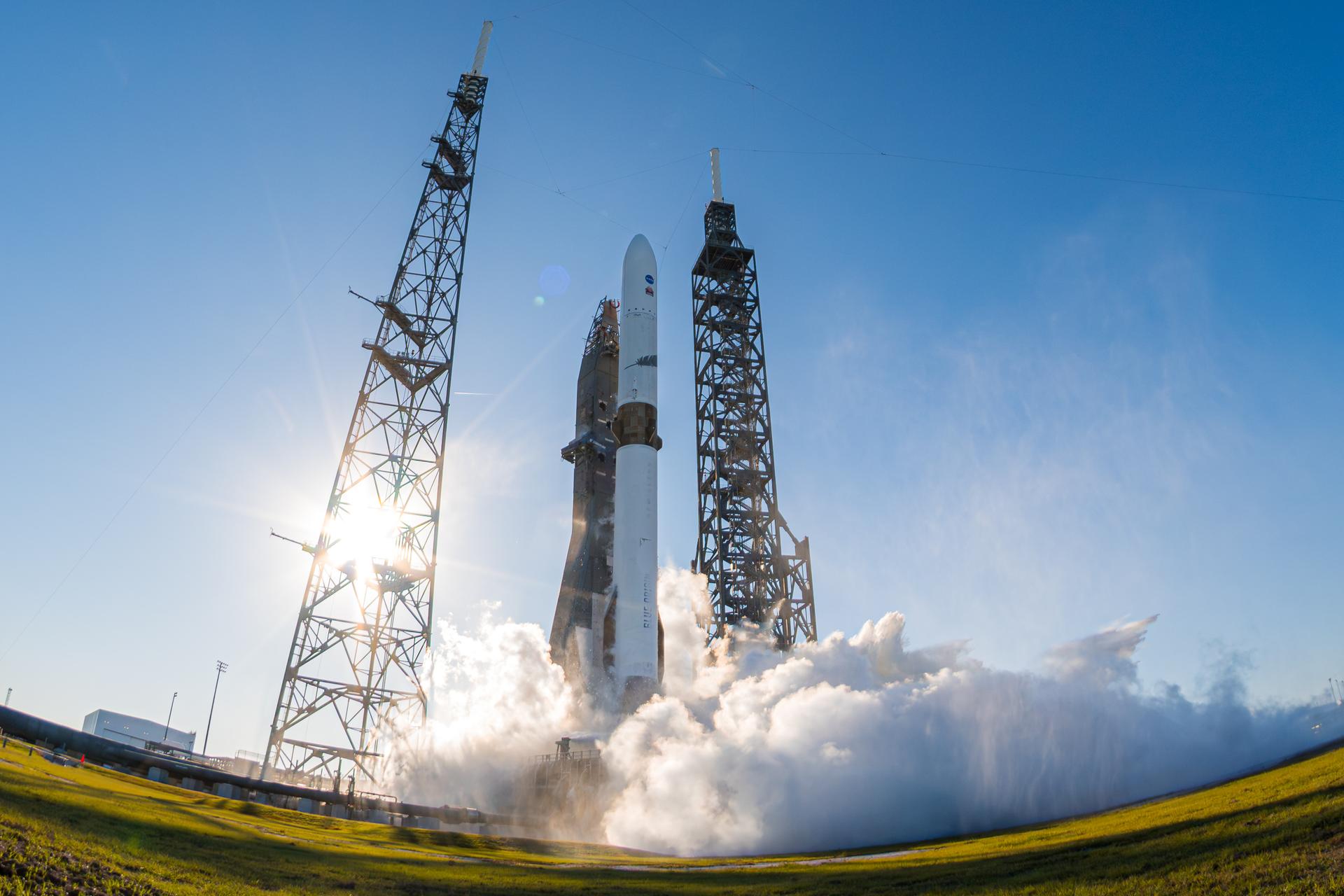
Image: Blue Origin
ESCAPADE
Mission Profile
| Launch date | 2025-11-13 |
|---|---|
| Launch vehicle | New Glenn (NG-2) |
| Spacecraft | Twin smallsat orbiters 'Blue' and 'Gold' (Rocket Lab) |
| Target | Mars |
| Type | Robotic |
| Cost | ~$80M (SIMPLEx class) |
| Duration | ~2-year cruise + ~1-year primary science mission |
| Partners | UC Berkeley Space Sciences Laboratory (PI), Rocket Lab (spacecraft), Blue Origin (launch) |
| Instruments | EMAG (magnetometer), EESA (electrostatic analyzer), ELP (Langmuir probe) |
Overview
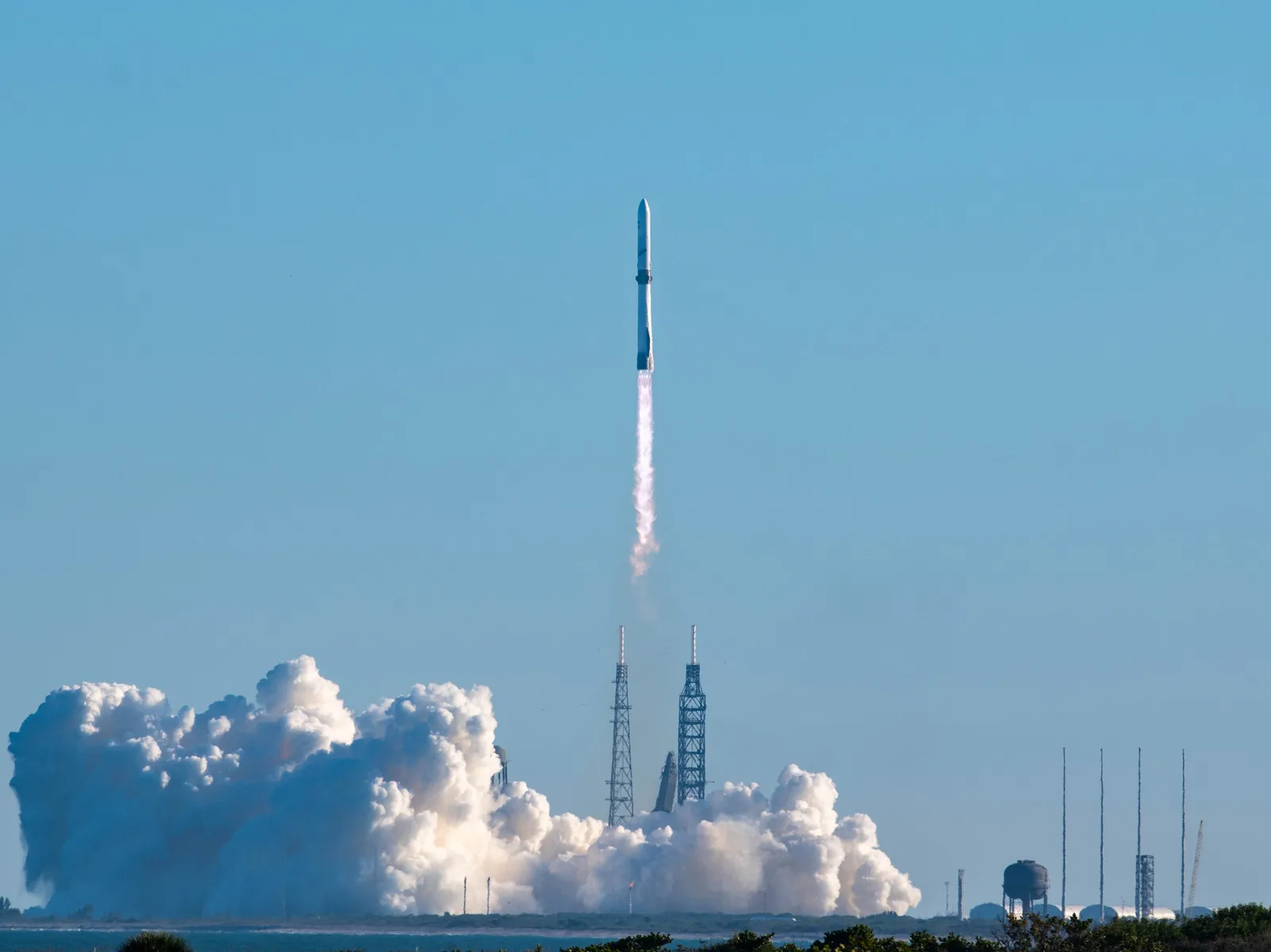
ESCAPADE (Escape and Plasma Acceleration and Dynamics Explorers) is a low-cost NASA SIMPLEx mission sending twin Rocket Lab-built smallsat orbiters — nicknamed Blue and Gold — to Mars to study how the solar wind strips away the planet's atmosphere. The pair launched on 13 November 2025 aboard the second flight of Blue Origin's New Glenn from Launch Complex 36, a flight that also achieved the first successful New Glenn booster landing. The spacecraft are flying an unconventional trajectory that loiters in the Earth-Sun environment before an Earth gravity assist in November 2026 sets up Mars arrival in September 2027. From staggered orbits, the two probes will make the first sustained two-point measurements of Mars's magnetosphere and ion escape — the processes that bled away the planet's early climate.
Key Milestones
2025-11-13
Launch on New Glenn NG-2 from LC-36; first New Glenn booster landing
2026-11
Earth gravity-assist flyby (planned)
2027-09
Mars orbit arrival (planned)