Image: Soviet Interkosmos programme, via Wikimedia Commons
Soyuz 33
Mission Profile
| Launch date | 1979-04-10 |
|---|---|
| Launch site | Baikonur Cosmodrome Site 1/5 |
| Launch vehicle | Soyuz-U |
| Spacecraft | Soyuz 7K-T (Soyuz 33) |
| Target | Low Earth Orbit |
| Type | Crewed |
| End date | 1979-04-12 |
| Duration | 1 day 23 hours 1 minute |
| Partners | People's Republic of Bulgaria, Soviet Union (Interkosmos) |
Overview
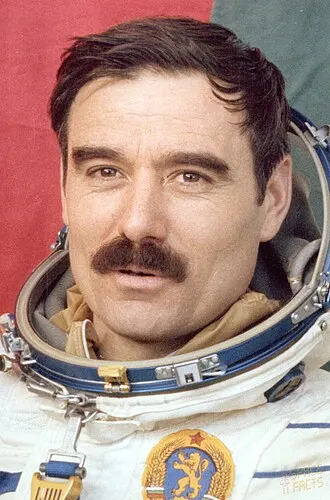
Soyuz 33 carried Bulgaria's Georgi Ivanov toward Salyut 6, making Bulgaria the sixth nation with a citizen in space — but the Interkosmos flight became a harrowing near-disaster. A former combat pilot, Ivanov flew with commander Nikolai Rukavishnikov, the first Soviet civilian engineer to command a spaceflight. Launched on 10 April 1979, the craft suffered a serious failure during approach to the station: the main engine shut down after three seconds of a planned six-second burn, a fault traced to a combustion-chamber pressure sensor. With docking impossible and the same propulsion section damaged, the crew faced the prospect of being stranded. They fired the untested backup engine, which burned long, forcing a steep ballistic re-entry at roughly 9-10 g. Ivanov and Rukavishnikov were safely recovered on 12 April after just under two days aloft, having never reached the station.
Crew
Georgi Ivanov
Research Cosmonaut (Bulgaria, Interkosmos)
First Bulgarian citizen in space
Key Milestones
1979-04-10
Launch from Baikonur at 17:34 UTC; Ivanov becomes the first Bulgarian in space
1979-04-11
Main engine fails on approach to Salyut 6; docking with residents Vladimir Lyakhov and Valery Ryumin aborted
1979-04-12
Backup engine fires long; steep ballistic re-entry at ~9-10 g
1979-04-12
Safe recovery 320 km SE of Dzhezkazgan after 1 day 23 hours in space
Key Achievements
First Bulgarian citizen in space; sixth nation with a citizen in orbit
Survived the first in-orbit Soyuz main-engine failure
Completed an emergency ballistic re-entry on the untested backup engine