1942–1956
The First Step
Space is reachable — and the first thing we sent there was a weapon built by slaves. Capability arrived before conscience.
ROCKET FACTORY
Drag through time and watch rockets change — every one drawn to true relative scale, so a 14-metre weapon from 1942 stands next to a 111-metre Moon rocket and a 124-metre stainless-steel promise. They don’t just get bigger. They get bigger, then they stop, then they get clever.
1942–1956
Space is reachable — and the first thing we sent there was a weapon built by slaves. Capability arrived before conscience.
1957–1972
Bigger is winning. Cost is irrelevant; the payload is prestige. It ends when the prestige runs out, not when the engineering does.
1973–1980
Space becomes routine, and the question shifts from “can we?” to “who gets to?” Reliability and access beat spectacle.
1981–2011
Reuse will make spaceflight cheap. It didn't — because reuse only pays if you fly often, and the flights never came.
2012–2026
Reuse works — but as an operations problem, not a hardware problem. Landing it was 2015. Turning it around fast is the actual breakthrough.
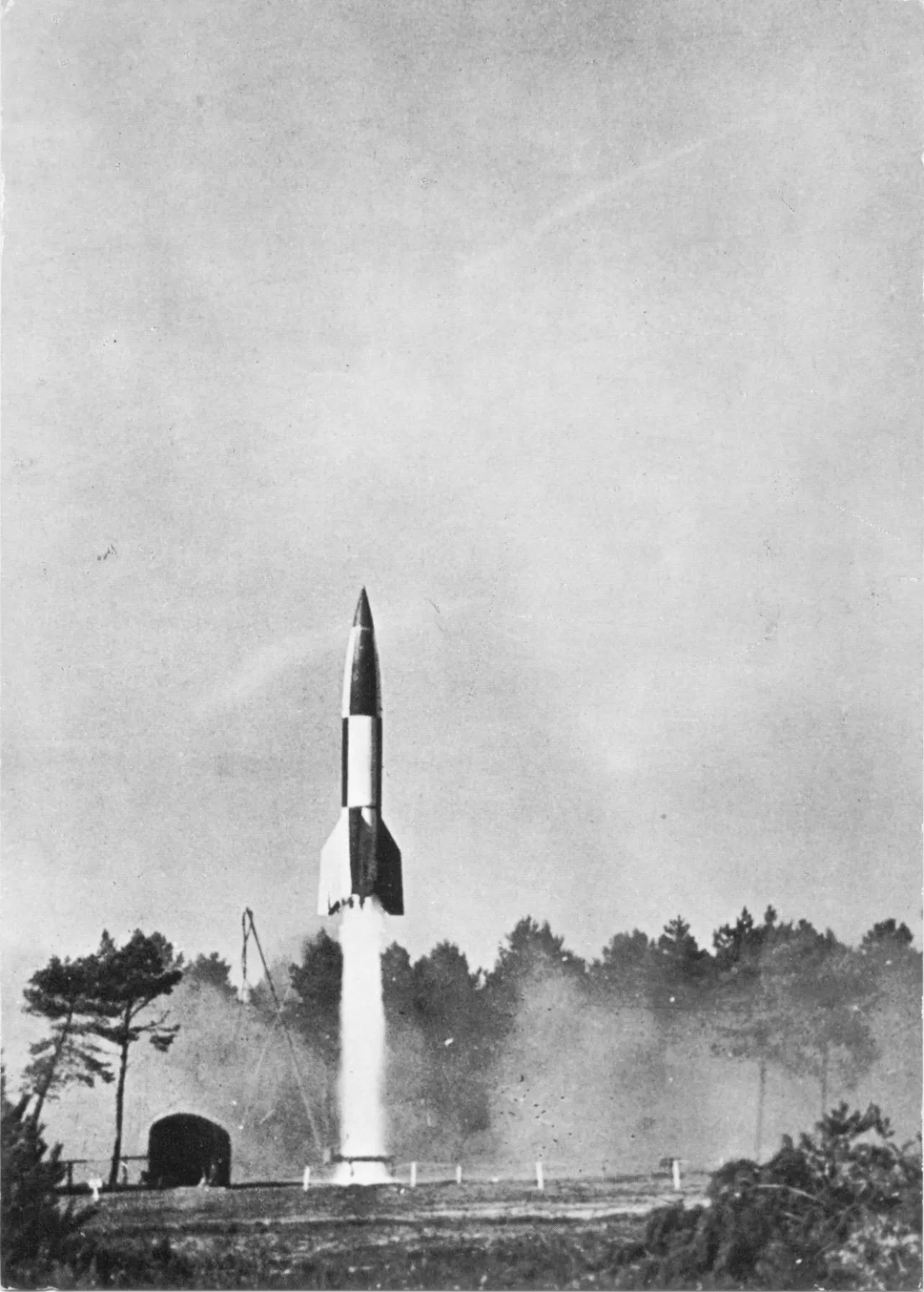
1942 · Nazi Germany
The first machine to touch space was a weapon, and more people died building it than were killed by it.
In 1944 a rocket flew higher than anyone had ever gone — right to the edge of space. But it was a war weapon, and it was built by prisoners who were forced to work until they died.
For engineers: The A4 combined the three things that make a space launcher work — liquid propulsion with turbopump feed, gyroscopic inertial guidance, and active control via graphite jet vanes — in one airframe for the first time. Its ~88 km operational apogee was below the Kármán line; only the vertical test shots of June 1944 crossed it. Its engineers, including von Braun, were taken by both the US and USSR — which is why the American and Soviet programmes both start here.
14 m · no orbital payload
A V-2 lifting off near Cuxhaven, October 1945. Science Museum (UK) / UK Government · Public domain (PD-UKGov)This is Operation Backfire — a captured V-2 launched by the British after the war. Real V-2 hardware, but not a wartime German launch.
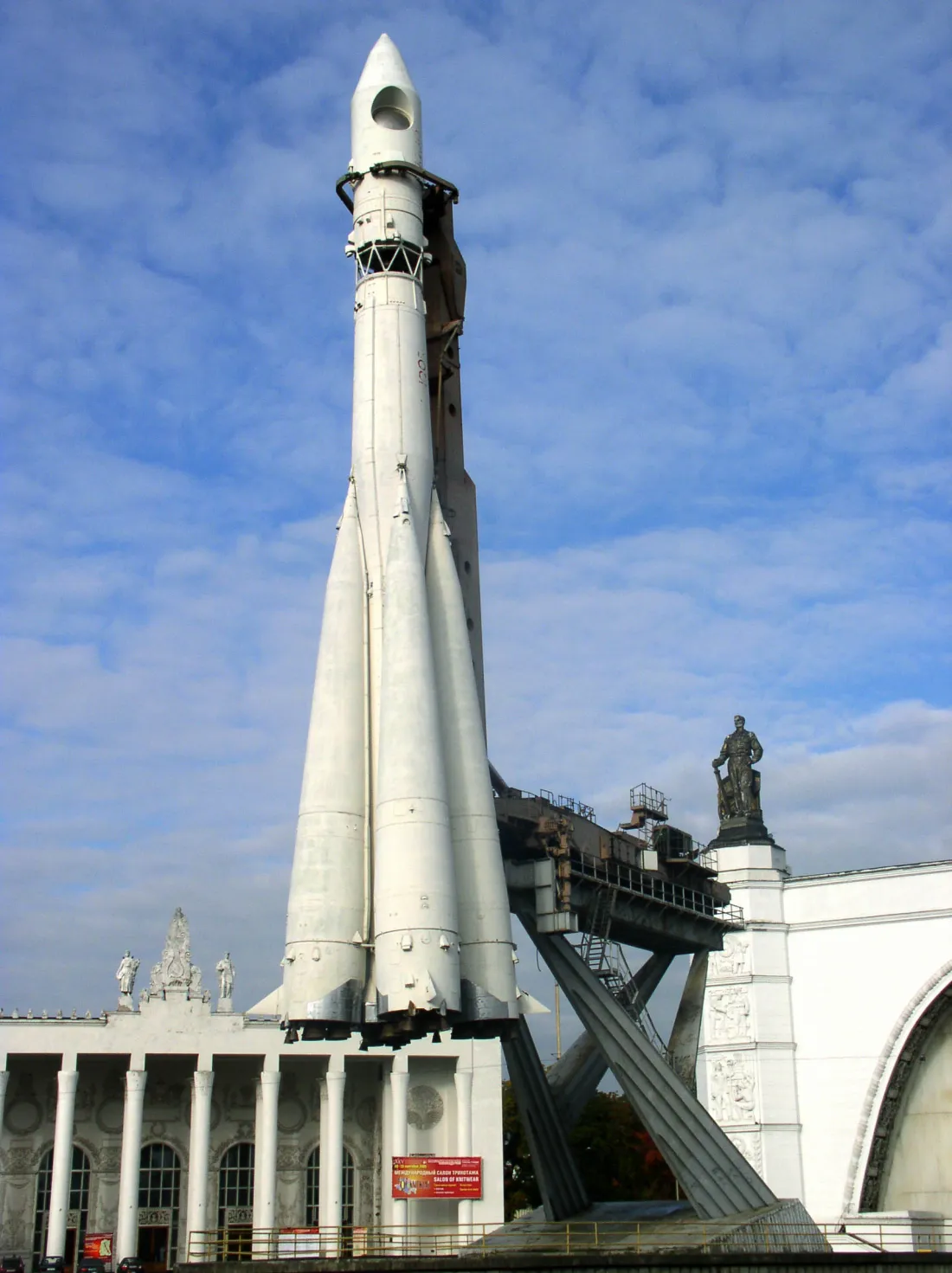
1957 · USSR
It turned a nuclear missile into a doorway, and the whole world heard it beeping overhead.
This rocket put the first-ever satellite into space — a shiny metal ball called Sputnik that went beep. Anyone with a radio could hear it passing over their house.
For engineers: The R-7's answer to unreliable staging was to light everything on the ground: four RD-107 strap-ons and a central RD-108, twenty main combustion chambers in all, every one ignited before liftoff, with the boosters falling away in the “Korolev cross”. That architecture was so sound it is still flying today, sixty-nine years later — the longest-lived design in spaceflight.
29.2 m · 500 kg — LEO capability
An R-7 family rocket on permanent display at VDNKh, Moscow. Alex Zelenko · CC BY-SA 4.0Not the Sputnik rocket, and not a period photograph. The VDNKh monument is a later Vostok-type R-7. No freely-licensed photograph of the Sputnik-era 8K71PS exists anywhere — the real launch imagery is held by the Russian state archives with no free licence. We would rather show you the wrong R-7 and say so than pretend.
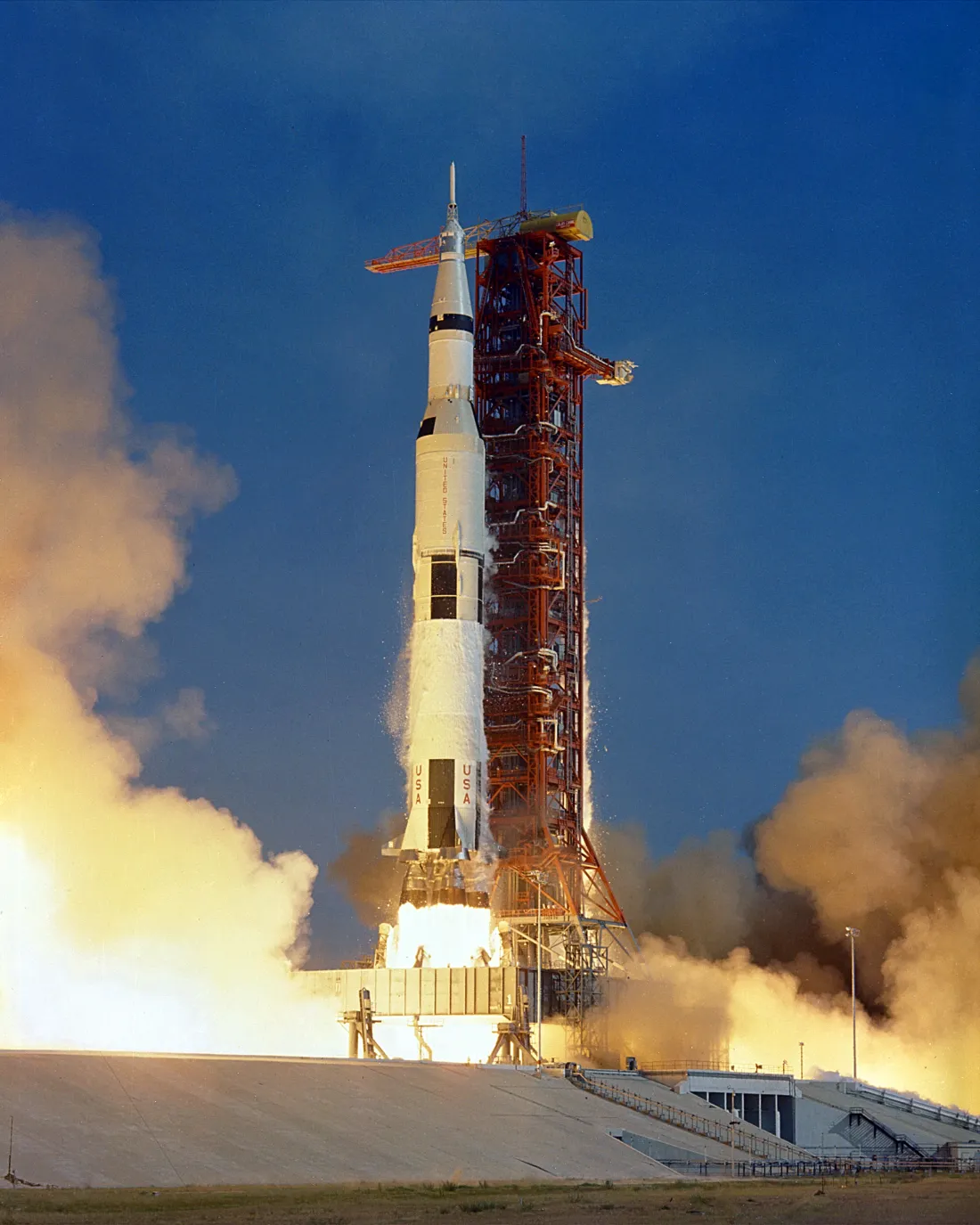
1967 · USA
It remains the most powerful rocket ever flown successfully — and it proved that brute force works, if you never have to ask what it costs.
This is the rocket that took people to the Moon. It was as tall as a 36-storey building, and it worked every single time it carried astronauts.
For engineers: Five F-1 engines produced 34.5 MN at liftoff — still the largest single-chamber liquid engines ever flown. The real triumph was managing failure: Apollo 6 suffered pogo oscillation and two J-2 shutdowns and still reached orbit on the remaining engines. Saturn V's cancellation, with flight hardware in hand, is the clearest case in history of a programme ending for political rather than technical reasons.
111 m · 118,000 kg — net payload to 185 km LEO (NASA)
Apollo 11 lifting off from LC-39A, 16 July 1969, 9:32 a.m. EDT. NASA · Public domain (NASA)
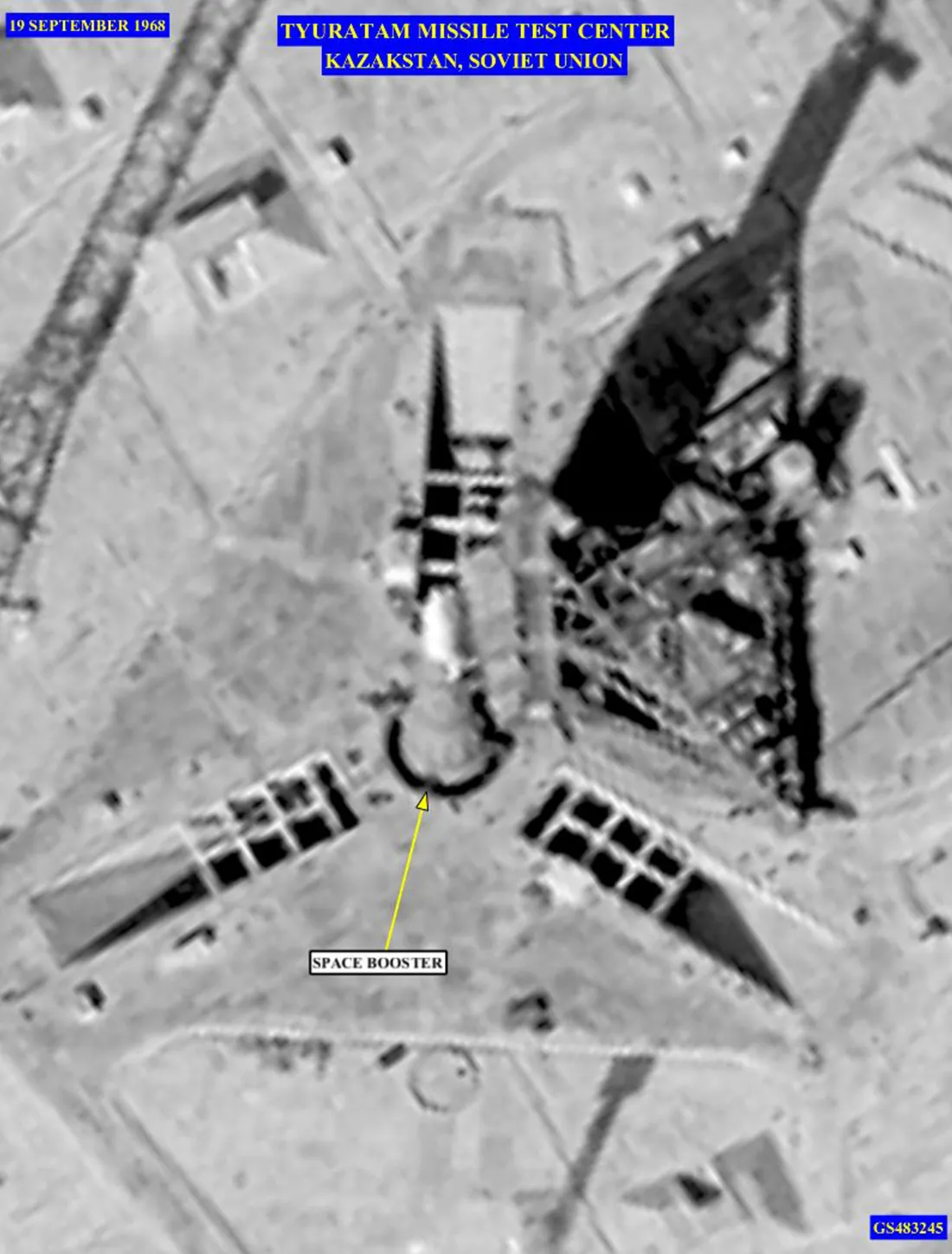
1969 · USSR
The rocket that never flew successfully — because thirty engines meant thirty things that could go wrong, and no way to test them together.
The Soviet Moon rocket had thirty engines at the bottom — and it blew up all four times it tried to fly. Sometimes more isn't better.
For engineers: The N1's fatal flaw was economic, not aerodynamic: there was no test stand for the assembled first stage, so 30 NK-15s in two rings first fired together on an actual launch. The KORD controller shut engines down symmetrically to hold attitude, which meant a single turbopump failure could cascade into losing thrust in pairs. The N1F upgrade fixed much of this and was flight-ready as vehicles 8L and 9L — both scrapped at cancellation.
105.3 m · 95,000 kg — LEO — design figure (never demonstrated)
A real N1 on the pad at Baikonur, 19 September 1968. U.S. Air Force — KH-8 reconnaissance satellite · Public domain (PD-USGov)This is an American spy satellite photograph, because it is the only free image that exists. All four N1 launches failed and the Soviet imagery was classified — so the clearest surviving view of the Soviet Moon rocket was taken from orbit, by the other side.
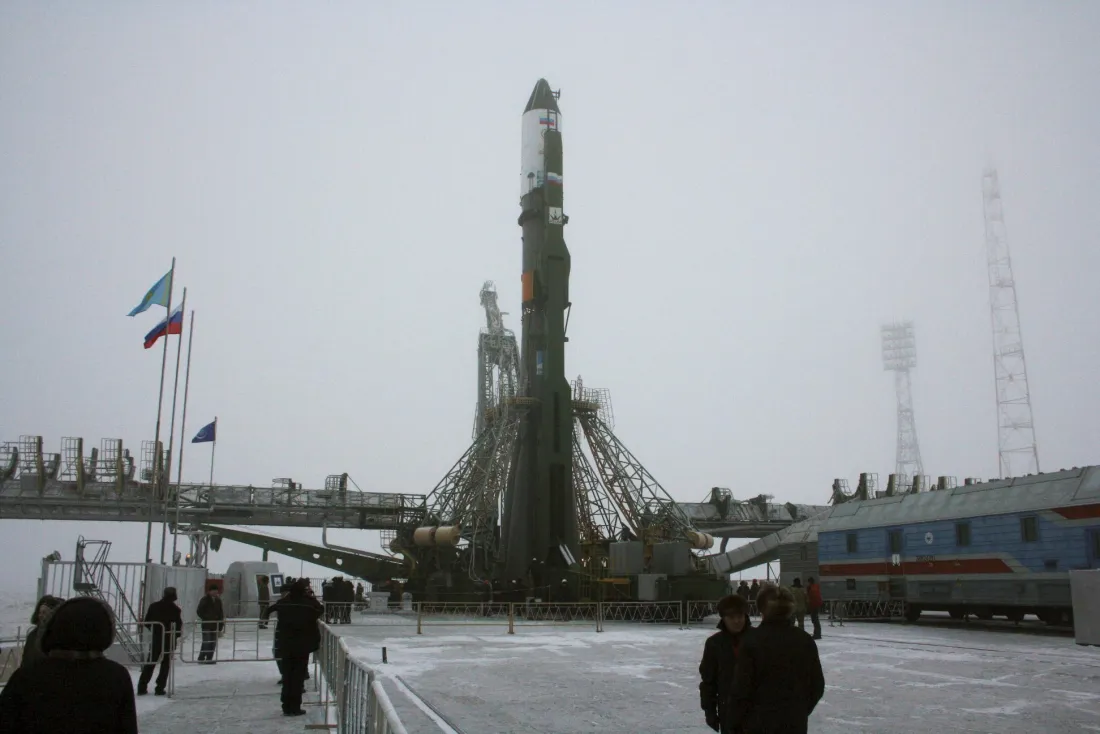
1973 · USSR / Russia
It flew 786 times over 44 years — proof that the rocket that wins isn't the most advanced one, it's the one that keeps working.
This rocket flew 786 times — more than any other rocket design ever built. Its grandparent launched Sputnik in 1957, and rockets from the same family still fly today.
For engineers: Soyuz-U's advantage was refusing novelty: an R-7 airframe, RD-107/108 engines of 1950s ancestry, and a production line at Samara that never stopped long enough to lose its tooling or its people. Reliability came from repetition, not redesign — the exact opposite of the Shuttle's bet, and the reason it outlived it by six years.
50.7 m · 6,900 kg — LEO from Baikonur
A Soyuz-U standing on the pad at Baikonur with Progress M-59, January 2007. NASA · Public domain (NASA)
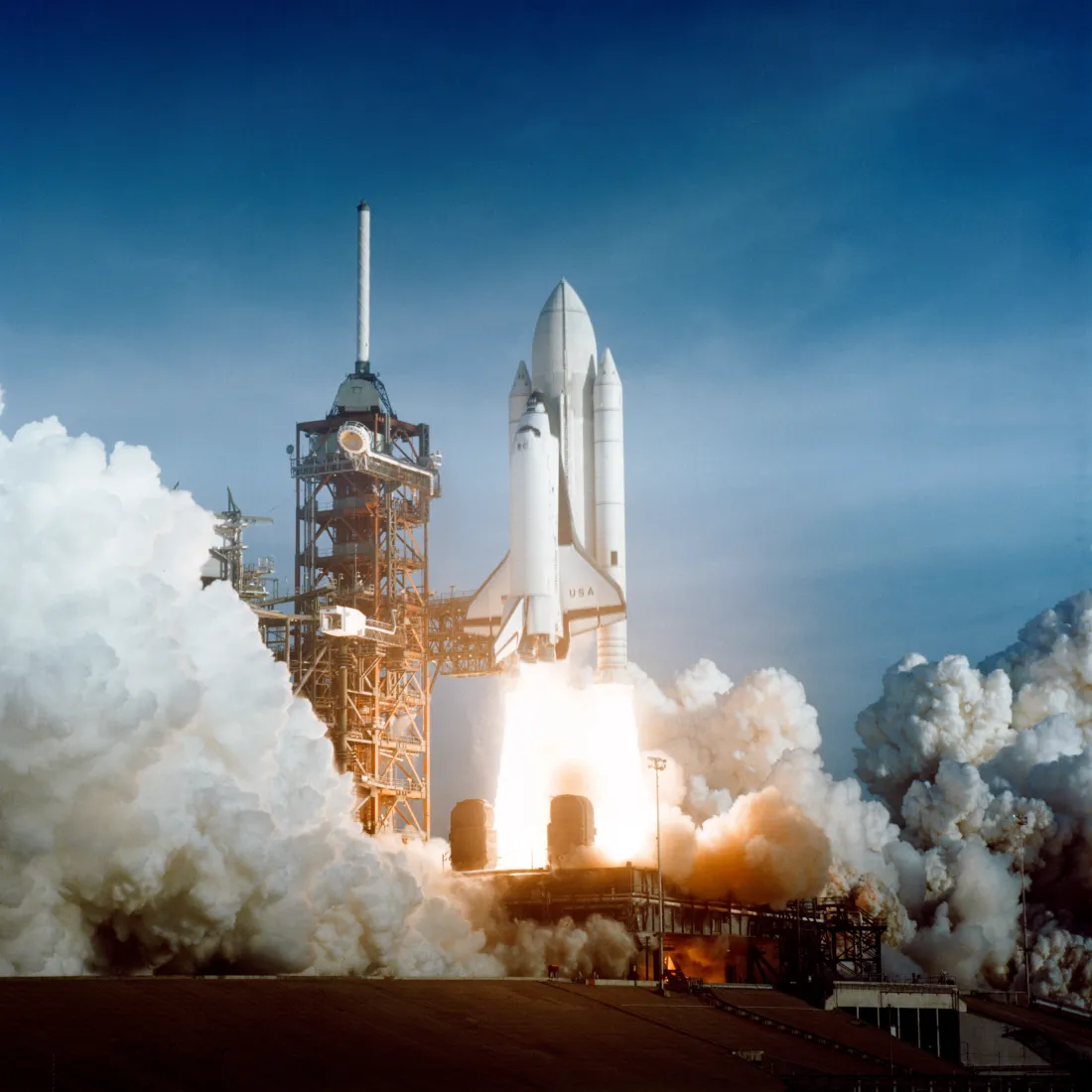
1981 · USA
It promised to make space cheap by flying every week, and instead proved that reuse means nothing without flight rate.
The Shuttle was a spaceship with wings that landed on a runway and flew again. It was meant to fly almost every week — but it only managed about four or five times a year, so it never got cheap.
For engineers: About 90% of a Shuttle flight's operations cost was fixed. That single fact explains the entire cost controversy: the marginal cost of one extra flight was genuinely tiny, while the average cost per flight was enormous, and both numbers are honest answers to different questions. The Shuttle didn't disprove reusability — it proved reuse is an amortisation strategy, and amortisation needs a denominator. Falcon 9 is the same bet with the flight rate actually delivered.
56 m · 27,500 kg — LEO at 204 km, in its reusable configuration
Columbia launching on STS-1, 12 April 1981 — the first Shuttle flight. NASA · Public domain (NASA)The tank is WHITE, not orange: only the first two flights were painted. NASA stopped, and saved 270 kg on every flight after.
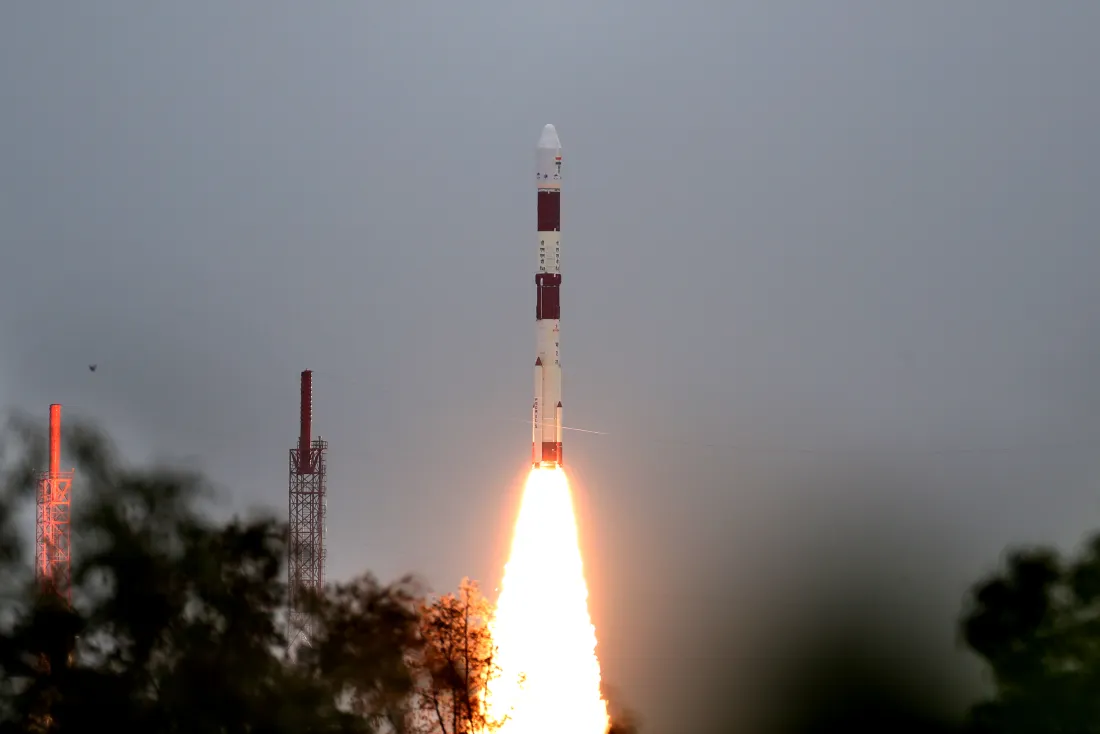
1993 · India
It made a nation of a billion people spacefaring on its own terms — and industrialised the smallsat rideshare years before anyone else.
India built this rocket to launch its own satellites instead of paying other countries. In 2017 it launched 104 satellites at once — a world record at the time.
For engineers: PSLV is deliberately unexotic: four alternating solid and liquid stages, no reuse, no novel propulsion. Its significance is operational and geopolitical rather than technological — it changed who can launch, not how launching works. Its cost advantage comes from Indian labour, domestic supply chains and currency, which is precisely why it is not transferable and did not move global launch prices the way Falcon 9 did.
44 m · 1,750 kg — 600 km sun-synchronous orbit (ISRO's own published figure)
PSLV-C49 launching EOS-01 from Sriharikota, 7 November 2020. Indian Space Research Organisation (GODL-India) · Government Open Data License – IndiaC49 flew in the PSLV-DL configuration, a close cousin of the XL shown on this chart.
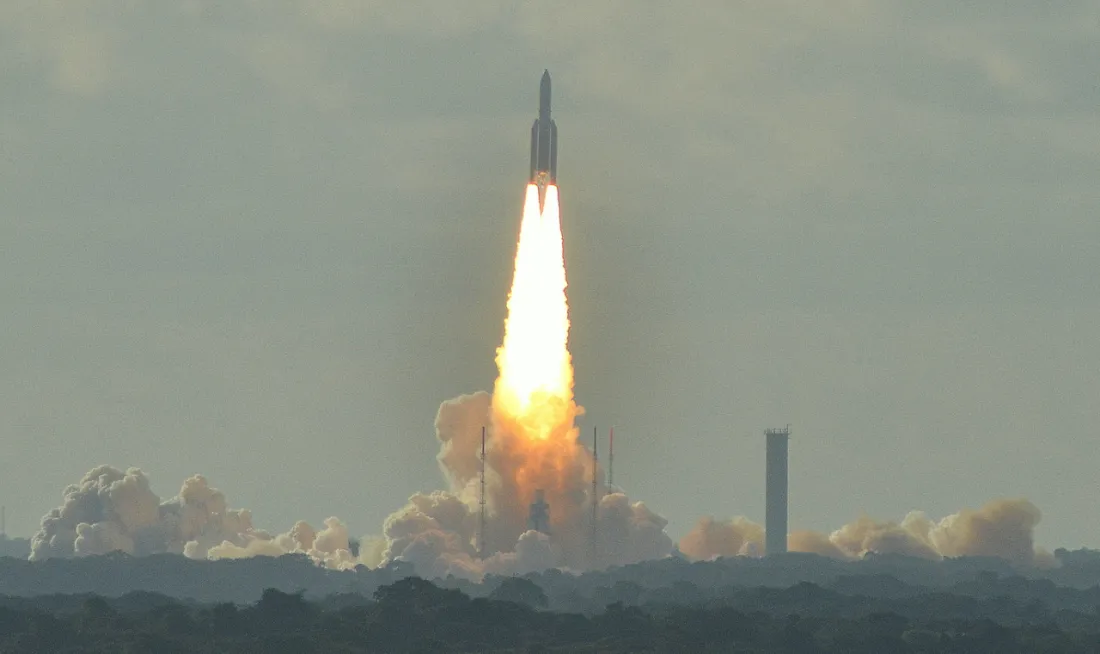
1996 · Europe
Its first flight blew up because of a line of software copied from an older rocket — then it became the most trusted rocket in the world and launched the James Webb Space Telescope.
Ariane 5's very first flight exploded — because of a tiny mistake in computer code copied from an older rocket. Europe fixed it, and it went on to fly 82 times in a row without failing, and to launch the biggest space telescope ever built.
For engineers: The bug was an unprotected 64-bit float to 16-bit signed int conversion on the horizontal-bias variable, inside an alignment routine that served no purpose whatsoever on Ariane 5 and was retained “for commonality reasons”. Seven variables were at risk; only four were protected — the failing one was left unprotected for CPU margin, justified by an assumption of physical impossibility that Ariane 5's five-times-faster acceleration invalidated. Redundancy was worthless: identical software on identical data is a common-mode failure. Reused code carries its original assumptions as invisible requirements.
53 m · 10,000 kg — geostationary transfer orbit — Ariane 5 is a GTO vehicle (ESA)
An Ariane 5 ECA lifting off from Kourou, French Guiana, August 2013. Guillaume Normand (Spotting973) · CC BY-SA 2.0
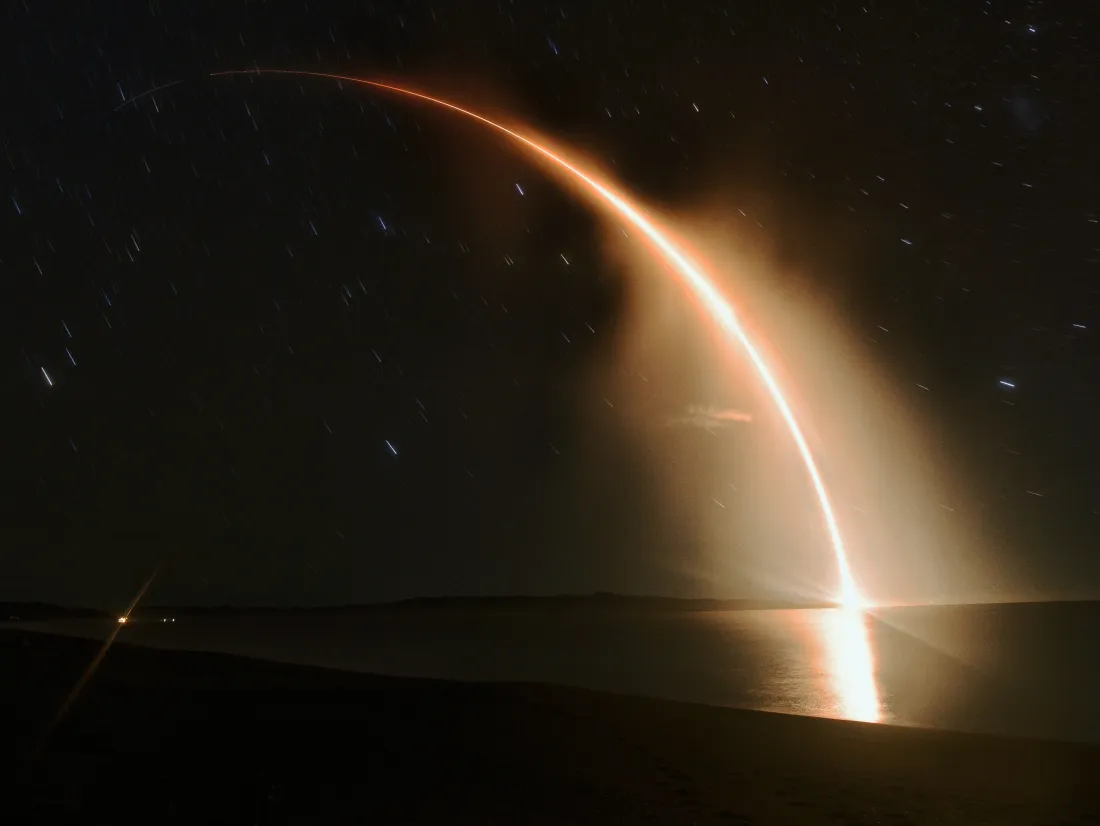
2017 · USA / New Zealand
It proved a rocket could be small, printed and battery-powered — and that not every satellite needs to wait for someone else's big rocket.
Electron is tiny — smaller than a Falcon 9's fins are tall. Its engines are 3D-printed, and its fuel pumps run on batteries, like a giant cordless drill.
For engineers: Electric pump-fed propulsion trades a gas generator, turbine and their plumbing for batteries and brushless motors — a mass penalty that only closes at small scale, which is exactly why nobody had done it and why it works here. An RD-170 equivalent would need on the order of 340 motors weighing ~25 tonnes, over 2.5× the engine itself. Rutherford is not a better answer than a turbopump; it is the right answer at Electron's size only.
18 m · 300 kg — LEO (Rocket Lab's published maximum)
Electron launching NASA's CAPSTONE from New Zealand, 28 June 2022, seen from the coast at Nuhaka. Yourong F. Wang (Vilfate) · CC BY-SA 4.0
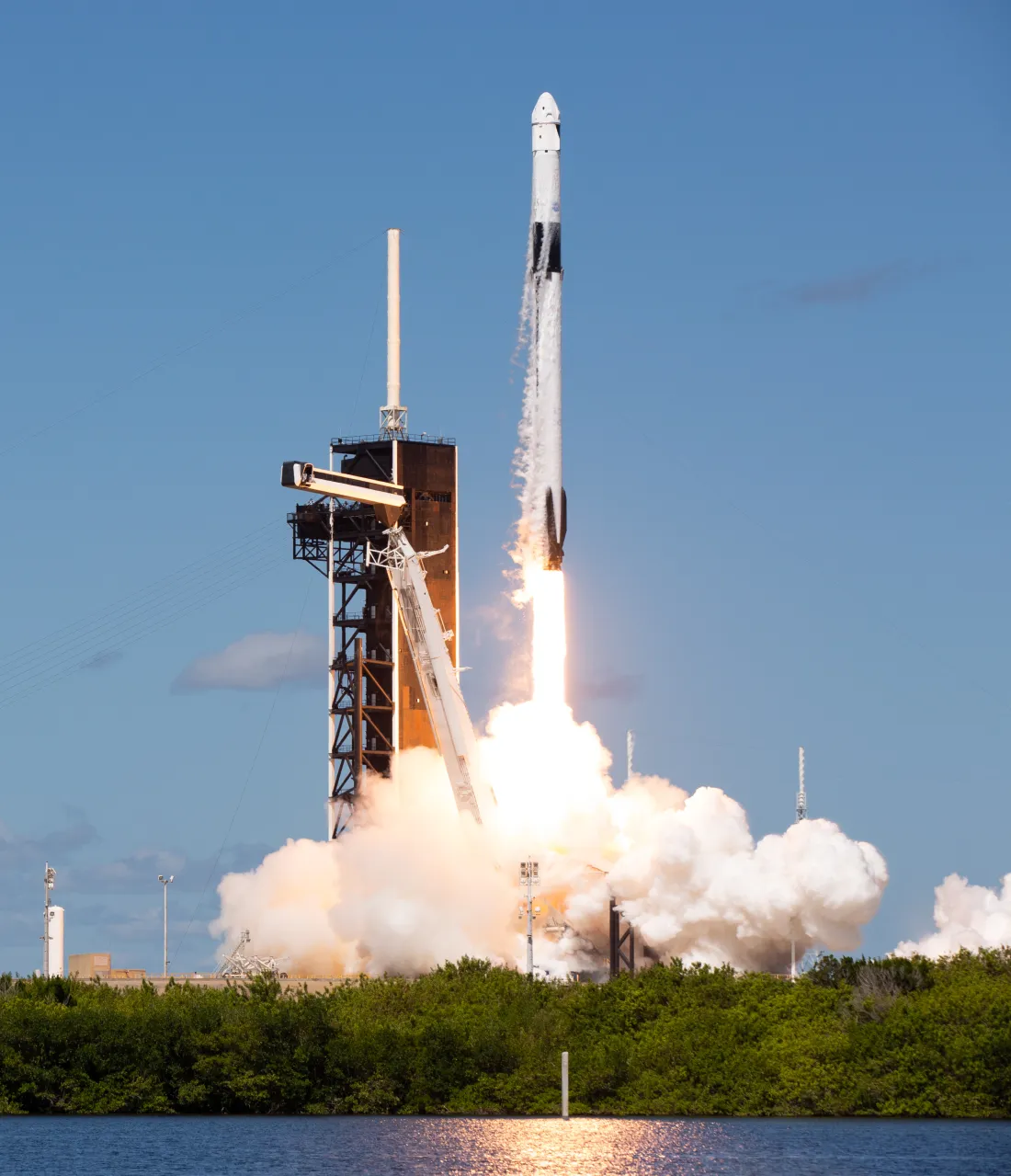
2018 · USA
It made rocket reuse routine — the same booster has now flown 36 times, and landing one stopped being news.
Falcon 9's bottom half flies back and lands upright, then goes again. One single booster has now flown 36 times. It's not a stunt any more — it's just Tuesday.
For engineers: Block 5 is the operations answer, not the landing answer — the landing was solved in 2015. Block 5 froze the design for human-rating and targeted rapid reflight: uprated Merlin 1Ds, titanium grid fins, and thermal protection built for reuse rather than survival. The honest asterisk is that the second stage is still thrown away every flight, so Falcon 9 is partially reusable and always has been.
70 m · 18,500 kg — LEO in reusable configuration (expendable is 22,000 kg)
A Falcon 9 Block 5 launching Crew-5 from LC-39A, 5 October 2022. NASA / Joel Kowsky · Public domain (NASA)
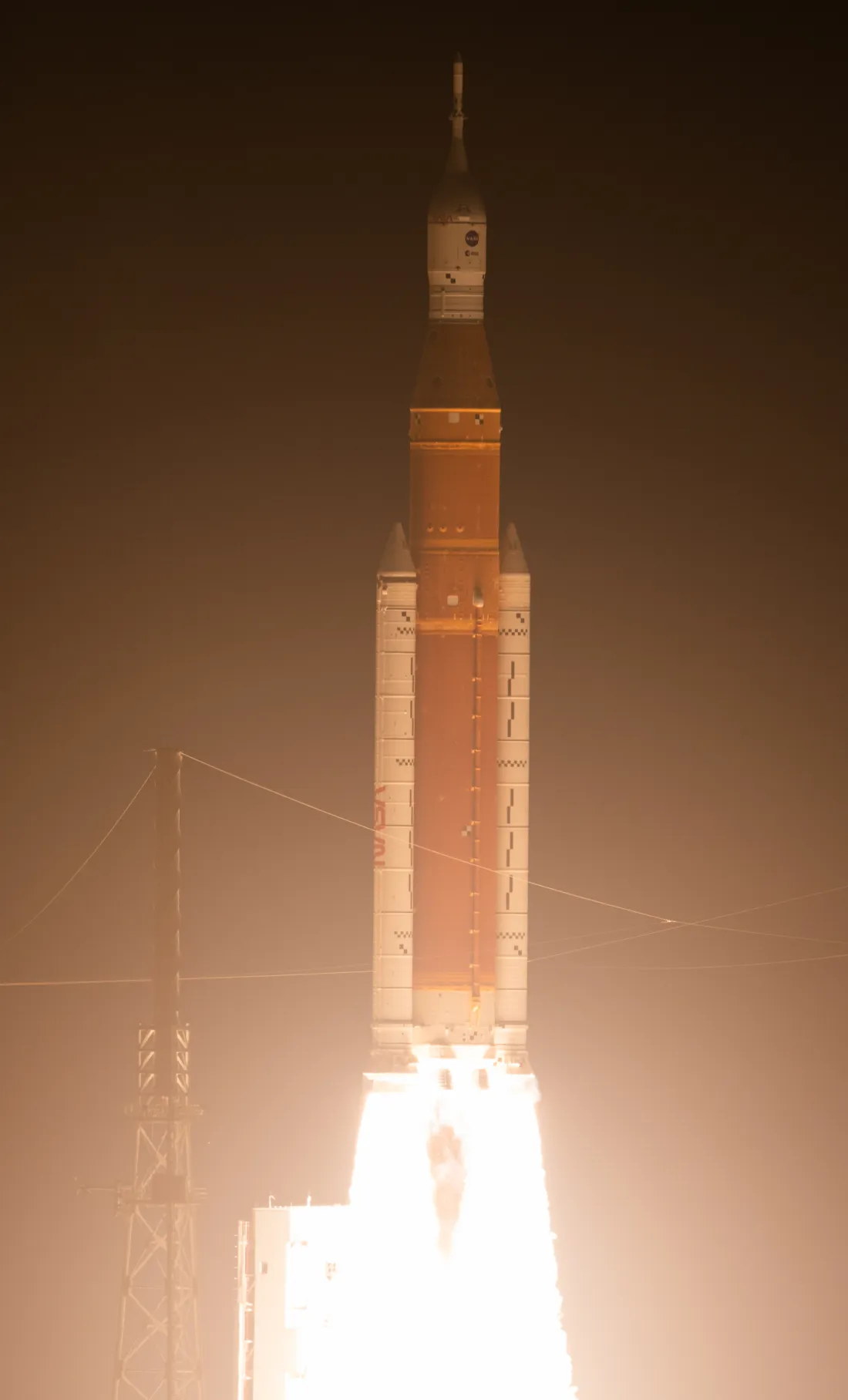
2022 · USA
It sent humans around the Moon for the first time in over 50 years — using Shuttle engines, on a rocket thrown away entirely, in the middle of the reusable era.
SLS took astronauts around the Moon in 2026 — the first people to go there in over 50 years. Its engines are actually old Space Shuttle engines… and they're thrown away into the ocean after one flight.
For engineers: SLS is a deliberate heritage vehicle — RS-25s, five-segment boosters, an 8.4 m core in Shuttle tooling — chosen to reduce development risk and preserve the Shuttle industrial base. That choice bought a rocket that worked on its first try and a cost structure with no path down. Expending flight-proven reusable engines is the clearest expression of the tension between political sustainability and economic sustainability on this whole timeline.
98 m · 27,000 kg — translunar injection — to the Moon, not to LEO (NASA)
SLS launching Artemis I from LC-39B, 16 November 2022, 1:47 a.m. EST. NASA / Joel Kowsky · Public domain (NASA)
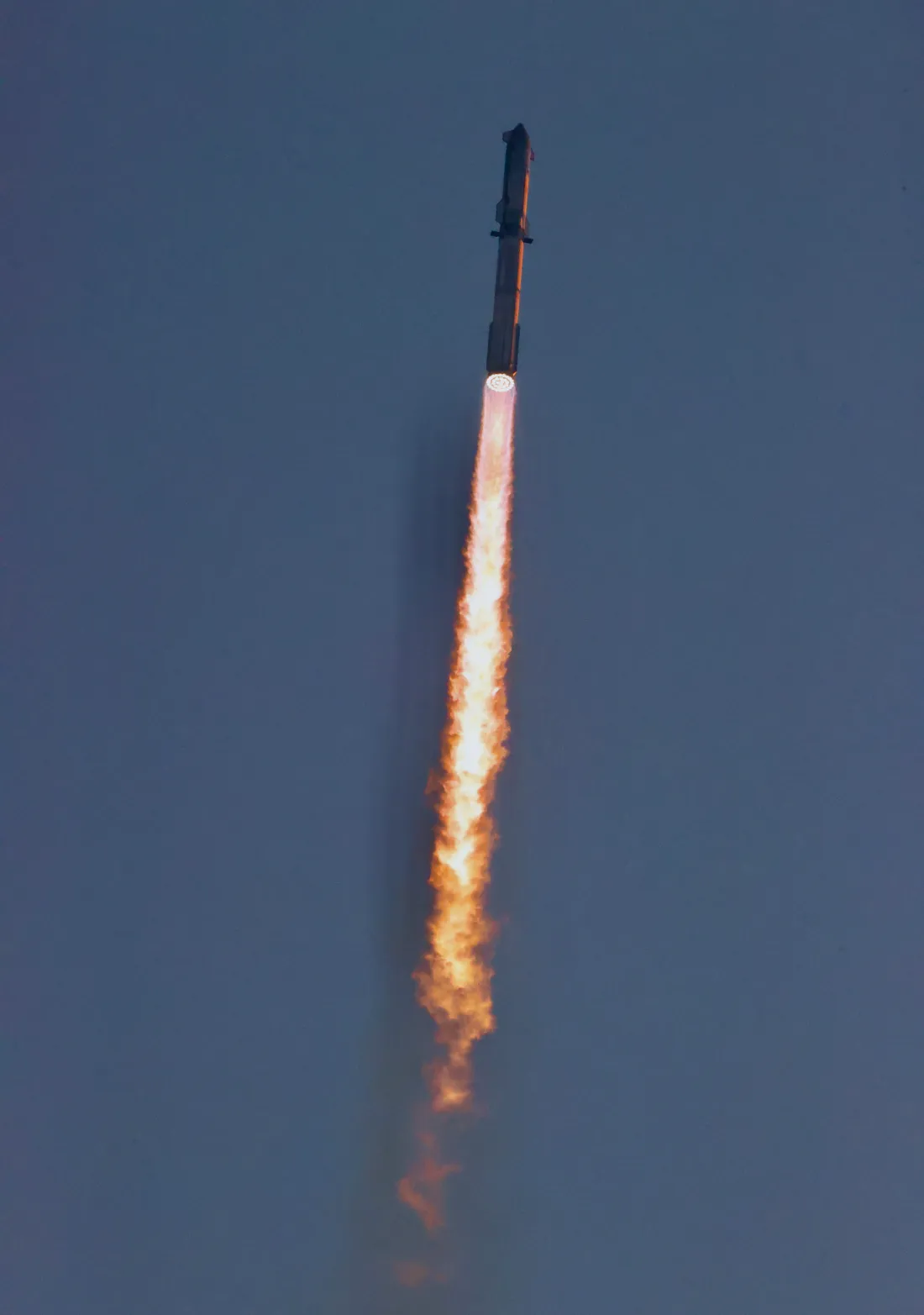
2023 · USA
It's the first rocket ever designed to be thrown away never — and, so far, the biggest thing humans have ever flown.
Starship is the biggest rocket ever built — taller than Saturn V. Its giant booster flies back and gets caught by the launch tower's arms, like a pair of chopsticks catching a falling pencil. It's still being tested, and it hasn't gone all the way to orbit yet.
For engineers: Catching the booster with the tower rather than landing it on legs removes landing-gear mass and moves the hardware to the ground, where it can be reused across flights — the same instinct as Falcon 9's droneship, taken further. The unsolved problem is the Ship: orbital-velocity reentry with a reusable heatshield, which is precisely where the Shuttle's economics died. Judge Starship on that, not on booster catches.
124.4 m · 100,000 kg — LEO — design target (never demonstrated)
The full stack — Starship on top of Super Heavy — during Flight 5, 13 October 2024. Steve Jurvetson · CC BY 2.0
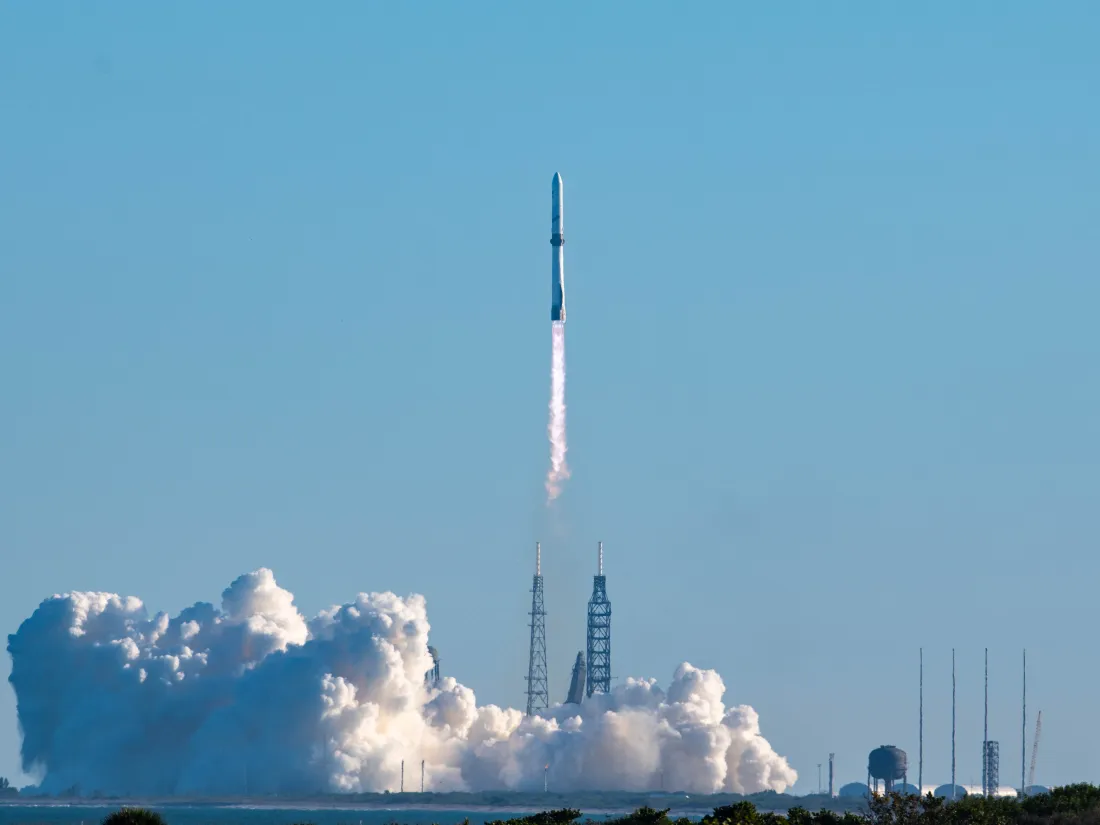
2025 · USA
It proved reusable heavy-lift wasn't a SpaceX monopoly — and then showed just how brutally hard it is to keep doing.
New Glenn is nearly as tall as Saturn V, and its booster lands on a ship in the ocean so it can fly again. It's only flown three times — and it's having a very hard time.
For engineers: New Glenn's 7 m fairing is a genuine differentiator — roughly twice the volume of 5 m-class fairings. Its trouble has been the upper stage and ground operations, not the landing: the third flight's engine underperformed on its second burn, and the fourth vehicle was lost with its fuelled second stage during a static fire. The contrast with Falcon 9's 600-plus flights is the whole lesson — capability is not cadence.
98 m · 45,000 kg — LEO (Blue Origin's published figure)
New Glenn launching NASA's ESCAPADE from SLC-36, 13 November 2025 — the flight that landed its booster. U.S. Space Force / Staff Sgt. Samuel Becker · Public domain (PD-USGov)
Several figures on this page deliberately disagree with the ones you’ll find elsewhere, because the popular ones measure different things and quietly flatter their rockets. Saturn V is listed at 118 tonnes, NASA’s own figure — the widely-quoted 140 tonnes counts the third stage and the Moon-bound fuel still inside it as payload. Falcon 9 is listed at 18,500 kg, its reusable figure — the usual 22,000 kg is what it lifts when you throw it away, which is a strange number to print beside the word “reusable”. And Starship’s 100 tonnes has never been demonstrated, so it’s drawn hollow: it has not yet reached orbit.
A chart that mixes those together isn’t a chart, it’s an argument. Each bar here states what it measures, and anything that hasn’t actually flown says so.
Assemble a Falcon 9 or a Saturn V part by part — then take it to orbit yourself.
Timeline covers 1942–2026. We stop at today: everything past it is announced, not achieved.