Time Machine
You have arrived · The New Space Age
Tianzhou 10 cargo resupply launches to Tiangong
May 11, 2026CNSA / CMSA
China News Service (中国新闻社), CC BY 4.0
The world that day
8.1 billion
People on Earth
3
Nations to launch a human
12
Humans to walk on the Moon
5,500
Known worlds beyond the Sun
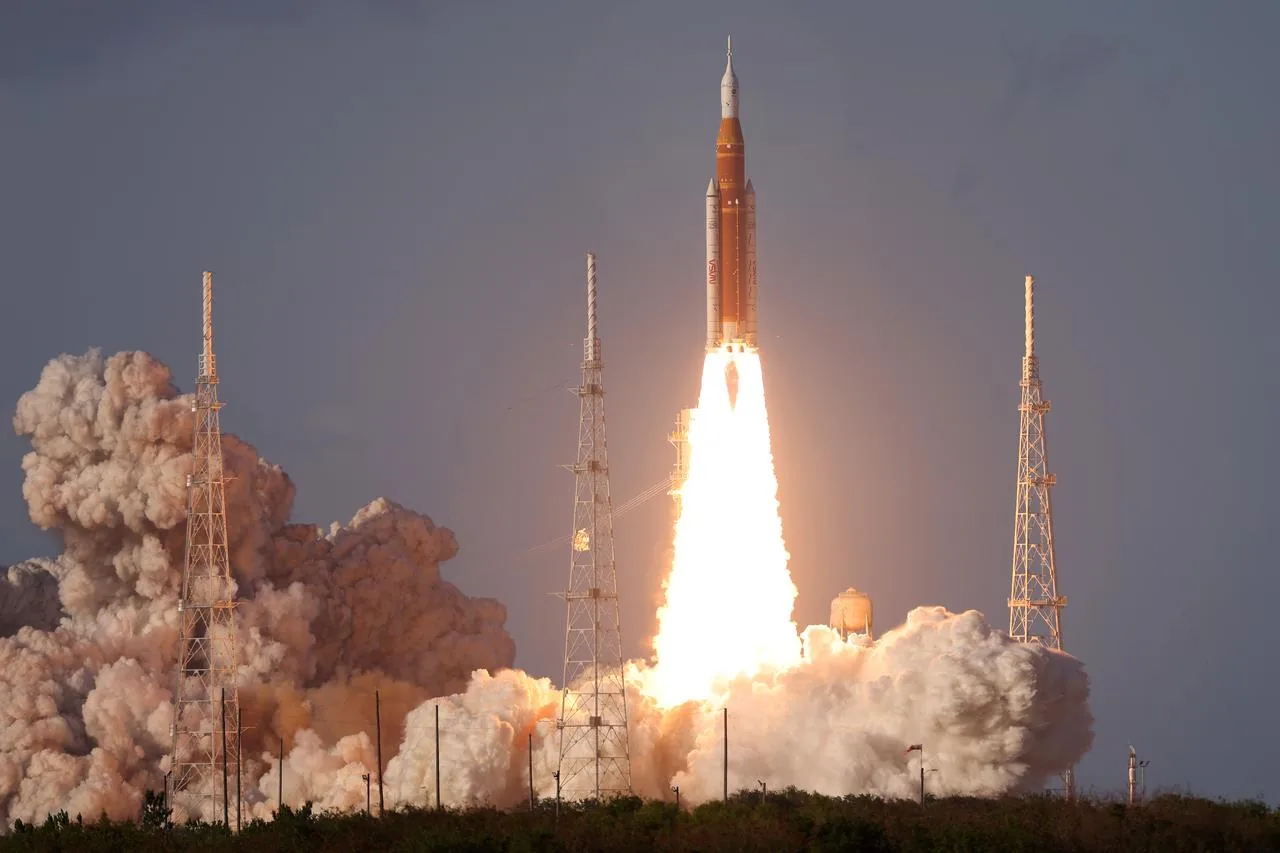
At 8:14 a.m. on 11 May 2026, a Long March 7 lifted off through the humid morning air of Wenchang, the seaside spaceport on Hainan island, hauling China's version of a grocery run. Tianzhou 10 carried about 6.2 tonnes of cargo in more than 220 packages: food and consumables for the crew, scientific experiment payloads, spare parts for station systems, a new treadmill, and one complete extravehicular spacesuit, the bulky armor that makes spacewalks possible.
The delivery was nearly same-day. At 1:11 p.m. Beijing time, less than five hours after liftoff, the freighter docked itself to the aft port of the Tianhe core module. Roughly 700 kilograms of propellant in its tanks would be pumped across to keep the station boosted against atmospheric drag. It was the 641st flight of the Long March rocket family and the fifth cargo mission since Tiangong entered its application and development phase, the workhorse rhythm running beneath every headline the station makes.
The timing told the larger story. Aboard Tiangong, the Shenzhou 21 crew was in the final weeks of what would become a record 210-day expedition, an unplanned marathon caused by the debris strike that had grounded Shenzhou 20 the previous autumn. Tianzhou 10's manifest was packed for the future, tailored to the Shenzhou 23 crew that would launch two weeks later, on 25 May, and to Shenzhou 24 beyond them. After a winter of emergencies, the quiet arrival of a fully loaded freighter was Chinese spaceflight's way of declaring the situation back to normal.
By the numbers
- Launch
- 11 May 2026, 00:14 UTC (08:14 Beijing)
- Rocket
- Long March 7 (Y11)
- Launch site
- Wenchang, Hainan
- Cargo
- ≈6.2 tonnes, 220+ items
- Docking
- 11 May 2026, 05:11 UTC, Tianhe aft port
- Long March flight number
- 641st
Why it mattered
Tianzhou 10 mattered precisely because nothing about it was dramatic. After a winter in which debris damage forced China's first emergency launch and stretched a crew to a record 210 days, a routine, precisely timed cargo flight was the proof that Tiangong's logistics chain had fully absorbed the disruption. The mission staged supplies for two future crews at once, kept the station fueled, and sustained the launch cadence on which a permanent human presence depends. Routine resupply is the quiet foundation of every space station, and this flight restored it.
- The manifest included one complete extravehicular spacesuit and a new treadmill for the crew.
- About 700 kilograms of the load was propellant for refueling the station against orbital decay.
- Door-to-door delivery took under five hours, from a beachside Hainan pad to Tianhe's aft docking port.
- It was the 641st launch of the Long March rocket family.
- The cargo was packed for crews not yet in space: the Shenzhou 23 astronauts launched two weeks later, with supplies for Shenzhou 24 already waiting on orbit.
Keep travelling