There is no gentle way to say this: Russia's return to the Moon did not go as planned. After nearly five decades without a lunar mission, Roscosmos launched Luna-25 in August 2023 with high hopes of reasserting Russia as a major player in lunar exploration. Instead, the spacecraft crashed into the Moon's surface, marking one of the most painful setbacks in Russia's modern space history. Understanding what happened -- and what it means for Russia's space future -- requires honest analysis rather than diplomatic euphemisms.
Luna-25: What Went Wrong
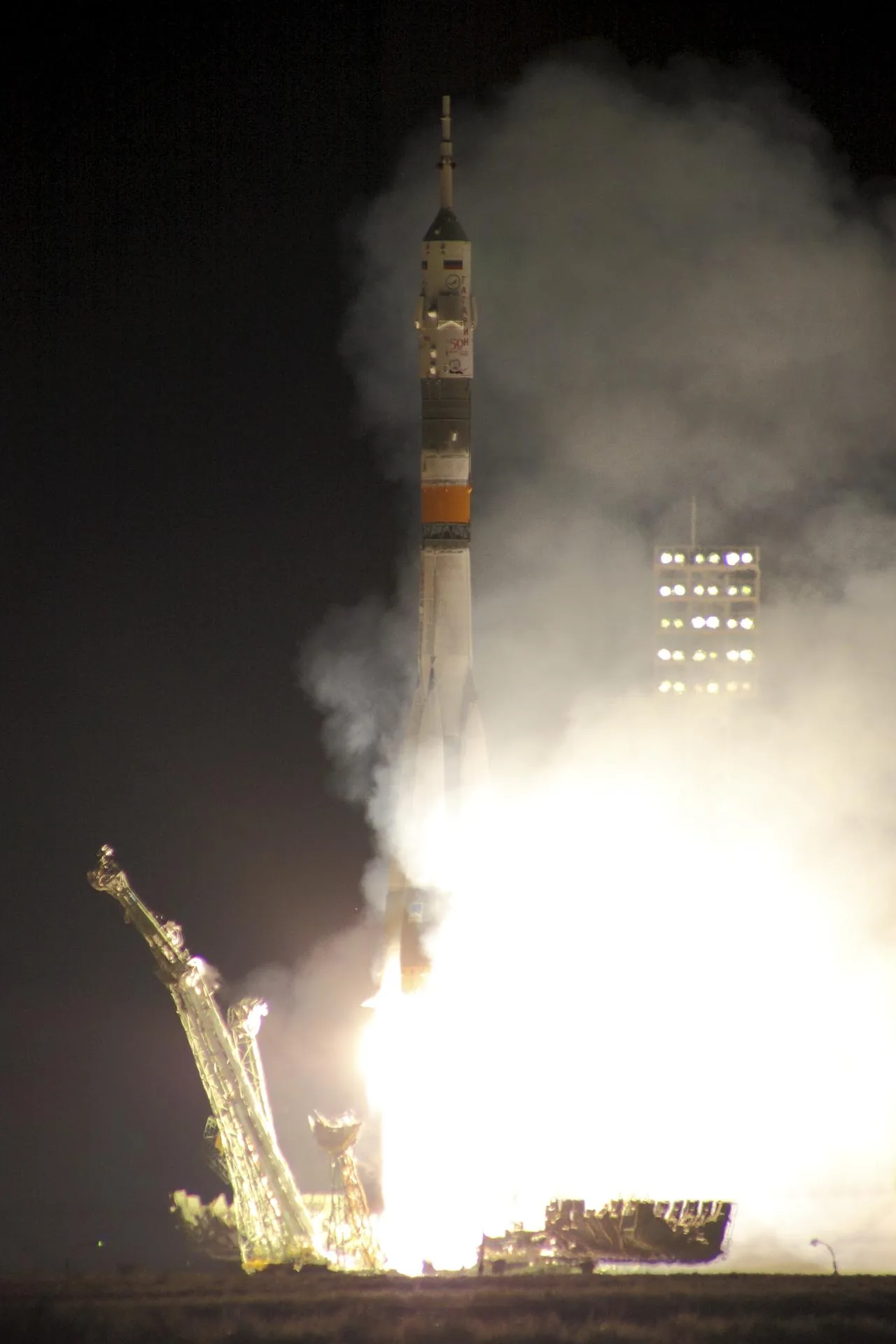
Luna-25 launched from the Vostochny Cosmodrome on August 10, 2023, aboard a Soyuz 2.1b rocket. The mission plan was straightforward by historical standards: travel to the Moon, enter orbit, and land near the south pole's Boguslawsky crater to study the lunar soil and search for water ice. Russia had not attempted a lunar landing since Luna-24 in 1976, and this mission was meant to demonstrate that the capability had been rebuilt.
The spacecraft reached lunar orbit successfully and began preparations for landing. But on August 19, during a critical pre-landing orbital adjustment burn, the engine fired for approximately 127 seconds instead of the planned 84 seconds. The spacecraft entered an uncontrolled trajectory and slammed into the Moon's surface, creating a new crater roughly 10 meters wide on the rim of Pontecoulant G crater.
Roscosmos attributed the failure to an onboard computer malfunction in the BIUS-L acceleration measurement unit, which caused the engine to continue firing beyond its intended duration. An investigation commission was formed, but the bottom line was stark: decades of institutional knowledge about lunar operations had atrophied, and the systems built to compensate were not robust enough.
The timing made the failure even more conspicuous. India's Chandrayaan-3 mission, which had launched weeks before Luna-25, successfully landed on the Moon's south pole on August 23, 2023 -- just four days after Luna-25's crash. India accomplished what Russia could not, and at a fraction of the cost. For a nation whose space program once led the world, it was a humbling moment.
The State of Roscosmos in 2025
To understand Luna-25's failure, you need to understand the broader context of Russia's space program. Roscosmos is not the organization it was even a decade ago, let alone during the Soviet era's golden age.
Sanctions and Technology Access
Following Russia's invasion of Ukraine in February 2022, Western nations imposed sweeping sanctions that significantly impacted Russia's access to advanced electronics, sensors, and other dual-use technologies. The space industry was not explicitly targeted in many sanctions packages, but the ripple effects have been devastating. Modern spacecraft rely on components -- radiation-hardened processors, precision gyroscopes, advanced sensors -- that Russia either imported from the West or manufactured using Western equipment. Replacing these supply chains with domestic alternatives or sourcing from non-Western suppliers has proven extremely difficult.
The sanctions also ended most of Russia's commercial launch partnerships with Western satellite operators. Arianespace had previously used Russian Soyuz rockets from French Guiana, but that cooperation was terminated. OneWeb, which had been launching its satellites on Soyuz, had to find alternative providers. The loss of commercial revenue further strained Roscosmos's already tight budget.
Budget Constraints
Russia's federal space budget has been declining in real terms for years. In 2024, Roscosmos received approximately 250 billion rubles (roughly $2.7 billion at current exchange rates), a fraction of NASA's budget and significantly less than what China spends on its space program. With inflation, the invasion of Ukraine consuming enormous government resources, and competing domestic priorities, there is little prospect of a meaningful budget increase in the near term.
For comparison, NASA's budget for fiscal year 2024 was approximately $25.4 billion. Even accounting for purchasing power differences, Roscosmos is working with dramatically fewer resources. That financial reality constrains everything from mission frequency to technology development to talent retention.
Brain Drain
Perhaps the most concerning long-term trend is the loss of experienced personnel. Russia's space industry has struggled to compete with other sectors for engineering talent, and the post-2022 emigration wave saw significant numbers of skilled technical workers leave the country. Young engineers who might have entered the space sector are often drawn to better-paying opportunities elsewhere. Rebuilding institutional knowledge -- the kind of deep, mission-specific expertise that comes from actually flying hardware -- is not something that happens quickly.
Luna-26 and Luna-27: The Path Forward
Despite the Luna-25 failure, Roscosmos has not abandoned its lunar ambitions. The next planned mission is Luna-26, a lunar orbital spacecraft designed to map the Moon's surface and characterize its gravitational and magnetic fields from orbit. Rather than attempting another risky landing immediately, the orbital mission represents a more cautious step. However, Luna-26's timeline has slipped repeatedly and is currently not expected before 2027 at the earliest.
Luna-27, which would attempt a south pole landing with more advanced instruments and a European-built drill (developed before the cooperation was suspended), has been pushed even further out. ESA formally ended its participation in Luna-27 following the Ukraine invasion, forcing Roscosmos to either develop replacement instruments domestically or find new partners. China has been discussed as a potential collaborator, but no formal agreements for Luna-27 have been announced.
The realistic outlook is that Russia will not attempt another lunar landing until the late 2020s at the earliest. Each delay compounds the challenge, as teams lose momentum and the rest of the world -- particularly China and the United States -- pulls further ahead.
The ISS: An Era Ending
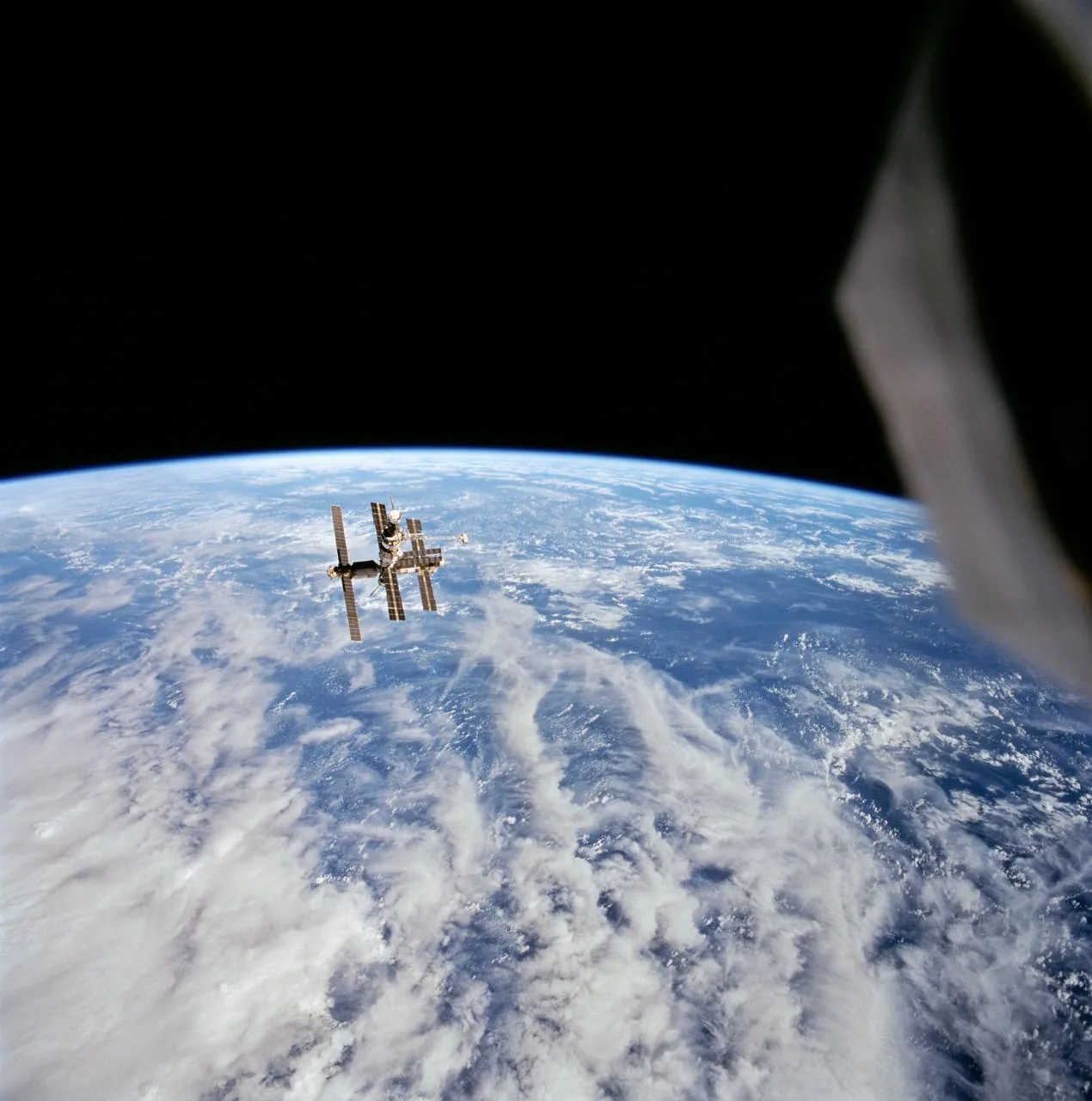
One area where Russia-U.S. space cooperation has remarkably persisted is the International Space Station. Despite the geopolitical rupture, American astronauts continue to fly on Russian Soyuz spacecraft and Russian cosmonauts continue to fly on SpaceX Crew Dragon missions to the ISS. This cross-flight arrangement, formalized in a seat-swap agreement, serves the practical purpose of ensuring both segments of the station always have at least one crew member who can operate their respective systems.
However, this cooperation has an expiration date. Russia has committed to the ISS through 2028, while NASA and its Western partners plan to continue operating the station through 2030. After that, the ISS will be deorbited using a specially built vehicle (NASA contracted SpaceX for this task). Russia has announced plans for the Russian Orbital Service Station (ROSS), a new national space station, but development appears to be in early stages and the timeline is uncertain.
The end of ISS cooperation will mark the close of one of the most remarkable chapters in international space collaboration -- a partnership that survived the end of the Cold War, multiple political crises, and even the current conflict. Whatever comes next, the ISS stands as proof that space can bring nations together even when everything else drives them apart.
The China Factor
Increasingly, Russia's space future may be tied to China. The two nations signed an agreement in 2021 to jointly develop the International Lunar Research Station (ILRS), an ambitious plan for a permanent base at the Moon's south pole. China is clearly the senior partner in this arrangement, bringing proven lunar landing capability, a robust budget, and a strong track record of meeting its space objectives.
For Russia, the partnership offers a path to lunar participation that it may not be able to achieve independently. For China, it provides additional international legitimacy and access to Russia's deep heritage in life support systems, EVA technology, and space station operations. Whether this partnership will deliver results remains to be seen, but it represents Russia's most viable path to the lunar surface.
An Honest Assessment
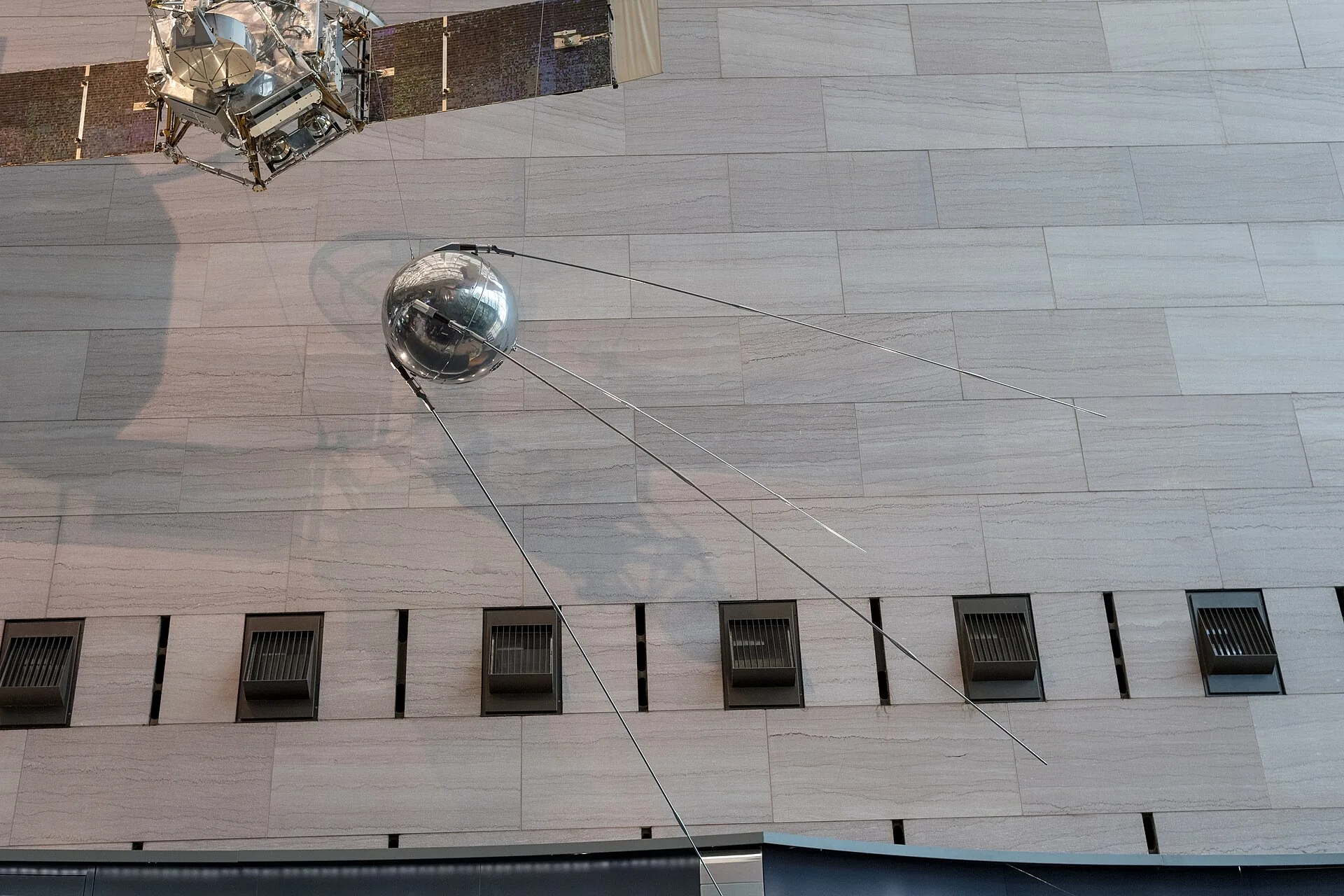
Writing about Russia's space program in 2025 requires balancing respect for a genuinely extraordinary legacy with honesty about present realities. The Soviet Union put the first satellite, the first animal, the first human, and the first space station into orbit. That legacy is permanent and magnificent. Russian Soyuz rockets remain among the most reliable launch vehicles ever built, with a flight heritage spanning decades.
But legacy alone does not put spacecraft on the Moon. Luna-25's failure was not an isolated incident -- it was a symptom of systemic challenges including underfunding, loss of expertise, technological isolation, and the enormous strain that sanctions and conflict have placed on the entire Russian industrial base.
The space community does not benefit from pretending these problems do not exist. Competition drives progress, and a capable Russian space program would be good for everyone. But capability must be rebuilt through sustained investment, honest engineering, and the kind of institutional patience that allows programs to learn from failure. Whether Russia's current circumstances permit that rebuilding is one of the open questions of the decade.
What I hope for -- genuinely -- is that Russia finds a way to fly again. The Moon is big enough for everyone, and the scientific questions waiting there do not care about geopolitics. But hope alone will not get a spacecraft to the surface. That takes money, talent, technology, and time. Right now, all four are in short supply.