All Astronauts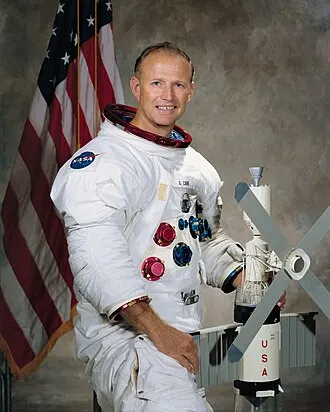 VETERANIn MemoriamNASA
VETERANIn MemoriamNASANASA·🇺🇸 United States·Born 1932
Gerald Carr
Commanded Skylab 4, the final and longest Skylab mission — 84 days, a US endurance record that stood for over two decades.
Days in Space
1
Missions
3
EVAs
16h
EVA Time
Biography
Commanded Skylab 4, the final and longest Skylab mission — 84 days, a US endurance record that stood for over two decades. He died in 2020.
Before NASAU.S. Marine Corps aviator who flew fighters including the F-9F Cougar, F-6A Skyray, and F-8 Crusader, logging more than 8,000 flying hours before NASA selected him in 1966.
Life & career
Gerald Paul "Jerry" Carr was born on August 22, 1932, and came to spaceflight through the U.S. Marine Corps. A naval aviator, he flew fighters including the F-9F Cougar, the F-6A Skyray, and the F-8 Crusader, accumulating more than 8,000 flying hours, and earned engineering degrees, including a master's in aeronautical engineering from Princeton. NASA selected him in April 1966 as one of nineteen new astronauts. Carr never flew an Apollo lunar mission; instead he was assigned to America's first space station, where his single spaceflight would become one of the most consequential long-duration missions of the era.
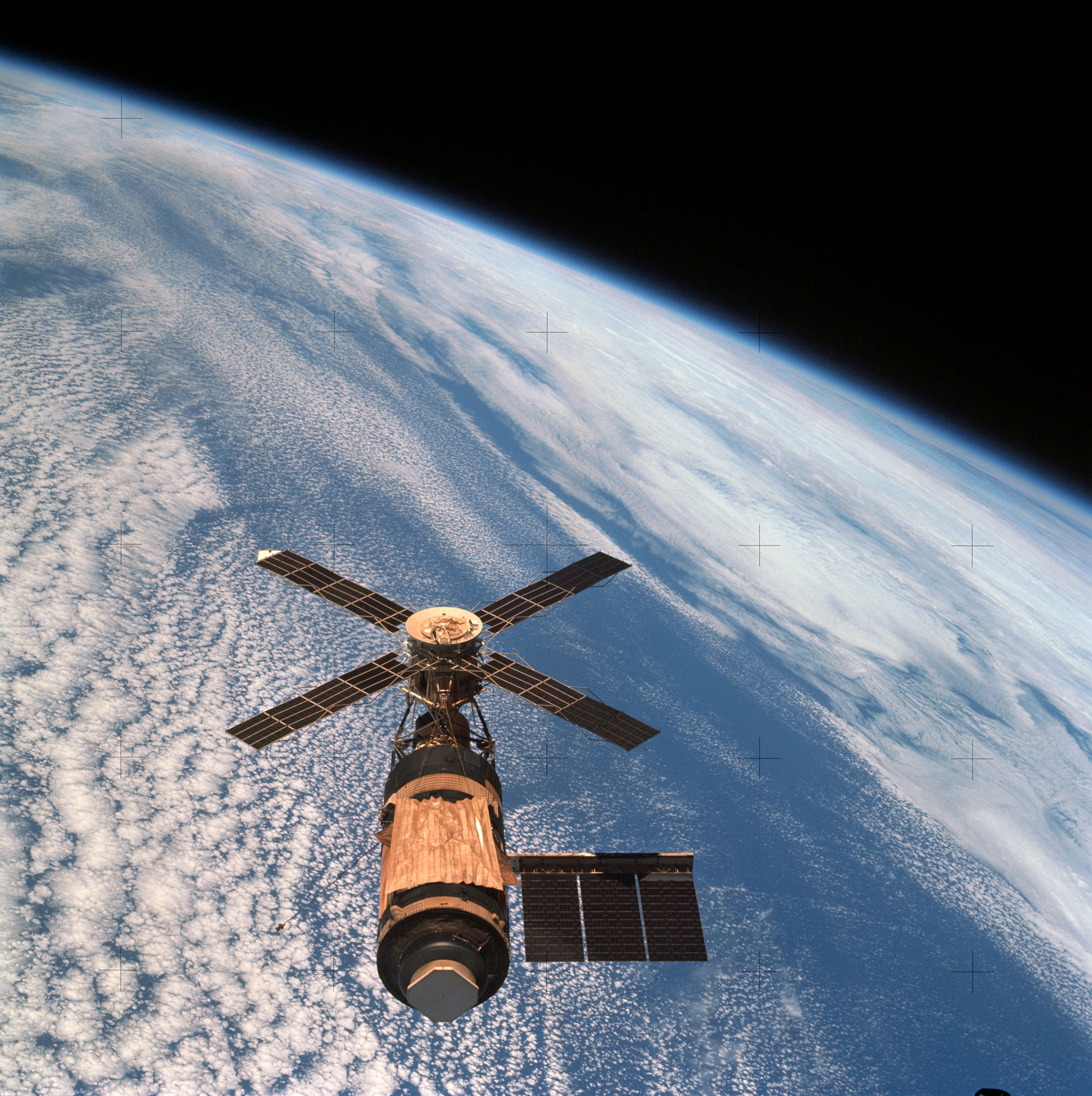
Carr commanded Skylab 4, the third and final crewed visit to the Skylab orbital workshop, launching on November 16, 1973, with science pilot Edward Gibson and pilot William Pogue, all three of them rookies. The crew spent 84 days aboard the station, a world endurance record that would stand until the Shuttle-Mir program more than two decades later, observing the newly discovered Comet Kohoutek, running a demanding program of solar and Earth-observation science, and conducting three spacewalks totaling nearly sixteen hours. The mission is often remembered for a so-called "strike" or "mutiny," but the reality was more human: overwhelmed by an overloaded schedule set with little slack, the crew fell behind, tensions built with the ground, and after frank discussion they took a needed day of rest, at one point letting the radio go quiet to look out the window. The episode led NASA to fundamentally rethink how it plans crew work-and-rest cycles on long missions, a lesson that still shapes life aboard the International Space Station.
After leaving NASA, Carr worked in the aerospace industry and in 1984 founded CAMUS, Inc., which provided human-factors and systems-integration expertise and contributed to the crew-systems design of the International Space Station, drawing directly on the hard-won lessons of Skylab. In later years he stepped back from engineering to collaborate with his wife, the artist and sculptor Pat Musick, on large-scale fine-art works, serving, as he described it, as her studio assistant. Gerald Carr died on August 26, 2020, at the age of eighty-eight. He is remembered as the commander of Skylab's marathon final flight, whose crew's honest struggle with the limits of human endurance in orbit made every long-duration mission that followed more sustainable.
Mission Timeline
- Commander
Apollo CSM / Saturn IB
Skylab 4
Launch: Nov 16, 1973Landing: Feb 8, 1974Duration: 84 days- 84-day flight, the longest US mission until Shuttle-Mir
Beyond the Mission
Hobbies & Interests
Boy Scoutssculpting
Languages
English
Fun fact
Carr commanded the record-setting Skylab 4 mission of 84 days in 1973–74, during which his crew pushed back against relentless ground-control scheduling by negotiating a day off — an unscheduled 'attitude adjustment' that permanently changed how NASA manages crew work-rest cycles on long-duration missions.
More Astronauts
Other space travelers from NASA