Image: NASA
Skylab 4
Mission Profile
| Launch date | 1973-11-16 |
|---|---|
| Launch site | Kennedy Space Center, Launch Complex 39B |
| Launch vehicle | Saturn IB (SA-208) |
| Spacecraft | Apollo CSM-118 |
| Target | Low Earth Orbit |
| Type | Crewed |
| End date | 1974-02-08 |
| Recovery | USS New Orleans, Pacific Ocean |
| Duration | 84 days, 1 hour, 15 minutes, 30 seconds |
Overview
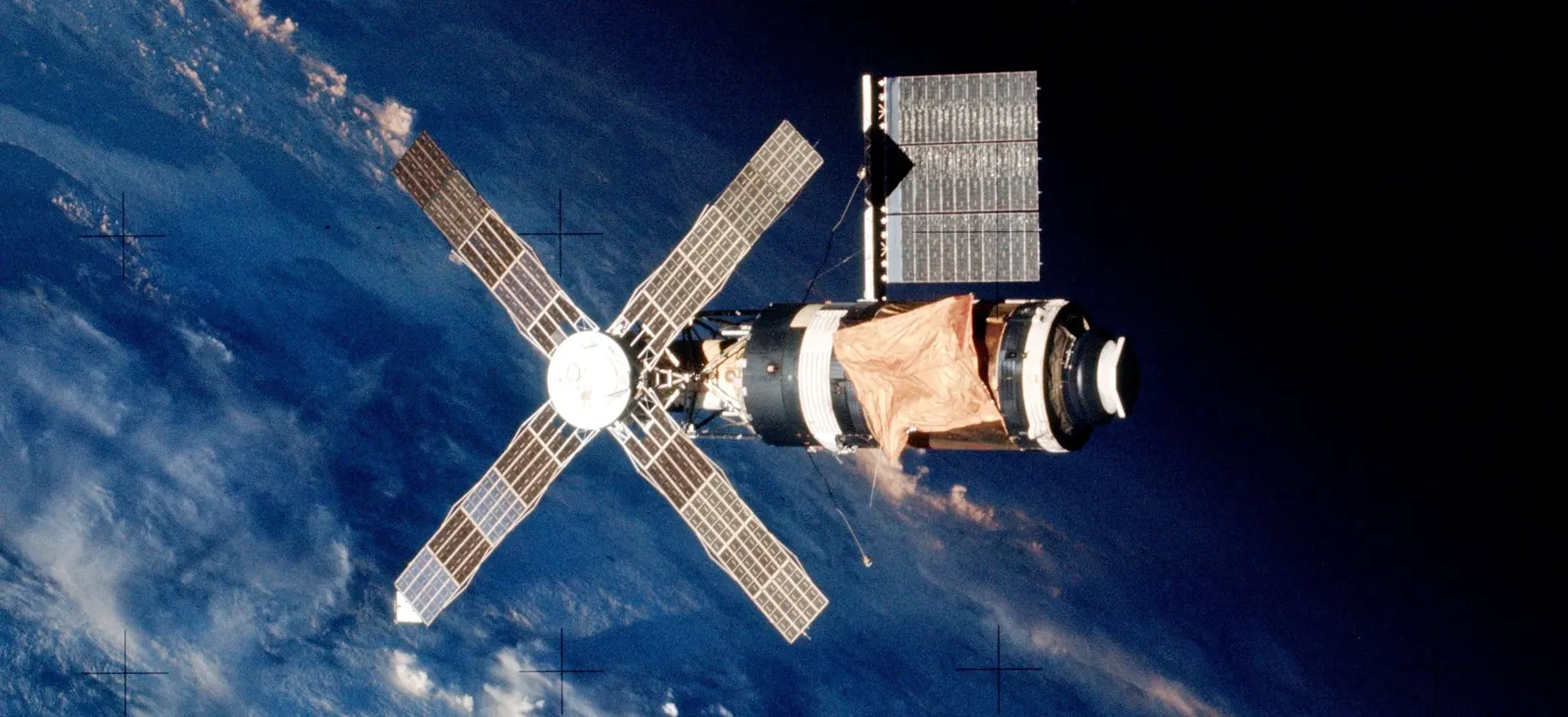
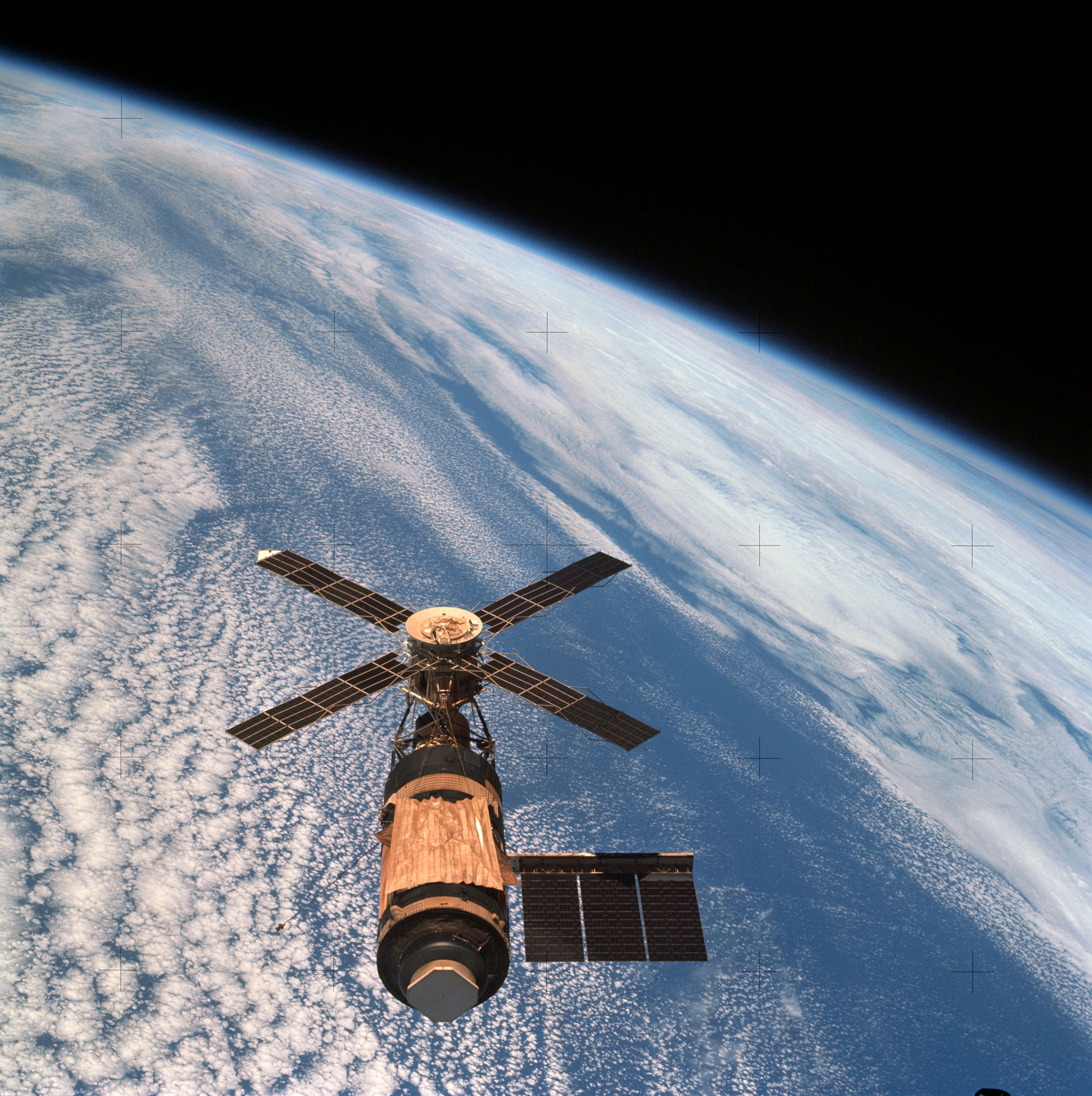
Skylab 4 closed out America's first space station with the longest spaceflight yet attempted — 84 days by an all-rookie crew. Gerald Carr, Edward Gibson and William Pogue launched on 16 November 1973 and docked with Skylab that evening. Their flight became a landmark in understanding the human side of long-duration missions: ground planners initially packed the timeline so densely that the exhausted crew fell behind, and a frank mid-mission discussion with Houston led to a restructured, more humane schedule — lessons still cited in ISS operations planning. The science return was immense. Four spacewalks were conducted, including a seven-hour excursion by Carr and Pogue on Christmas Day 1973 to photograph Comet Kohoutek, and from the Apollo Telescope Mount console Gibson became the first observer to catch the birth of a solar flare. The crew logged 1,214 orbits and roughly 55.5 million kilometres while amassing solar physics, Earth-resources and biomedical data that anchored NASA's long-duration medical baseline for two decades. They splashed down in the Pacific on 8 February 1974 and were recovered by USS New Orleans. No crew ever visited Skylab again; the station reentered over Australia and the Indian Ocean in July 1979.
Crew
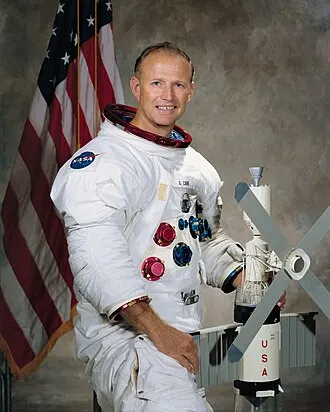
Gerald Carr
Commander
Only spaceflight; commanded the longest mission of its era on his first flight
Edward G. Gibson
Science Pilot
Solar physicist; first to observe the onset of a solar flare from space
William R. Pogue
Pilot
Former Thunderbirds pilot; co-author of influential post-flight workload findings
Key Milestones
1973-11-16
Launch on Saturn IB SA-208 from LC-39B; docking with Skylab the same day
1973-11-22
First EVA: Pogue and Gibson spend 6.5 hours outside, repairing an antenna and loading telescope film
1973-12-25
Seven-hour Christmas Day EVA by Carr and Pogue to photograph Comet Kohoutek
1974-02-03
Final Skylab spacewalk retrieves the last Apollo Telescope Mount film
1974-02-08
Splashdown after a world-record 84 days; Skylab is left unoccupied
Key Achievements
Set a world spaceflight endurance record of 84 days — the longest American flight until Shuttle–Mir in 1995
Performed the first spacewalk on Christmas Day, photographing Comet Kohoutek
Captured the first observation of a solar flare's birth from space via the Apollo Telescope Mount
Completed 1,214 orbits and ~55.5 million km on the final Skylab crewed mission
Surfaced workload-management lessons that reshaped how mission control schedules long-duration crews
Legacy & Significance
Skylab 4 was the high-water mark of America's first station era: its 84-day record stood worldwide until Yuri Romanenko and Georgi Grechko's 96-day Salyut 6 expedition in 1977–78, and as a US record for over twenty years. Just as enduring were its human lessons — the crew's candid renegotiation of an overloaded timeline became a case study in crew autonomy and workload design that still informs ISS and future deep-space mission planning.