All Astronauts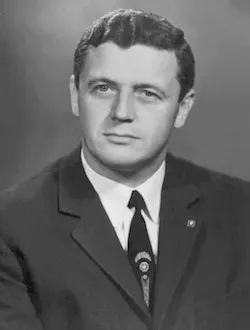 VETERANIn MemoriamROS
VETERANIn MemoriamROSRoscosmos·🇷🇺 Russia·Born 1935
Vladislav Volkov
Flight engineer on Soyuz 7 and Soyuz 11.
Hours in Space
2
Missions
0
EVAs
—
EVA Time
Biography
Flight engineer on Soyuz 7 and Soyuz 11. Lived aboard Salyut 1 with the first space station crew, and died with his crewmates during the Soyuz 11 reentry in 1971.
Before NASAAviation engineer at Sergei Korolev's OKB-1 design bureau from 1958, where he contributed to the development of the Vostok and Voskhod spacecraft after graduating from the Moscow Aviation Institute in 1959.
Life & career
Vladislav Nikolayevich Volkov was born on 23 November 1935 in Moscow, into a family already connected to the emerging Soviet aerospace industry. He pursued that same calling, graduating from the Moscow Aviation Institute in 1959, having joined Sergei Korolev's famed OKB-1 design bureau in 1958, where he worked as an aviation engineer. In that role he contributed to the development of the Vostok and Voskhod spacecraft that carried the earliest cosmonauts into orbit — meaning that Volkov helped build the very kind of machines he would one day fly. Selected as a cosmonaut in 1966, he brought to the corps not the background of a fighter pilot but that of a hands-on engineer intimately familiar with spacecraft systems, an increasingly valuable profile as missions grew more complex. Away from his work he was a noted sportsman, becoming the first chairman of the Soviet Society of Sports Acrobatics in 1970.
Volkov flew twice, both times as flight engineer. His first mission, Soyuz 7, launched on 12 October 1969 as part of an ambitious three-spacecraft group flight — Soyuz 6, 7, and 8 aloft simultaneously — an unprecedented orbital exercise. Soyuz 7 was meant to rendezvous and dock with Soyuz 8 while Soyuz 6 observed and carried out the first welding experiments in the vacuum of space, but a failure of the rendezvous electronics across the group meant the planned docking never took place. That roughly five-day flight nonetheless earned Volkov his first designation as Hero of the Soviet Union. His second mission was Soyuz 11, launched on 6 June 1971 under commander Georgi Dobrovolsky and alongside test engineer Viktor Patsayev. Docking with Salyut 1, the crew became the first ever to inhabit a space station, spending some 23 days in orbit on scientific work before beginning their return. During re-entry on 30 June 1971, a ventilation valve opened prematurely and depressurized the unsuited crew's cabin, and Volkov died with his two companions — the only human fatalities ever to occur in space.
Volkov's death, coming less than two years after his triumphant first flight, made him one of the most mourned figures of the Soviet space program. He was decorated a second time as Hero of the Soviet Union, this time posthumously, and awarded the Order of Lenin and the title Pilot-Cosmonaut of the USSR. His name lives on across the map of the cosmos — a lunar crater on the Moon's far side and the minor planet 1790 Volkov bear his name — and in more earthbound tributes, including streets, schools, and even a tomato variety christened 'Cosmonaut Volkov' by an admiring plant scientist who had been his friend. As both a builder of spacecraft and a two-flight cosmonaut who helped open the era of orbital stations, Volkov occupies a distinctive place in spaceflight history: an engineer who lived long enough to fly the kind of hardware he had a hand in creating, and who gave his life at the dawn of humanity's permanent presence in orbit.
Mission Timeline
- Flight Engineer
Soyuz 7
Soyuz 7
Launch: Oct 12, 1969Landing: Oct 17, 1969Duration: 5 days- Part of the first triple group flight of crewed spacecraft
- Flight Engineer
Soyuz 11
Soyuz 11 / Salyut 1
Launch: Jun 6, 1971Landing: Jun 29, 1971Duration: 23 days- First crew to live aboard a space station
Beyond the Mission
Hobbies & Interests
sports acrobatics
Languages
Russian
Fun fact
While still alive, Volkov became the first chairman of the Soviet Society of Sportsacrobatics in 1970, and a Ukrainian plant scientist later named a tomato variety 'Cosmonaut Volkov' in his honor.
More Astronauts
Other space travelers from Roscosmos