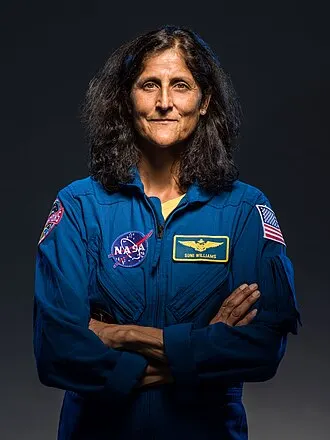
Sunita Williams
🇺🇸 United States · NASA
US Naval Academy → Naval helicopter pilot → US Naval Test Pilot School → NASA Group 17 (1998) → 2 long-duration ISS missions, Boeing Starliner CFT (2024).
View profileCareer Pathway
Fly to space as a government or commercial crew member.
Typical journey
10–15 years
Minimum degree
Bachelor's
Salary range (USD)
$110K–$175K
Searches / month
80,000
Astronauts are selected by national space agencies (NASA, ESA, JAXA, ISRO, CNSA, Roscosmos) or commercial operators (SpaceX, Axiom, Blue Origin) to live and work in microgravity. The path typically takes 10–15 years from undergraduate degree to first flight, with selection rates below 1 in 1,000.
NASA requires a master's or equivalent in engineering, biological/physical sciences, computer science, or mathematics. ESA, JAXA, and CSA list similar requirements; ISRO recruits primarily from the Indian Air Force.
Either: (a) accumulate 1,000+ hours in jet aircraft as a military or test pilot, OR (b) earn a graduate degree and 2+ years of professional/research experience, OR (c) a doctorate in a STEM field.
NASA opens classes roughly every 4 years (last: 2024). ESA's most recent window was 2021–2022. Tens of thousands apply; 8–20 are selected.
Two years of basic training: Soyuz/Dragon systems, ISS systems, EVA in the Neutral Buoyancy Lab, T-38 jet flight, Russian language, robotics, geology, and survival training.
After graduation, candidates wait 2–6 years for a flight assignment. Typical first mission is ISS Expedition or commercial LEO; Artemis lunar surface seats are highly contested.
Active astronauts typically fly 1–3 missions over a 15–20 year career, then move into management, capcom, or leave the agency.
US-centric estimates. International compensation varies; agency-civilian roles tend to cap lower, commercial roles higher.
Entry level (0–3 yrs)
$110K
Median annual (USD)
Mid-career (4–8 yrs)
$145K
Median annual (USD)
Senior (9+ yrs)
$175K
Median annual (USD)
Concrete career arcs from astronauts, engineers, and operators in our database.
🇺🇸 United States · NASA
US Naval Academy → Naval helicopter pilot → US Naval Test Pilot School → NASA Group 17 (1998) → 2 long-duration ISS missions, Boeing Starliner CFT (2024).
View profile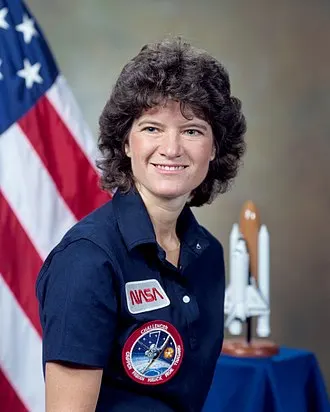
🇺🇸 United States · NASA
Stanford BA English + BS Physics → PhD Physics (Stanford) → answered 1977 NASA newspaper ad → NASA Group 8 (1978) → first American woman in space, STS-7 (1983).
View profile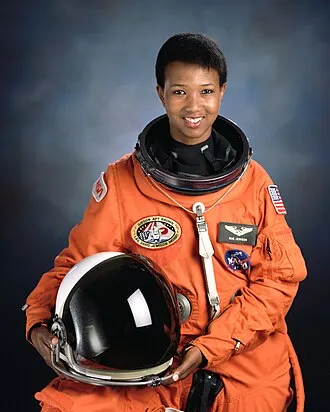
🇺🇸 United States · NASA
Stanford BS Chemical Engineering → Cornell MD → Peace Corps medical officer (Liberia/Sierra Leone) → NASA Group 12 (1987) → STS-47 (1992), first Black woman in space.
View profile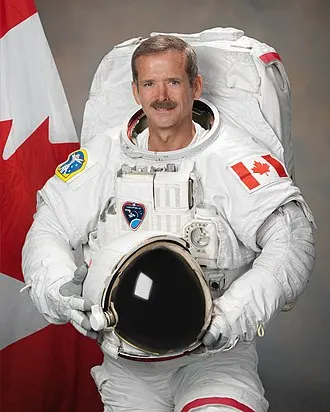
🇨🇦 Canada · CSA
Royal Military College Canada → CF-18 fighter pilot → US Naval Test Pilot School (top graduate) → CSA selection 1992 → 3 missions, ISS Commander Expedition 35.
View profile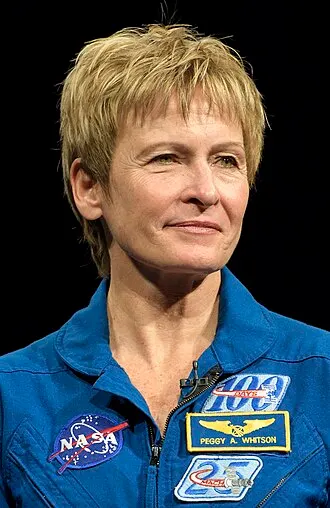
🇺🇸 United States · NASA
Iowa Wesleyan BS Biology/Chemistry → Rice PhD Biochemistry → 10 years as NASA biochemistry researcher → NASA Group 16 (1996) → record holder, ISS commander, now Axiom.
View profile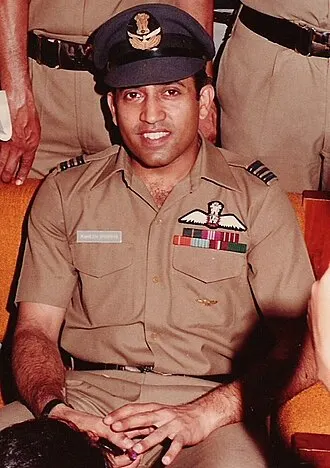
🇮🇳 India · ISRO
National Defence Academy (Khadakwasla) → Indian Air Force MiG-21 pilot → joint Soviet–Indian selection 1982 → Soyuz T-11 to Salyut 7 (1984), first Indian in space.
View profile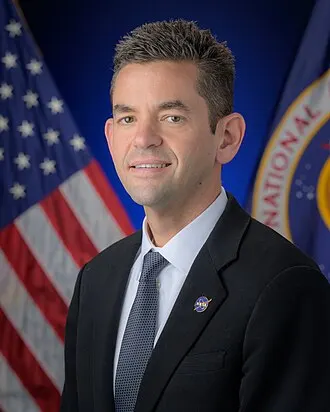
🇺🇸 United States · SPX
Self-taught (left high school at 16) → founded Shift4 Payments (1999) → trained as private pilot, then jet aerobatic pilot → funded and commanded Inspiration4 (2021), Polaris Dawn (2024) — first commercial EVA.
View profilePrograms and universities with strong pipelines into this discipline.
USA
Aerospace Engineering / Course 16
USA
Aero/Astro / Mechanical
USA
BS Engineering, military commission
Pipeline to Test Pilot School
USA
BS Astronautical Engineering
USA
Planetary Science / Engineering
USA
Aeronautics & Astronautics
Has produced 27 astronauts — more than any non-military school
France
Master's Aerospace Engineering
Netherlands
MSc Aerospace Engineering
India
Aerospace / Avionics
ISRO recruits heavily from IIST
$15K for STEM juniors/seniors at partner US universities
Patti Grace Smith Fellowship Org.
Aerospace internships for women & gender minorities
Black undergraduates in aerospace
Commercial spaceflight focus
SpaceX
Good fit if
Bad fit if
The hardest part
Selection. Roughly 12,000 people applied to NASA's 2017 class for 12 seats — odds ~0.1%. Even after selection, 2–6 years can pass before a flight assignment.
Employers and agencies hiring for this role outside North America.
Europe
ESA selects astronauts every decade; latest class (2022) included 5 career astronauts and a reserve cohort of 11. European candidates train at EAC Cologne then cross-train at JSC and Tsukuba.
Russia
Russia has the longest continuous human spaceflight program; Soyuz training is required for all ISS long-duration crews regardless of nationality.
China
China's Shenzhou program is fully independent of ISS; Tiangong is fully crewed and has hosted 7 crews. Third taikonaute cohort included first civilian (Gui Haichao, 2023).
India
India's Gaganyaan crewed mission is planned for 2025–2026; the four prime candidates trained at Yuri Gagarin Cosmonaut Training Centre in 2020 and subsequently at HSFC Bengaluru.
Japan
JAXA's small but consistently active corps (Wakata, Noguchi, Hoshide, Furukawa, Yui, Onishi, Kanai, Matsushita, Kikuchi) punches above Japan's program size. JAXA opened astronaut recruitment in 2021 for the first time in 13 years — 4,127 applied for 2 seats.
UAE
Hazza Al Mansouri became the first Emirati in space (ISS, October 2019); Sultan Al Neyadi completed a 6-month ISS stay (Expedition 69, 2023). UAE is the most active new spacefaring nation for human spaceflight.
South Korea
Yi So-yeon was selected via a public competition in 2006; South Korea has no current crewed program but participates in Artemis and plans to develop indigenous crew transport capability.
Canada
Canada's consistent 2–4 active astronaut corps (Marc Garneau, Roberta Bondar, Julie Payette, Chris Hadfield, Robert Thirsk, Bjarni Tryggvason, Steve MacLean, Dave Williams, Jeremy Hansen, Joshua Kutryk) has punched far above its size — all recent Canadian astronauts have flown ISS expeditions. Jeremy Hansen will fly Artemis II lunar orbit.
Brazil
Marcos Pontes (Soyuz TMA-8, March 2006) remains Brazil's only astronaut; AEB has no current crewed program but participates in Artemis Accords and has bilateral ISS agreements.
Israel
Ilan Ramon was Israel's first and only astronaut; he died in the Columbia accident (2003). Israel has no current astronaut program but continues contributing scientific payloads to ISS and has civilian observer status at ESA.
Related careers that overlap in skills, training, or industry.
Design the engines that get rockets and spacecraft to space.
Write the algorithms that fly the rocket and dock the spacecraft.
Sit on console and fly the spacecraft.
Search for life beyond Earth and understand life in extreme environments.
21 career pathways with milestones, salaries, and real astronaut journeys.