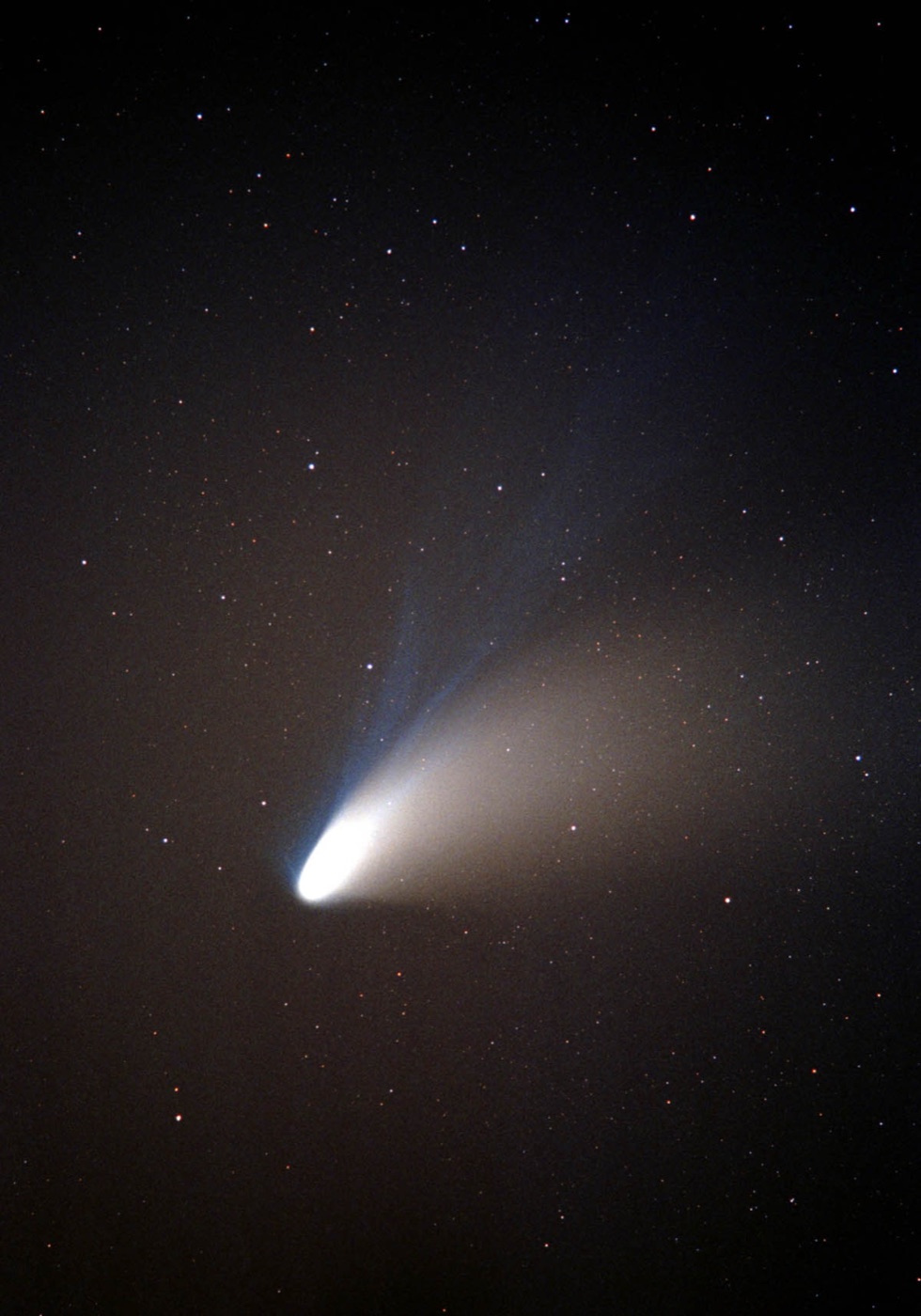
C/1995 O1The Great Comet of 1997
Comet Hale-Bopp
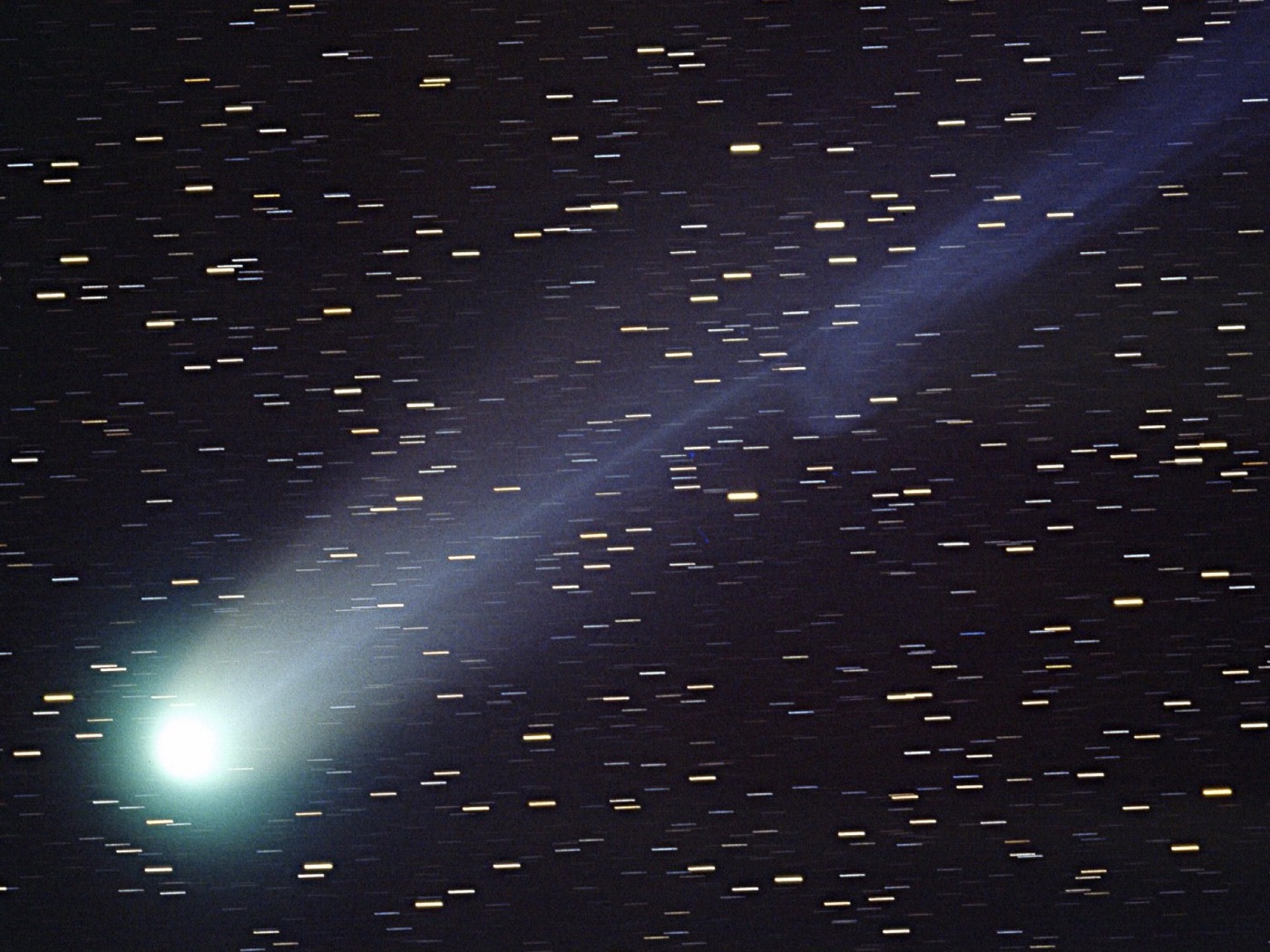
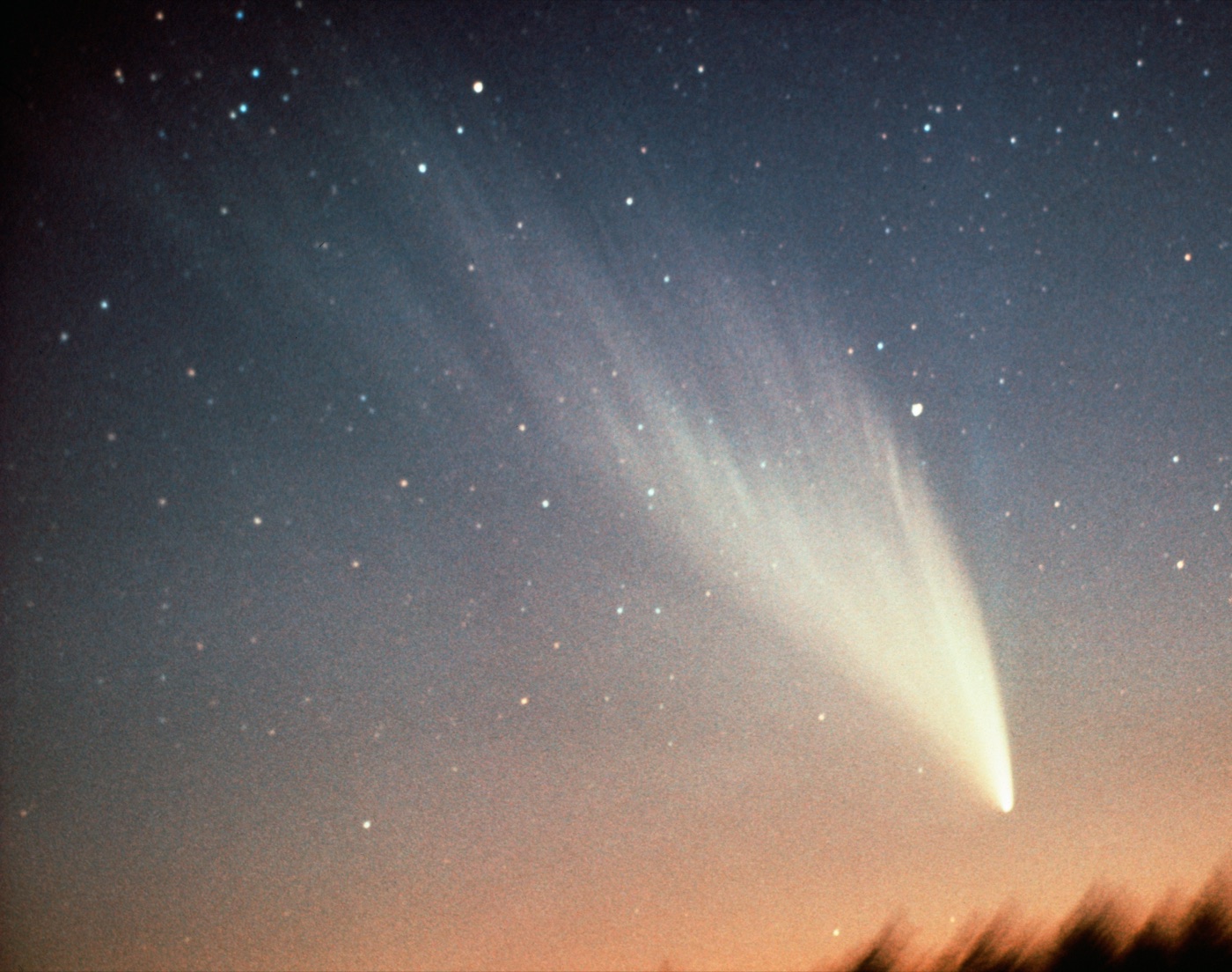
Discovered independently on July 23, 1995 by Alan Hale and Thomas Bopp while still beyond Jupiter at a remarkable 7.15 AU, Hale-Bopp became one of the brightest comets of the 20th century. Its unusually large nucleus (roughly 60 km / 37 miles across) made it visible to the naked eye for a record ~18 months across 1996-1997, peaking after its April 1, 1997 perihelion. It displayed a striking dual tail: a blue ion (gas) tail pointing straight away from the Sun and a whitish-gold dust tail curving along its orbit, and as a long-period comet it will not return to the inner Solar System for roughly 2,534 years.
- Designation
- C/1995 O1
- Type
- Great comet
- Orbital period
- ~2,534 years
- Discovery
- Independently by Alan Hale & Thomas Bopp, July 23, 1995