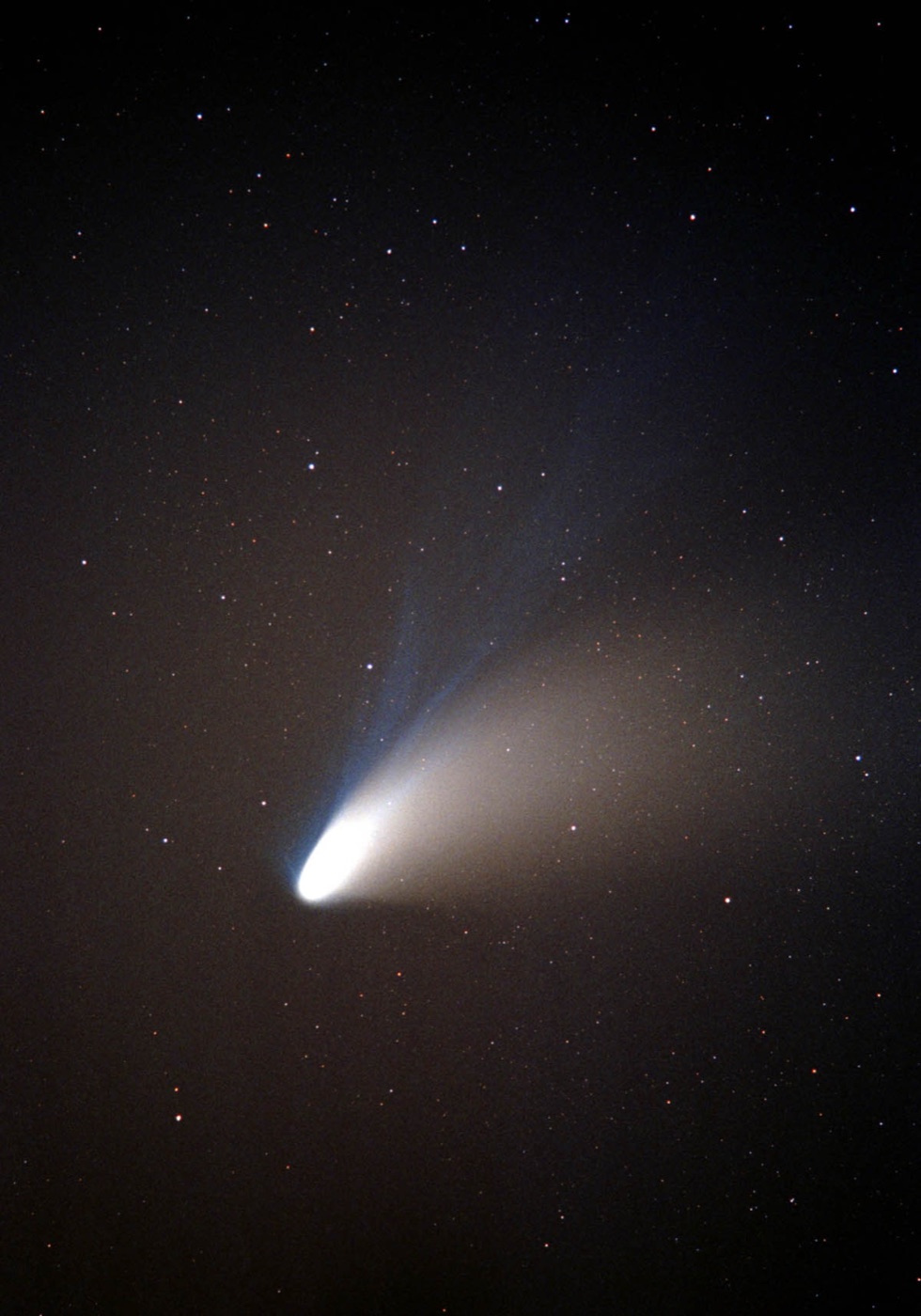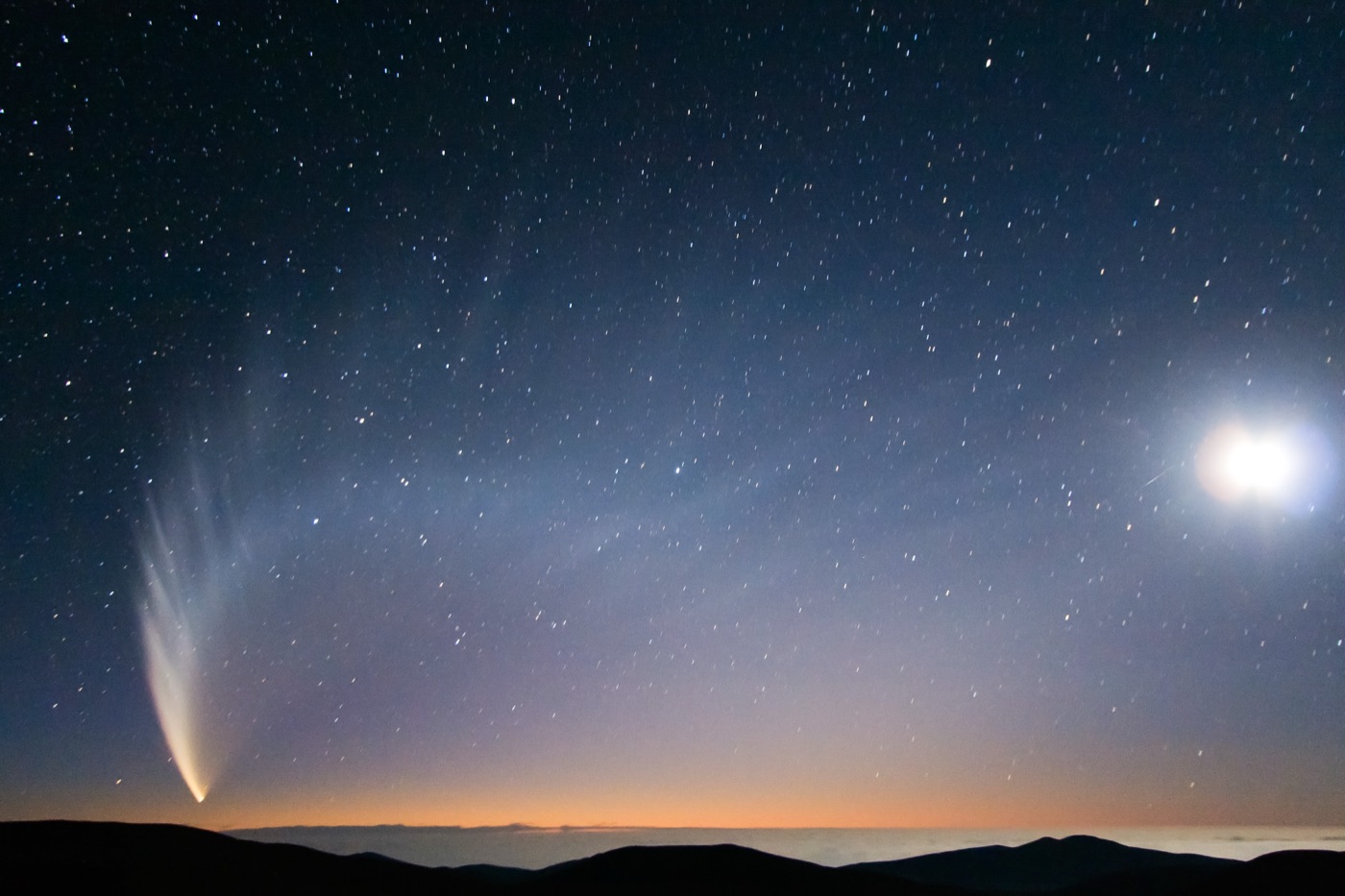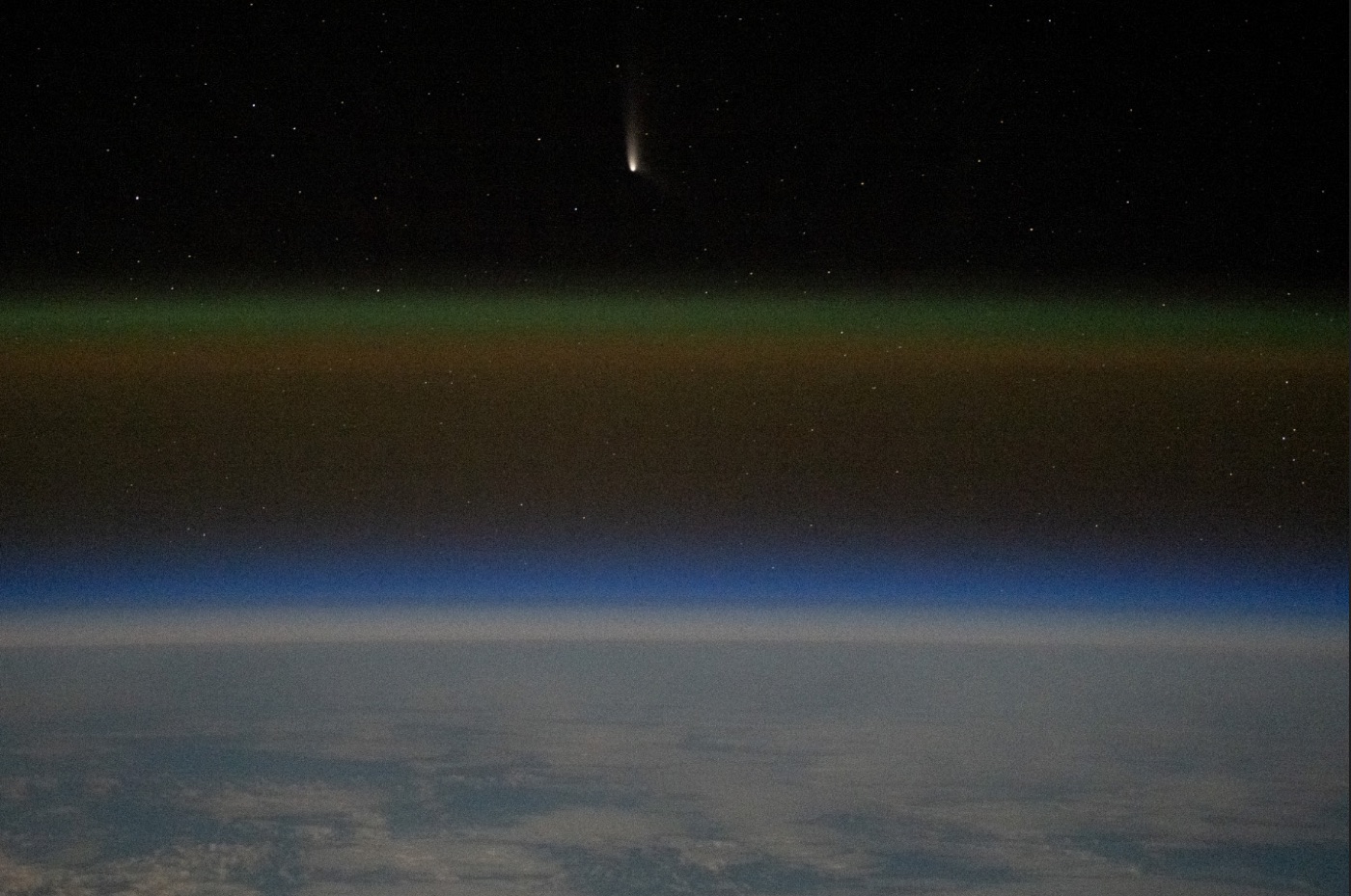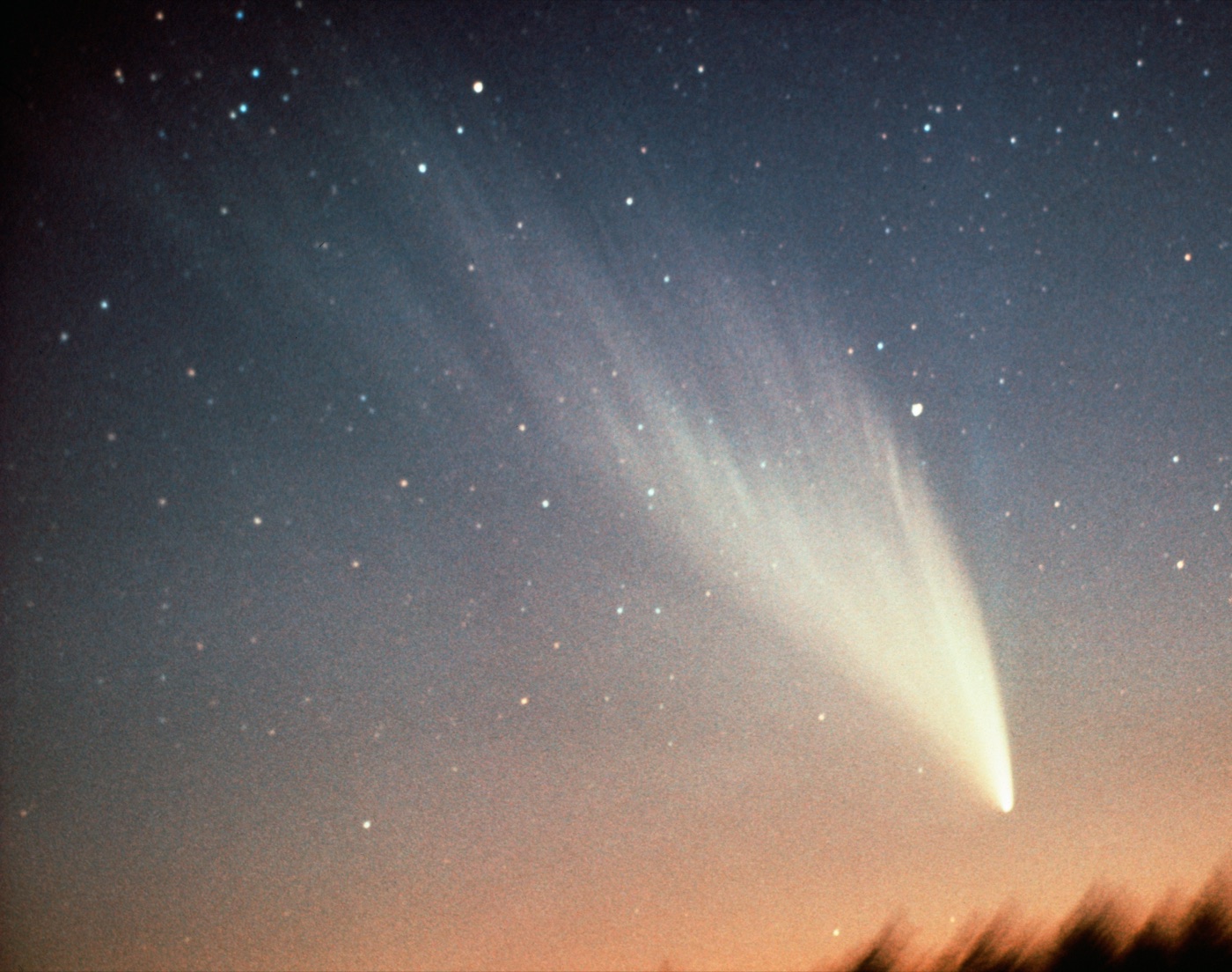
C/1996 B2 (Hyakutake)The Great Comet of 1996 with a record-breakingly long tail
Comet Hyakutake
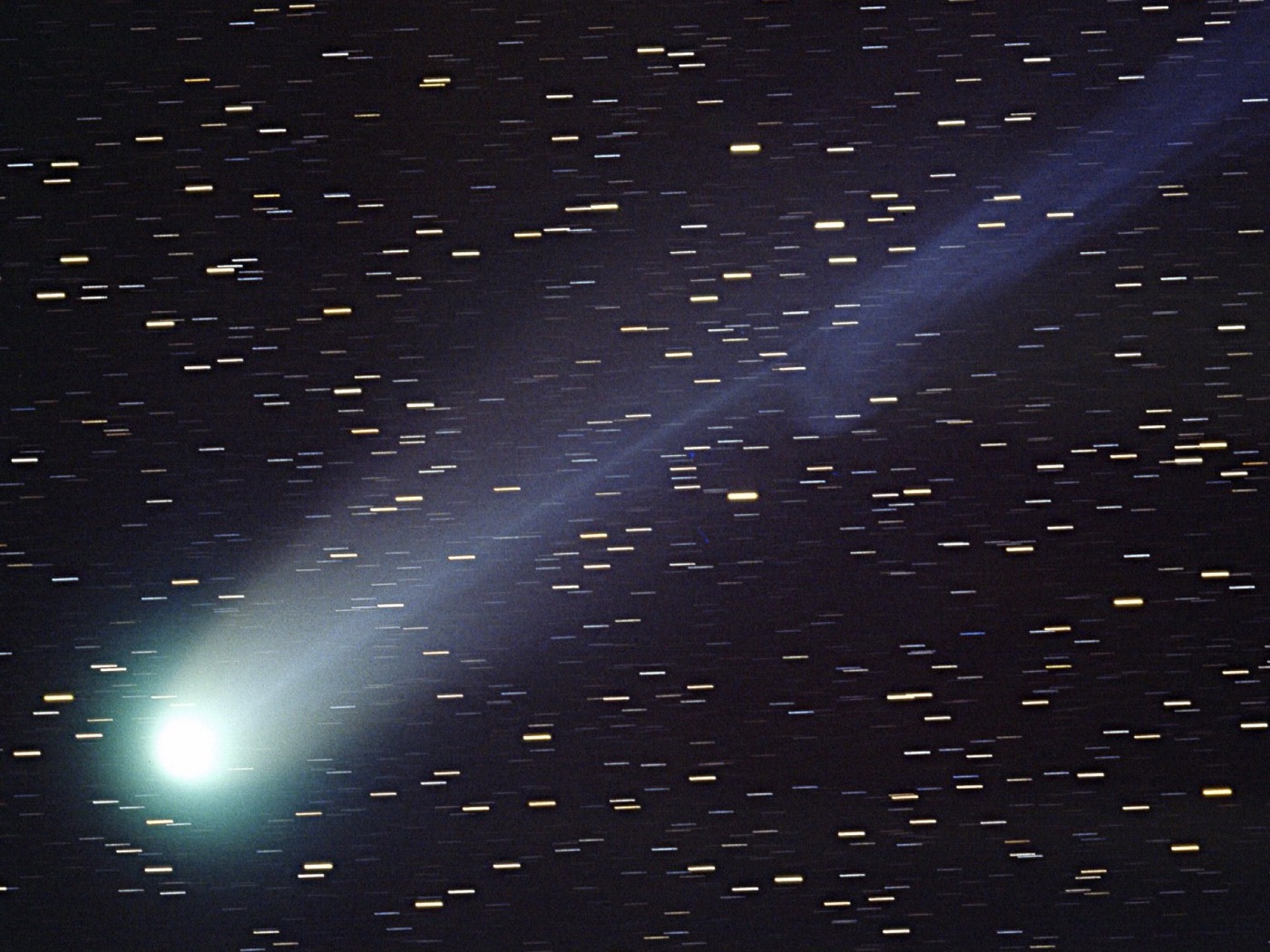
Comet Hyakutake (C/1996 B2) swept to within 0.1 AU (about 15 million km) of Earth on 25 March 1996 — one of the closest cometary approaches in 200 years — blazing to magnitude 0 with a brilliant blue-green coma and an ion tail that visually spanned nearly 80 degrees of sky. The Ulysses spacecraft later crossed its tail more than 500 million km from the nucleus, revealing the longest comet tail ever measured, and Hyakutake became the first comet detected emitting X-rays. After reaching perihelion on 1 May 1996, gravitational nudges from the giant planets stretched its orbit so it will not return for roughly 70,000 years.
- Designation
- C/1996 B2 (Hyakutake)
- Type
- Long-period
- Orbital period
- ~70,000 years (post-passage; was ~17,000 years)
- Discovery
- Discovered by Japanese amateur astronomer Yuji Hyakutake on 31 January 1996 (using large binoculars)