All Astronauts ROOKIEIn Memoriam—
ROOKIEIn Memoriam—Other·🇮🇱 Israel·Born 1954
Ilan Ramon
I feel I am representing all Jews and all Israelis.
Hours in Space
1
Missions
0
EVAs
—
EVA Time
There is no better place to emphasize the unity of people in the world than flying in space. We are all the same people, we are all human beings, and I believe that most of us, almost all of us, are good people.
Biography
First Israeli astronaut. Fighter pilot who perished in the Columbia disaster. Only foreign recipient of the Congressional Space Medal of Honor.
Before NASAColonel and F-16 fighter pilot in the Israeli Air Force; one of the youngest pilots in the 1981 Operation Opera strike on Iraq's Osirak reactor.
Life & career
Ilan Ramon was born Ilan Wolferman on 20 June 1954 in Ramat Gan, Israel, and grew up in Beersheba as the child of a family shadowed by the Holocaust — his mother and grandmother had survived Auschwitz before emigrating to the young state. He entered the Israel Air Force and graduated as a fighter pilot in 1974, building a career of exceptional distinction. In 1981 he flew as one of the youngest pilots in Operation Opera, the Israeli strike that destroyed Iraq's Osirak nuclear reactor, and he later helped establish the IAF's first F-16 squadron, eventually rising to the rank of colonel. When Israel and NASA agreed to fly an Israeli payload specialist, Ramon was selected in 1997 and began training in Houston, carrying with him a keen awareness that he would be flying as a symbol for his country and for Jewish people worldwide.
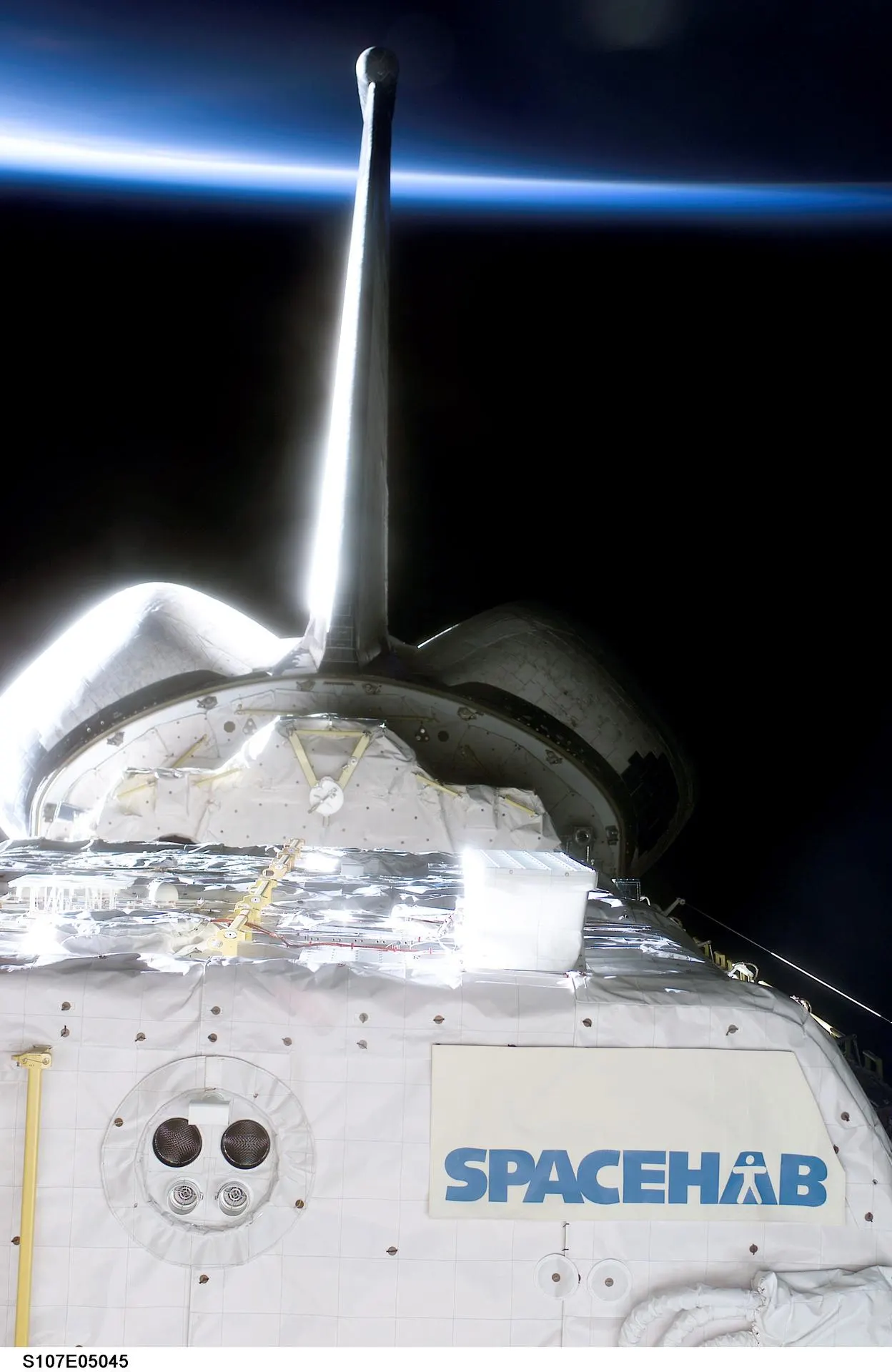
Ramon flew a single mission, STS-107, aboard Space Shuttle Columbia, launched on 16 January 2003 as a dedicated 16-day science and research flight packed with microgravity and Earth-observation experiments. His principal task was operating the Mediterranean Israeli Dust Experiment, which studied how desert dust aerosols affect the atmosphere and climate. Deeply conscious of what he represented, Ramon — personally secular — observed traditions in orbit that made him a first: he requested kosher food and marked the Sabbath in space, and he carried mementos of remembrance, including a small Holocaust-era Torah scroll and a pencil drawing titled 'Moon Landscape' by Petr Ginz, a teenage boy murdered at Auschwitz. On 1 February 2003, as Columbia re-entered the atmosphere, the orbiter broke apart because of damage sustained at launch when foam debris struck the leading edge of its left wing; Ramon and all six of his crewmates — Rick Husband, William McCool, Michael Anderson, David Brown, Kalpana Chawla and Laurel Clark — were killed.
Ilan Ramon remains Israel's first astronaut, and his loss was mourned as a national tragedy and marked internationally. He became the only foreign recipient of the United States Congressional Space Medal of Honor, awarded posthumously, and was also honoured with the NASA Space Flight Medal. His legacy has been carried forward with unusual continuity: pages of a diary he kept in orbit were recovered from the Columbia wreckage in Texas and painstakingly restored, and the Ramon Foundation, established in his and his family's memory, continues to advance space and science education for Israeli youth. His son Assaf, who became an air force pilot, was killed in a training accident in 2009, deepening the family's place in Israel's collective memory. More than two decades on, Ramon is remembered less for the brevity of his single flight than for the dignity and meaning he brought to it.
Notable Missions
STS-107 (Columbia)
Beyond the Mission
Causes They Champion
Holocaust remembranceIsraeli science education (the Ramon Foundation continues his legacy)
Languages
HebrewEnglish
Awards & Honors
- Congressional Space Medal of Honor (posthumous — first foreign recipient)
- NASA Space Flight Medal (posthumous)
Fun fact
Son of an Auschwitz survivor, he carried a Holocaust-era miniature Torah scroll and Petr Ginz's 'Moon Landscape' drawing into orbit, and was the first astronaut to observe Shabbat in space.
Item flown to space
Petr Ginz's pencil drawing 'Moon Landscape' from Yad Vashem and a miniature Holocaust-era Torah scroll.
More Astronauts
Other space travelers from Other