Six wheels, no springs
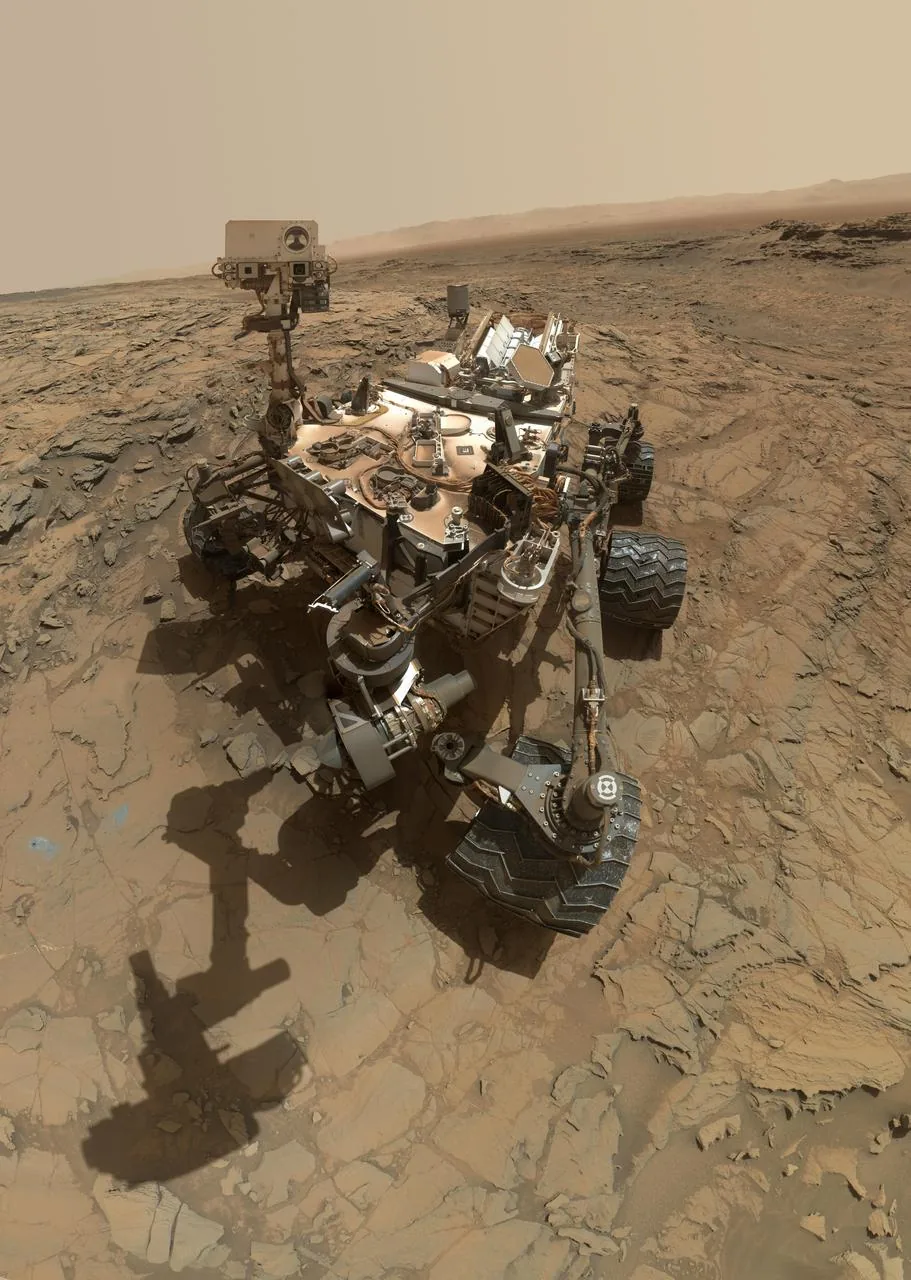
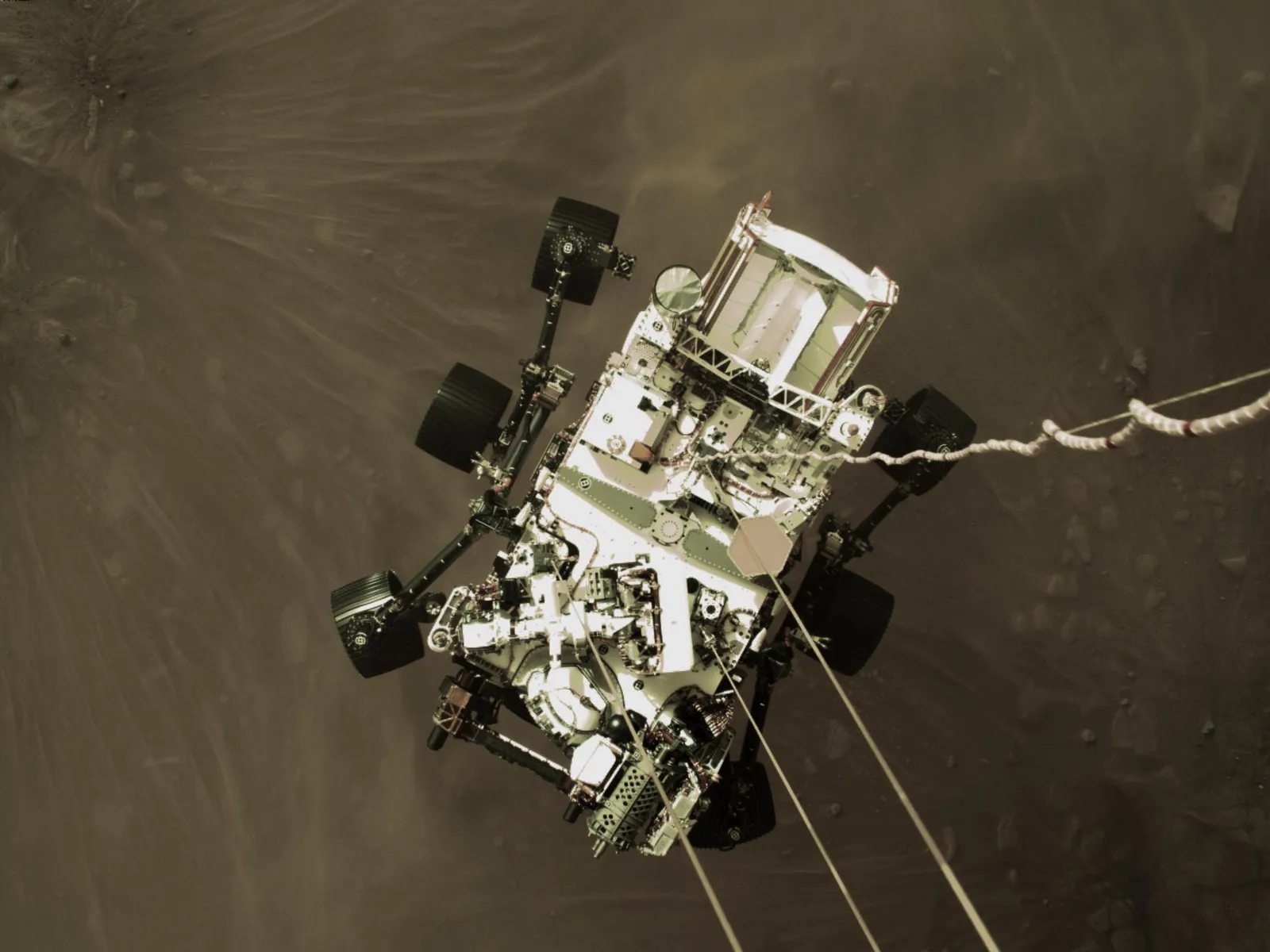
The passive rocker-bogie keeps all six independently-driven wheels on the ground over rocks and slopes, so the rover can crawl to the science instead of getting stuck.
BUILD · ROVERS · PERSEVERANCE
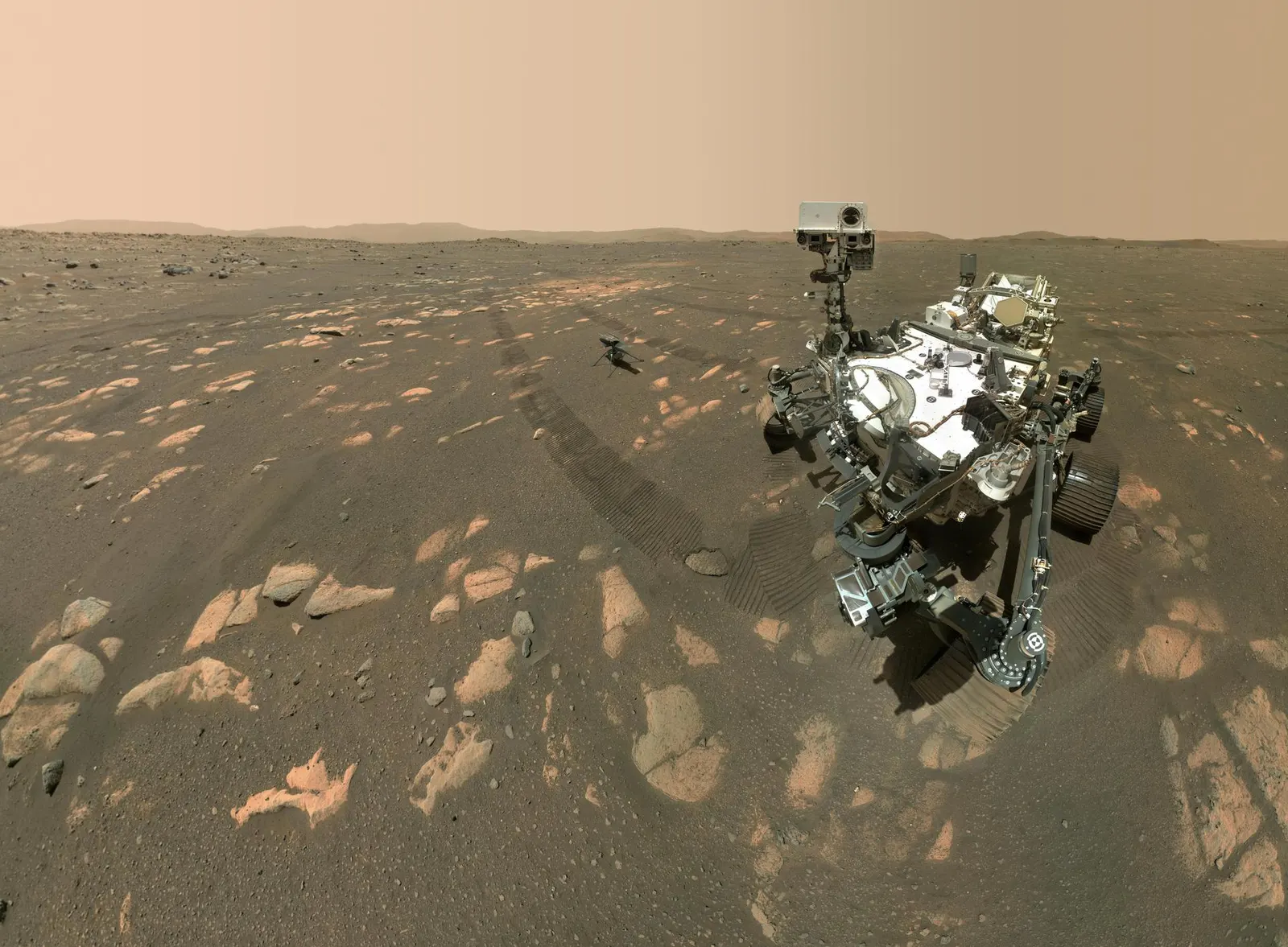
A nuclear-powered robot geologist the size of a car — driving itself across Jezero Crater because Earth is up to 20 light-minutes away and no one can steer it in real time.
Two ways to know it. Realisticstands NASA's own model of the rover on the Martian regolith. Engineeringlets you take it apart — separate the six wheels, the camera mast, the arm and the finned nuclear battery, recolour it by material, x-ray it, then cut the heaters and watch what a Martian night does to a rover that can't keep itself warm.
Separate it, inspect any part, then break it — everything here exists so the rover can survive and think entirely on its own.
The passive rocker-bogie keeps all six independently-driven wheels on the ground over rocks and slopes, so the rover can crawl to the science instead of getting stuck.
Dust storms and long winters starve solar panels on Mars, so the MMRTG makes ~110 W from the heat of plutonium — steady power, day and night, through any weather.
Martian nights fall to about −90 °C. The Warm Electronics Box is a heated, insulated core; without its heater loop the flight computer would freeze and die before morning.
Sources: NASA Science — Perseverance Rover Components & Science Instruments; NASA JPL — Mars 2020 Power (MMRTG). Geometry modelled to the real ~3 m rover with six 52.5 cm wheels.
You've built the rover — now explore the planet it drives on, mission by mission.