Full mission transcript
Every chapter of Perseverance, in sequence.
T+00:00:00
A Species of Explorers
July 30, 2020 · 11:50 UTC
At 7:50 a.m. Eastern on July 30, 2020 — 11:50:01 UTC — a United Launch Alliance Atlas V 541 rose from Space Launch Complex 41 at Cape Canaveral and carried NASA's heaviest, most capable Mars rover off a planet in the grip of a pandemic. The control rooms were thinned out and masked; the viewing stands were nearly empty. The machine leaving them behind was named for exactly the quality the year demanded.
The name had come from a seventh-grader. NASA's naming contest drew 28,000 student essays, and on March 5, 2020, the agency announced its winner: Alexander Mather of Lake Braddock Secondary School in Burke, Virginia, who argued that exploration is what humans do, setbacks and all. From the same contest came a second name — Vaneeza Rupani, a high-school junior from Northport, Alabama, had proposed Ingenuity, and on April 29 NASA Administrator Jim Bridenstine assigned it to the small helicopter riding to Mars bolted to the rover's belly, a 1.8-kilogram experiment hitching a ride with a one-tonne laboratory.
Ahead lay a cruise of 471 million kilometres and 203 days — seven months of coasting toward a rendezvous with a crater that, three and a half billion years ago, was a lake.
Sol 0
Seven Minutes of Terror
February 18, 2021 · 20:55 UTC
On February 18, 2021, Mars sat eleven minutes and twenty-two seconds away at the speed of light. Whatever happened in the Martian sky that afternoon — touchdown around 20:44 UTC on Mars — had already happened by the time the first tone of it reached Earth. When JPL's control room heard the confirmation at 20:55 UTC, it was history arriving, not news. For the seven minutes of entry, descent, and landing, no one on Earth could help; the spacecraft was on its own.
Ten minutes before entry it shed its cruise stage. Hitting the atmosphere, the heat shield endured peak temperatures near 1,300 degrees Celsius about 75 seconds in. Roughly 240 seconds after entry, at about 11 kilometres altitude and still moving around 1,512 kilometres per hour, the spacecraft deployed its 21.5-metre parachute — timed not by speed, as on every previous Mars landing, but by position, a new technique called Range Trigger that tightened the landing ellipse. Twenty seconds later the heat shield fell away, and the genuinely new technology opened its eyes: Terrain-Relative Navigation, a vision system that photographed the ground rushing up and matched it against onboard maps, steering the rover away from hazards no engineer could see in advance. The sky crane finale — the rover lowered on nylon cords beneath a hovering rocket stage — was inherited from Curiosity in 2012. The brains that chose where to land were Perseverance's own.
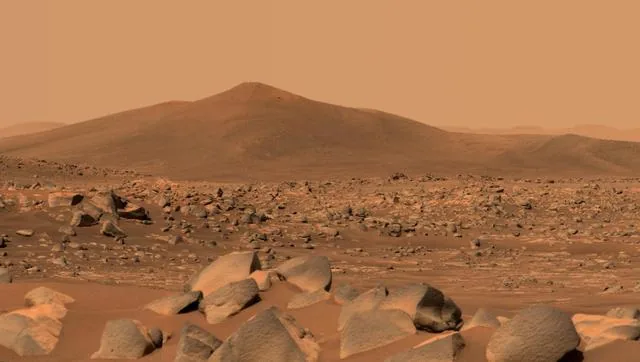
In the control room, Swati Mohan narrated the descent in a steady voice: the sky crane maneuver starting, about twenty metres off the surface. Then the touchdown call — "Tango Delta" — crackled across the loop, and a heartbeat later Mohan said the words a masked, pandemic-spaced room had waited years to hear. The rover stood in Jezero Crater, a 45-kilometre basin holding an ancient lakebed and a fossilized river delta some 3.5 billion years old. Two weeks later, NASA named the touchdown point Octavia E. Butler Landing, for the science-fiction author who wrote that the destiny of Earthseed is to take root among the stars.
Control room · NASA broadcast - TD−07:11 Mohan (EDL): We have confirmation of entry interface. Perseverance is currently going 5.3 kilometers per second at an altitude of about 120 kilometers from the surface of Mars.
- TD−03:13 Mohan (EDL): The navigation has confirmed that the parachute has deployed, and we are seeing significant deceleration in the velocity.
- TD−02:49 Mohan (EDL): Perseverance has now slowed to subsonic speeds and the heat shield has been separated. This allows both the radar and the cameras to get their first look at the surface.
- TD−00:19 Mohan (EDL): Sky crane maneuver has started.
- TD−00:02 EDL net: Tango Delta.
- TD 00:00 Mohan (EDL): Touchdown confirmed! Perseverance safely on the surface of Mars, ready to begin seeking the signs of past life.
Sol 1–16
The Sounds of Another World
February 20, 2021 · 00:00 UTC
The microphone strapped to the rover's side had been meant to record the descent. It returned no usable data on the way down — and then, having survived a landing it was never engineered to outlive, it kept working. Perseverance's microphones began logging almost immediately: on February 19, the day after landing, SuperCam's mast-mounted unit — still stowed inside its housing — caught Martian wind muffled like the sea in a seashell, air moving past an enclosure rather than the open planet.
The next day came the recording NASA would release to the world as the first sounds of Mars. On February 20, engineers commanded the surviving descent microphone to listen for sixty seconds. About ten seconds in, beneath the rover's own hum, there it was: a gust of Martian wind, roughly five miles per hour, captured clean from the open air of another planet. The precision matters: NASA's InSight lander had 'heard' Martian wind in 2018, but as vibrations derived from its seismometer and pressure sensors — this was a microphone. On March 2 — Sol 12 — SuperCam added the planet's first percussion: thirty staccato laser zaps fired at a rock named Máaz from 3.1 metres away, each snap revealing the rock's hardness to scientists listening on Earth.
The recordings became a physics experiment no one had run before. Analyzing the soundscape in Nature in April 2022, Sylvestre Maurice and colleagues confirmed that Mars has two speeds of sound: about 240 metres per second for low frequencies, and roughly 10 metres per second faster for high pitches like the laser's crack — against 340 on Earth. In an atmosphere of 96 percent carbon dioxide at about one percent of Earth's density, sound also dies fast; a conversation on Mars would strain to carry across tens of metres. The planet, it turned out, had a voice. It was just very, very quiet.
Sol 58 · Flight 1
The Wright Brothers Moment
April 19, 2021 · 07:34 UTC
At 07:34 UTC on April 19, 2021 — 12:33 by the local Mars sun — a 1.8-kilogram helicopter spun its rotors to a blur in an atmosphere one percent as dense as Earth's, and lifted. Ingenuity climbed three metres, held a thirty-second hover, pirouetted to face a new direction, and settled back onto the sand. Thirty-nine point one seconds, end to end: the first powered, controlled flight on another planet. Confirmation crossed the void to JPL at 10:46 UTC, and project manager MiMi Aung theatrically tore up the speech she had prepared in case of failure.
Taped beneath the helicopter's solar panel rode a postage-stamp swatch of unbleached 'Pride of the West' muslin — fabric from the lower-left wing of the 1903 Wright Flyer, lent by Carillon Historical Park in Dayton, Ohio. The team had spent years calling this their Wright brothers moment, and they leaned into it: the patch of Jezero floor below was designated Wright Brothers Field, with a ceremonial ICAO airfield code, JZRO, and a call sign for the aircraft itself: IGY-1.
Perseverance watched the whole thing from a rise 64.3 metres away that the team named Van Zyl Overlook — and during Ingenuity's fourth flight, it listened. The rover's microphone caught the rotors' 84-hertz hum drifting across 80 metres of thin Martian air: the first time one spacecraft has ever recorded the sound of another flying on another planet. The hum is faint — NASA isolated the 80-to-90-hertz band to lift it out of the wind — but it is unmistakably the sound of flight, somewhere no one thought there would ever be aircraft.
Sol 60+
A Working Rover
April 20, 2021 · 00:00 UTC
The day after Ingenuity's flight, on Sol 60, a toaster-sized box in the rover's chassis quietly made history of its own. MOXIE pulled in Martian carbon dioxide, cracked it apart, and produced 5.4 grams of oxygen in its first hour-long run — about ten minutes of breathing for one astronaut, and the first time any mission had manufactured oxygen from the raw materials of another planet. Over sixteen runs — the final one on August 7, 2023 — it produced 122 grams in total: a proof, written in breathable air, that future crews need not haul every kilogram of it from Earth.
The rover's defining job — coring rock for eventual return to Earth — began with a humbling. On August 6, 2021, the drill executed flawlessly on a rock nicknamed Roubion, and the tube came up empty; the rock had crumbled to powder too fine to hold. Success came in early September on a more cooperative boulder called Rochette, which yielded a finger-width core named Montdenier, about six centimetres long, and a twin, Montagnac. The laser kept firing too, as SuperCam zapped and listened its way through the crater's geology — the staccato snap of light against rock that the microphone first caught on Sol 12.
Then, in July 2024, in a dry river channel called Neretva Vallis, the rover met the rock the whole mission had been aimed at. Cheyava Falls, an arrowhead-shaped slab one metre by 0.6, carried organic compounds and millimetre-scale 'leopard spots' — pale splotches ringed by dark halos rich in iron phosphate, patterns that on Earth are often left by microbial chemistry. Announced on July 25, 2024, with its core, Sapphire Canyon, sealed as the mission's 22nd rock core, it survived more than a year of scrutiny: in September 2025, after peer review in Nature, NASA formally classified the find as a potential biosignature — emphatically not confirmed life, with the agency inviting the wider science community, in its own words, to confirm or refute its biological potential. The strongest hint yet found is now sealed in a titanium tube, waiting.
Sol 653
Three Forks
December 21, 2022 · 00:00 UTC
Beginning on December 21, 2022 — Sol 653 — Perseverance spent five weeks doing something no machine had ever done: it built a depot on another world. One by one, ten titanium tubes, each 18.6 centimetres long, were dropped onto a flat patch of Jezero floor called Three Forks, laid out in a careful zigzag five to fifteen metres apart, every drop photographed and mapped to centimetre precision so that a future mission could find them even under dust. The first tube down held an igneous core named Malay. By January 28, 2023, the depot was complete, and a week before that, on January 6, the rover had formally finished its prime mission.
The depot was an insurance policy. The main plan had the rover itself handing its samples to a Mars Sample Return lander; Three Forks existed in case Perseverance could not make that rendezvous. What no one planned for was the rendezvous ceasing to exist.
The unraveling came date-stamped. In September 2023, an independent review priced Mars Sample Return at $8–11 billion, with samples home around 2040. On April 15, 2024, NASA Administrator Bill Nelson said it plainly: "The bottom line is that $11 billion is too expensive, and not returning samples until 2040 is unacceptably too long." A two-option rescue study followed in January 2025; the White House's FY26 budget proposal in May 2025 sought outright termination; and in January 2026, the final FY26 appropriations restored most of NASA's science portfolio but left Mars Sample Return unfunded — the program is cancelled, with roughly $110 million redirected to a 'Mars Future Missions' technology line. The ten tubes at Three Forks sit exactly where the rover left them, mapped to the centimetre, with no funded ride home. If Mars rock reaches Earth in the coming decade, China's Tianwen-3 is now positioned to carry it first.
Flight 72
The Last Flight
January 18, 2024 · 00:00 UTC
By January 2024, Ingenuity had long since flown out of the territory it was built for — and into terrain that defeated it. Flight 72, on January 18, was meant to be a brief hop to twelve metres, a check-up after an earlier early landing. But the ground below was featureless sand, ripple after identical ripple, and the helicopter's camera-based navigation — designed to track rocks and texture — starved for landmarks. It came down at an angle. All four carbon-fibre rotor tips snapped off about a third of the way down the blade; one blade separated entirely. Ingenuity would never fly again — and NASA would later conduct the first aircraft-accident investigation on another world to understand why.
The ledger it left behind beggars the original plan. Built for five flights in thirty days, Ingenuity flew seventy-two flights across nearly three years and roughly a thousand sols: two hours, eight minutes, and forty-eight seconds aloft, 17.242 kilometres covered, twenty-four metres up at its highest, thirty-six kilometres per hour at its fastest. Announcing the mission's end on January 25, NASA's administrator said the helicopter had flown 'higher and farther than we ever imagined.' From 416 metres away, Perseverance's Mastcam-Z photographed its companion one last time — a glinting speck alone among the dunes of the airfield the team had nicknamed, with Tolkien in mind, Valinor Hills.
On April 16, 2024, the team gathered for one final transmission, uploading the names of everyone who had built and flown her. Then they let her be. Ingenuity stands there still, solar panel to the sky, working a quiet retirement as a stationary data recorder — waiting, as her project manager put it, for whoever comes next.
Sol 1,797
Still Seeking
March 11, 2026 · 00:00 UTC
On March 11, 2026 — Sol 1,797 — Perseverance raised the camera on its robotic arm and took a 61-frame self-portrait beside a freshly ground abrasion patch nicknamed Arethusa. The rover in the picture is sandblasted and dust-filmed, five years past its landing, and standing somewhere remarkable: a region called Lac de Charmes, west beyond Jezero Crater entirely. Its fifth science campaign — the Northern Rim Campaign — had carried it over the crater's western rim at Lookout Hill on December 12, 2024, down the 135-metre slope of Witch Hazel Hill through 2025, and out into what the team calls its Wild West: terrain of deep-crust ejecta some 3.9 billion years old, likely the oldest rock the rover will ever touch.
The scoreboard, per NASA's sample tracker: 30 of its 38 sample tubes are filled with cores, plus three witness tubes — 33 sealed in all, the newest a core named Gallants taken on July 1, 2025. Eight of those cores wait at the Three Forks depot; the rest ride aboard the rover. Since January 2026, when Mars Sample Return was cancelled, they have been waiting for a retrieval mission that no longer exists. The rover's answer is the only one it knows: keep driving, keep coring, keep listening.
Somewhere in those tubes may be the answer to whether anything ever lived on Mars. And there is a strange symmetry in how this story is still going: a 13-year-old boy promised, in the essay that named this machine, that there would be many setbacks on the way to Mars — and that they would not be the end of the story. Five years in, dusty and alone and farther west than anyone planned, the rover is still keeping his word.
Sources: NASA/JPL — Mars 2020 Perseverance Landing Press Kit · NASA — Touchdown! NASA's Mars Perseverance Rover Safely Lands on Red Planet · NASA/JPL — After Three Years on Mars, NASA's Ingenuity Helicopter Mission Ends · NASA/JPL — NASA Says Mars Rover Discovered Potential Biosignature Last Year · NASA Science — Perseverance Rover Rock Samples Tracker
Answers come only from the Perseverance mission record above.
Continue your journey

The moment in history
Moment
Perseverance lands on Mars
The moment in history
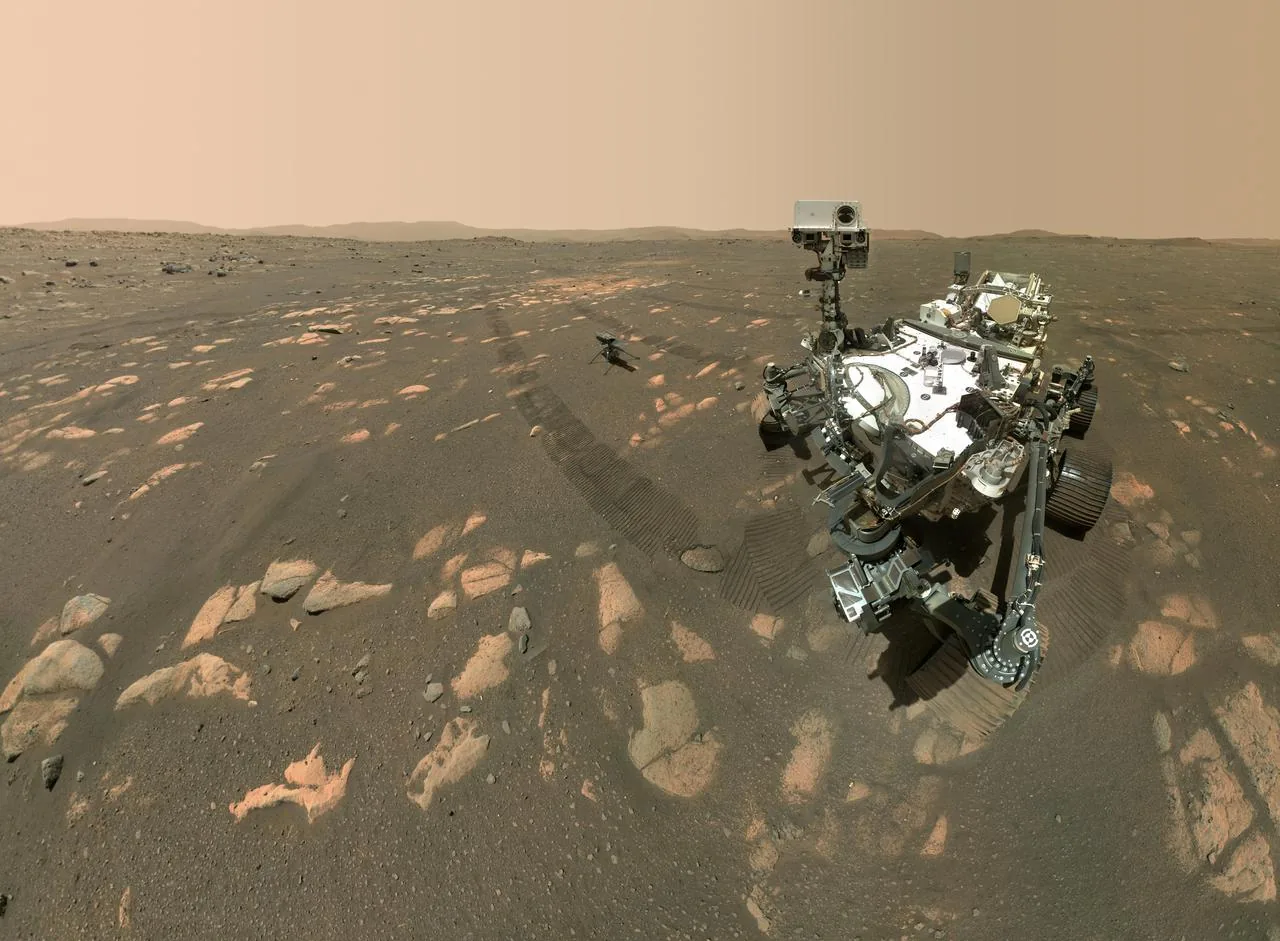
The mission file
Mission
Perseverance (Mars 2020)
The mission file
Experience it
World
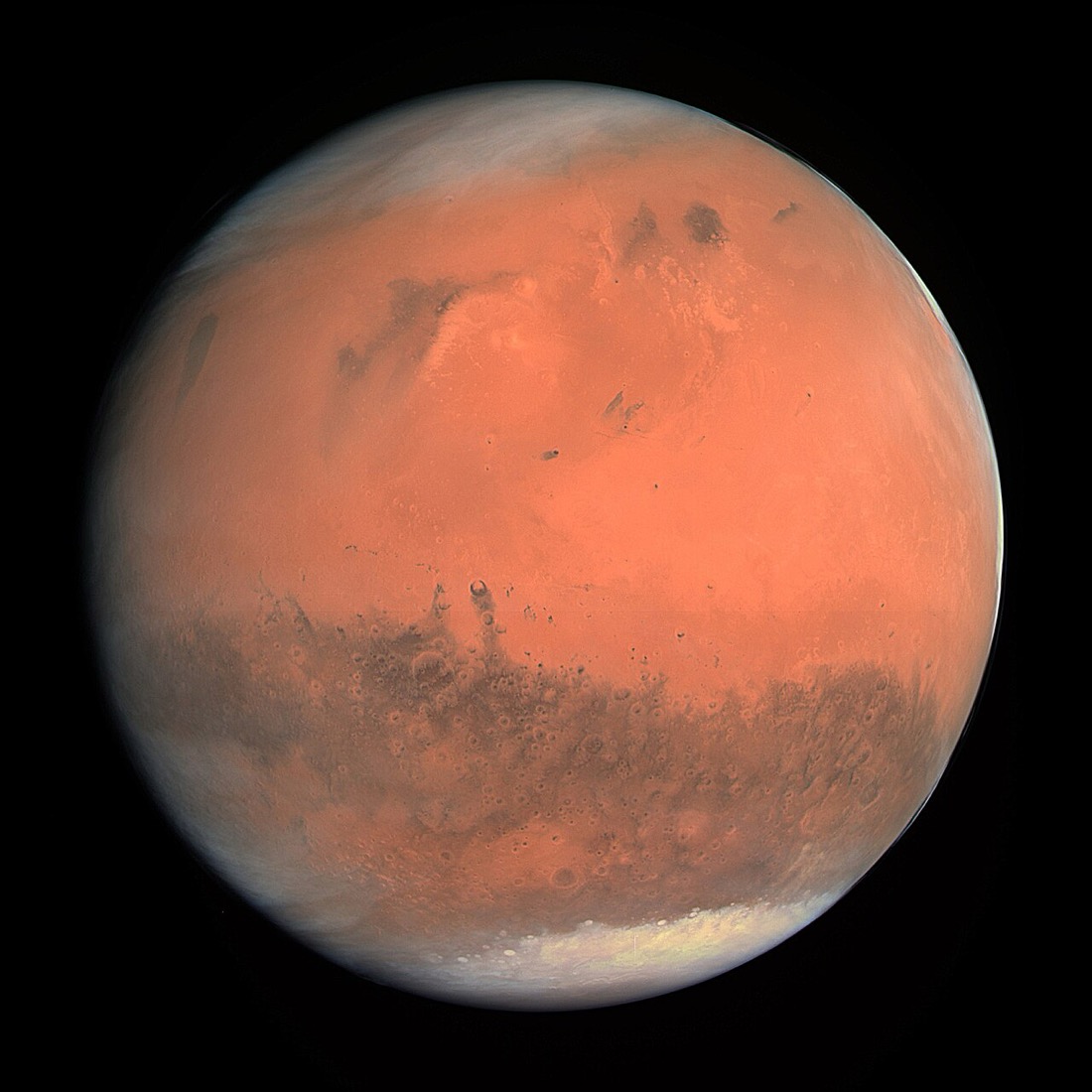
Mars
Experience it
Experience it
World
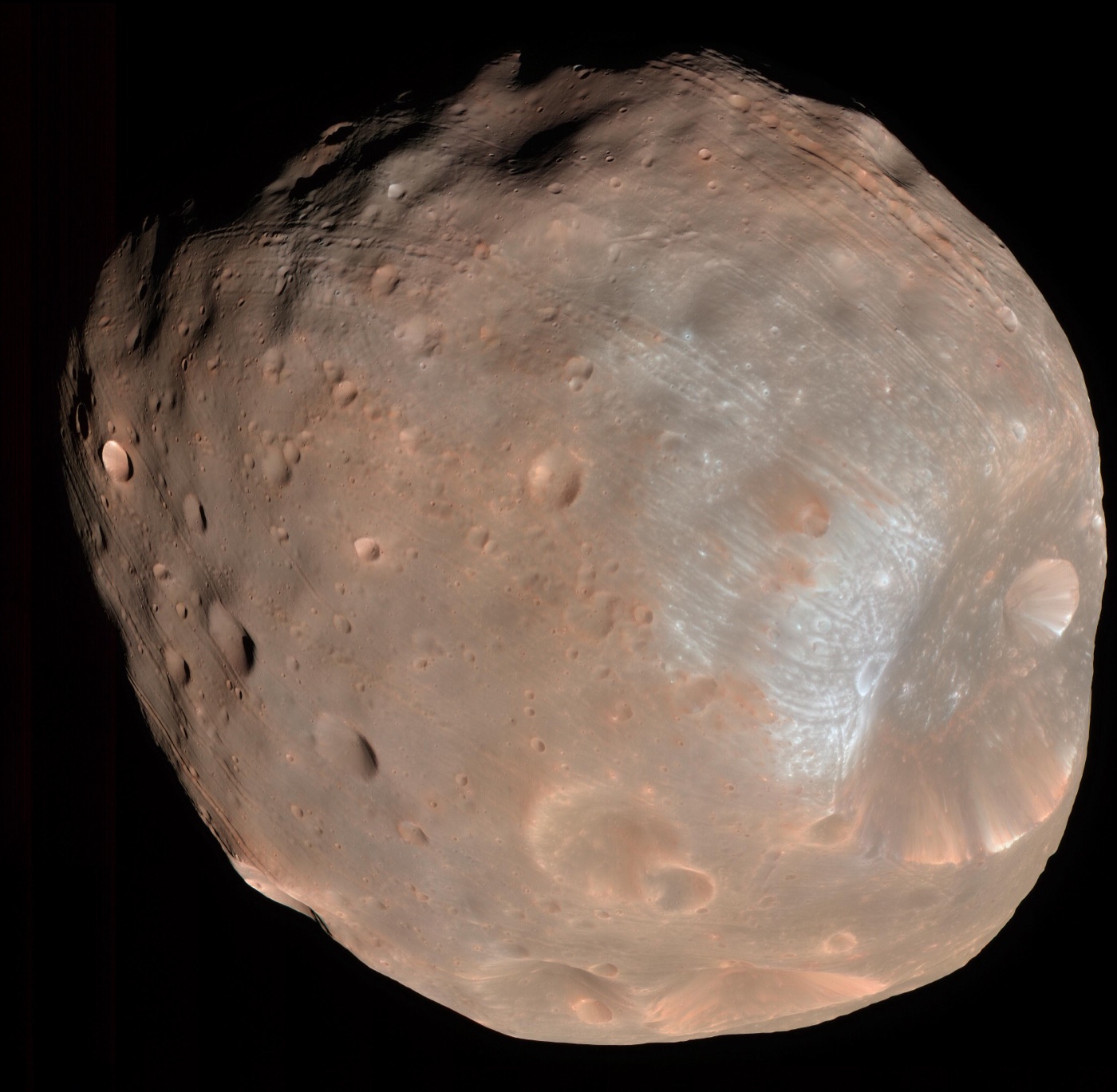
Phobos
Experience it
Build it yourself
Build it
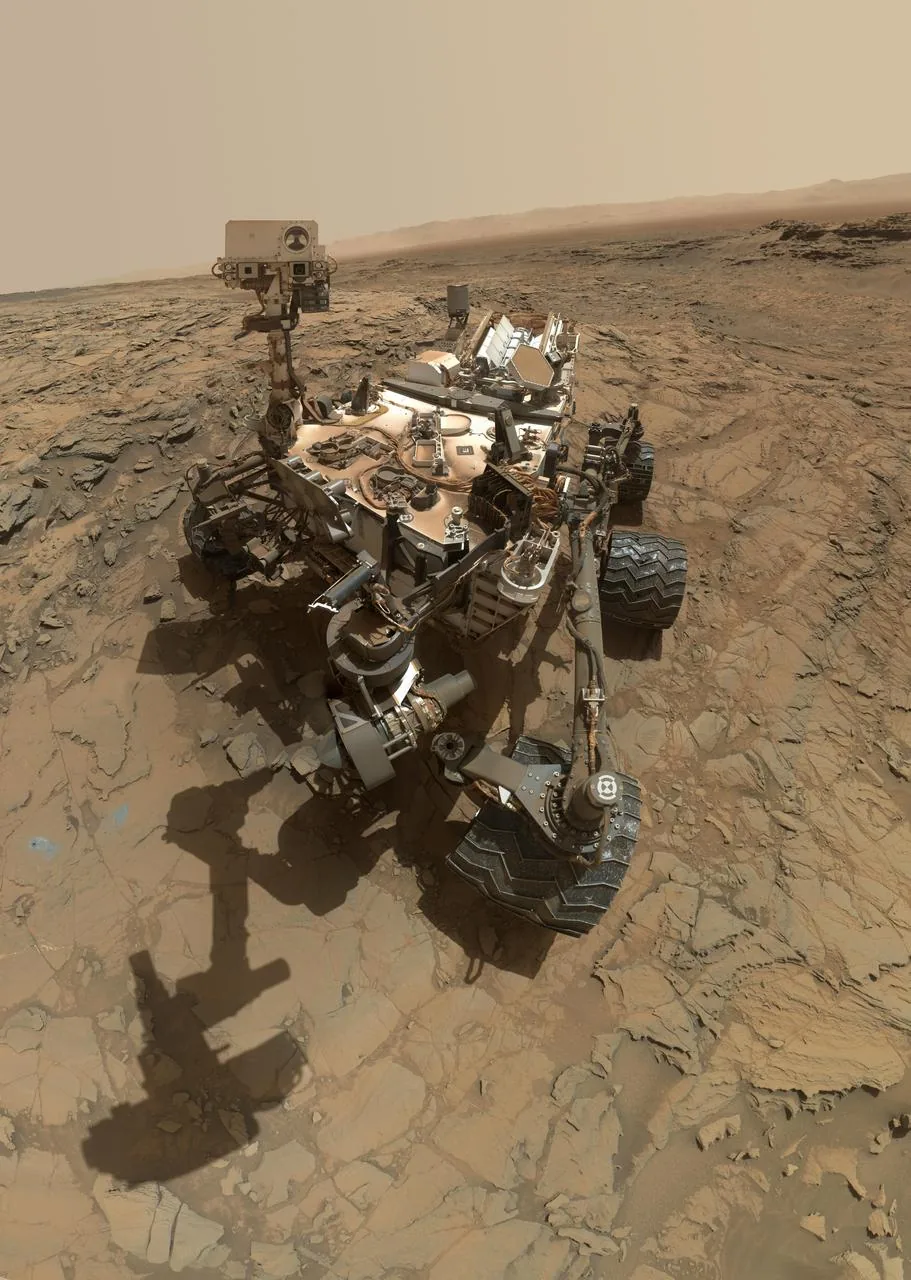
Mars Mobility Lab — build the Rovers
Build it yourself
Build it yourself
Build it
Perseverance — the digital twin
Build it yourself