
International · ESA / JAXAmissionrobotic
October 20, 2018
BepiColombo launches toward Mercury
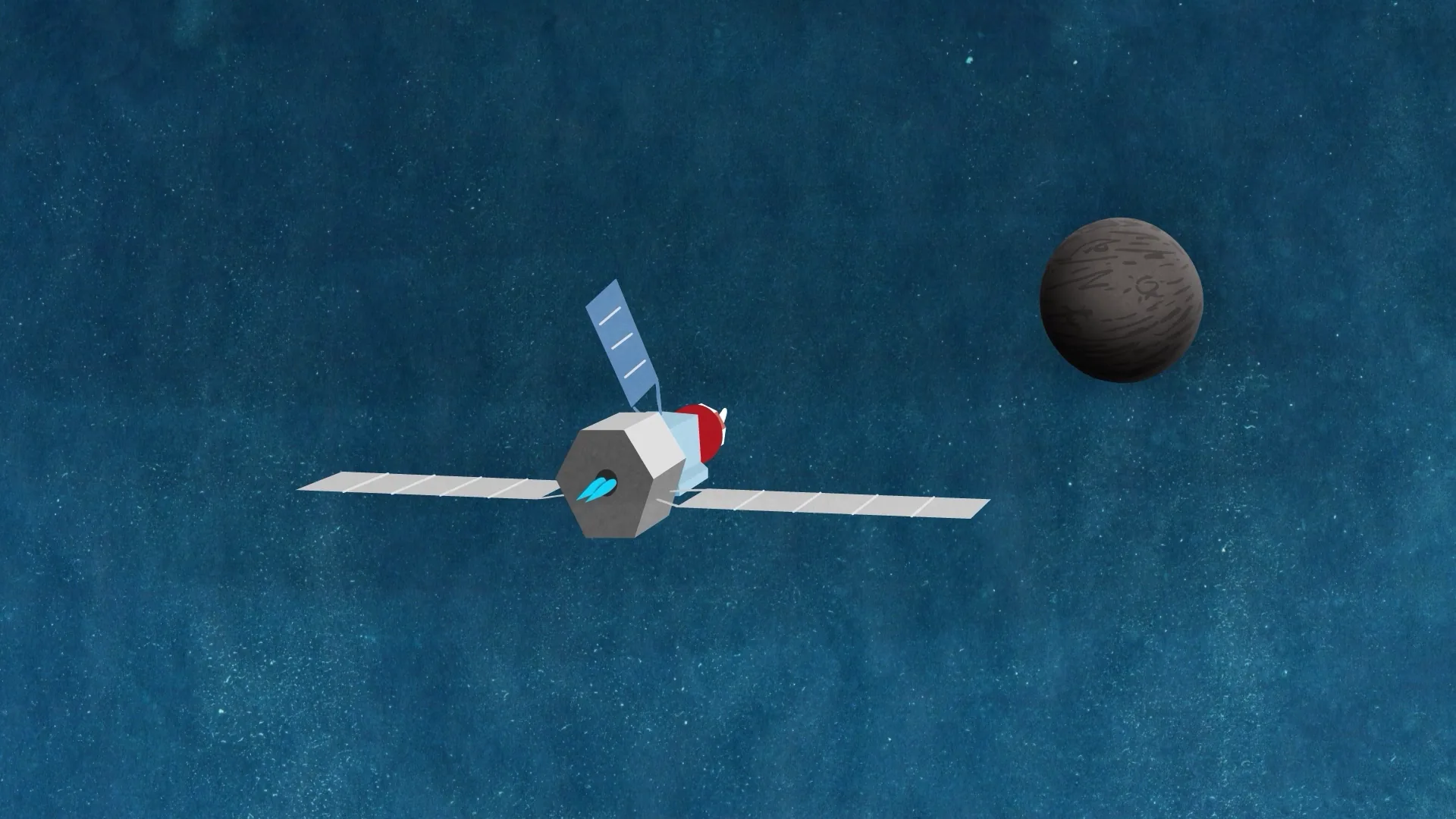
In the small hours of 20 October 2018, an Ariane 5 rose from Europe's spaceport in Kourou, French Guiana, at 01:45 GMT, carrying one of the strangest spacecraft ever assembled. BepiColombo is really three vehicles stacked like a train: a solar-electric transfer module doing the driving, ESA's Mercury Planetary Orbiter, and JAXA's spin-stabilized Mio magnetospheric orbiter tucked inside a sunshield. It is Europe's first mission to Mercury, Japan's first as well, and the most ambitious partnership the two agencies have ever flown.
Mercury is among the hardest destinations in the Solar System. Falling toward the Sun means a spacecraft must constantly shed energy or be flung past its target, so BepiColombo's route requires nine planetary flybys, one of Earth, two of Venus and six of Mercury, plus years of patient braking by ion thrusters. The mission honours Giuseppe 'Bepi' Colombo, the Padua mathematician who explained Mercury's curious 3:2 spin-orbit resonance and showed NASA's Mariner 10 how to return for repeat flybys in the 1970s.
The cruise has not been uneventful. The flybys returned striking selfie-camera views of Mercury's cratered face, but in April 2024 an electrical fault between the transfer module's solar array and its power unit left the ion thrusters limited to about 90 percent of full thrust. ESA's flight dynamics team redesigned the trajectory, trading time for thrust: arrival slipped from December 2025 to November 2026, with the science mission preserved intact.
That arrival is now only months away. In November 2026 the stack will finally let Mercury's gravity take hold, and the two orbiters will separate to begin complementary surveys, the MPO mapping the surface and interior while Mio samples the magnetosphere, with routine science planned from early 2027. BepiColombo will become only the second mission ever to orbit the innermost planet, after NASA's MESSENGER, and the first to study it with two spacecraft at once, in an environment where sunlight is ten times more intense than at Earth.
“Launching BepiColombo is a huge milestone for ESA and JAXA, and there will be many great successes to come.”
Mission Data
Launch
20 Oct 2018, 01:45 GMT, Ariane 5, Kourou
Launch mass
4,100 kg
Spacecraft
2 orbiters (MPO, Mio) + transfer module
Planetary flybys
9 (Earth ×1, Venus ×2, Mercury ×6)
Mercury orbit arrival
Nov 2026 (revised from Dec 2025)
Science instruments
16 across both orbiters
Key Facts
The mission is named for Giuseppe 'Bepi' Colombo, the Italian mathematician who deduced that Mercury rotates exactly three times for every two orbits and devised the trajectory that let Mariner 10 fly past the planet repeatedly.
Getting into Mercury orbit is so difficult that the spacecraft needs nine planetary flybys and years of continuous ion-engine braking just to avoid being captured by the Sun's pull.
JAXA's Mio orbiter spins 15 times per minute so that no single side roasts in sunlight roughly ten times more intense than at Earth.
An electrical fault in April 2024 capped the ion thrusters near 90 percent power; flight dynamics teams replotted the entire endgame, delaying arrival by 11 months to November 2026 while preserving the full science mission.
BepiColombo will be only the second mission ever to orbit Mercury, after NASA's MESSENGER, and the first to examine the planet with two spacecraft simultaneously.
Why It Mattered
BepiColombo turned Mercury, long the most neglected rocky planet, into the target of the most complex interplanetary mission Europe and Japan have ever mounted. It demonstrated large-scale solar-electric propulsion for planetary travel and pioneered a two-spacecraft architecture that will let scientists separate the planet's internal magnetic field from its chaotic solar-wind environment for the first time. The 2024 thruster crisis and its trajectory rescue also became a case study in modern deep-space operations: missions can now be re-flown in software mid-cruise. When orbital science begins in 2027, its data on Mercury's oversized iron core and scorched surface will test theories of how planets form close to their stars, including exoplanets.
ESA/NASA (public domain)
Official sourceContinue your journey
Mission
BepiColombo
The mission behind this moment

Moment
Juno enters Jupiter orbit
From the same era

Moment
SES-10 — first reflight of an orbital-class rocket booster
From the same era

Moment
Chang'e 4 — first soft landing on Moon's far side
From the same era

Moment
Crew Dragon Demo-1 — first commercial spacecraft to dock with ISS
From the same era