Image: NASA
Soyuz TMA-1
Mission Profile
| Launch date | 2002-10-30 |
|---|---|
| Launch site | Baikonur Cosmodrome, Site 1/5 |
| Launch vehicle | Soyuz-FG |
| Spacecraft | Soyuz TMA (11F732 No. 211) |
| Target | Low Earth Orbit |
| Type | Crewed |
| End date | 2003-05-04 |
| Duration | 185 days 22 hours 53 minutes (spacecraft); ascent crew flew ~11 days |
| Partners | Rosaviakosmos, ESA |
Overview
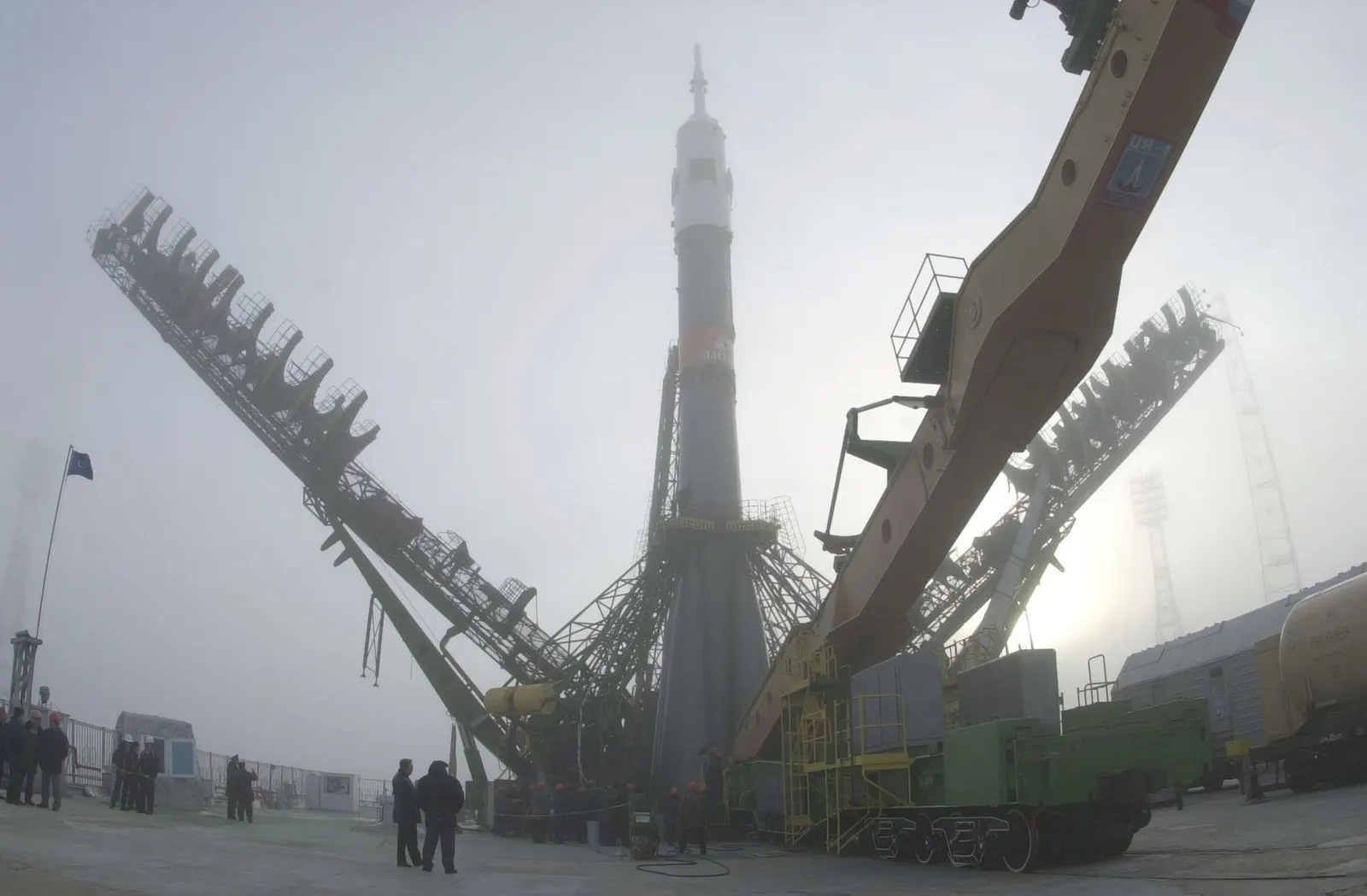
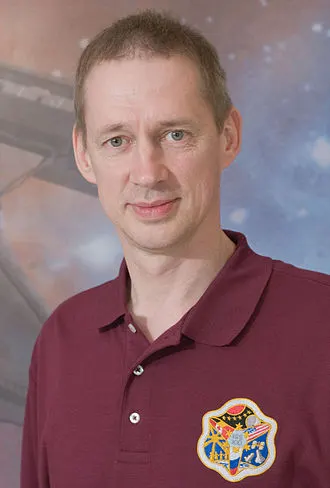
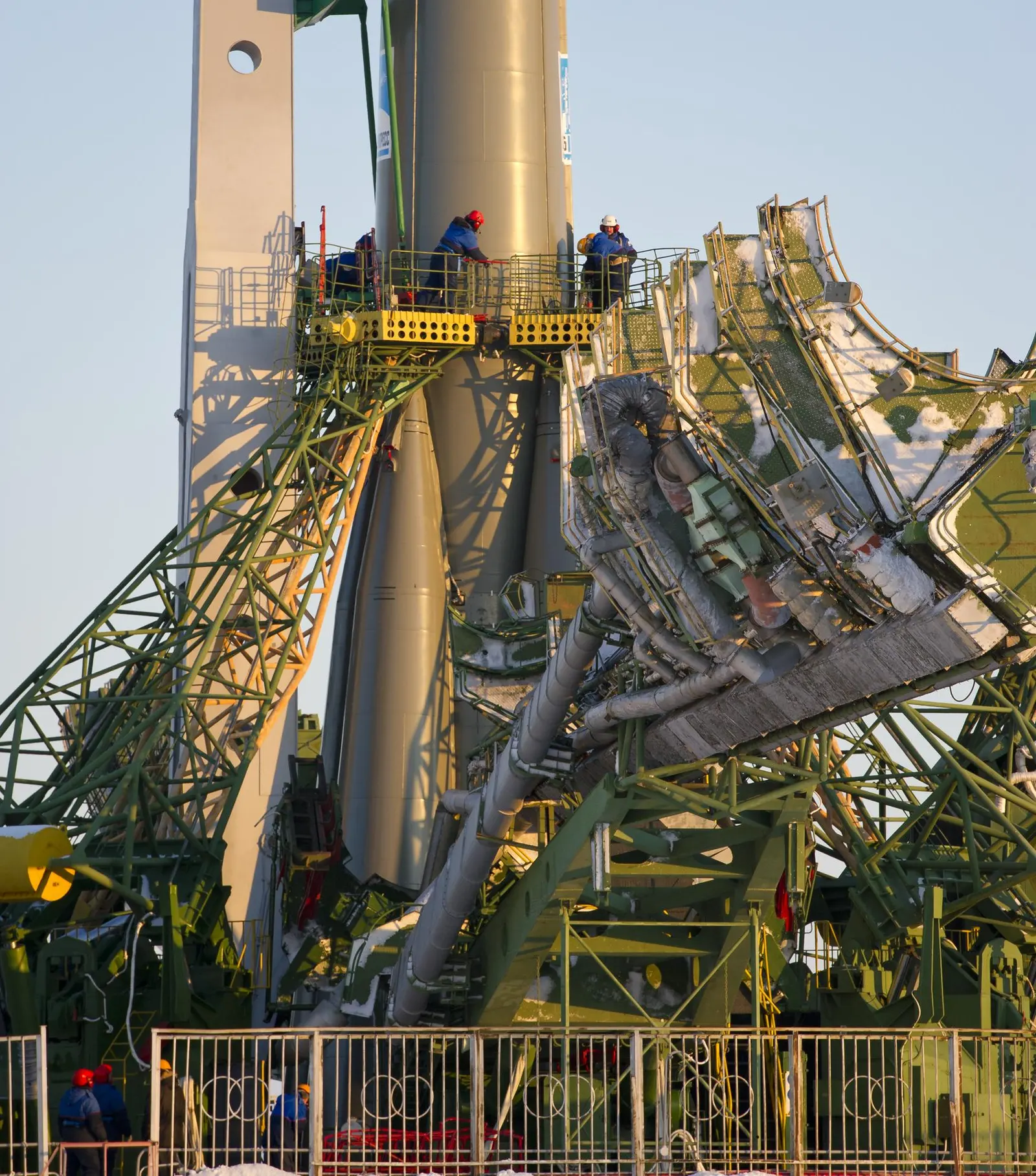
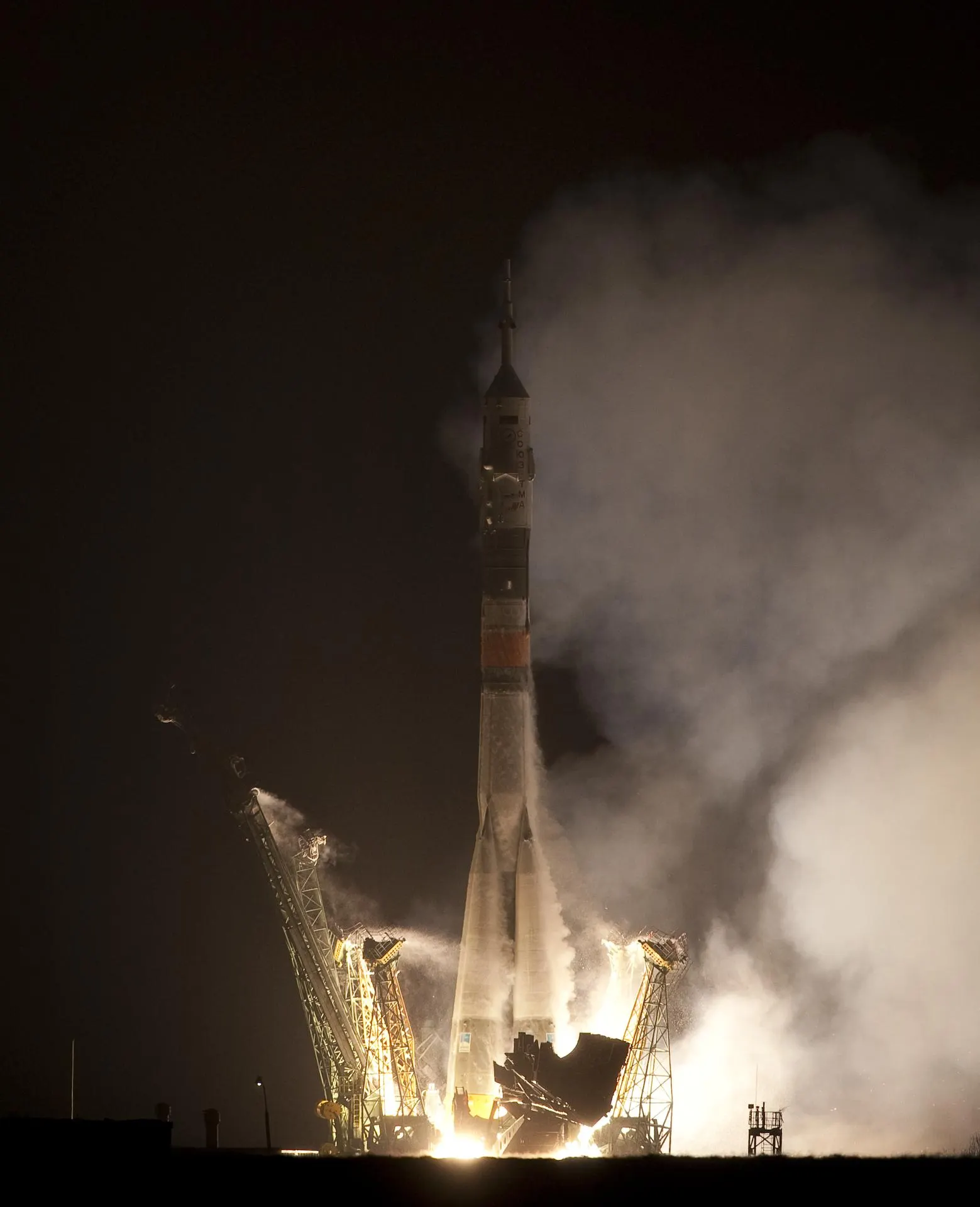
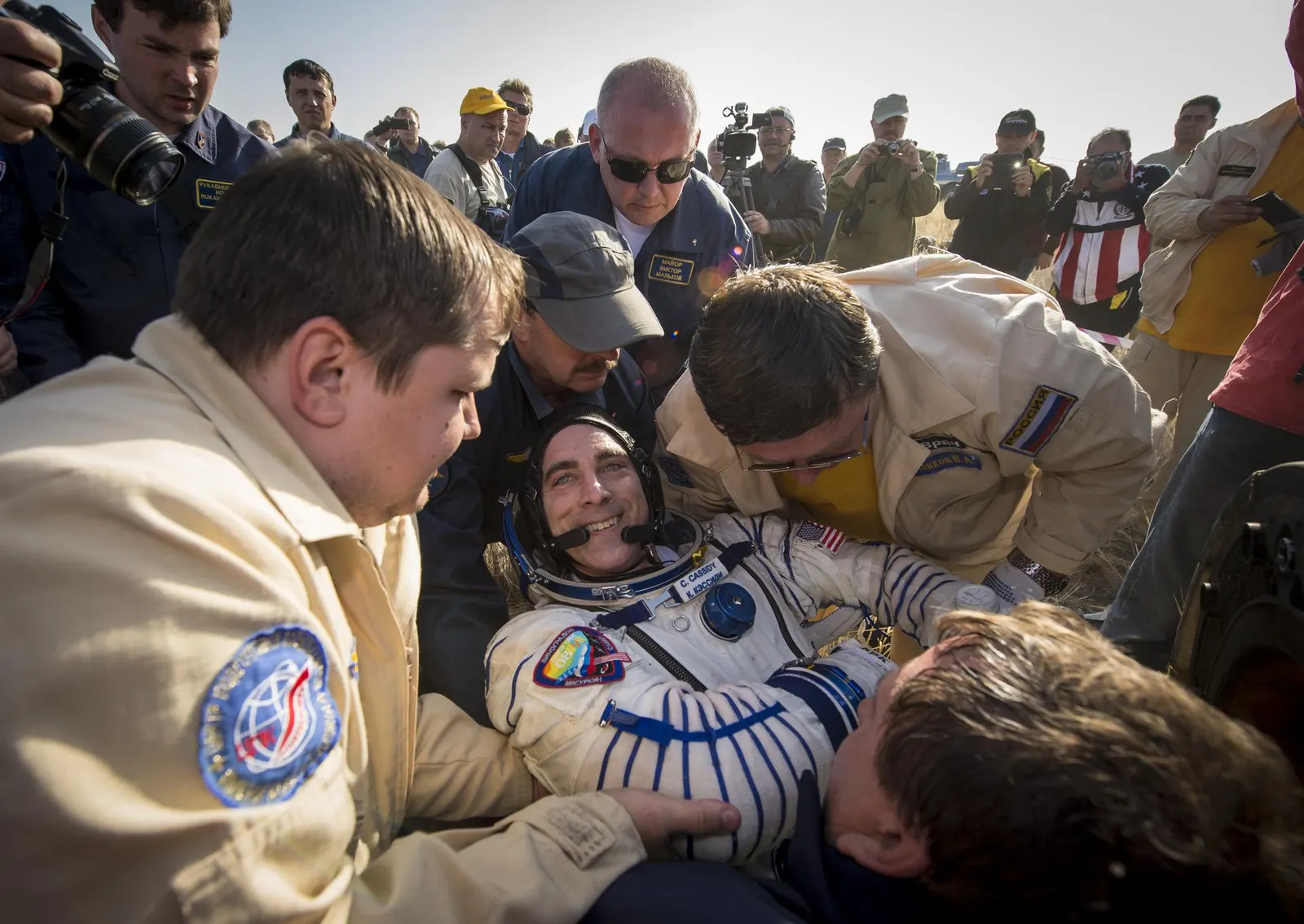
Soyuz TMA-1, launched on 30 October 2002, was the maiden flight of the redesigned Soyuz TMA — re-engineered with a 'glass' cockpit and roomier couches to accommodate a wider range of astronaut body sizes. Russian commander Sergei Zalyotin and flight engineer Yuri Lonchakov flew it up with Belgian ESA astronaut Frank De Winne, who carried out the 'Odissea' science mission over eight days at the ISS before the trio returned aboard the older Soyuz TM-34 lifeboat. The fresh TMA-1 then served as the station's lifeboat for the Expedition 6 crew. After the Columbia disaster grounded the Shuttle, TMA-1 became their ride home in May 2003 — but a control failure forced a steep ballistic re-entry, exposing Budarin, Bowersox and Pettit to about 8 g and landing them hundreds of kilometres off target.
Crew
Sergei Mikayev
Commander
Listed roster name; the TMA-1 ascent commander was Sergei Zalyotin (Russia, Rosaviakosmos)
Frank De Winne
Flight Engineer (visiting, Odissea mission)
Belgium, ESA; first spaceflight; returned aboard Soyuz TM-34
Yuri Lonchakov
Flight Engineer
Russia, Rosaviakosmos; returned aboard Soyuz TM-34
Key Milestones
2002-10-30
Maiden launch of the Soyuz TMA series from Baikonur
2002-11-01
Docking to the ISS Pirs module
2002-11-09
Zalyotin, De Winne and Lonchakov return aboard Soyuz TM-34 after the Odissea mission
2003-05-04
Expedition 6 crew lands aboard TMA-1 after a ballistic re-entry to ~8 g
Key Achievements
Maiden flight of the redesigned Soyuz TMA spacecraft
Frank De Winne flew the Belgian Odissea science mission
Brought the Expedition 6 crew home after Columbia, surviving a ballistic ~8 g re-entry