Image: NASA/Bill Ingalls
Soyuz TMA-8
Mission Profile
| Launch date | 2006-03-30 |
|---|---|
| Launch site | Baikonur Cosmodrome, Site 1/5 |
| Launch vehicle | Soyuz-FG |
| Spacecraft | Soyuz TMA (11F732A17) |
| Target | Low Earth Orbit |
| Type | Crewed |
| End date | 2006-09-29 |
| Duration | 182 days (spacecraft); Pontes flew ~9 days |
| Partners | Roscosmos, NASA, Brazilian Space Agency (AEB) |
Overview
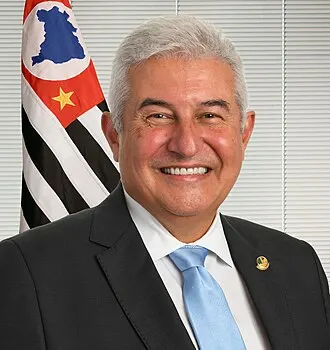
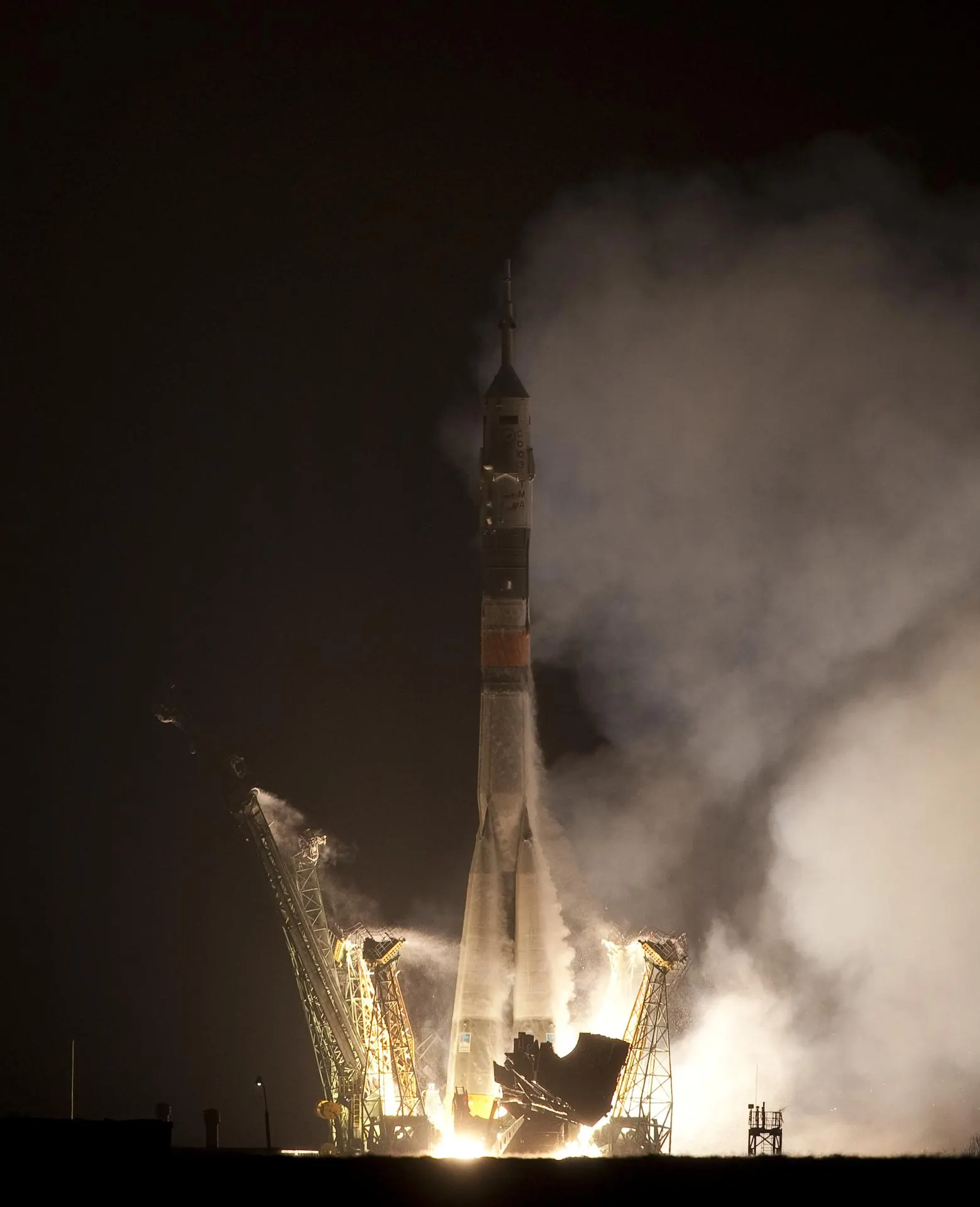
Soyuz TMA-8 launched from Baikonur on 30 March 2006 with Expedition 13 commander Pavel Vinogradov and NASA flight engineer Jeffrey Williams, joined by Brazil's first astronaut, air-force pilot Marcos Pontes. Flying the 'Missão Centenário' to mark a century since Alberto Santos-Dumont's pioneering flight, Pontes became the first Brazilian — and the first Lusophone and first South American — to reach orbit, carrying out eight Brazilian microgravity experiments over roughly nine days. He returned to Earth aboard Soyuz TMA-7 with the departing Expedition 12 crew. Vinogradov and Williams remained on the ISS for half a year, later hosting Iranian-American spaceflight participant Anousheh Ansari — the first self-funded woman in space — who joined them for the TMA-8 landing in September 2006.
Crew
Pavel Vinogradov
Commander
Russia, Roscosmos; Expedition 13 commander
Jeffrey Williams
Flight Engineer
USA, NASA; Expedition 13 flight engineer
Marcos Pontes
Spaceflight Participant (visiting, Missão Centenário)
Brazil, AEB; first Brazilian in space; returned aboard Soyuz TMA-7
Key Milestones
2006-03-30
Launch from Baikonur with Vinogradov, Williams and Pontes
2006-04-01
Docking to the International Space Station
2006-04-08
Marcos Pontes returns to Earth aboard Soyuz TMA-7
2006-09-29
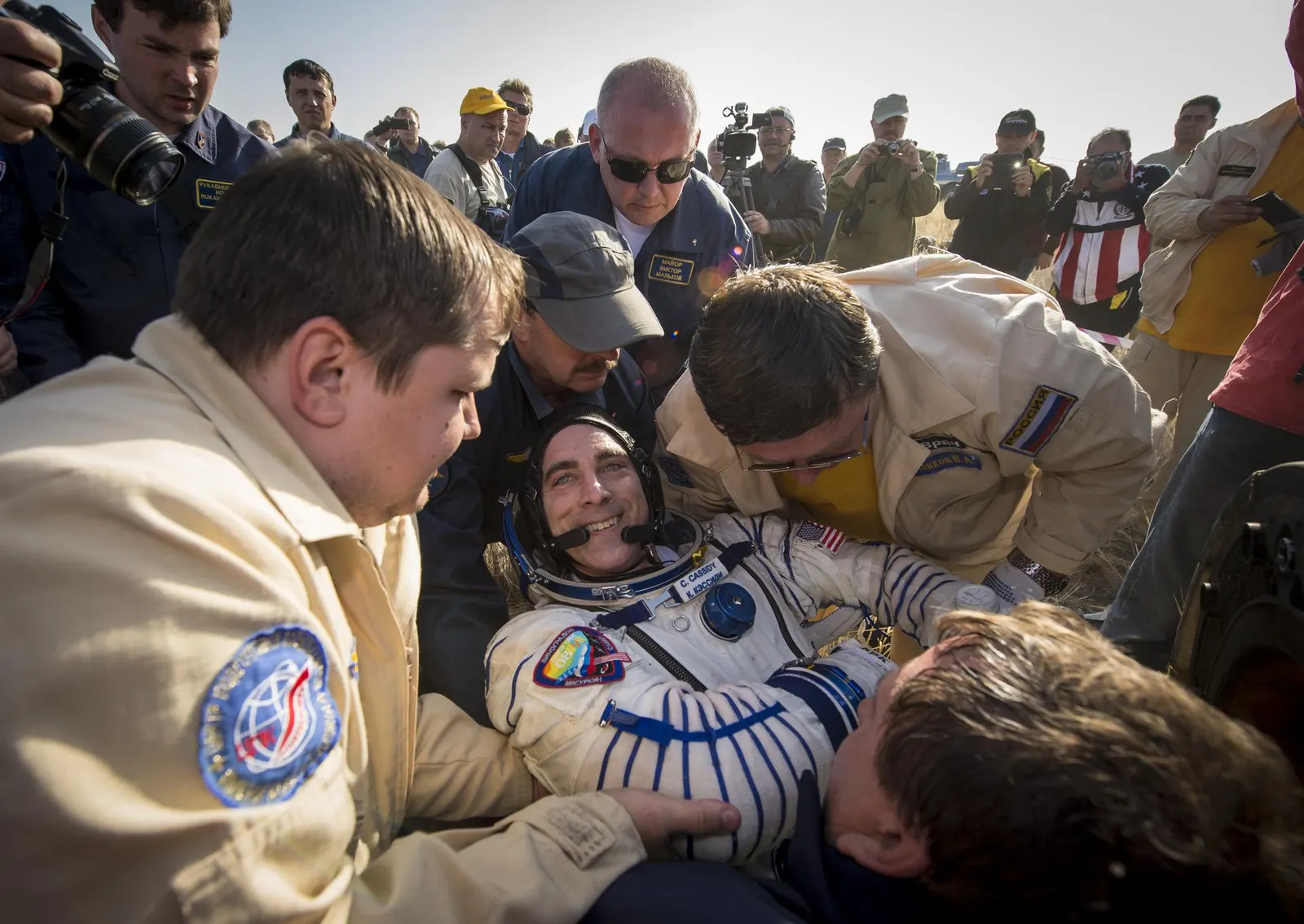
Vinogradov, Williams and Anousheh Ansari land aboard TMA-8
Key Achievements
Marcos Pontes became the first Brazilian, first Lusophone and first South American in space
Flew the Missão Centenário marking 100 years of Brazilian aviation
Delivered the Expedition 13 long-duration crew to the ISS