
South Korea · KARIfirst
June 21, 2022
Nuri / KSLV-II — South Korea's first indigenous orbital launch
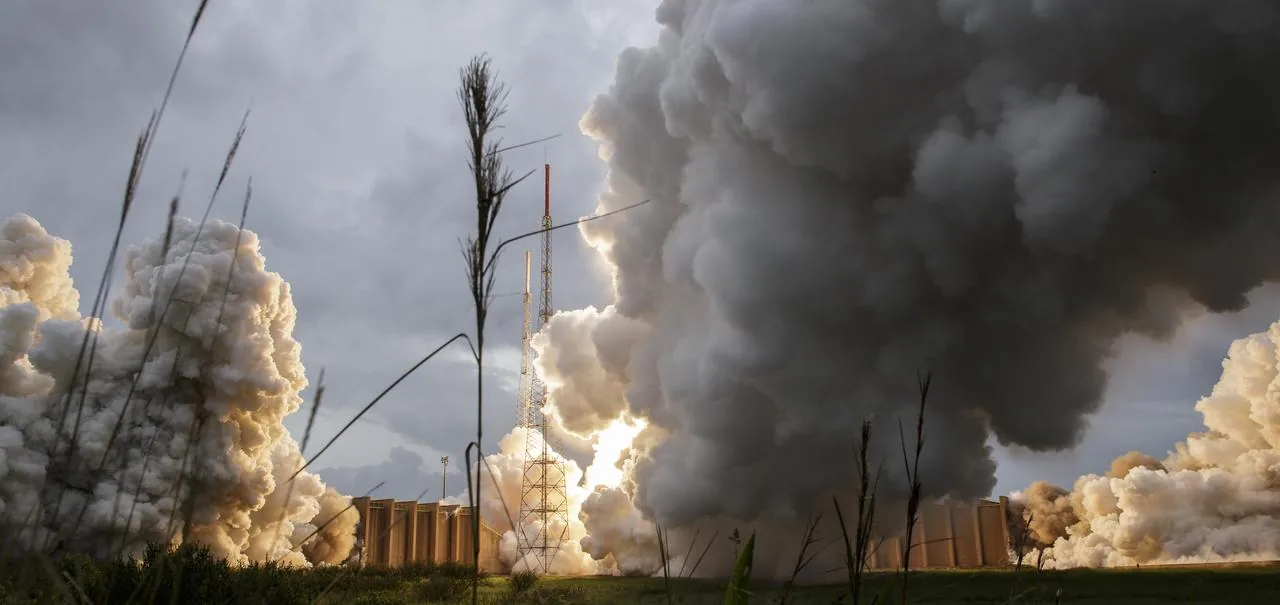
At exactly 4:00 p.m. on 21 June 2022, a white three-stage rocket rose off its pad at the Naro Space Center in Goheung, on South Korea's southern coast, riding the combined 300 tonnes of thrust from four Korean-built engines. Eight months earlier the country had watched the first Nuri climb flawlessly, only to fall agonisingly short when its third stage shut down 46 seconds early. This time the nation held its breath through every staging event, and the telemetry told a perfect story: third-stage burnout on time, payloads separated, orbit achieved.
Nuri, formally KSLV-II, was more than a decade and about two trillion won in the making, designed, built and tested entirely with domestic technology. Its predecessor Naro-1 had flown on a Russian-built first stage; Nuri's 47.2-metre, 200-tonne airframe was Korean from engines to avionics. The first flight's failure had been traced to a helium tank that shook loose inside the third-stage oxidizer tank, a subtle buoyancy effect missed in the fixture design. Engineers reinforced it, and on the second flight the vehicle delivered a 162.5-kilogram performance verification satellite and a 1.3-tonne mass simulator to a 700-kilometre sun-synchronous orbit.
With that, South Korea became the seventh country capable of placing a satellite of more than one tonne into orbit on a wholly homegrown launcher, joining Russia, the United States, France, China, Japan and India. In the days that followed, the verification satellite ejected four CubeSats built by Korean universities, each release a small graduation ceremony for the country's space programme. Nuri flew again in May 2023 carrying eight working satellites, and its technology is being transferred to Hanwha Aerospace, seeding a private Korean launch industry.
“We have arrived at a monumental moment not just in Korea's science technology history but for Korea's history as well.”
Mission Data
Launch
21 Jun 2022, 16:00 KST (Naro Space Center)
Height
47.2 m
Liftoff mass
~200 t
Payload
162.5 kg verification satellite + 1.3 t mass simulator
Orbit
700 km sun-synchronous
Development cost
~2 trillion won (~US$1.6 billion)
Key Facts
The first Nuri failed in October 2021 because a helium tank tore loose inside the third-stage oxidizer tank; investigators found the fixture design had not fully accounted for buoyancy that increases during flight.
South Korea's previous rocket, Naro-1, flew on a Russian-built first stage; Nuri is Korean down to its engines, the country's first fully indigenous orbital launcher.
Four university-built CubeSats rode to orbit tucked inside the performance verification satellite and were pushed out one at a time over the following days.
Nuri's first stage clusters four KRE-075 engines of 75 tonnes thrust each, every one designed and manufactured domestically.
The rocket's technology is being handed to Hanwha Aerospace, turning a government launcher into the seed of a private Korean launch industry.
Why It Mattered
Nuri's success moved South Korea from space customer to space power. Independent orbital launch is a capability only a handful of countries possess, and the seventh seat at the heavy-satellite table gave Seoul strategic autonomy it had previously rented from foreign providers. The flight anchored a national roadmap that runs through the Danuri lunar orbiter, a planned lunar lander and the next-generation KSLV-III, and it kick-started commercialisation of the country's launch sector through technology transfer to private industry.
Korea Aerospace Research Institute (KARI), KOGL Type 1, via Wikimedia Commons
Official sourceContinue your journey

Moment
Tianwen-1 / Zhurong — first Chinese soft landing on Mars
From the same era
Moment
James Webb Space Telescope releases first science images
From the same era

Moment
DART impacts Dimorphos — first asteroid deflection test
From the same era

Moment
Artemis I — uncrewed Moon-orbit test flight
From the same era