China · CNSA / CMSAmission
April 29, 2021
Tianhe — Tiangong space station core module launched
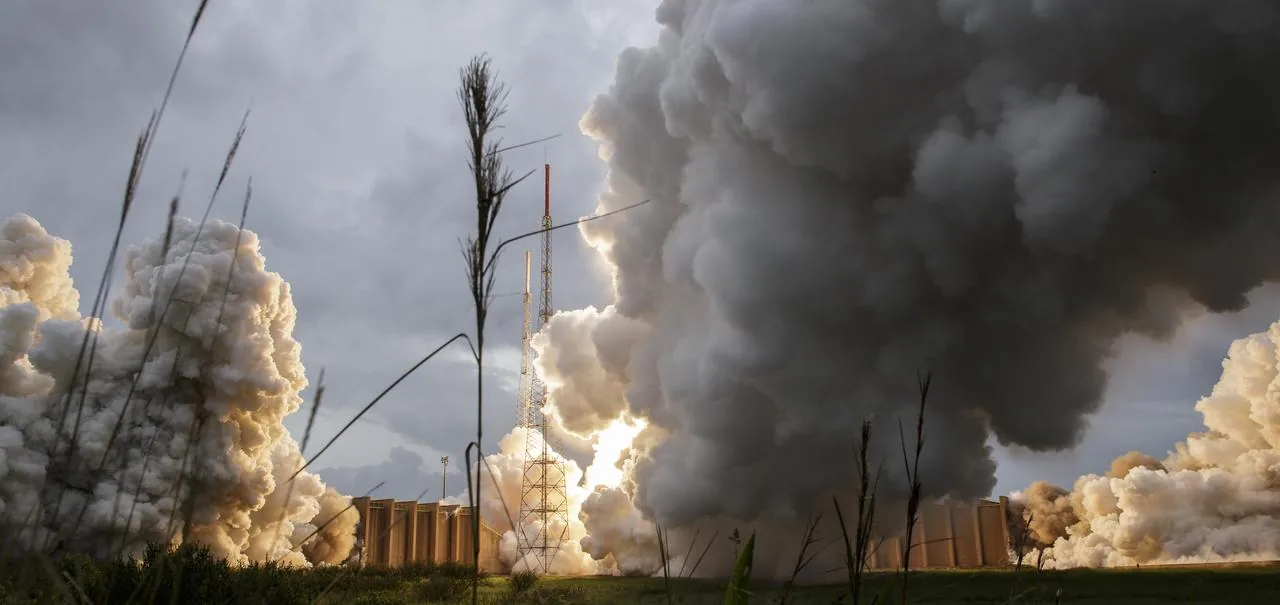
At 11:23 a.m. Beijing time on 29 April 2021, the coastline of Hainan island shook as a Long March 5B climbed off its pad at Wenchang, watched by crowds on the surrounding beaches. In its cavernous fairing rode Tianhe, 'Harmony of the Heavens,' a 22.5-tonne cylinder that was the largest and most complex spacecraft China had ever built. About 494 seconds after liftoff it separated cleanly into orbit, and the construction of China's permanent space station had begun.
The module was the answer to a locked door. Barred from the International Space Station partnership, in part by the 2011 Wolf Amendment restricting NASA cooperation with China, the country spent a decade rehearsing with the small Tiangong-1 and Tiangong-2 laboratories. Tianhe was the real thing: 16.6 meters long and 4.2 meters across, with regenerative life support, a robotic arm, and living quarters for three, built to serve as the command and control core of the entire station.
Events moved quickly. That June, the Shenzhou-12 crew of Nie Haisheng, Liu Boming and Tang Hongbo floated aboard as Tianhe's first residents. The Wentian and Mengtian laboratory modules followed, completing the T-shaped Tiangong station by late 2022, and it has been continuously crewed since June 2022. The launch had a controversial coda: the rocket's 20-tonne core stage tumbled back uncontrolled ten days later, splashing into the Indian Ocean near the Maldives and drawing sharp international criticism.
With Tianhe's arrival, humanity operated two continuously inhabited outposts in orbit for the first time since the Mir era. As the International Space Station approaches retirement around 2030, the station that began with this launch may become the longest-serving address in orbit, and it anchors China's road to crewed lunar flight.
Mission Data
Launch
29 Apr 2021, 03:23 UTC (11:23 Beijing time)
Rocket
Long March 5B (Y2), Wenchang, Hainan
Module mass
22.5 tonnes
Dimensions
16.6 m long, 4.2 m max diameter
Crew capacity
3 taikonauts, long-duration
First residents
Shenzhou-12 crew, Jun 2021
Key Facts
Tianhe was the largest and most complex spacecraft China had ever independently developed, by the space agency's own description.
Its name means 'Harmony of the Heavens,' and the station it anchors, Tiangong, means 'Heavenly Palace.'
China built its own station partly because the 2011 Wolf Amendment effectively barred it from the International Space Station partnership.
The rocket's massive core stage made an uncontrolled reentry ten days after launch, splashing down near the Maldives and igniting a global debate on space debris.
Tiangong has been continuously occupied since June 2022, making it humanity's second permanently crewed outpost alongside the ISS.
Why It Mattered
Tianhe's launch ended the International Space Station's three-decade run as the only game in orbit. In eighteen months China assembled a complete, permanently crewed national station, demonstrating heavy-lift launch, autonomous module assembly and sustained human habitation as an independent capability. It rebalanced the geopolitics of low Earth orbit, gave researchers worldwide a second microgravity laboratory through UN-coordinated experiments, and positioned China for its declared goal of landing taikonauts on the Moon. The era of a single space station was over.
China News Service (中国新闻社), CC BY 4.0
Official source