
International · NASA / SpaceXhuman
March 18, 2025
Wilmore and Williams return after unplanned nine-month ISS stay
At 5:57 p.m. Eastern on 18 March 2025, four main parachutes lowered Dragon Freedom into calm water off Tallahassee, Florida, and a saga the whole world had followed finally ended. As recovery boats closed in, a pod of dolphins circled the scorched capsule on live television. Inside were Nick Hague, Aleksandr Gorbunov, and the two astronauts everyone was waiting for: Butch Wilmore and Suni Williams, home after 286 days on what had been sold as a roughly week-long test flight.
Wilmore and Williams had launched on 5 June 2024 aboard Boeing's Starliner for its first crewed flight test. Helium leaks and failing thrusters during the approach to the station turned the shakedown cruise into a months-long engineering debate, and in August 2024 NASA made the call: Starliner would fly home empty, which it did that September, and its crew would stay aboard the ISS. Crew-9 launched on 28 September 2024 with two empty seats reserved for the ride back.
The two test pilots refused the word 'stranded.' They folded into Expedition 72 as full crew members; Williams took command of the station, and on a January 2025 spacewalk with Wilmore she pushed her career total to 62 hours and 6 minutes outside, the most cumulative spacewalk time by any woman. By splashdown the pair had logged 121,347,491 miles and 4,576 orbits. Once Crew-10 arrived on 16 March, the way home was clear.
The hatch opened at 6:38 p.m., and the crew emerged into the Gulf evening to grins that matched Hague's description from inside the capsule. The episode reshaped American spaceflight: Boeing's Starliner did not fly crew again during the period, while NASA's two-provider strategy stood vindicated, since the system absorbed a failed spacecraft without losing a crew. Williams retired in December 2025 with 608 cumulative days in space, second all-time among NASA astronauts.
“What a ride. I see a capsule full of grins from ear to ear.”
Mission Data
Splashdown
18 Mar 2025, 5:57 p.m. EDT, off Tallahassee, Florida
Wilmore & Williams mission length
286 days (planned ≈8 days)
Distance travelled
121,347,491 miles
Orbits of Earth
4,576
Original launch
5 Jun 2024, Boeing Starliner Crew Flight Test
Return capsule
SpaceX Dragon Freedom (Crew-9)
Key Facts
Minutes after splashdown, a pod of dolphins circled Dragon Freedom on the live NASA broadcast, an image that instantly defined the homecoming.
Williams came home holding the record for cumulative spacewalk time by a woman: 62 hours 6 minutes across nine EVAs, set during the extended stay.
Their original ride, Starliner, flew home without them in September 2024 and landed safely in New Mexico, proving the capsule could have made it but vindicating NASA's caution.
Crew-9 launched in September 2024 with two seats deliberately empty, and its commander Nick Hague was the first active U.S. Space Force Guardian to fly to orbit.
At 286 days, Wilmore and Williams share the sixth-longest single spaceflight by an American, an accidental endurance record from an eight-day test flight.
Why It Mattered
The Starliner saga became the defining stress test of NASA's commercial crew era, and the agency passed it. Having two independent crew transportation systems meant a malfunctioning spacecraft cost schedule and reputation, not lives: the crew simply stayed aboard the station and came home on the other provider's vehicle. The episode reshaped public understanding of spaceflight risk, fueled months of political controversy over whether the astronauts were 'stranded,' and deepened Boeing's crisis while cementing SpaceX's operational dominance. It also quietly demonstrated the deeper lesson of the ISS program: a professional crew can absorb a nine-month change of plans and treat it as just another expedition.
Mission Crew
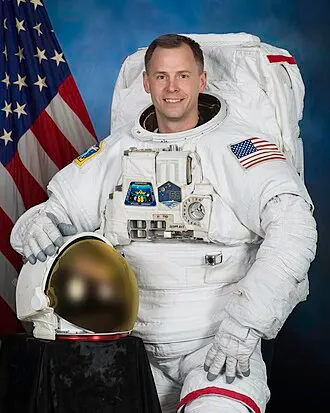
Barry "Butch" WilmoreSunita "Suni" WilliamsNick HagueAleksandr Gorbunov
NASA/Keegan Barber
Official sourceContinue your journey

Astronaut
Aleksandr Gorbunov
Flew on this mission
Astronaut
Nick Hague
Flew on this mission

Moment
Blue Ghost — first fully-successful commercial Moon landing
From the same era

Moment
IM-2 Athena reaches the lunar south pole — partial success
From the same era

Moment
Shenzhou 20 launches crew to Tiangong
From the same era

Moment
Tianwen-2 launches — China's first asteroid sample-return mission
From the same era