Mars Exploration Programs
The four major government and multi-agency Mars exploration programs active as of 2026. Each program spans multiple missions, multi-year contracts, and multi-billion dollar budgets.
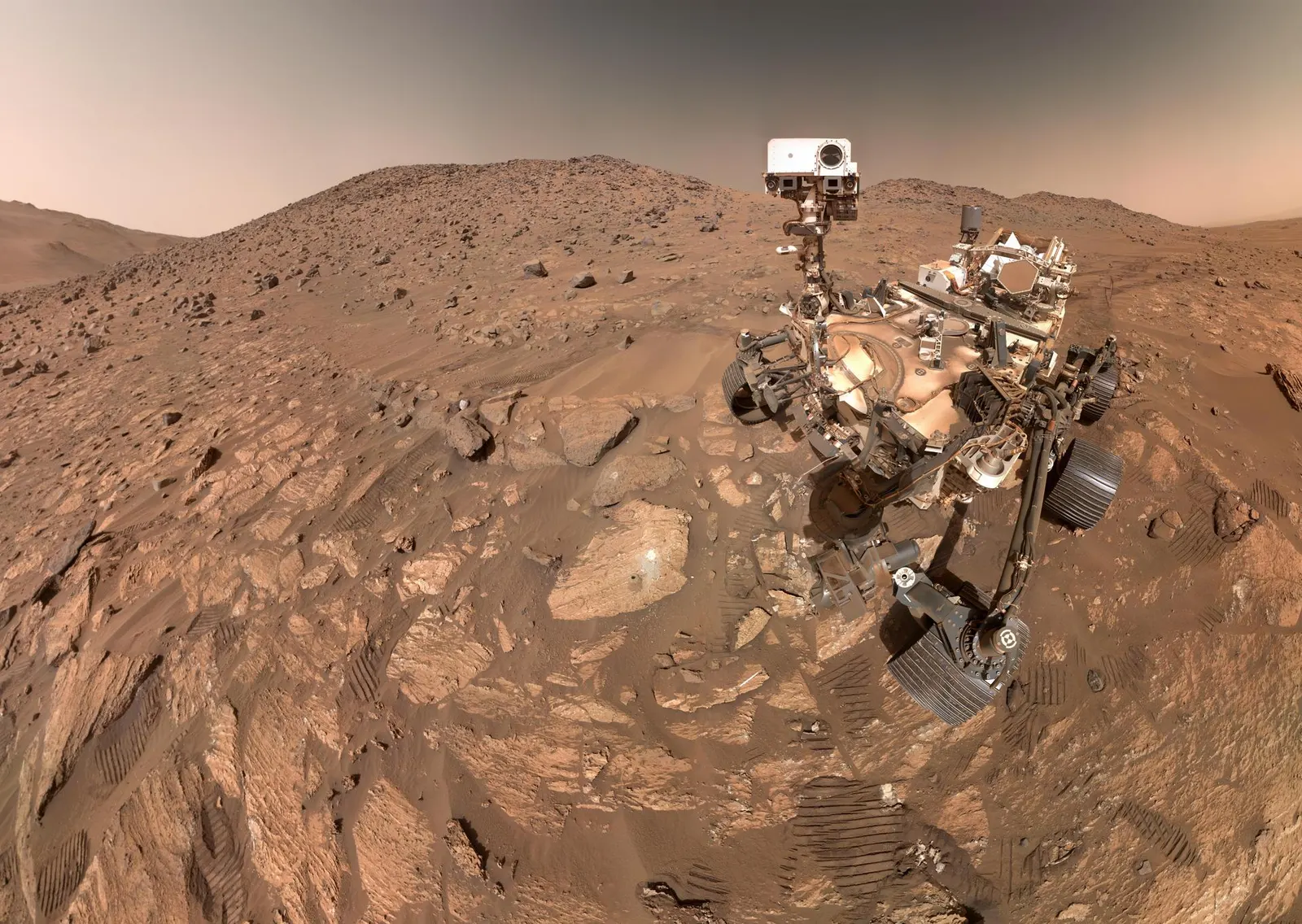
Mars Exploration Program
NASA · North America
NASA's Mars Exploration Program is a multi-decade portfolio of robotic orbiters, landers and rovers — Curiosity (still operational since August 2012), Perseverance (with Ingenuity helicopter, Feb 2021), MAVEN, MRO and Mars Odyssey — plus the embattled $11B+ Mars Sample Return campaign currently under architectural restructure following a 2023 Independent Review Board finding that the planned mission would cost $8-11B and slip to 2040 [1][2][3][4]. The program sustains roughly $600-800M/year in NASA Science Mission Directorate spending and underpins multi-decade contracts at Lockheed Martin (rover descent stages), Aerojet Rocketdyne (RS-25-class propulsion via L3Harris), Maxar (instruments), and JPL/Caltech (integration) [5][6][7].
NASA Jet Propulsion Laboratory (Caltech)Lockheed MartinL3Harris Technologies (Aerojet Rocketdyne)Maxar Technologies+3 more
Full program profile →
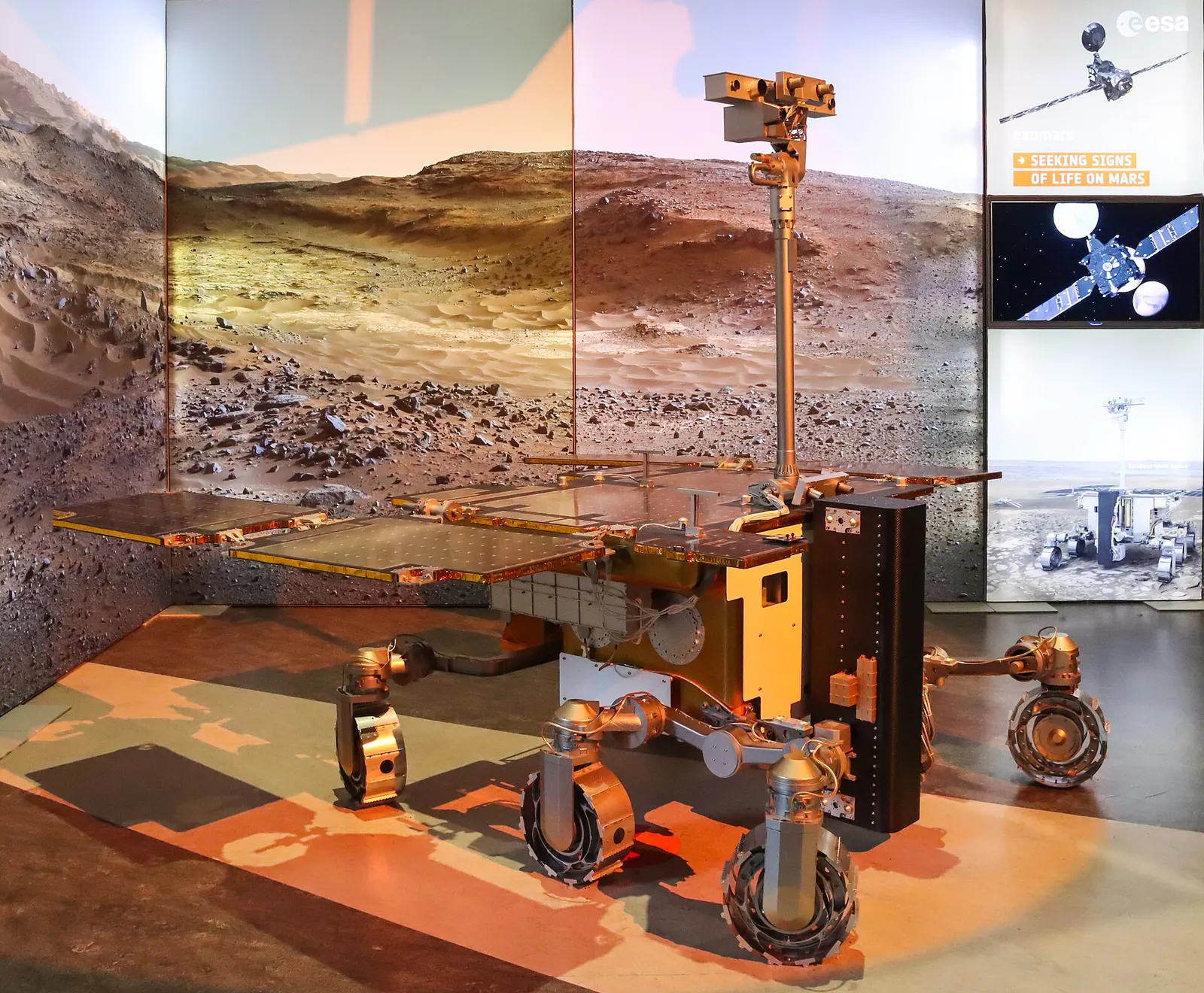
ExoMars / Rosalind Franklin Rover
ESA · Europe
ExoMars is ESA's flagship Mars astrobiology programme, anchored by the Rosalind Franklin rover targeting a two-metre subsurface drill — the first instrument ever flown to Mars capable of accessing depths where ancient biosignatures may be preserved from radiation damage [1][2]. Originally a joint ESA-Roscosmos mission, the rover was unwound from Russia in March 2022 in response to the invasion of Ukraine and re-baselined under a Europeanised architecture with a new ESA-built landing platform, NASA contributions, and a now-confirmed launch on a SpaceX Falcon Heavy from Kennedy Space Center LC-39A no earlier than 2028, with arrival at Oxia Planum in 2030 [3][4][5].
Thales Alenia Space (Italy/France)OHB SEAirbus Defence and Space UK (Stevenage)Leonardo S.p.A.+3 more
Full program profile →
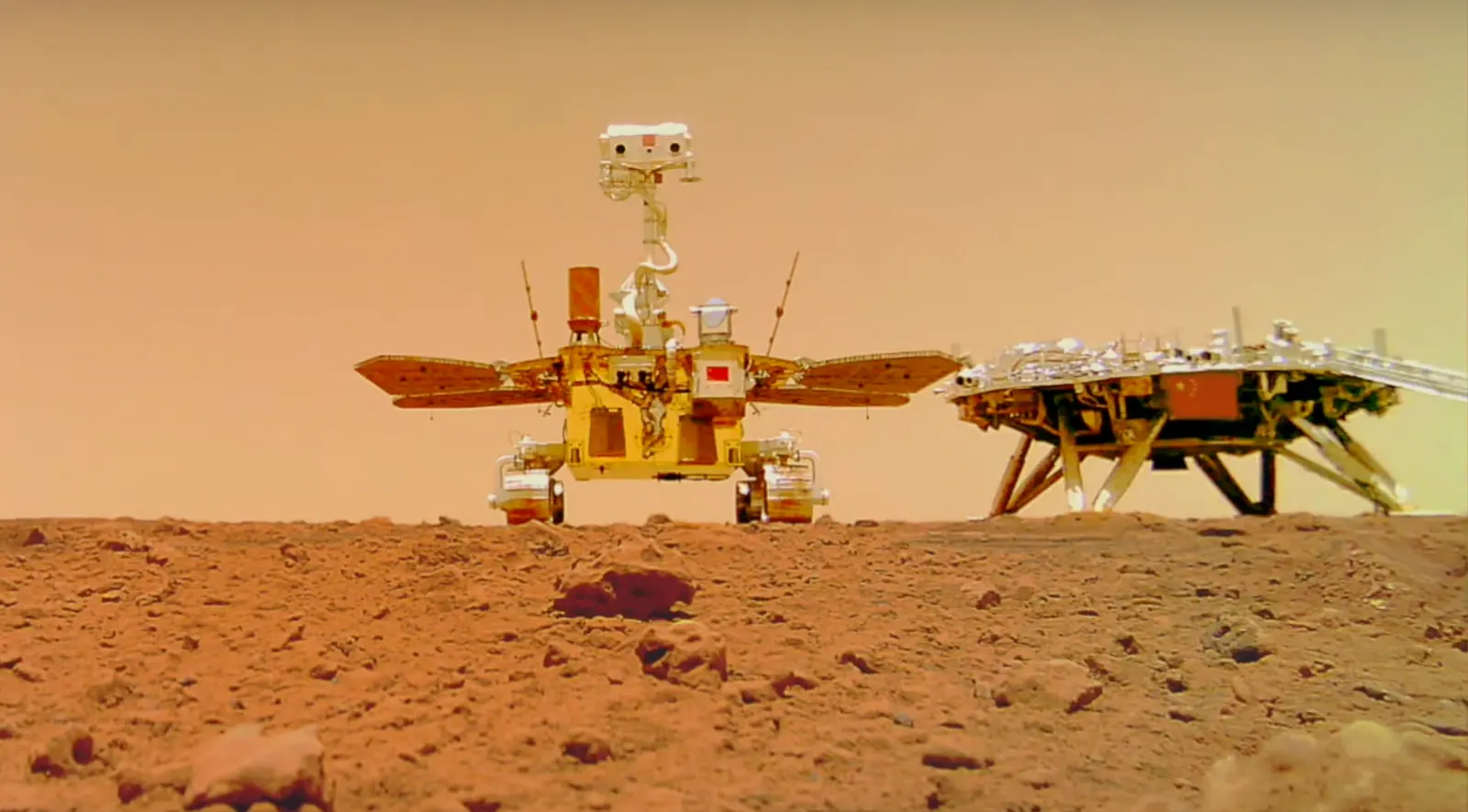
Tianwen Mars Exploration Programme
CNSA (China National Space Administration) · Asia-Pacific
Tianwen (天问, 'Questions to Heaven') is China's Mars exploration programme — Tianwen-1 (launched July 23, 2020, arrived Mars orbit February 10, 2021) made China the second nation to successfully soft-land and operate a rover (Zhurong) on Mars in May 2021, and the planned Tianwen-3 sample-return mission (NET 2028) targets first return of Mars samples to Earth, potentially ahead of NASA's reformulated Mars Sample Return programme [1][2][3]. Executed by CAST and CALT under CASC, with no listed pure-play exposure and a credible chance of beating NASA / ESA to a Mars sample-return first [4].
China Aerospace Science and Technology Corporation (CASC)China Academy of Space Technology (CAST)China Academy of Launch Vehicle Technology (CALT)Shanghai Academy of Spaceflight Technology (SAST)+2 more
Full program profile →
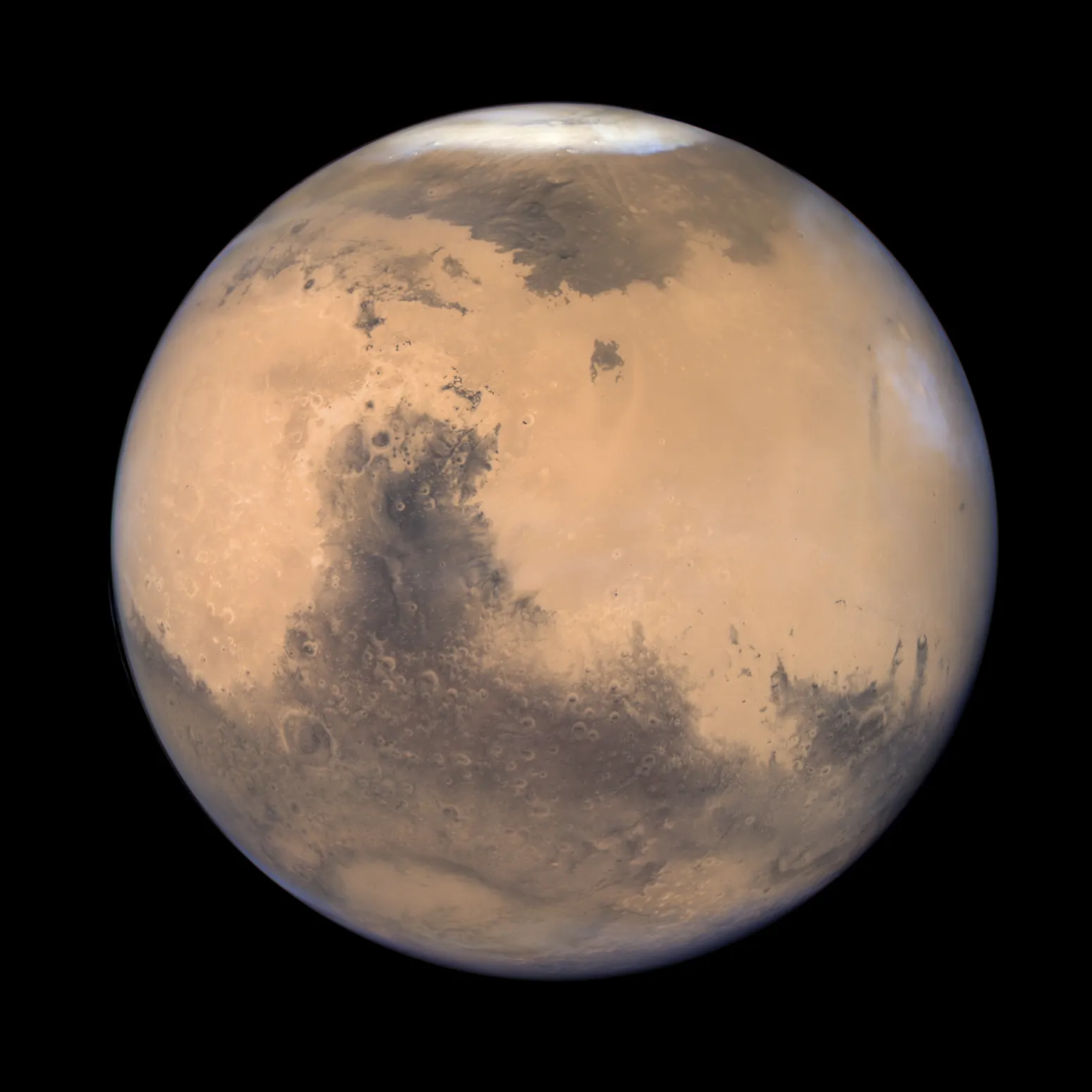
Emirates Mars + Asteroid Programme
UAE Space Agency / MBRSC · Middle East
The UAE's Emirates Mars Mission (EMM, 'Hope' probe / Al-Amal) made the United Arab Emirates the first Arab nation to reach Mars when it entered orbit on February 9, 2021 — at a total programme cost reported in the region of $200M [1][2]. The follow-on Emirates Mission to the Asteroid Belt (EMA) — announced in October 2021 — is a far more ambitious 7-year, 5-billion-kilometre cruise to seven main-belt asteroids culminating in a 2034 rendezvous and landing on (269) Justitia, targeting a late-2028 launch on a commercial U.S. launcher [3][4]. Both missions are executed by the Mohammed Bin Rashid Space Centre (MBRSC) in collaboration with the Laboratory for Atmospheric and Space Physics (LASP) at the University of Colorado Boulder, anchoring an Emirati deep-space industrial and knowledge-transfer capability [1][3].
Mohammed Bin Rashid Space Centre (MBRSC) — mission prime, spacecraft integrationLaboratory for Atmospheric and Space Physics (LASP), University of Colorado Boulder — spacecraft co-development, payload integrationArizona State University — EMIRS instrument science leadUniversity of California, Berkeley Space Sciences Laboratory — EMUS instrument science lead+2 more
Full program profile →
See all space programs
Browse the complete catalog of 45 tracked programs across all destinations.