Image: ISRO
Aditya-L1
Mission Profile
| Launch date | 2023-09-02 |
|---|---|
| Launch vehicle | PSLV-XL |
| Spacecraft | Aditya-L1 spacecraft |
| Target | Earth-Sun L1 |
| Type | Robotic |
| Cost | ₹378 crore (~$45M) |
| Mass | 1,475 kg |
| Duration | Primary 5 years; designed for ~10-year operational lifetime |
| Partners | ISRO (lead), Indian Institute of Astrophysics (VELC), Inter-University Centre for Astronomy and Astrophysics (SUIT) |
| Instruments | VELC (visible emission line coronagraph), SUIT (Solar UV Imaging Telescope), SoLEXS, HEL1OS, ASPEX, PAPA, Magnetometer |
Prime Contractors
Companies that built, launched, or operate this mission. Tickers link to their investor profile.
- Indian Space Research Organisation
- Indian Institute of Astrophysics
- Hindustan Aeronautics Limited
Overview
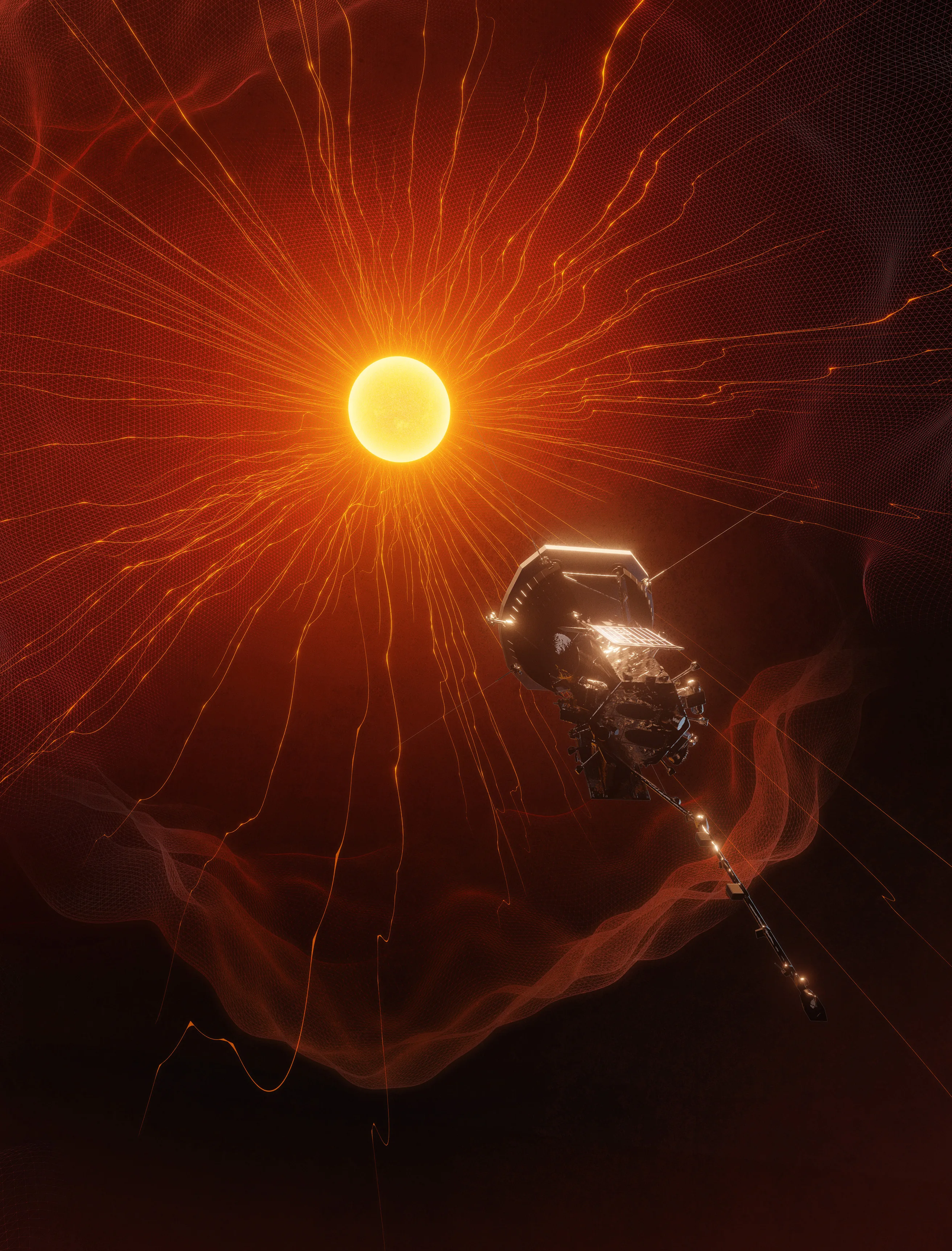
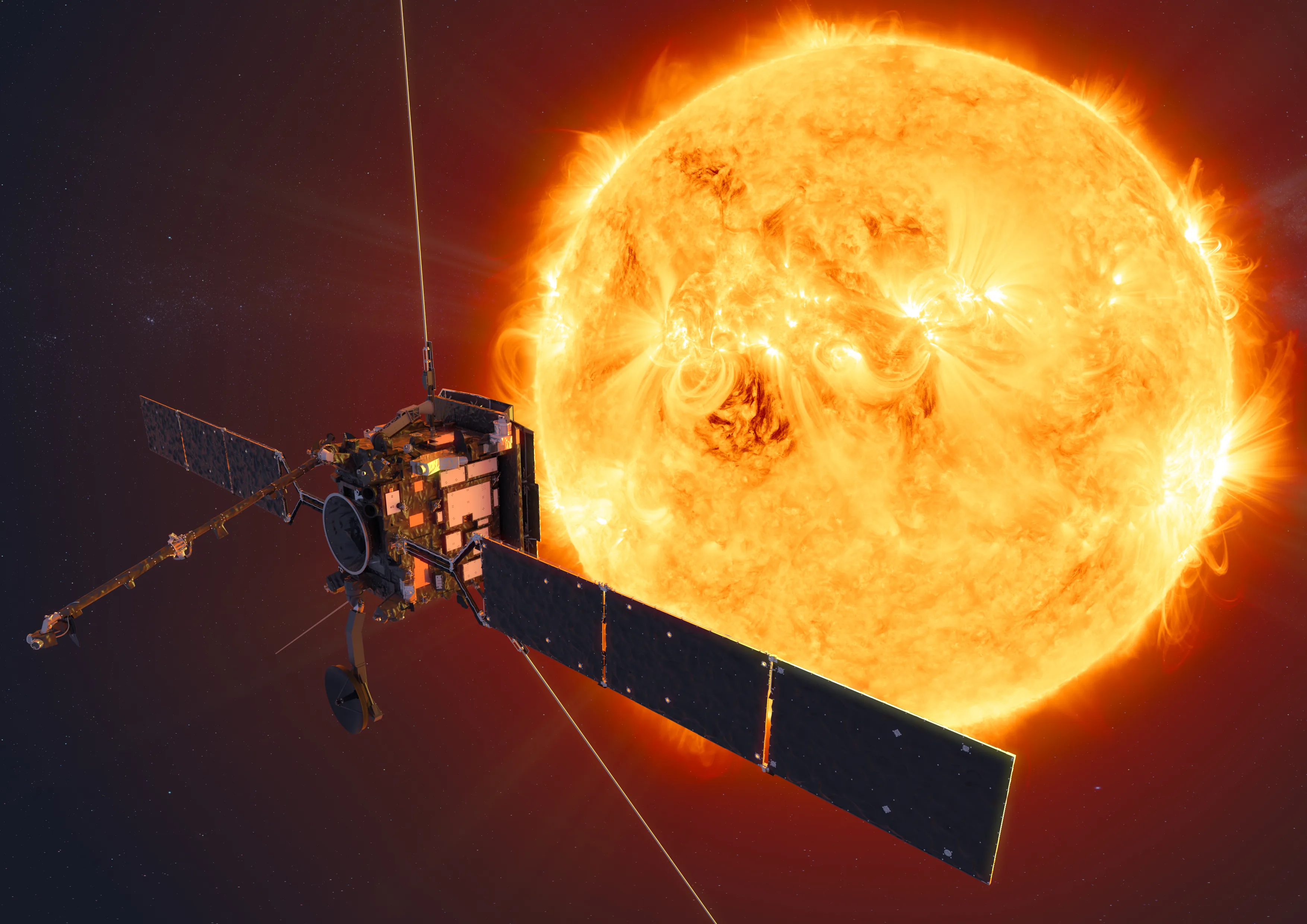
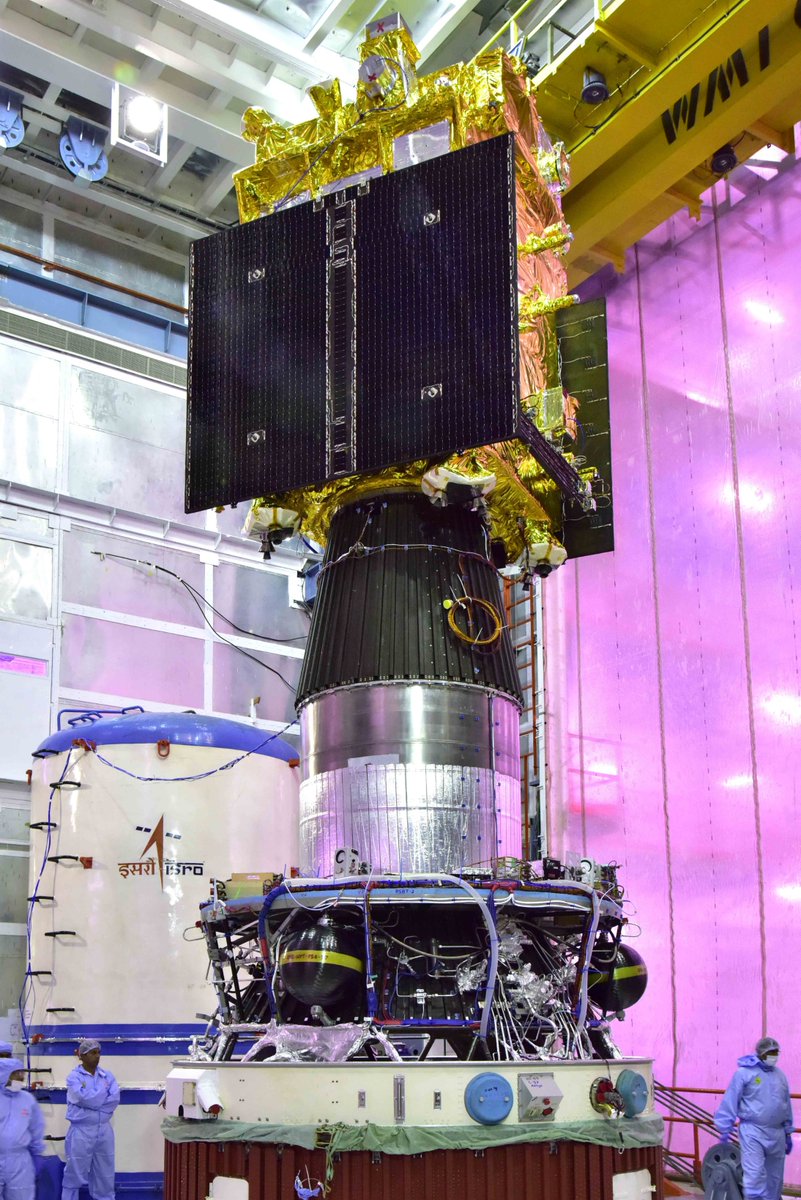
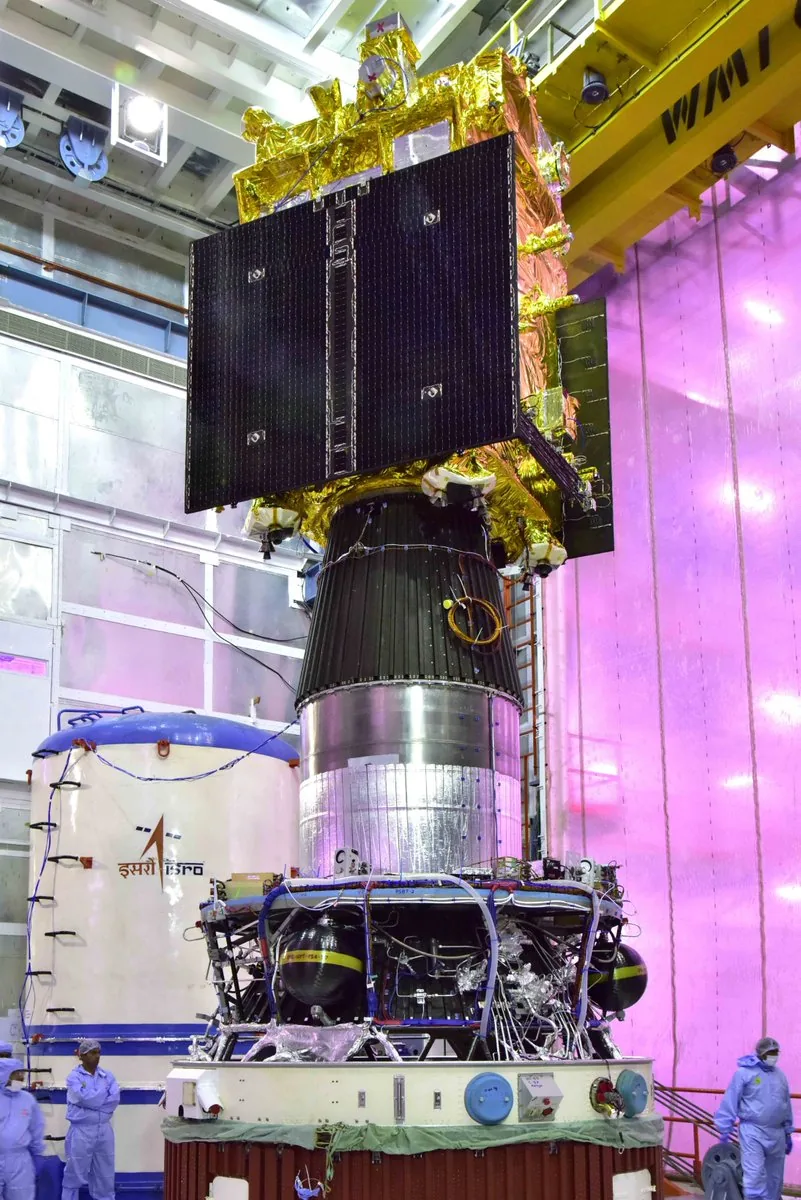
Aditya-L1 is India's first dedicated solar mission and ISRO's first interplanetary-class observatory, designed to study the Sun's photosphere, chromosphere, and corona from a halo orbit around the Sun-Earth L1 Lagrangian point. Launched on a PSLV-XL from Sriharikota on 2 September 2023, Aditya-L1 used progressively higher Earth orbits before transferring to L1, where it inserted on 6 January 2024 — making India only the fourth country (after the United States, ESA, and Japan) to operate a space-based solar observatory. From L1, roughly 1.5 million km sunward of Earth, Aditya-L1 has an unobstructed view of the Sun and is shielded from Earth's magnetosphere, making it ideal for studying the solar wind and coronal mass ejections without the interference experienced by lower-Earth-orbit observatories. The 1,475 kg spacecraft carries seven instruments — VELC (a coronagraph), SUIT (UV imaging telescope), SoLEXS and HEL1OS (X-ray spectrometers), ASPEX and PAPA (particle analyzers), and a magnetometer. The mission's primary science objectives include understanding coronal heating, the origin of solar wind, and space weather drivers — a topic of growing economic importance as satellite constellations and grid infrastructure become more vulnerable to solar storms. Aditya-L1 also coordinates observations with NASA's Parker Solar Probe and ESA's Solar Orbiter for joint multi-vantage-point campaigns.
Key Milestones
2023-09-02
Launch on PSLV-XL from Sriharikota
2023-09-19
Trans-Lagrangian Insertion maneuver
2024-01-06
Successful L1 halo orbit insertion
2024-02-29
VELC coronagraph captures first solar images
2024-05-11
Observes major coronal mass ejection causing global aurora