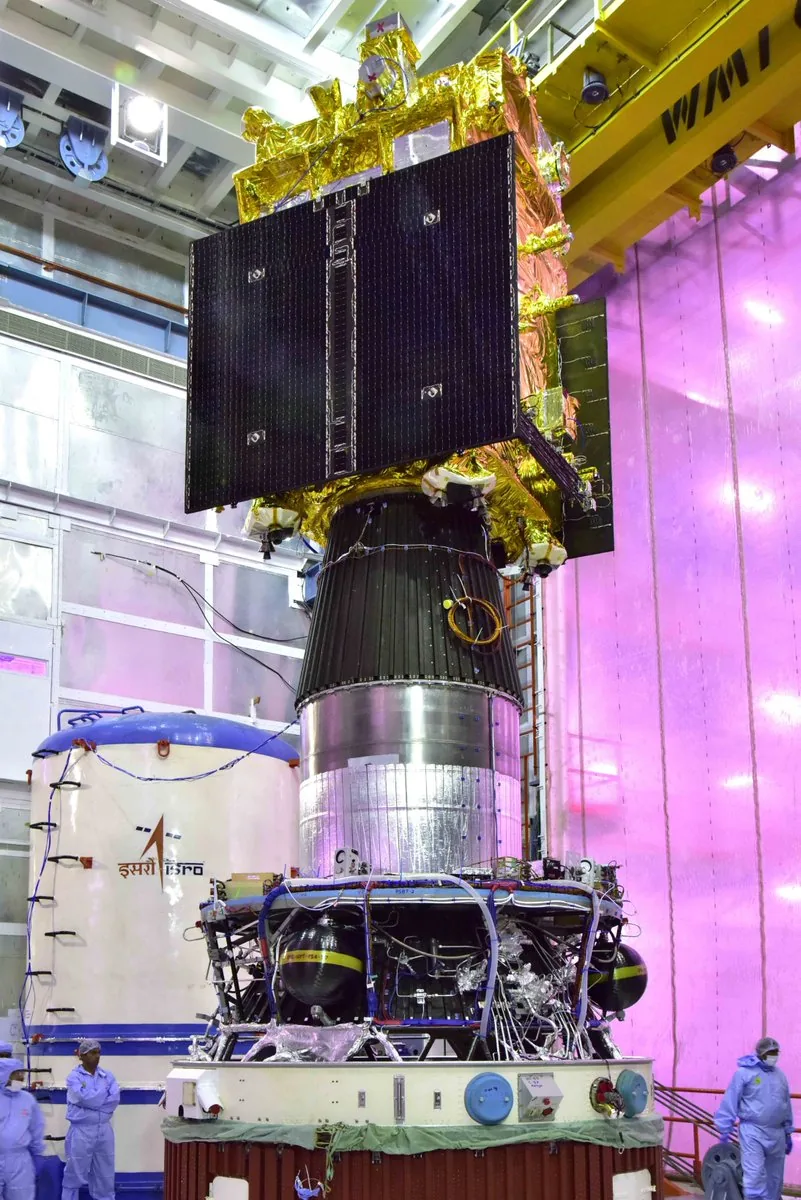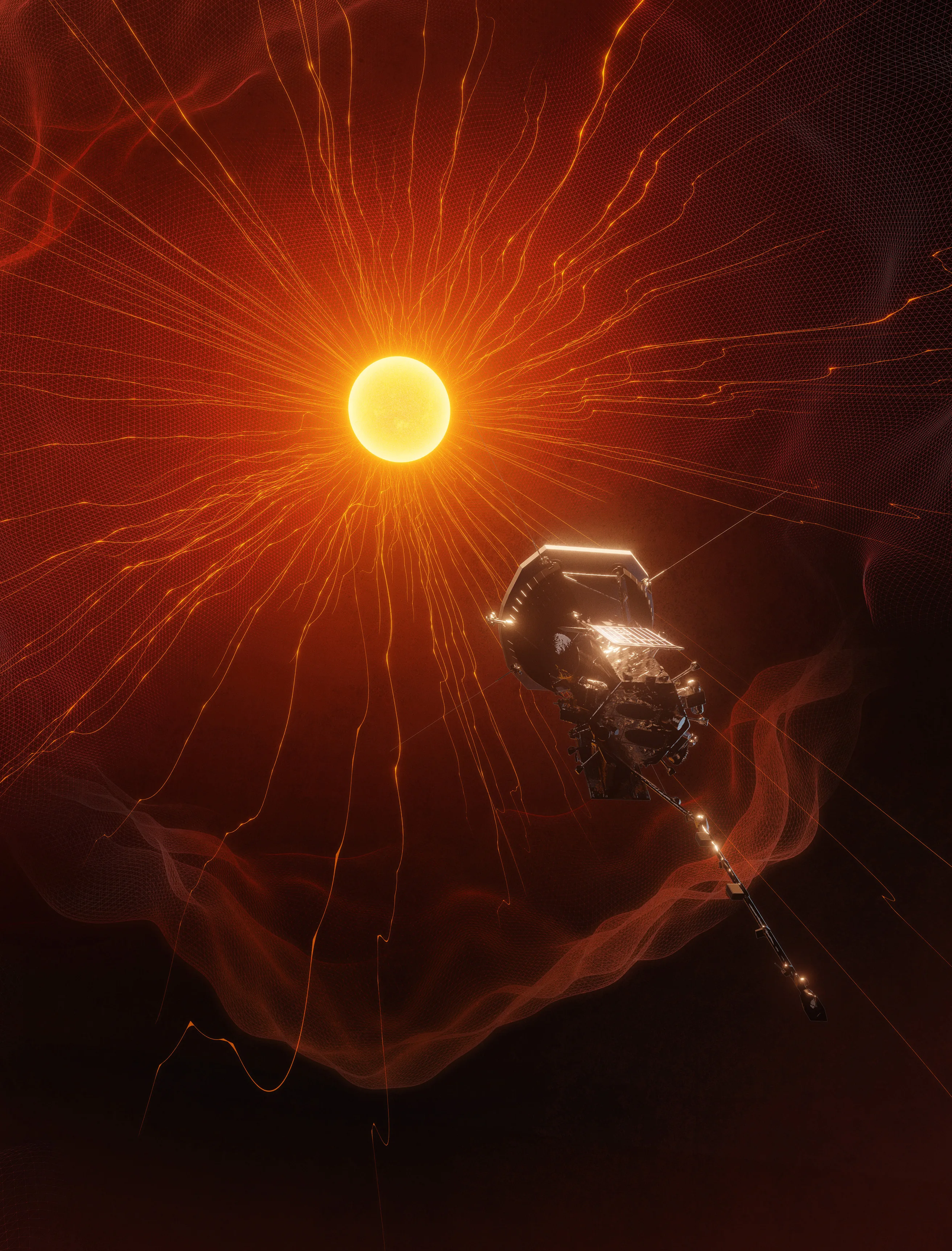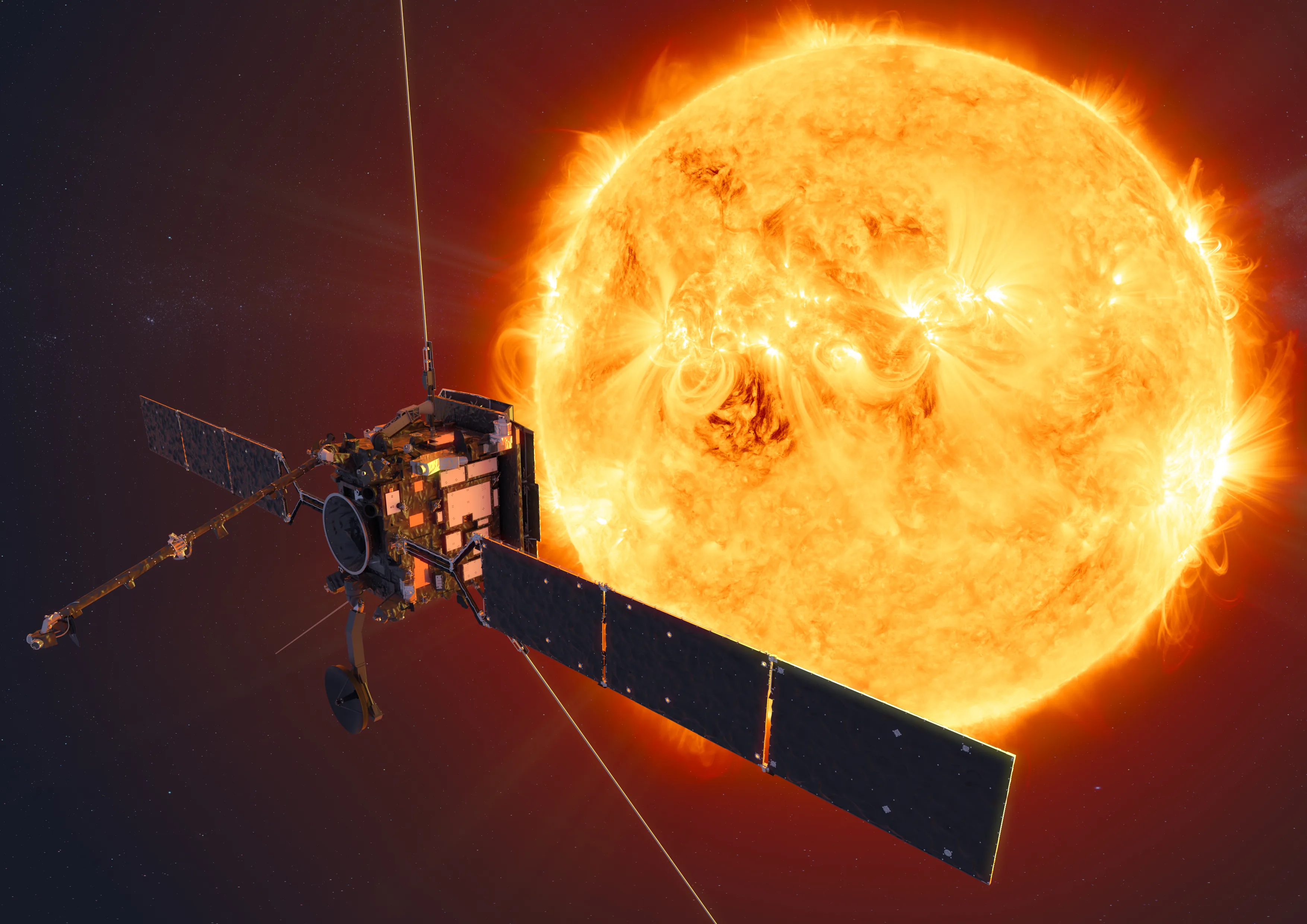
Image: ESA / ATG medialab
Solar Orbiter
Mission Profile
| Launch date | 2020-02-10 |
|---|---|
| Launch vehicle | Atlas V 411 |
| Spacecraft | Solar Orbiter |
| Target | Sun |
| Type | Robotic |
| Cost | €1.5B (ESA + NASA contributions) |
| Mass | 1,800 kg fueled |
| Duration | Primary 7 years + planned 3-year extended phase |
| Partners | ESA (lead), NASA (SoloHI, launch, cooperative ops), Airbus Defence and Space (prime) |
| Instruments | PHI, EUI, STIX, SPICE, Metis, SoloHI, MAG, RPW, SWA, EPD |
Prime Contractors
Companies that built, launched, or operate this mission. Tickers link to their investor profile.
- Airbus Defence & Space
- United Launch Alliance
- Leonardo
- Thales Alenia Space
Overview
Solar Orbiter is ESA's flagship heliophysics mission, developed in close partnership with NASA, designed to take the first close-up images of the Sun's polar regions and to study the relationship between the Sun and the heliosphere. Launched in February 2020 on an Atlas V from Cape Canaveral, the 1,800-kg spacecraft uses repeated Venus gravity assists to progressively tilt its orbital plane out of the ecliptic, eventually reaching a heliographic latitude of more than 30° — angles never previously imaged in detail. Solar Orbiter's perihelion of approximately 0.28 AU (42 million km) is closer than Mercury, requiring a sophisticated heat shield with apertures that selectively open for each of its ten instruments. Six of those instruments are remote-sensing, including the Polarimetric and Helioseismic Imager (PHI) that produces high-resolution magnetograms, and the Extreme Ultraviolet Imager (EUI), which captured iconic 'campfire' structures in the corona during its first close approach in 2022. The other four are in-situ, measuring the local solar wind, energetic particles, and magnetic field. Solar Orbiter and NASA's Parker Solar Probe are designed to operate together in a joint heliophysics campaign — Parker samples solar wind close to its source, while Solar Orbiter images that source from a slightly farther vantage and tracks the wind's evolution outward.
Key Milestones
2020-02-10
Launch on Atlas V from Cape Canaveral
2020-06-15
First perihelion at 0.51 AU
2022-03-26
First close perihelion at 0.32 AU; 'campfires' confirmed
2025-02-18
First high-latitude imaging (~17° heliographic)
2027-02-01
Reaches >30° heliographic latitude (planned)