Image: NASA / ESA
Hera
Mission Profile
| Launch date | 2024-10-07 |
|---|---|
| Launch vehicle | Falcon 9 |
| Spacecraft | Hera spacecraft + Juventas and Milani CubeSats |
| Target | Asteroid |
| Type | Robotic |
| Cost | €363M |
| Mass | 1,128 kg fueled (Hera); 12 kg each CubeSat |
| Duration | ~2-year cruise + ~6-month primary science |
| Partners | ESA (lead), OHB (prime), GMV, DLR, ASI, JAXA (CubeSat support) |
| Instruments | Asteroid Framing Cameras, PALT (laser altimeter), TIRA (thermal IR), HyperScout-H, Juventas LFR radar, Milani ASPECT spectrometer |
Prime Contractors
Companies that built, launched, or operate this mission. Tickers link to their investor profile.
- OHB System
- GMV
- Avio
- SpaceX
Overview
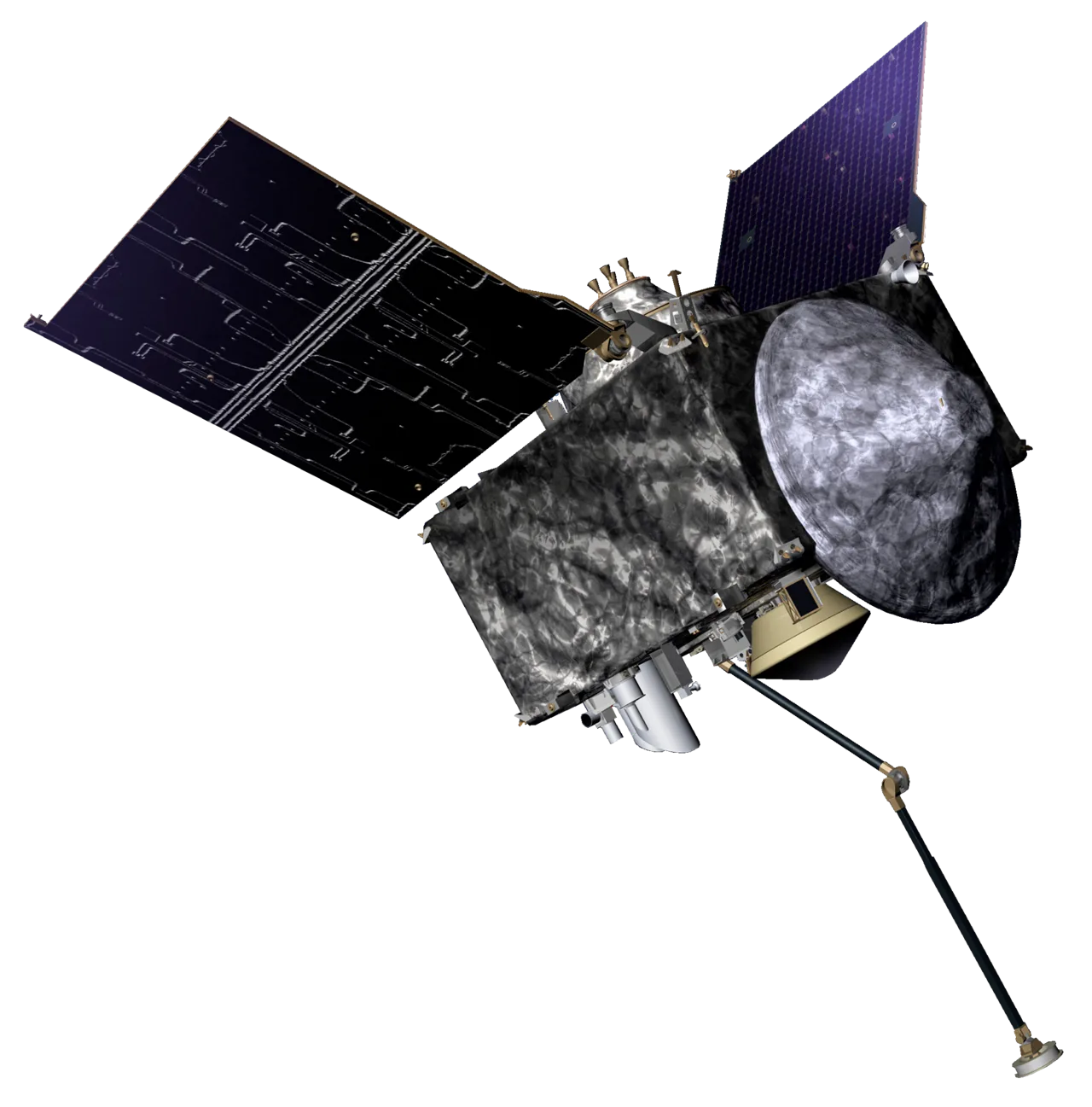
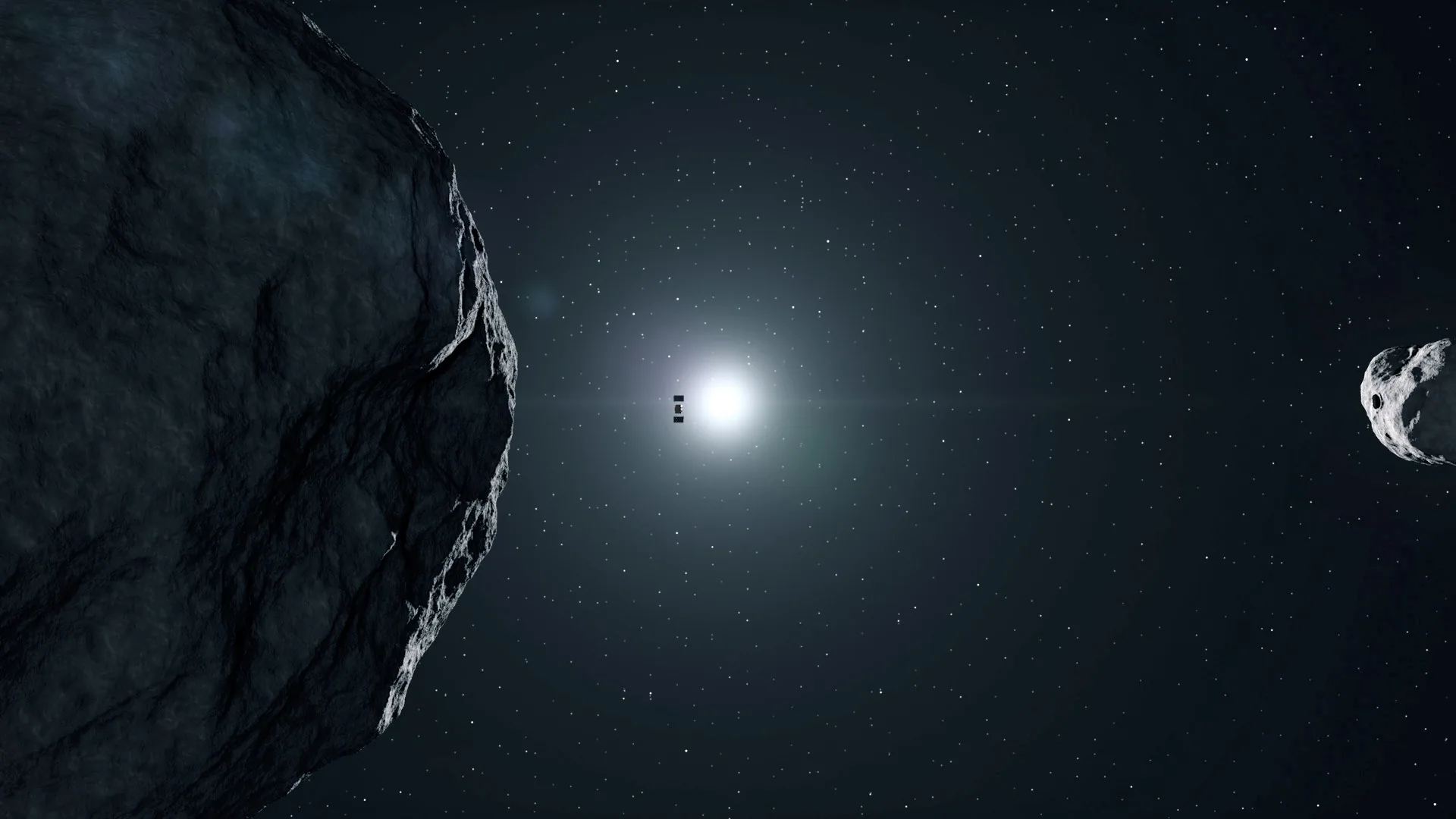
Hera is ESA's contribution to the world's first planetary defense experiment, the joint AIDA (Asteroid Impact and Deflection Assessment) campaign. AIDA combined NASA's DART spacecraft, which deliberately impacted the small moonlet Dimorphos in September 2022 and shortened its orbit around the larger asteroid Didymos by 33 minutes, with ESA's Hera, which will arrive at the same binary system to measure the impact crater, the precise momentum transfer, and the moonlet's internal structure. A February 2026 deep-space maneuver set up the rendezvous, and ESA has since pulled arrival forward by about a month — to November 2026 (a 'brake later and harder' approach plan) — though the spacecraft is in solar conjunction, out of contact behind the Sun, until around 24 October 2026. Launched in October 2024 on a Falcon 9, Hera carries two ESA CubeSats — Juventas, equipped with the first low-frequency radar to probe an asteroid's interior, and Milani, equipped with hyperspectral imaging — that will be released after Hera arrives at Didymos. Together the three spacecraft will give the first detailed in-situ characterization of a binary asteroid post-impact, dramatically improving our ability to model deflection scenarios for future hazardous near-Earth asteroids. Hera is ESA's first dedicated planetary-defense mission and one of the first deep-space science missions to deploy CubeSat companions for distributed observations.
Key Milestones
2022-09-26
NASA DART impacts Dimorphos (33-minute orbit change)
2024-10-07
Hera launch on Falcon 9 from Cape Canaveral
2025-03-12
Mars gravity-assist flyby
2026-02
Second deep-space maneuver lines up the Didymos rendezvous
2026-11
Didymos system arrival (moved ~1 month earlier than planned, per ESA)
2027-01-01
Juventas and Milani CubeSat deployment (planned)