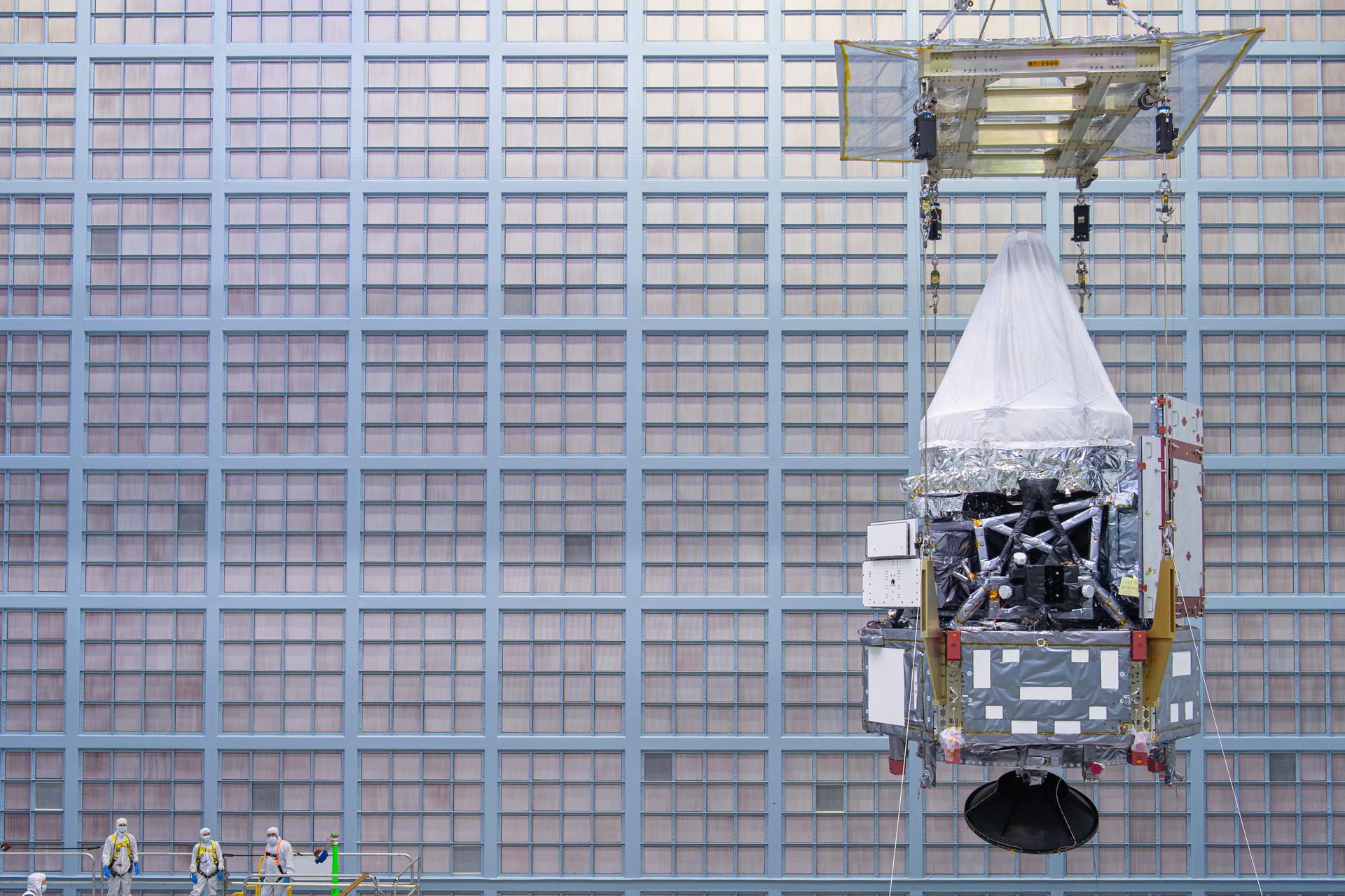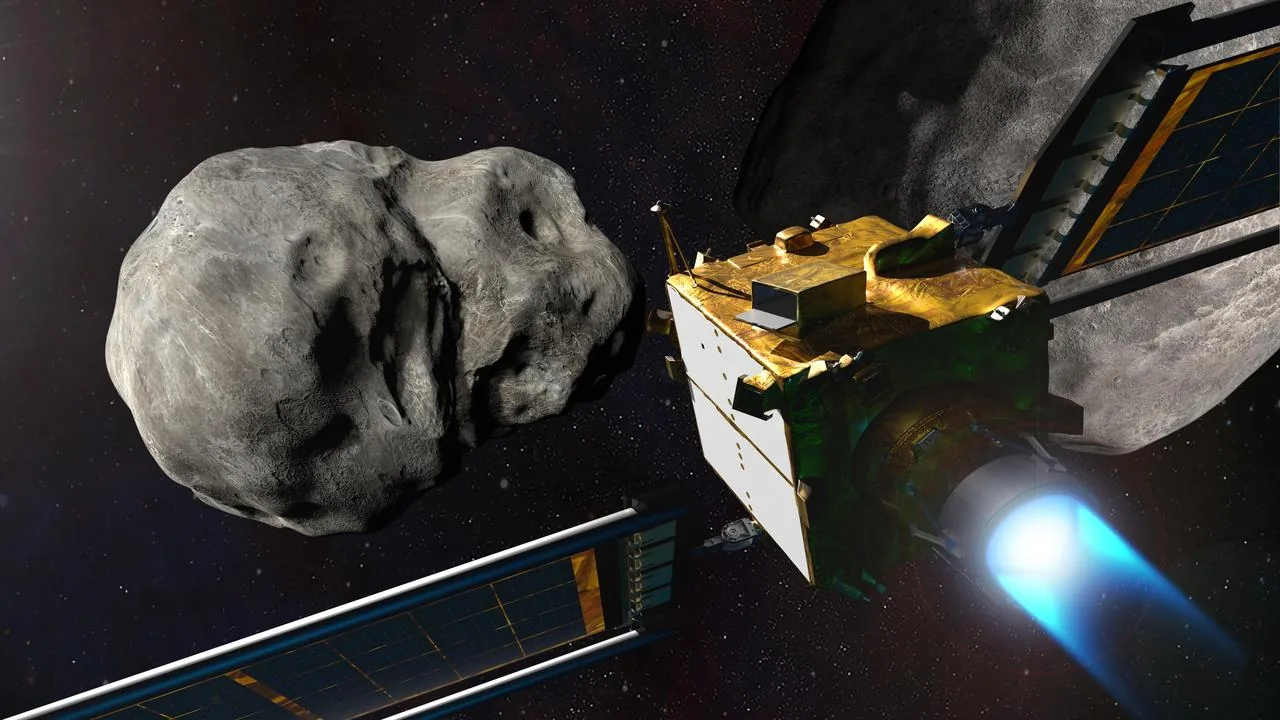
On September 26, 2022, at 7:14 PM Eastern Time, a NASA spacecraft the size of a vending machine slammed into a small asteroid moonlet at roughly 22,530 kilometers per hour. It was intentional. It was planned down to the second. And it worked far better than anyone had dared to hope.
The Double Asteroid Redirection Test -- DART -- was humanity's first attempt to deliberately change the orbit of a celestial body. Not in a movie. Not in a simulation. In actual space, with an actual asteroid, using an actual spacecraft that we built and aimed with extraordinary precision. And when the dust settled (literally -- an enormous plume of debris erupted from the impact site), the data showed that we had changed the asteroid's orbit by 33 minutes. The mission requirement was a change of at least 73 seconds. Scientists had predicted roughly 10 minutes.
We got 33 minutes.
Let that sink in. In our first real attempt at planetary defense, we exceeded expectations by a factor of more than three. If a threatening asteroid were heading toward Earth, we now know -- not theorize, not model, not hope -- that we can do something about it.
Major Asteroid Missions (2018–2030)
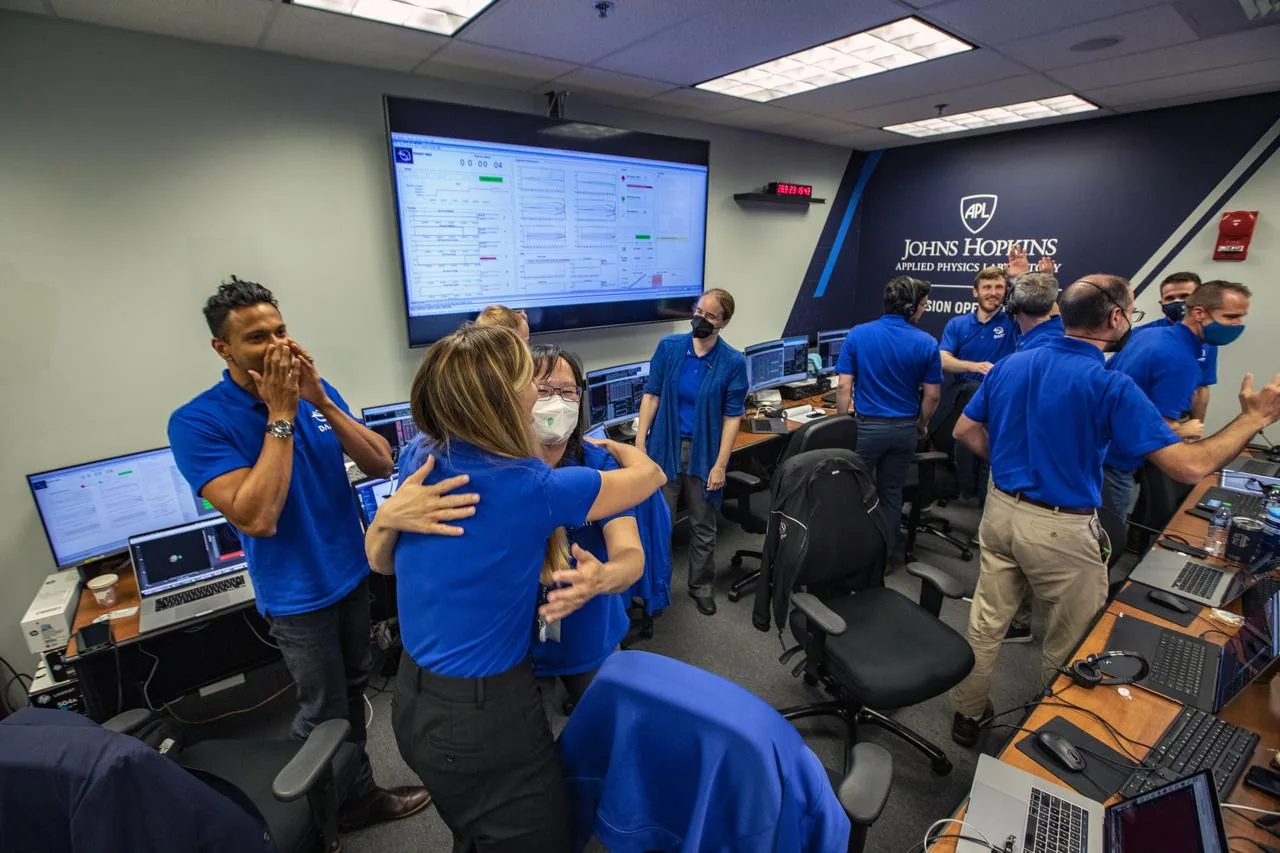
A snapshot of every spacecraft that has visited, sampled, deflected, or is currently surveying near-Earth or main-belt asteroids:
| Mission | Agency | Target(s) | Launched | Status (2026) | Achievement |
|---|---|---|---|---|---|
| OSIRIS-REx / OSIRIS-APEX | NASA | Bennu → Apophis | 2016 | En route to Apophis (2029) | First U.S. asteroid sample return (2023) |
| Hayabusa2 | JAXA | Ryugu + extended | 2014 | Cruising to 1998 KY26 (arrival 2031) | First sub-surface asteroid sample |
| DART | NASA | Dimorphos | 2021 | Mission complete (2022) | First deliberate asteroid deflection |
| Lucy | NASA | 8 Trojan + main-belt asteroids | 2021 | En route, Donaldjohanson 2025 | First Jupiter Trojan tour |
| Psyche | NASA | (16) Psyche metal asteroid | 2023 | Cruising, arrival 2029 | First metal-world reconnaissance |
| Hera | ESA | Didymos / Dimorphos | 2024 | Arriving Dec 2026 | DART impact crater post-mortem |
| NEO Surveyor | NASA | All NEOs ≥ 140 m | 2027 (planned) | In integration | Will find ~90% of city-killer NEOs |
Notable Asteroid Close Approaches (Recent & Upcoming)
| Asteroid | Diameter | Closest Approach | Distance | Significance |
|---|---|---|---|---|
| 2024 YR4 | ~50–90 m | Dec 22, 2032 | ~Earth flyby | Briefly ranked Torino 3 (Feb 2025); now < 0.1% impact risk |
| 2024 PT5 | ~10 m | Sep–Nov 2024 | Captured "mini-moon" | Returns for second flyby Jan 2026 |
| 2023 DW | ~50 m | Feb 14, 2046 | Possible (1 in ~600) | Discovered 2023; under continuous monitoring |
| (99942) Apophis | ~370 m | Apr 13, 2029 | ~32,000 km (closer than GEO sats) | Visible to naked eye in Europe/Africa |
| 2005 YY128 | ~280 m | Feb 2023 | 4.5 LD | Past flyby; precovery refined orbit |
LD = Lunar Distance (~384,400 km). The Apophis 2029 close approach is the highest-profile near-Earth asteroid event of the century — Apophis will pass closer to Earth than geostationary satellites, visible to roughly 2 billion people without a telescope. Earth's gravity will significantly bend its orbit, requiring updated tracking afterward. Both NASA's repurposed OSIRIS-APEX and ESA's RAMSES (a proposed Apophis mission) plan to be present at the encounter.
The Target: Dimorphos and Didymos
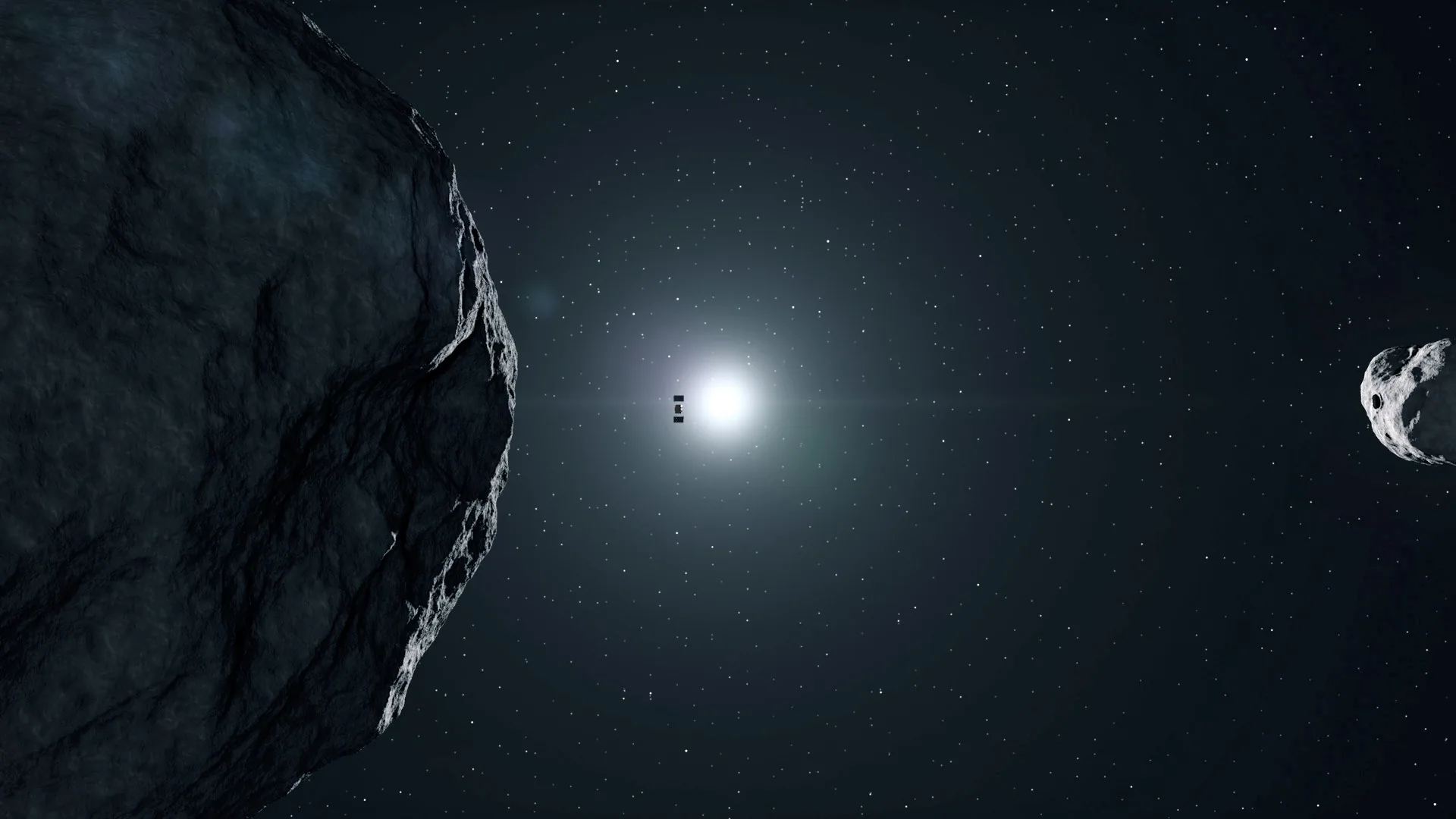
DART's target was carefully chosen. Dimorphos is a small asteroid moonlet, about 160 meters in diameter, that orbits a larger asteroid called Didymos (780 meters in diameter). The pair orbit the Sun together, and Dimorphos takes about 11 hours and 55 minutes to complete one orbit around Didymos.
This binary system was ideal for the test for several reasons. First, neither Dimorphos nor Didymos poses any threat to Earth -- this was purely an experiment, not an emergency response. Second, the binary orbit means that changes in Dimorphos's orbital period can be precisely measured from Earth-based telescopes by timing when Dimorphos passes in front of or behind Didymos. Third, Dimorphos is close to the size of asteroid that poses the most realistic near-term threat to Earth -- large enough to cause significant regional damage if it impacted but small enough that a kinetic impactor could plausibly deflect it.
The choice was deliberate and brilliant. DART was not just a stunt. It was a controlled experiment designed to produce scientifically rigorous, operationally relevant results.
The Impact: 22,530 Kilometers Per Hour
DART launched on November 24, 2021, aboard a SpaceX Falcon 9 rocket from Vandenberg Space Force Base in California. For ten months, it cruised through space toward its rendezvous with Didymos and Dimorphos.
The final approach was autonomous. In the last four hours before impact, DART's onboard navigation system -- called SMART Nav -- took over, identifying Didymos and Dimorphos, distinguishing between them, and guiding the spacecraft to impact squarely on Dimorphos. The system worked flawlessly, centering the spacecraft on the moonlet with a targeting accuracy of about 17 meters.
DART's single instrument, a camera called DRACO (Didymos Reconnaissance and Asteroid Camera for Optical navigation), sent back images at a rate of one per second during the final approach. The sequence is mesmerizing. Dimorphos grew from a dot to a resolved body to a surface filling the entire frame, boulders and shadows becoming visible in the final seconds. The last complete image, taken about two seconds before impact, shows a patch of rocky surface about 30 meters across in stunning detail.
Then the signal stopped. DART had done its job.
The Results: Better Than Expected
Over the following weeks, ground-based telescopes around the world measured the orbital period of Dimorphos. The result was unambiguous: the moonlet's orbit had been shortened from 11 hours and 55 minutes to 11 hours and 23 minutes -- a change of 33 minutes, plus or minus one minute.
Why was the deflection so much larger than the minimum expectation? The answer lies in the ejecta. When DART hit Dimorphos, it did not just transfer its own momentum to the asteroid. The impact blasted a huge plume of rocky debris into space -- thousands of tons of material ejected at high speed. That ejecta acted like rocket exhaust, pushing Dimorphos in the opposite direction and multiplying the momentum transfer well beyond what the spacecraft alone could have achieved.
Scientists quantified this using a number called beta -- the momentum enhancement factor. A beta of 1.0 would mean no ejecta contribution, just the spacecraft's own momentum. DART achieved a beta of roughly 3.6, meaning the ejecta contribution was about 2.6 times more than the spacecraft's direct impact. This is a hugely important result for planetary defense, because it means that kinetic impactors are significantly more effective than the most conservative models predicted.
Hubble and JWST: Watching from Afar
The DART impact was observed by an unprecedented array of telescopes, including the two most powerful space telescopes ever built: Hubble and the James Webb Space Telescope.
Hubble tracked the ejecta plume over the weeks following impact, watching it evolve from a compact cloud into a long tail of debris stretching tens of thousands of kilometers, pushed by solar radiation pressure. The images revealed complex structure in the ejecta -- clumps, streamers, and a distinctive cone-shaped plume that provided clues about the impact geometry and the properties of Dimorphos's surface material.
JWST observed the impact in infrared wavelengths, providing complementary data about the composition and temperature of the ejecta. Together, Hubble and JWST gave scientists a multi-wavelength view of the impact aftermath that was far richer than any single instrument could have provided.
Ground-based observatories on every continent also contributed. The global campaign involved dozens of telescopes, from major research facilities to smaller university observatories, all coordinated to maximize coverage. The resulting dataset is one of the most comprehensive ever assembled for a single solar system event.
LICIACube: The Italian Eye-Witness
DART did not fly alone. It carried a small companion spacecraft called LICIACube (Light Italian CubeSat for Imaging of Asteroids), built by the Italian Space Agency. LICIACube separated from DART fifteen days before impact and flew past Dimorphos about three minutes after the collision, photographing the ejecta plume and the impact site from close range.
LICIACube's images captured the moment of impact from a perspective that DART itself could not provide, showing the massive plume of debris expanding away from Dimorphos. These images were invaluable for understanding the geometry of the ejecta and the immediate aftermath of the collision.
Hera: Going Back for a Closer Look
The DART story does not end with the impact. In October 2024, the European Space Agency launched Hera, a follow-up mission that will arrive at the Didymos-Dimorphos system in late 2026 to conduct a detailed post-impact investigation.
Hera will survey the impact crater left by DART, measure the mass and internal structure of Dimorphos, study the composition and physical properties of both asteroids, and precisely determine the momentum transfer efficiency. The mission carries two CubeSats -- Milani and Juventas -- that will get even closer to the asteroids for specialized measurements, including a radar experiment to probe Dimorphos's interior structure.
Understanding the internal structure of Dimorphos is critical. The efficiency of a kinetic impactor depends heavily on the target's composition and cohesion. Is Dimorphos a solid rock, a rubble pile, or something in between? Hera will find out, and the answer will directly inform future planetary defense strategies.
What Comes Next for Planetary Defense
DART proved the concept. But a single successful test does not mean we are fully prepared to defend Earth from asteroid impacts. Several important challenges remain.
First, we need to find the threats. NASA's Planetary Defense Coordination Office and international partners are working to catalog all near-Earth objects larger than 140 meters -- the size threshold above which an impact could cause continental-scale devastation. The upcoming NEO Surveyor space telescope, scheduled for launch in the late 2020s, will dramatically accelerate this survey from its vantage point in space, where it can detect dark asteroids that are difficult to spot from the ground.
Second, we need more deflection options. Kinetic impact works well for asteroids we detect decades in advance, giving us time to change their orbits gradually. But what about short-warning scenarios? For those, we may need more aggressive approaches, including nuclear deflection -- using a nuclear explosion near (not on) the asteroid's surface to vaporize material and push the asteroid off course. Studies of nuclear deflection are ongoing, though the political and legal dimensions are complex.
Third, we need international coordination. An asteroid does not care about national borders. Any credible planetary defense response will require cooperation among space agencies, governments, and the United Nations. Frameworks for this coordination are being developed, but they remain works in progress.
A Species That Can Defend Itself
The dinosaurs did not have a space program. When a 10-kilometer asteroid slammed into what is now the Yucatan Peninsula 66 million years ago, there was nothing they could do. The impact triggered a mass extinction that wiped out 75 percent of all species on Earth.
We are the first species in the 4.5-billion-year history of this planet that has the ability to see a threatening asteroid coming and do something about it. DART proved that this ability is not theoretical -- it is real and it works. On September 26, 2022, we joined an extraordinarily exclusive club: civilizations capable of altering the trajectories of celestial bodies.
That is not just a technical achievement. It is a milestone in the story of life on Earth. For the first time, extinction by asteroid impact is a preventable natural disaster. We just have to keep investing in the science, the technology, and the vigilance to make sure we are ready when the time comes.
And if that does not fill you with awe about what humanity can accomplish when it focuses on a common goal, I do not know what will.