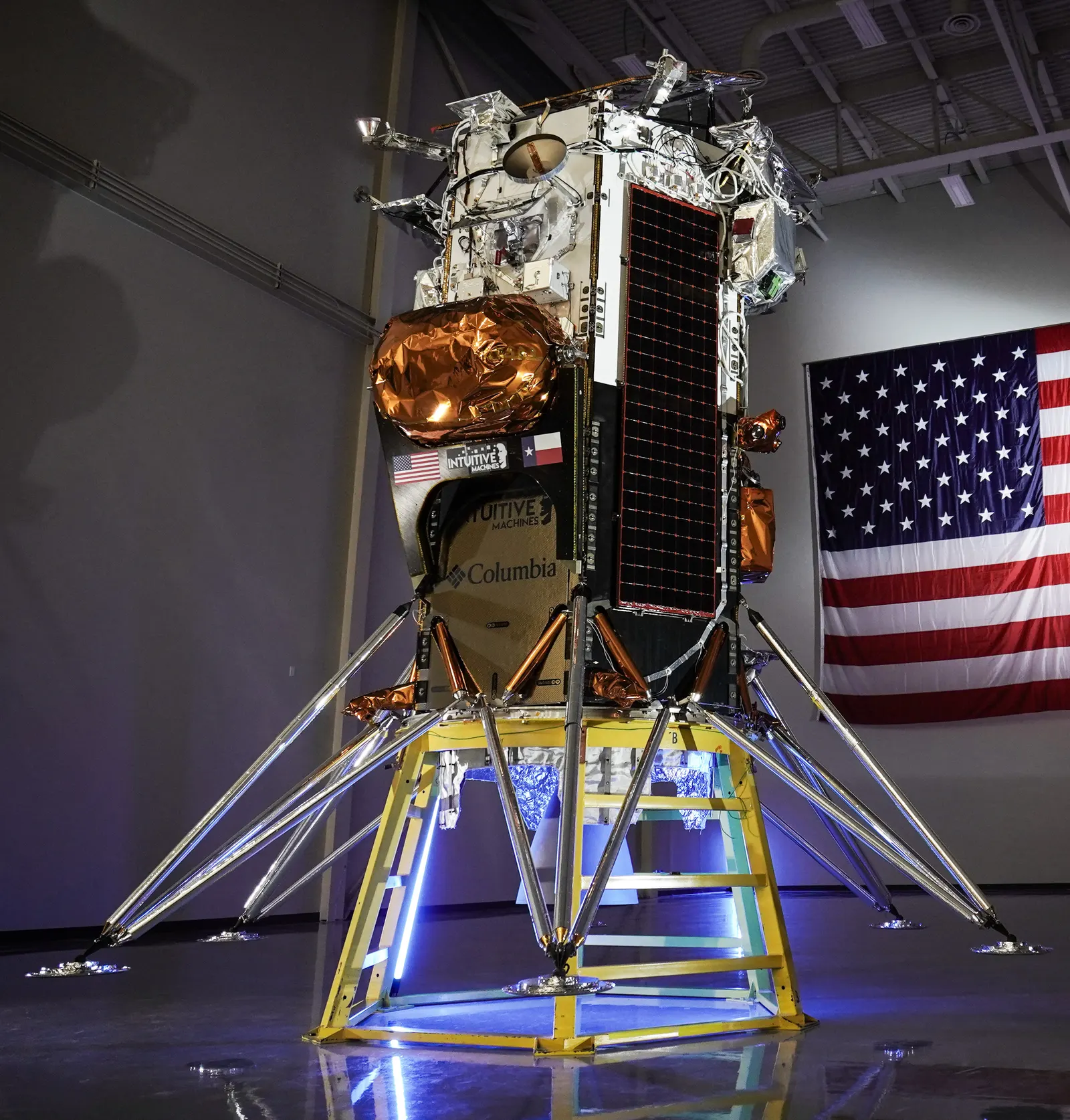
Image: Intuitive Machines / NASA
IM-1 Odysseus
Mission Profile
| Launch date | 2024-02-15 |
|---|---|
| Launch site | Kennedy Space Center, Launch Complex 39A, Florida |
| Launch vehicle | Falcon 9 Block 5 |
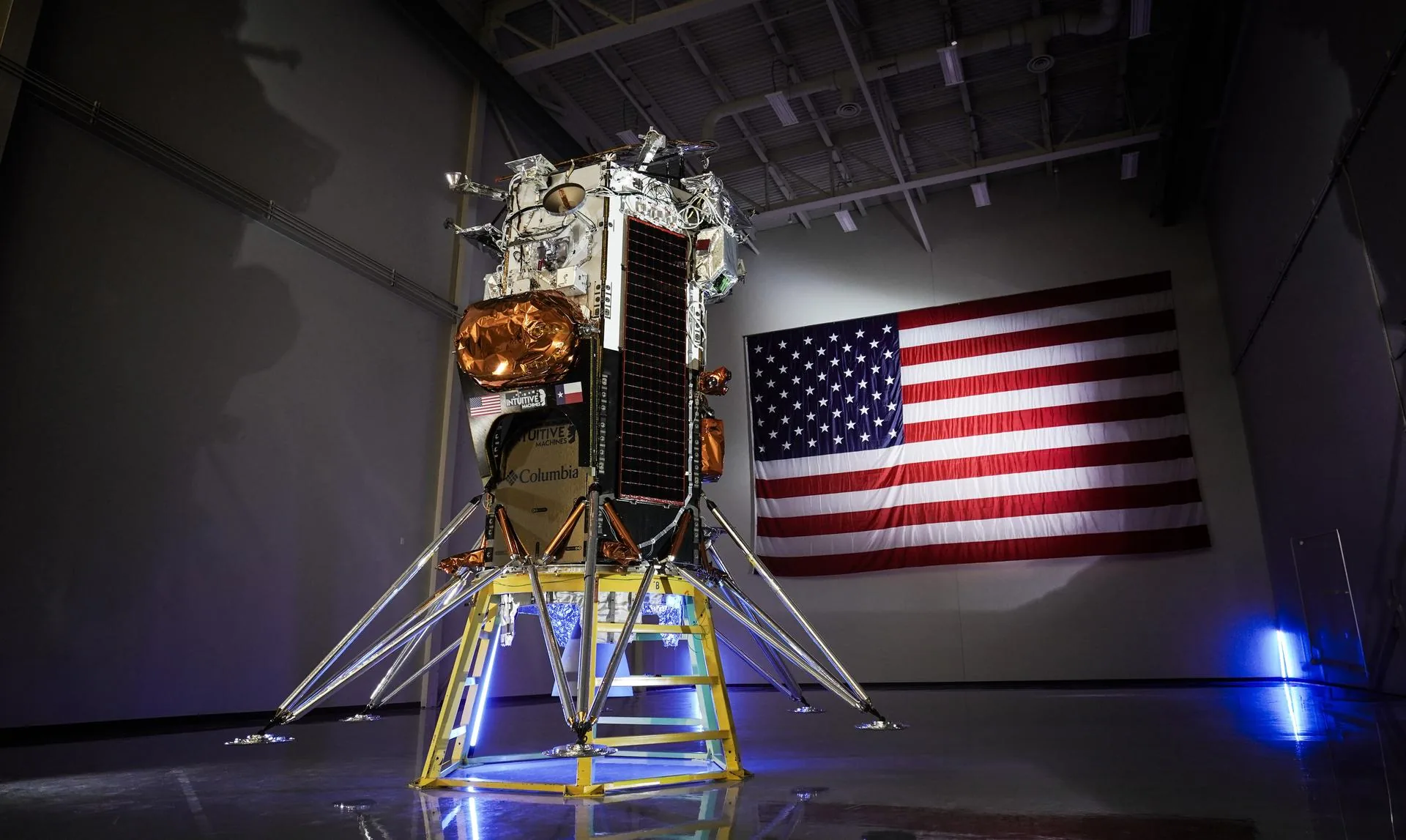
| Spacecraft | Nova-C lander "Odysseus" — first commercial cryogenic methalox lunar lander |
| Target | Moon |
| Type | Robotic |
| End date | 2024-03-23 |
| Recovery | Permanent on lunar surface near Malapert A (south-polar region) |
| Landing site | 80.13°S, 1.44°E (inside a small crater near Malapert A — southernmost lunar landing ever) |
| Surface stay | ~6 Earth days of active operations (22 – 29 February 2024) |
| Cost | ~US$118M NASA CLPS contract (+ commercial payloads) |
| Mass | 1,908 kg wet; ~675 kg dry |
| Duration | ~6 Earth days active surface operations |
| Partners | Intuitive Machines (prime), NASA CLPS, SpaceX (launch), Columbia Sportswear (thermal blankets) |
| Instruments | NASA NDL (navigation doppler lidar), LRA (laser retroreflector), ROLSES (radio astronomy), RFMG (propellant mass gauging), SCALPSS (plume-surface interaction), LN-1 (autonomous navigation beacon) |
Overview
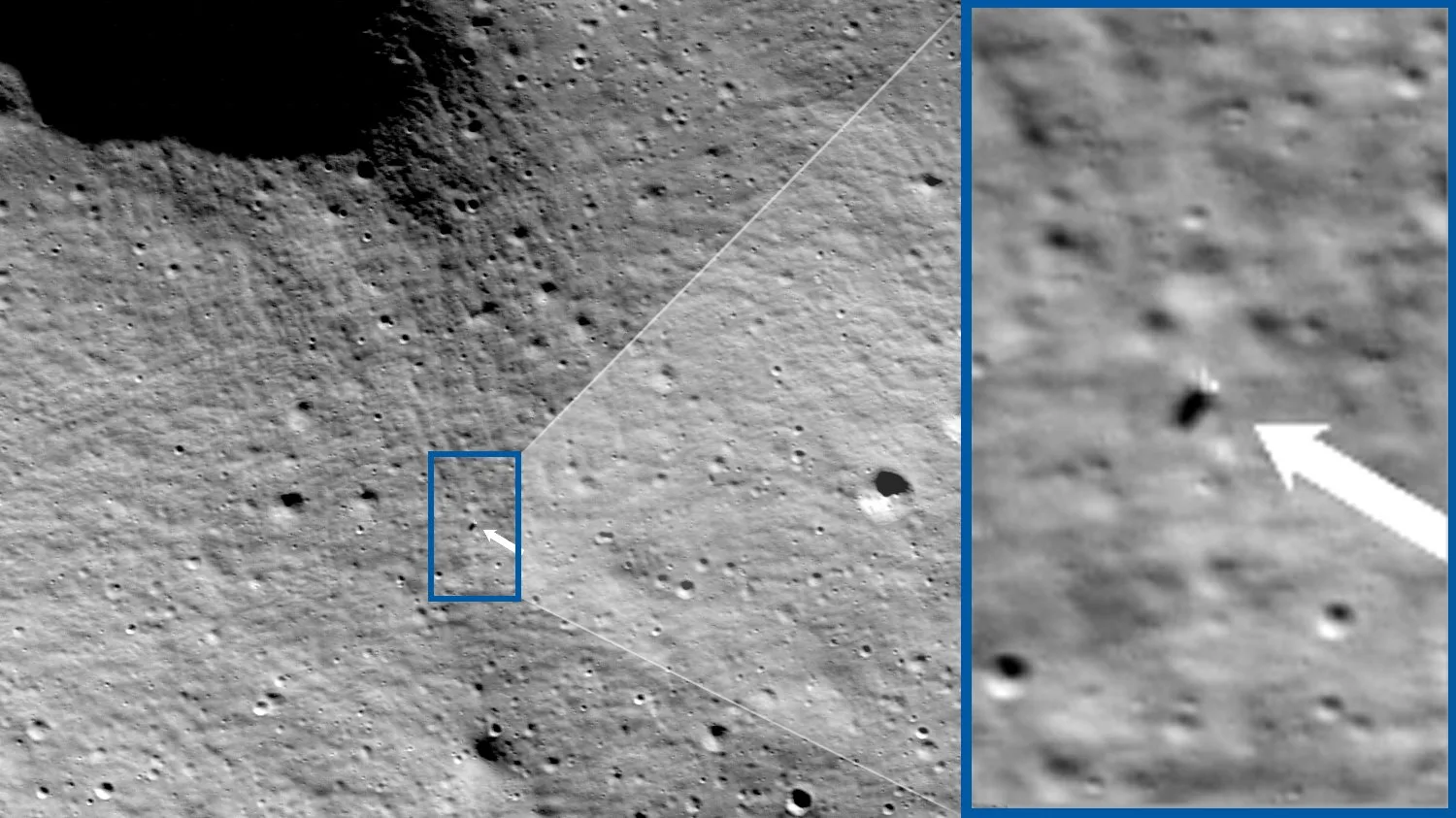
IM-1 Odysseus, built and operated by Houston-based Intuitive Machines under NASA's Commercial Lunar Payload Services contract, performed the first United States soft lunar landing since Apollo 17 in December 1972 and the first commercial soft lunar landing in history. The 1,908-kilogram Nova-C lander launched on a Falcon 9 from Kennedy Space Center on 15 February 2024 and reached the Moon a week later. During terminal descent on 22 February, ground controllers discovered that a hardware switch protecting the lander's laser rangefinders had been left enabled; the rangefinders never powered on. In an unprecedented mid-descent recovery, NASA's NDL (Navigation Doppler Lidar) — flown as a CLPS technology demonstration — was repurposed to provide range data in real time. Odysseus touched down at 23:23 UTC inside a small crater approximately 1.5 km from the planned target near Malapert A, at 80.13°S — the southernmost lunar landing ever attempted. A landing-leg failure caused the spacecraft to tip onto its side, but Odysseus operated NASA CLPS payloads for six Earth days before lunar night cut power. The mission proved the CLPS public-private model after Astrobotic's Peregrine had failed five weeks earlier, restored US lunar-surface presence after 51 years, and demonstrated LOX/methane propulsion to a planetary surface for the first time.
Mission Objectives
Deliver six NASA CLPS payloads to the lunar south-polar region
partial
Achieve the first commercial soft lunar landing
achieved
Target landing within ~10 km of the planned site near Malapert A
achieved
Validate Nova-C cryogenic LOX/methane propulsion in deep space
achieved
Operate through one full lunar day
partial
Vehicle Specifications
Spacecraft (wet mass)
- Mass
- 1,908 kg
Fueled at launch; LOX/LCH4 cryogenic propellant.
Spacecraft (dry mass)
- Mass
- ~675 kg
Derived; Intuitive Machines has not published official dry mass.
Main engine
VR900 (~3,100 N) — Intuitive Machines in-house LOX/methane engine; first commercial deep-space cryogenic main.
Landing legs (6)
Aluminum / carbon-composite; one leg snapped at touchdown, causing the sideways orientation.
Payload capacity
- Mass
- 100 kg
To lunar surface; this mission carried 6 NASA payloads + commercial customer items.
Bus dimensions
- Dimensions
- 4.3 m tall × hexagonal cylinder
Nova-C bus heritage will fly again on IM-2 and IM-3.
Key Milestones
2024-02-15
Launch on Falcon 9 from KSC LC-39A at 06:05 UTC
2024-02-21
Lunar orbit insertion
2024-02-22
Mid-descent NDL repurposing after laser-rangefinder switch failure discovered
2024-02-22
Touchdown at 80.13°S near Malapert A at 23:23 UTC
2024-02-23
Confirmed tipped on side; communications restored via low-gain antenna
2024-02-29
Final downlink as lunar night fell
2024-03-23
Intuitive Machines declares no signal after wake-up attempts
Key Achievements
First US soft lunar landing in 51 years, 2 months (since Apollo 17)
First commercial soft lunar landing in history
Southernmost lunar landing ever attempted at the time (80.13°S)
First operational use of LOX/methane propulsion delivered to a planetary surface
Validated NASA CLPS public-private model and opened the path for IM-2, IM-3, and Firefly Blue Ghost
Returned SCALPSS plume-surface-interaction data despite the tilted orientation
Photo Gallery

Legacy & Significance
IM-1 was the proof point CLPS needed. Astrobotic's Peregrine had failed in orbit five weeks earlier; another lost lander would have endangered the entire commercial-lunar-services thesis. Odysseus landed — imperfectly, sideways, late — but it landed, and it returned NASA payload data from 80°S. That bought CLPS credibility on Capitol Hill and inside NASA's Science Mission Directorate just as Artemis budget pressure mounted. Operationally, IM-1 demonstrated three firsts that propagate forward: LOX/methane storable-enough propulsion (now Firefly Blue Ghost's baseline), polar-region landing precision adequate for resource prospecting, and real-time payload re-tasking (NASA's NDL was effectively uploaded to replace a failed rangefinder during transit). Intuitive Machines' subsequent IM-2 (Athena, March 2025) and IM-3 (PRIME-1) flew on the same Nova-C bus heritage.