Full mission transcript
Every chapter of Parker Solar Probe, in sequence.
The question
The Hottest Mystery
August 12, 2018 · 00:00 UTC
The surface of the Sun is about 5,500°C. Its outer atmosphere, the corona, is millions of degrees — hundreds of times hotter than the surface beneath it. For decades that made no sense: how can the air above a fire be hotter than the fire? In 1958 a young physicist named Eugene Parker also predicted that the Sun must be blowing a constant 'solar wind' out into space. He was widely doubted, then proved right.
Sixty years later, the only way left to answer the deepest questions was to stop looking from afar and go there — to fly a spacecraft into the corona itself.
T+00:00:00
Launch
August 12, 2018 · 07:31 UTC
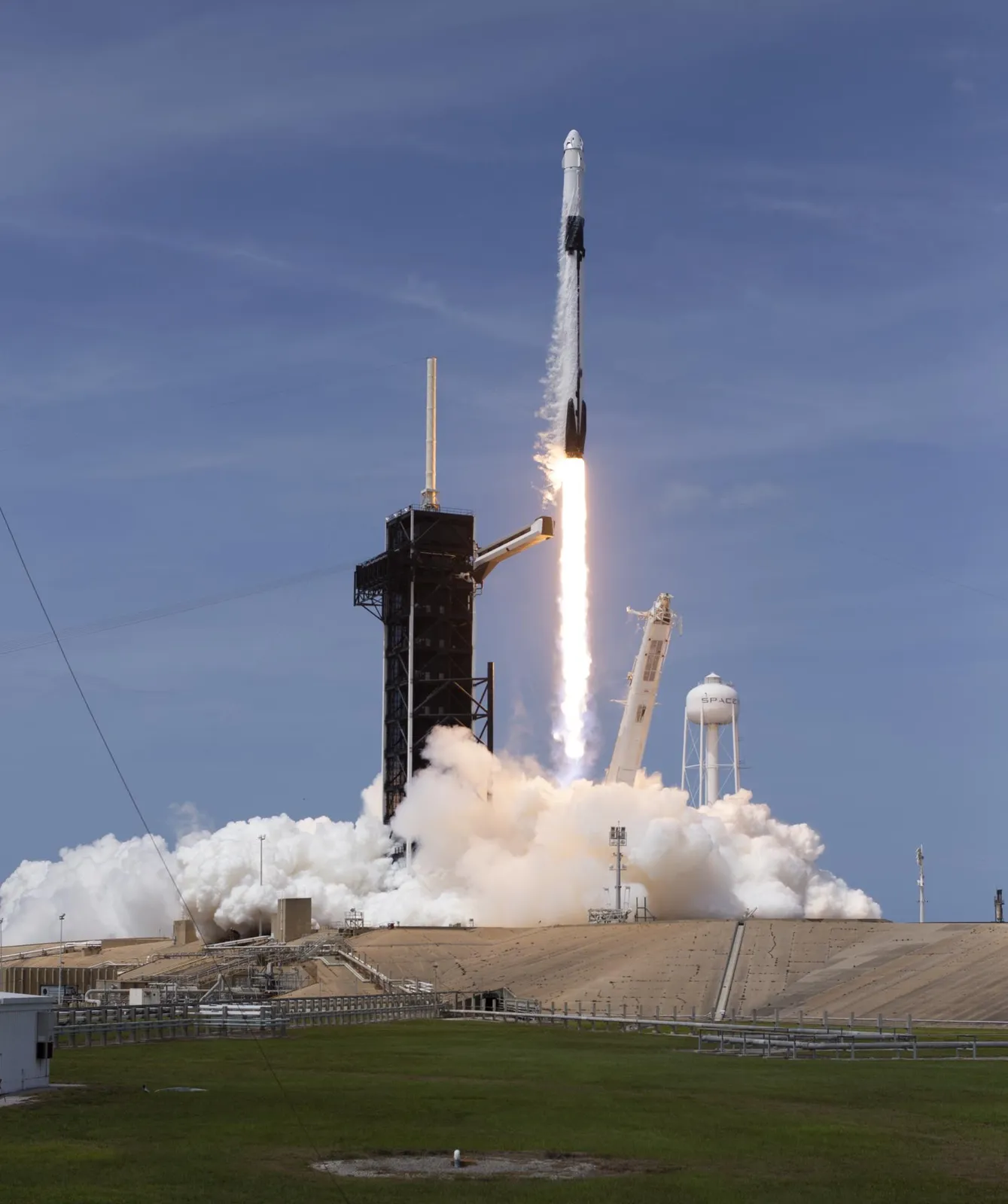
Before dawn on August 12, 2018, a Delta IV Heavy — one of the most powerful rockets in the world — thundered off the pad at Cape Canaveral. Counter-intuitively, reaching the Sun takes enormous energy: Earth is racing sideways at 30 km/s, and to fall inward a spacecraft must cancel much of that speed.
Among the spectators was 91-year-old Eugene Parker himself, watching the first NASA mission ever named for a living person rise toward the star he had spent his life explaining.
By design
The Shield
August 12, 2018 · 07:31 UTC
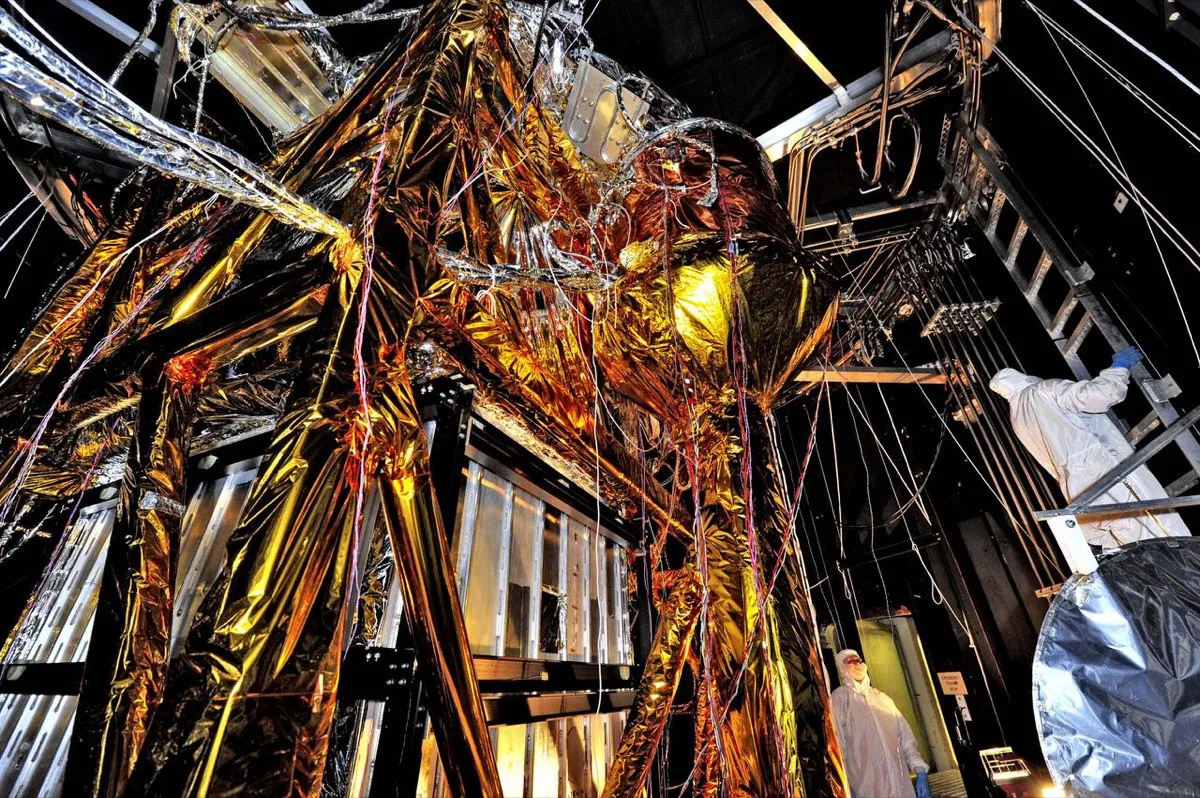
Everything depends on one piece of hardware: the Thermal Protection System, a disc of carbon-composite foam just 11.4 centimetres thick. Its sunward face endures temperatures around 1,400°C, while behind it — in its shadow — the instruments sit at a comfortable room temperature.
The spacecraft flies itself, using sensors that detect the first sliver of sunlight creeping past the edge and nudging the body back into the shield's protective shade. A few degrees off, for more than a moment, and it would be gone.
2018–2024
Seven Times Past Venus
October 3, 2018 · 08:44 UTC
Parker could not simply dive at the Sun. Instead, over seven years, it looped past Venus seven times, each flyby stealing a little orbital energy and tightening its path around the Sun a little more — a slow spiral inward toward the fire.
Passing Venus, its wide-field camera even peered through the planet's thick clouds to glimpse the glowing nightside surface below — an accidental gift on the way to somewhere hotter.
First corona pass
Into the Corona
April 28, 2021 · 00:00 UTC
On April 28, 2021, Parker Solar Probe crossed the Alfvén surface — the boundary that marks the true edge of the Sun's atmosphere — and for the first time in history, a spacecraft was flying inside the corona of a star. It threaded through towering coronal streamers, structures seen for centuries only as faint rays during total eclipses.
Humanity had, in a real and literal sense, touched the Sun.
Closest passes
The Fastest Thing We've Built
December 24, 2024 · 11:53 UTC
Falling toward the Sun, Parker became the fastest object humans have ever made. At its closest approaches it tore along at roughly 690,000 kilometres per hour — fast enough to fly from New York to Tokyo in under a minute, or cover the distance from Earth to the Moon in about half an hour.
Nothing built by human hands has ever moved that quickly, or come that close to a star.
Perihelion
Closest Approach
December 24, 2024 · 11:53 UTC
On December 24, 2024, Parker made its record dive: within about 6.1 million kilometres of the Sun's surface — roughly seven times closer than the planet Mercury ever comes. For days around the pass it was out of contact, alone in the corona, and no one on Earth knew if the shield had held.
Then, on December 26, a simple beacon arrived across the void: the spacecraft was healthy, and it had survived its closest brush with a star.
And counting
What the Sun Told Us
December 26, 2024 · 00:00 UTC
From inside the corona, Parker found the solar wind threaded with sudden magnetic 'switchbacks,' mapped where the wind is born, and flew through a region swept clean of dust near the Sun — observations rewriting decades of solar physics and sharpening our forecasts of the space weather that can disrupt satellites and power grids on Earth.
Eugene Parker died in March 2022, having lived to see the spacecraft bearing his name reach the star whose wind he first imagined. His probe is still out there, still circling, still listening to the Sun.
Sources: NASA — Parker Solar Probe · Johns Hopkins APL — Parker Solar Probe
Answers come only from the Parker Solar Probe mission record above.