Time Machine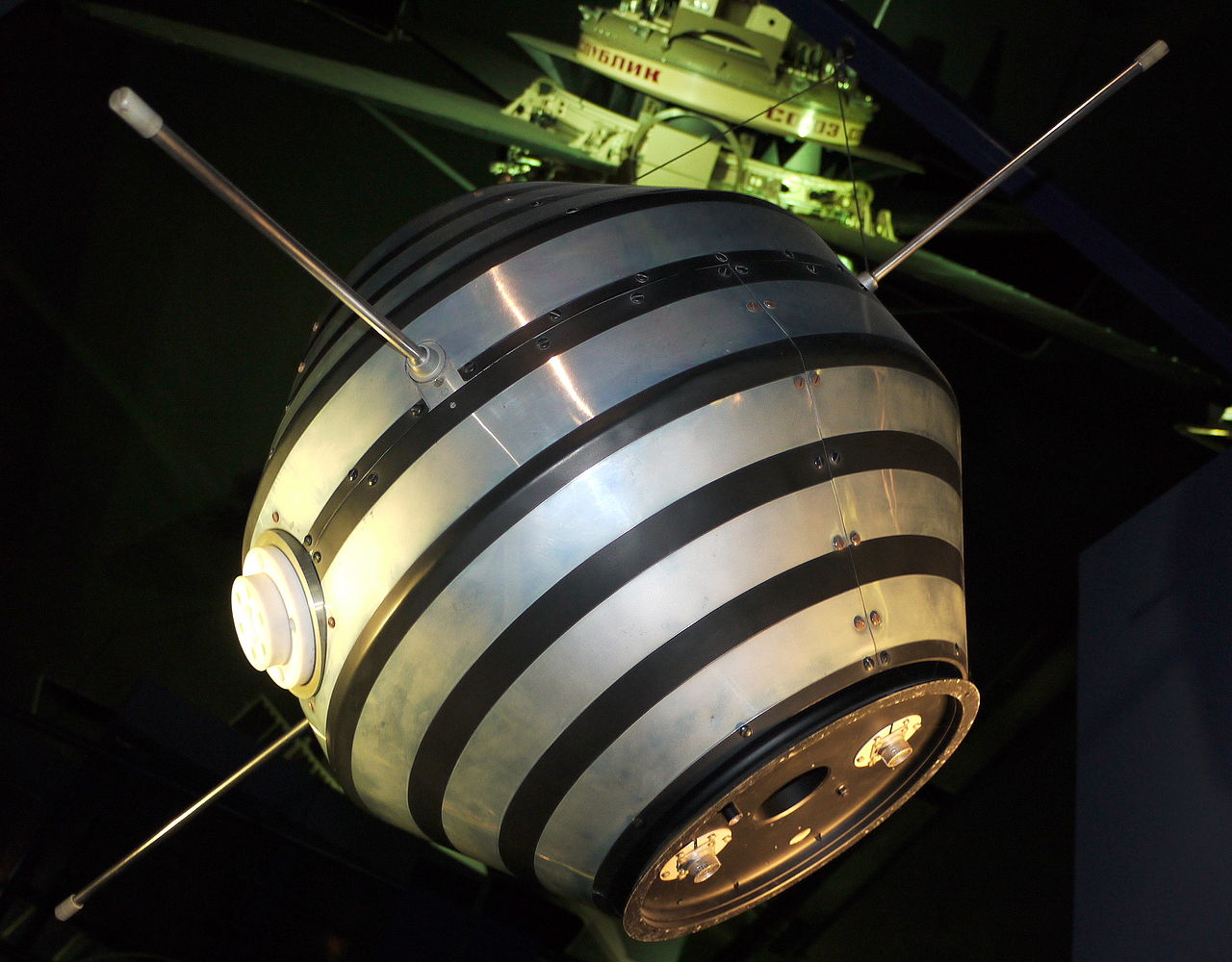
You have arrived · The Moon Race
Astérix
France becomes the third space-faring nation
November 26, 1965CNES
Pline, CC BY-SA 3.0, via Wikimedia Commons
The world that day
3.1 billion
People on Earth
2
Nations to launch a human
0
Humans to walk on the Moon
0
Known worlds beyond the Sun
On 26 November 1965, at the Hammaguir firing range in the Algerian Sahara, a slender three-stage rocket called Diamant climbed away from the desert on its very first flight. In its nose rode a 42-kilogram satellite shaped like a spinning top, officially designated A-1, affectionately renamed Astérix after the indomitable comic-strip Gaul. Minutes later, France had done what only the Soviet Union and the United States had done before: placed a satellite in orbit with a rocket entirely its own.
Diamant was the polished product of France's 'precious stones' programme, a series of test rockets named Agate, Topaze, Émeraude, Saphir, and Rubis that had methodically proven each stage and technology through the early 1960s. The gamble paid off with a maiden-flight success on a brand-new launcher. The satellite itself was less lucky: the separating payload fairing damaged its telemetry antennas and its signals were soon lost. American tracking radars confirmed that Astérix was in orbit all the same, and the third space power was real.
The triumph carried an expiry date. Hammaguir stood on Algerian soil, and under the Évian Accords that ended the Algerian war, France had to abandon the base by mid-1967. The search for a replacement led to Kourou in French Guiana, today the spaceport of all Europe. Astérix needed no such relocation: launched into an orbit of roughly 530 by 1,700 kilometres, it is still circling Earth six decades later and is expected to remain aloft for centuries, a silent Gaul outlasting everyone who built it.
By the numbers
- Launch
- 26 Nov 1965
- Launcher
- Diamant A (maiden flight)
- Satellite mass
- 42 kg
- Launch site
- Hammaguir, Algerian Sahara
- Orbit
- approx. 530 x 1,700 km
- Status
- Still in orbit, expected to last centuries
Why it mattered
Astérix made France the world's third independent space power and planted the seed of European autonomy in orbit. The Diamant programme proved that a medium-sized nation could master the full chain of launcher technology, and that expertise, along with the forced move from Hammaguir to Kourou, flowed directly into the Europa and Ariane programmes that followed. Six decades on, every European argument for independent access to space traces back to a 42-kilogram satellite named after a cartoon Gaul.
- The satellite was officially designated A-1; engineers nicknamed it Astérix after the comic-strip Gaul, and the name stuck.
- France succeeded on the maiden flight of a brand-new launcher; Diamant distilled years of 'precious stones' test rockets named Agate, Topaze, Émeraude, Saphir, and Rubis.
- The separating fairing damaged Astérix's telemetry antennas, so its own signals were lost; American tracking radar confirmed France's place in orbit.
- Hammaguir sat on Algerian soil, and under the Évian Accords France had to leave by mid-1967, a deadline that pushed the programme to Kourou, now Europe's spaceport.
- Astérix is still in orbit today and is expected to stay there for centuries.
Keep travelling
People also explored

From the same era
Moment
Ed White becomes the first American to spacewalk
From the same era

From the same era
Moment
Mariner 4 — first close-up images of Mars
From the same era

From the same era
Moment
Luna 9 — first soft landing on the Moon
From the same era

From the same era
Moment
Soyuz 1 — Vladimir Komarov, first in-flight space fatality
From the same era