Time Machine
You have arrived · The Moon Race
Mariner 4
first close-up images of Mars
July 15, 1965NASA/JPL
NASA/JPL (public domain)
The world that day
3.1 billion
People on Earth
2
Nations to launch a human
0
Humans to walk on the Moon
0
Known worlds beyond the Sun
On the night of 14 July 1965, engineers at the Jet Propulsion Laboratory listened to a whisper from a dozen light-minutes away. Mariner 4, a 261-kilogram spacecraft riding on four solar panels, was sweeping past Mars at 9,846 kilometres, its television camera clicking frame after frame onto a loop of magnetic tape. No machine had ever photographed another planet up close. Somewhere on that tape, a century of speculation about canals, vegetation, and Martian civilisations was about to end.
That the spacecraft existed at all was a feat of desperation. Its twin, Mariner 3, had suffocated inside a faulty launch fairing on 5 November 1964, and the Mars window was closing fast. In under three weeks, engineers designed, built, and tested an entirely new metal shroud, and Mariner 4 left Cape Canaveral on 28 November 1964. It then flew seven and a half months through interplanetary space, holding its course by locking onto the star Canopus, a navigation technique no probe had used before.
The pictures came home at eight and a third bits per second, each frame taking about eight hours to transmit. Too impatient to wait for the processed image, engineers pasted the raw numbers into strips and coloured them by hand with pastel crayons; their paint-by-numbers Mars, finished before the official version, still hangs at JPL. The 21 complete photographs that followed covered barely one percent of the planet and revealed a cratered, Moon-like world. The radio occultation experiment was crueller still: an atmosphere thinner than one percent of Earth's, and daytime readings near minus 100 Celsius.
The romantic Mars of Percival Lowell died in those frames, but a real planet took its place. Every future lander would need retrorockets as well as parachutes to survive the thin air, a lesson that shaped spacecraft from Viking to Perseverance. NASA kept contact with Mariner 4 until 31 December 1967, more than three years after launch, and the flyby reconnaissance it pioneered became the template for the first exploration of every planet in the solar system.
By the numbers
- Launch
- 28 Nov 1964
- Mars flyby
- 15 Jul 1965
- Closest approach
- 9,846 km
- Images returned
- 21 complete, plus part of a 22nd
- Spacecraft mass
- 260.8 kg
- Mission end
- 31 Dec 1967
Why it mattered
Mariner 4 founded modern planetary science. In a single pass it replaced a Mars of canals and imagined civilisations with a measured world of craters, thin air, and deep cold, proving that only spacecraft, not telescopes, could settle such questions. Its engineering data dictated the design of every Mars lander that followed, and its success validated the flyby reconnaissance model later used at Venus, Mercury, Jupiter, and beyond. The 21 grainy images were a humbling gift: the end of a fantasy, and the beginning of the real exploration of Mars.
- Its twin Mariner 3 died inside a faulty payload fairing three weeks before launch; engineers designed, built, and tested a replacement metal shroud in under three weeks to save the Mars window.
- Images returned at eight and a third bits per second, roughly eight hours per picture.
- Too impatient to wait for processing, engineers hand-coloured strips of raw image numbers with pastel crayons; the 'paint by numbers' first picture of Mars still hangs at JPL.
- The 21 complete photographs covered only about one percent of the planet, yet were enough to end a century of canal speculation.
- Its occultation experiment showed surface pressure below one percent of Earth's, which is why every Mars lander since has needed retrorockets as well as parachutes.
Keep travelling
People also explored
From the same era
Moment
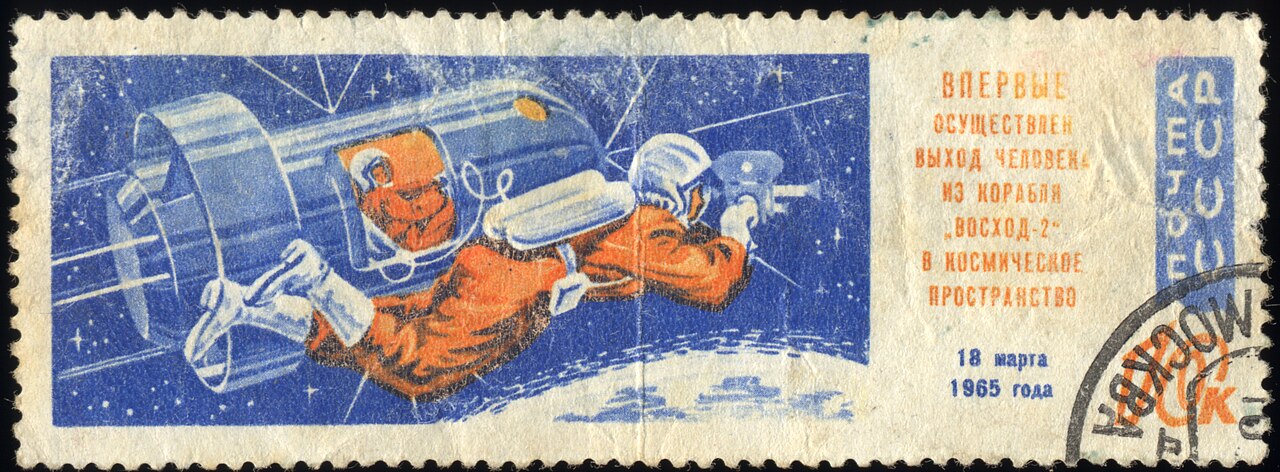
Voskhod 2 — Alexei Leonov performs the first spacewalk
From the same era

From the same era
Moment
Ed White becomes the first American to spacewalk
From the same era
From the same era
Moment
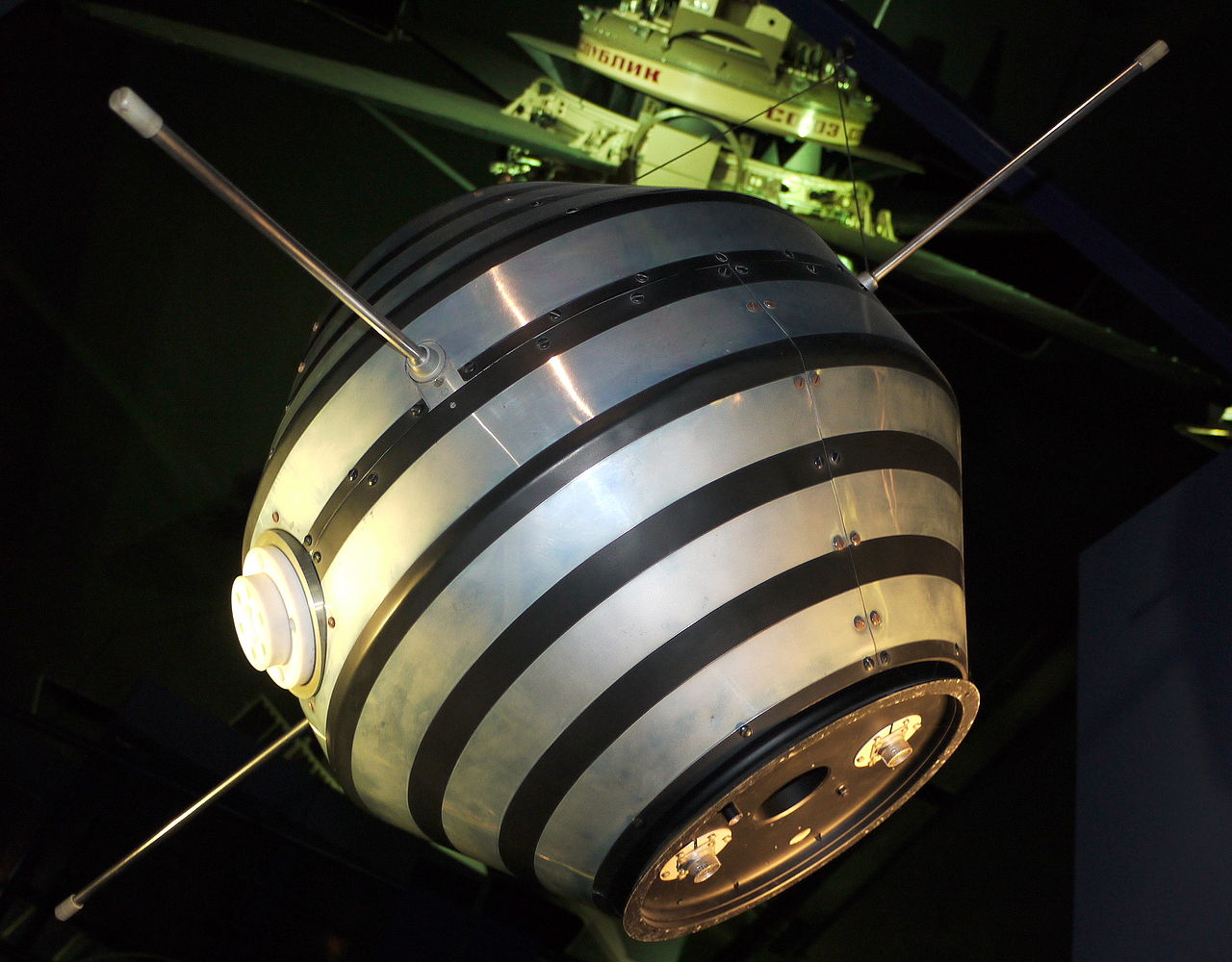
Astérix — France becomes the third space-faring nation
From the same era

From the same era
Moment
Luna 9 — first soft landing on the Moon
From the same era