Time Machine
You have arrived · The Moon Race
Venera 7
first soft landing on another planet
December 15, 1970Lavochkin
Emerezhko / Korolyov Astronautics Museum, Zhytomyr (CC BY-SA 4.0)
The world that day
3.6 billion
People on Earth
2
Nations to launch a human
4
Humans to walk on the Moon
0
Known worlds beyond the Sun
The spacecraft that fell toward Venus on 15 December 1970 had been kept deliberately cold, chilled to minus 8 degrees Celsius by its carrier bus before entry, because every degree bought seconds of life below. Venera 7's lander was a sealed titanium sphere built to survive 180 atmospheres of pressure, engineered against a planet that had crushed or silenced every probe sent into its depths before. Its parachute opened about 60 kilometres up, in air the instruments confirmed was 97 percent carbon dioxide, and the probe began radioing temperatures as it sank.
Then the descent went wrong. Minutes after deploying fully, the parachute began to fail and finally collapsed. The probe fell free and struck the surface at about 16.5 metres per second, roughly 60 kilometres per hour, and apparently bounced onto its side, leaving its antenna aimed away from Earth. The signal seemed to die at impact. In Moscow the mission looked like another agonizing near miss, one more Venus probe lost at the last moment. But the ground stations' tape recorders had kept rolling.
Weeks later, radio scientist Oleg Rzhiga, combing through the recordings, found something buried in the noise: 23 more minutes of telemetry at about one percent of normal signal strength, transmitted from the surface itself. A stuck telemetry switch meant only the temperature channel had come home, 475 plus or minus 20 degrees Celsius, from which a surface pressure of roughly 90 atmospheres was later derived. Faint, garbled and very nearly lost, it was the first signal human beings had ever received from the surface of another planet.
By the numbers
- Launch
- 17 Aug 1970, Baikonur
- Venus landing
- 15 Dec 1970, 05:37 UT
- Surface transmission
- approx. 23 min
- Surface temperature
- 475 ± 20 °C
- Surface pressure (derived)
- approx. 90 atmospheres
- Lander mass
- 490 kg, titanium vessel rated to 180 atm
Why it mattered
Venera 7 ended years of speculation about conditions on Venus with hard numbers: roughly 475 degrees Celsius and 90 atmospheres. It proved that landers could survive the most hostile planetary surface in the inner solar system and established the engineering grammar, pressure vessels, pre-cooling, hardened electronics, that carried the later Venera landers to their photographs and soil analyses. Every Venus surface mission concept being designed today still works within the limits this probe measured in its 23 faint minutes.
- The parachute failed during descent; the probe hit Venus at about 60 km/h and bounced onto its side, leaving its antenna mispointed toward Earth.
- The surface signal was discovered weeks after landing by radio scientist Oleg Rzhiga, who found 23 minutes of telemetry at roughly one percent of normal strength hidden in recorded tape noise.
- A stuck telemetry switch meant only temperature data came back from the surface; the famous pressure figure of about 90 atmospheres had to be derived afterwards.
- The titanium lander was engineered for 180 atmospheres, double what Venus actually delivered, and was pre-chilled to minus 8 °C by its carrier bus to buy extra minutes of life.
- Its 23 minutes of weak transmission remain the first data ever returned from the surface of another planet, a first that can never be repeated.
Keep travelling
People also explored

From the same era
Moment
Luna 16 — first robotic sample return from another world
From the same era

From the same era
Moment
Lunokhod 1 — first wheeled rover to operate on another body
From the same era

From the same era
Moment
Salyut 1 — first space station
From the same era
From the same era
Moment
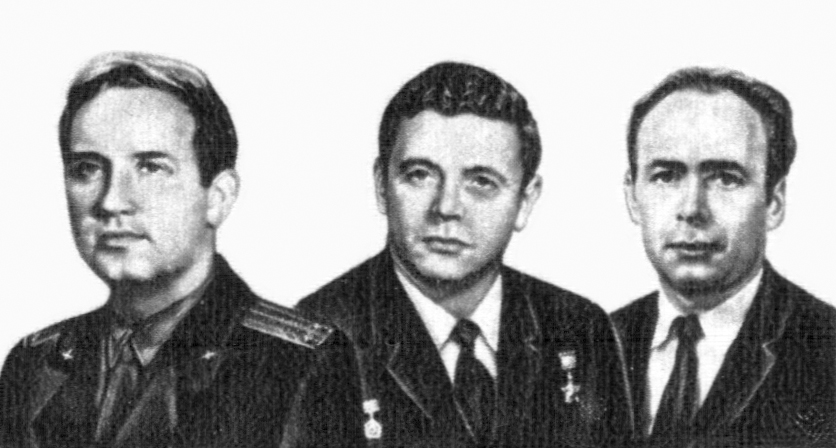
Soyuz 11 — first and only deaths in space
From the same era