Time Machine
You have arrived · The Moon Race
Prospero
Britain's only domestic orbital launch
October 28, 1971RAE / UK
Geni, CC BY-SA 4.0 / GFDL, via Wikimedia Commons
The world that day
3.6 billion
People on Earth
2
Nations to launch a human
8
Humans to walk on the Moon
0
Known worlds beyond the Sun
On 28 October 1971, at Launch Area 5B in the South Australian desert at Woomera, a slender British rocket called Black Arrow lifted off on a flame that was almost invisible. The strange part was that the program it belonged to was already dead. The British government had cancelled Black Arrow in July 1971, three months earlier, but this final vehicle, R3, was already built and shipped, so the launch was allowed to proceed. The engineers on the range were sending up a satellite for a country that had just decided it no longer wanted its own rockets.
Black Arrow was a quiet triumph of frugal engineering by the Royal Aircraft Establishment and its Isle of Wight contractors. It burned kerosene with high-test hydrogen peroxide, a combination that produced a clean, nearly smokeless exhaust. Its payload, a 66-kilogram experimental satellite designated X3, carried solar cells, thermal-surface materials, and instruments meant to prove technologies for future communications satellites. Forty minutes after liftoff, tracking confirmed it was safely in a 531 by 1,403 kilometre orbit inclined at 82 degrees.
Once in orbit the satellite received its name: Prospero, after the magician in Shakespeare's The Tempest who renounces his magic at the play's end. For a nation surrendering its launch capability, the choice was pointed. The United Kingdom had become the sixth country to orbit a satellite on its own rocket, and the first and only one to then walk away from that capability. No Black Arrow ever flew again; the backup vehicle, R4, hangs today in London's Science Museum.
Prospero itself outlived the program by decades. Its experiments operated until 1973, and ground controllers continued to contact the old satellite annually until 1996, when the tracking station at Lasham was decommissioned. It is still up there, circling Earth on every pass as a small, persistent reminder of the road not taken, and British engineers have since floated proposals to retrieve it as a national heirloom.
By the numbers
- Launch
- 28 Oct 1971, Woomera LA-5B, Australia
- Launch vehicle
- Black Arrow R3
- Satellite mass
- 66 kg
- Orbit
- 531 × 1,403 km, 82° inclination
- Operations
- Experiments to 1973; contacted annually until 1996
- Status
- Still in orbit (NORAD ID 5580)
Why it mattered
Prospero made the United Kingdom the sixth nation to launch its own satellite, and the only one ever to achieve independent orbital launch capability and then deliberately give it up. The decision pushed British space ambitions into European cooperation and American launch contracts for half a century, and Black Arrow became the textbook cautionary tale quoted whenever governments weigh the strategic value of sovereign access to space. The satellite still passing silently overhead has become a touchstone for the UK's modern launch revival, invoked by every spaceport and rocket startup trying to finish what Woomera started.
- The Black Arrow program was cancelled in July 1971, three months before its only successful satellite launch; the rocket was already at Woomera, so the team flew it anyway.
- The satellite was renamed Prospero after the magician in The Tempest who gives up his powers, a deliberately wry choice for a nation abandoning its own rockets.
- Black Arrow's hydrogen peroxide and kerosene propellants burned with an almost invisible, smokeless flame, unlike any other orbital rocket of its era.
- The unflown backup rocket, Black Arrow R4, is displayed in the Science Museum in London, a complete orbital launcher that never got to fly.
- Prospero is still in orbit today and was contacted annually until 1996; UK launch company Skyrora has even proposed a mission to find and retrieve it.
Keep travelling
People also explored
From the same era
Moment
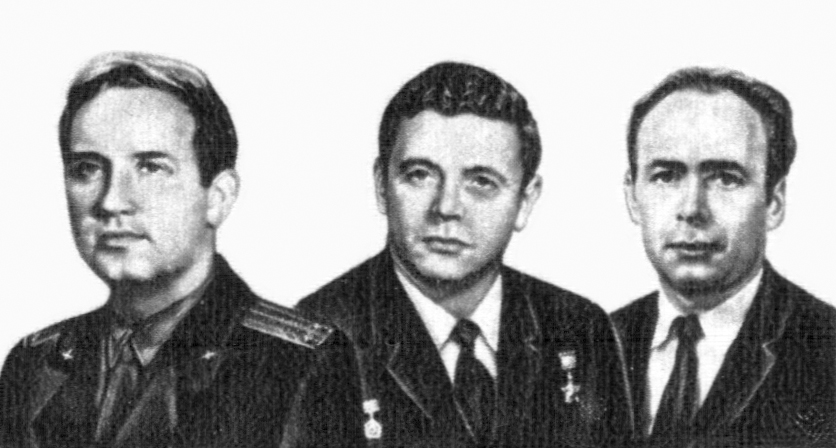
Soyuz 11 — first and only deaths in space
From the same era

From the same era
Moment
Apollo 15 — first crewed Lunar Roving Vehicle drive
From the same era

From the same era
Moment
Mariner 9 — first spacecraft to orbit another planet
From the same era

From the same era
Moment
Mars 3 — first soft landing on Mars
From the same era