Time Machine
You have arrived · Outward Bound
Skylab
first US space station
May 14, 1973NASA
NASA
The world that day
3.6 billion
People on Earth
2
Nations to launch a human
12
Humans to walk on the Moon
0
Known worlds beyond the Sun
On 14 May 1973, the last Saturn V ever to fly climbed away from Kennedy Space Center carrying not a crew but a 77,088-kilogram space station built inside a converted rocket stage. Sixty-three seconds into flight, telemetry showed something wrong: the micrometeoroid shield, which doubled as the station's sunshade, had ripped away, tearing off one of the two main solar wings and jamming the other shut. America's first space station reached orbit crippled, overheating, and starved of power before anyone had set foot aboard.
What followed became one of NASA's finest rescues. The first crew, Pete Conrad, Joseph Kerwin, and Paul Weitz, launched on 25 May after ten frantic days of improvisation on the ground. They pushed a folding parasol sunshade out through a small scientific airlock, and internal temperatures began to fall. Then, in a hazardous spacewalk on 7 June, Conrad and Kerwin cut through the debris strap pinning the surviving solar wing and forced it open. The station came alive. It was the first major repair ever performed in orbit.
Skylab then delivered handsomely. Three crews lived aboard for 28, 59, and 84 days, running roughly 300 experiments inside a workshop more voluminous than a small house. The Apollo Telescope Mount gave astronomers their first long-duration, astronaut-tended solar observatory, capturing the Sun's flares and corona beyond the reach of ground telescopes, while medical studies of the nine crewmen established that humans could live and work in weightlessness for months. Skylab 4's 84-day flight stood as the American duration record until 1995.
The station's end was as dramatic as its beginning. NASA hoped a Space Shuttle could boost Skylab to a higher orbit, but the Shuttle was late and an active Sun swelled the atmosphere, dragging the station down. On 11 July 1979, Skylab broke apart over the Indian Ocean, scattering debris across the outback near Esperance, Western Australia. No one was hurt; the local shire cheekily fined NASA 400 dollars for littering, a ticket finally paid three decades later by a California radio host and his listeners.
By the numbers
- Launch
- 14 May 1973, the final Saturn V flight
- Mass
- 77,088 kg
- Crewed missions
- 3 (28, 59, and 84 days)
- Total time occupied
- 171 days
- Experiments conducted
- ~300
- Reentry
- 11 Jul 1979, Indian Ocean and Western Australia
Why it mattered
Skylab proved that humans could live, work, and do world-class science in space for months, not days, and that astronauts could repair a broken spacecraft in orbit rather than abandon it. Its medical baseline on long-duration weightlessness underpins everything NASA later did on Shuttle, Mir, and the International Space Station, and its solar observatory effectively founded crewed space astronomy. The improvised parasol and solar-wing rescue established the in-flight maintenance culture that later saved Hubble and keeps the ISS flying. Its fiery, headline-grabbing fall in 1979 also forced the first serious public conversation about orbital debris and reentry risk.
- Skylab rode the last Saturn V ever launched, its workshop built inside a converted S-IVB rocket stage with about 361 cubic metres of habitable volume.
- It nearly died 63 seconds after launch when its combined micrometeoroid shield and sunshade tore off, ripping away one solar wing and jamming the other.
- The first crew saved it with a parasol sunshade pushed through an airlock and a daring spacewalk to cut free the jammed solar array, the first major repair in space.
- After debris fell near Esperance, Western Australia, the shire fined NASA 400 dollars for littering; the fine went unpaid until 2009, when a US radio host raised the money.
- Skylab 4's 84-day mission remained the American spaceflight duration record for over two decades, until a US astronaut aboard Mir surpassed it in 1995.
Keep travelling
People also explored
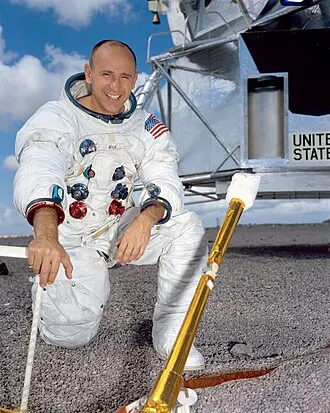
Flew on this mission
Astronaut
Alan Bean
Flew on this mission
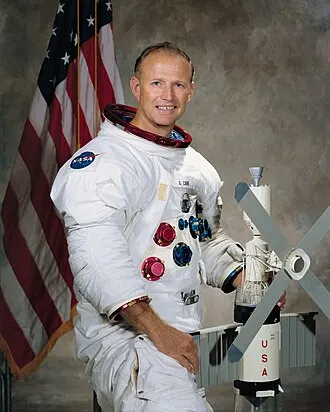
Flew on this mission
Astronaut
Gerald Carr
Flew on this mission

From the same era
Moment
Pioneer 10 launches — first probe to Jupiter and through the asteroid belt
From the same era

From the same era
Moment
Apollo 17 — last humans on the Moon
From the same era

From the same era
Moment
Aryabhata — India's first satellite
From the same era

From the same era
Moment
Apollo-Soyuz — first international docking in space
From the same era