All Astronauts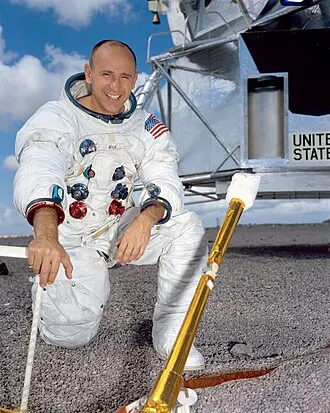 VETERANIn MemoriamNASA
VETERANIn MemoriamNASANASA·🇺🇸 United States·Born 1932
Alan Bean
Fourth person to walk on the Moon and commander of the 59-day Skylab 3 mission.
Days in Space
2
Missions
3
EVAs
10h
EVA Time
Inspirations
Biography
Fourth person to walk on the Moon and commander of the 59-day Skylab 3 mission. After NASA he became a painter devoted entirely to Apollo-era scenes. He died in 2018.
Before NASAU.S. Navy aviator and test pilot who flew the F9F Cougar and A-4 Skyhawk, graduated from the U.S. Naval Test Pilot School in 1960, and logged over 7,145 flight hours before joining NASA.
Life & career
Alan LaVern Bean was born on March 15, 1932, in the small Texas Panhandle town of Wheeler, and came of age during the aviation-obsessed 1940s and 50s. He earned a degree in aeronautical engineering from the University of Texas and was commissioned into the U.S. Navy, where he flew fighters and then honed his craft at the U.S. Naval Test Pilot School, graduating in 1960. Flying the F9F Cougar and A-4 Skyhawk, Bean logged well over 7,000 flight hours before NASA selected him as one of its third group of astronauts in 1963. His path to the Moon was shaped by a mentor and friend, Pete Conrad, who had been his test-pilot-school instructor and who would later hand-pick Bean for his own lunar crew.
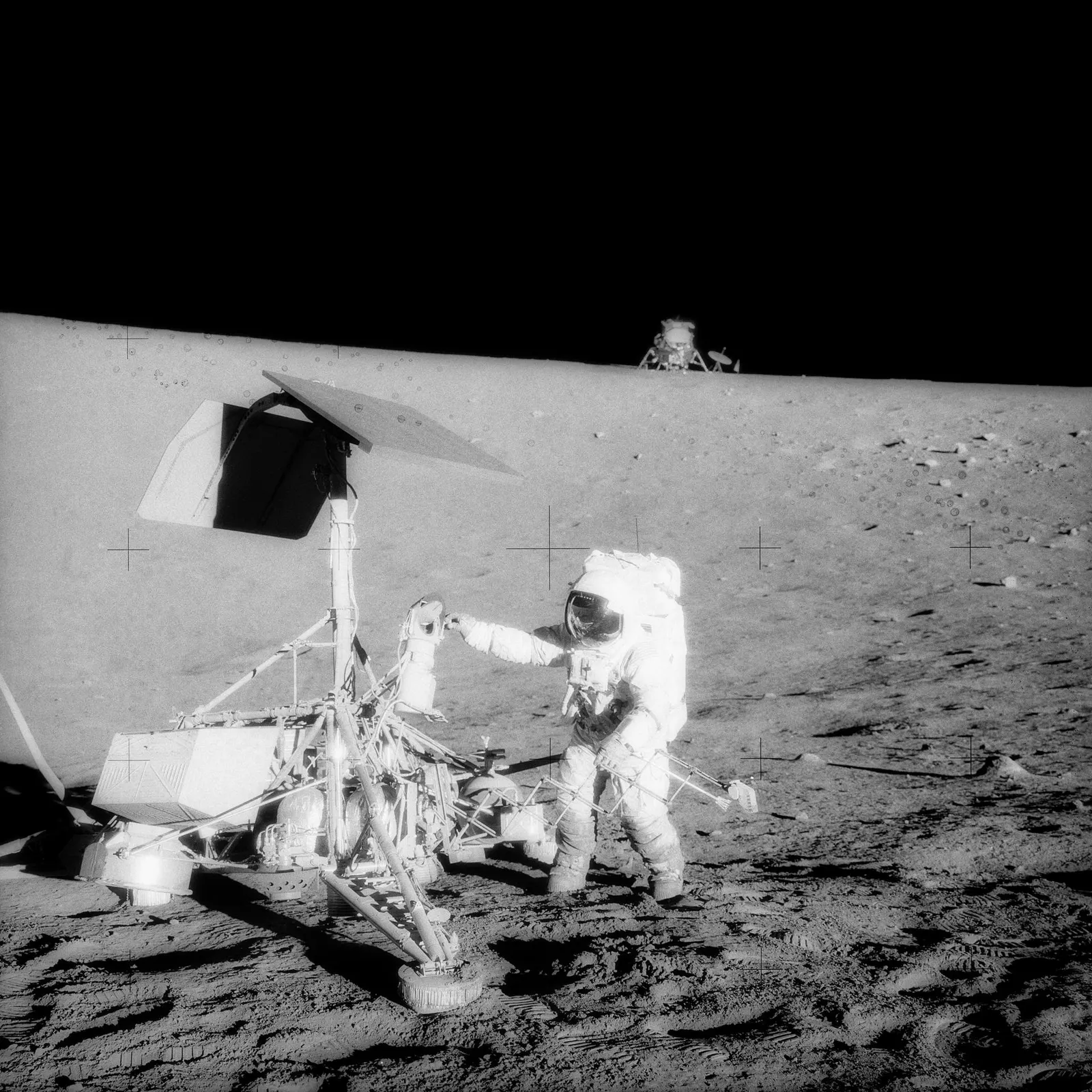
Bean's first spaceflight, Apollo 12, launched on November 14, 1969, the second mission to attempt a crewed lunar landing. As Lunar Module Pilot aboard the LM Intrepid, he descended with Conrad to the Ocean of Storms and, on November 19, became the fourth human being to walk on the Moon. The crew pulled off a precision landing within walking distance of the derelict Surveyor 3 probe, retrieving pieces of it for study, and Bean spent hours deploying experiments and gathering samples across two moonwalks. Nearly four years later he returned to space as commander of Skylab 3, launching on July 28, 1973, for a 59-day stay aboard America's first space station. That endurance flight roughly doubled the previous U.S. record, with Bean and his crew traveling some 24 million miles while conducting hundreds of experiments and salvaging equipment aboard the recently damaged station. Across his two missions he accumulated about 1,671 hours in space and three spacewalks totaling roughly ten hours.
Bean retired from NASA in 1981 to pursue an unexpected second calling: he became a full-time painter devoted entirely to the Apollo era he had helped create. Uniquely among the moonwalkers, he mixed traces of actual lunar dust from his Apollo 12 mission patches, along with fragments of his spacesuit, into his acrylic canvases, making them the only artworks on Earth to physically contain material from the Moon. His textured, luminous paintings became his enduring legacy, translating the experience of standing on another world into images the public could hold onto. One of only twelve people ever to walk on the lunar surface, Alan Bean died on May 26, 2018, in Houston at the age of 86, remembered as both an explorer and an artist who spent a lifetime documenting where he had been.
Mission Timeline
- Lunar Module Pilot
Apollo LM Intrepid
Apollo 12
Launch: Nov 14, 1969Landing: Nov 24, 1969Duration: 10 days- Fourth person to walk on the Moon
- Commander
Apollo CSM / Saturn IB
Skylab 3
Launch: Jul 28, 1973Landing: Sep 25, 1973Duration: 59 days- 59-day mission doubling US spaceflight endurance
Beyond the Mission
Hobbies & Interests
paintingart
Languages
English
Fun fact
After retiring from NASA in 1981, Bean became a full-time painter, and uniquely mixed actual Moon dust and fragments of his Apollo 12 spacesuit into his acrylic paintings of the lunar surface — making them the only artworks physically containing material from the Moon.
More Astronauts
Other space travelers from NASA