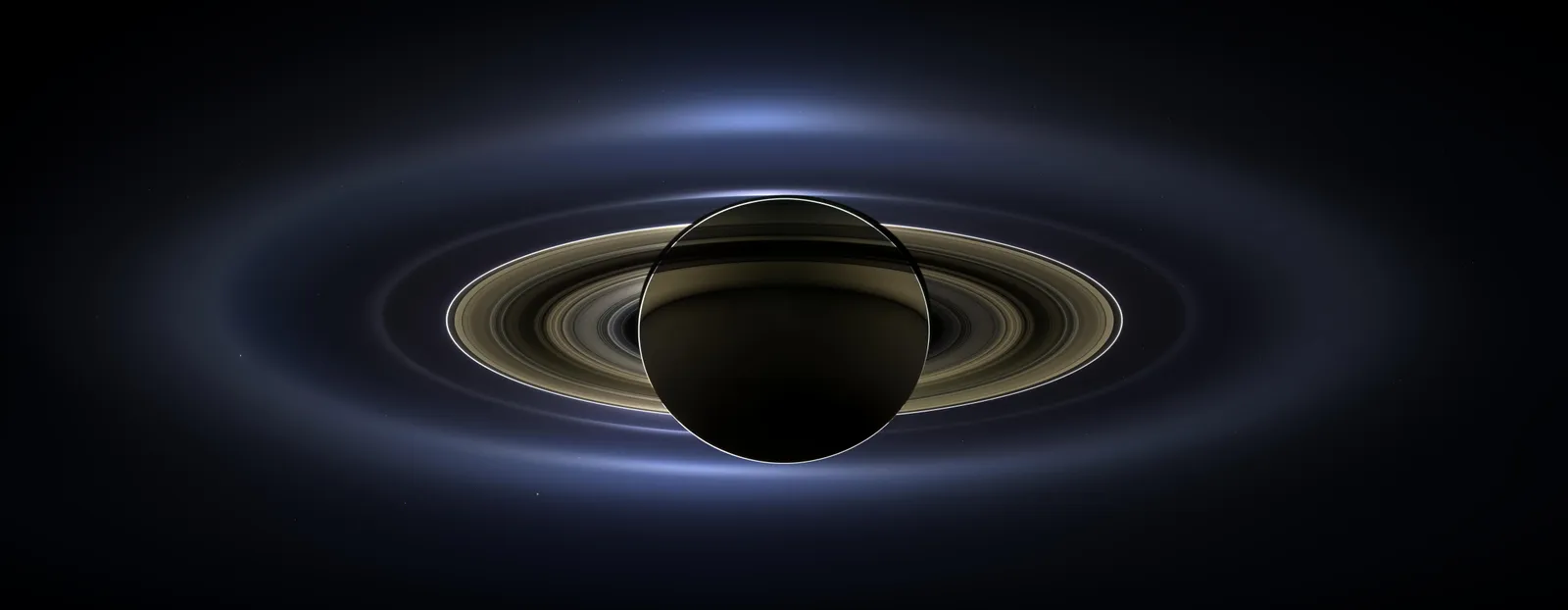
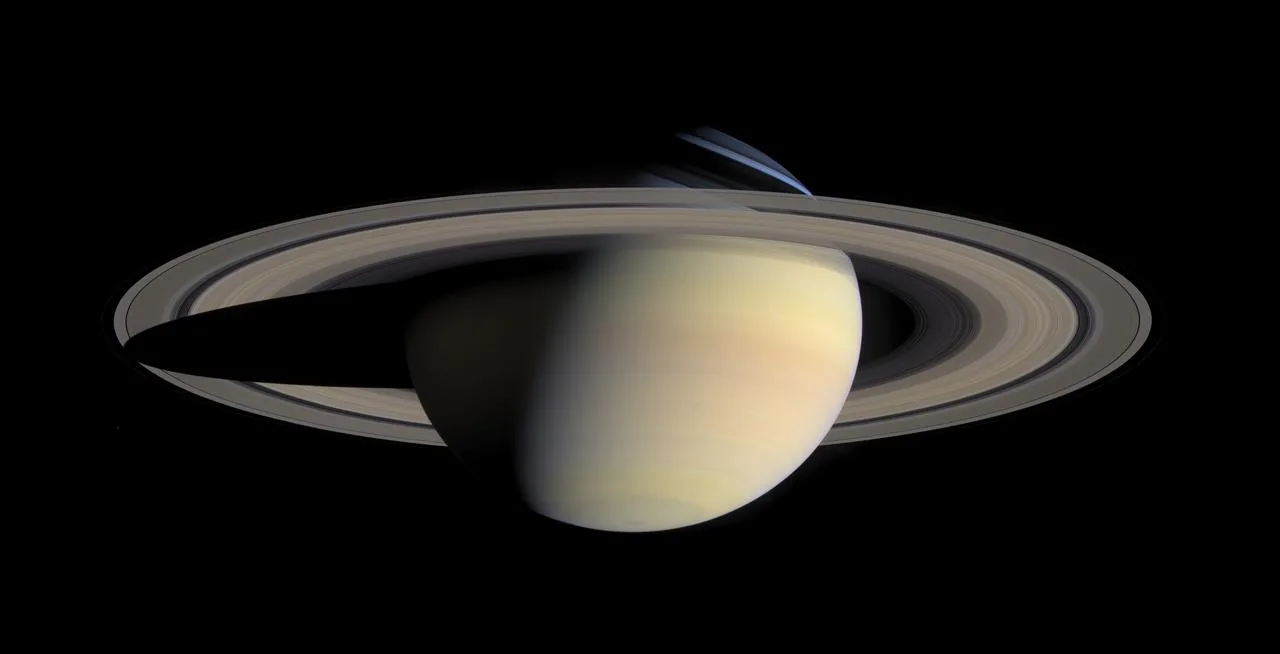
At 4:43 a.m. on 15 October 1997, a Titan IVB rocket tore open the night above Cape Canaveral carrying the heaviest, most complex interplanetary spacecraft ever built. Cassini weighed 5,712 kilograms fueled, stood two storeys tall, and carried a passenger: ESA's Huygens probe, bound for Saturn's haze-shrouded moon Titan. Protesters had rallied for weeks against the plutonium powering its generators, but the launch was flawless, the opening of a 3.5-billion-kilometre, seven-year cruise built by NASA, the European Space Agency, and the Italian Space Agency together.
02 / 04
Getting a six-tonne ship to Saturn took borrowed momentum: two swings past Venus, one past Earth, one past Jupiter. On 1 July 2004, by UTC, Cassini threaded the gap between Saturn's F and G rings and burned into orbit, the first spacecraft ever to orbit the ringed planet. Six months later it released Huygens, which on 14 January 2005 parachuted for two and a half hours through Titan's orange smog and set down on a frigid plain strewn with rounded pebbles of ice, the most distant landing ever performed, transmitting from the surface for more than an hour.
03 / 04
Thirteen years of discovery followed, turning Saturn's neighborhood into the most surprising in the solar system. Cassini watched geysers of water ice and vapor erupt from the small moon Enceladus and flew straight through the plume, finding essentially all the ingredients life requires. It mapped rivers and seas of liquid methane on Titan, the only standing liquid known on another world's surface, tracked storms wider than Earth, and discovered new moons across 294 orbits and 162 targeted flybys.
04 / 04
By 2017 the propellant was nearly spent, and NASA chose to protect Enceladus and Titan from any chance of contamination. After 22 final dives through the unexplored gap between Saturn and its rings, Cassini plunged into the planet on 15 September 2017, holding its antenna toward Earth until the atmosphere tore it apart. The last signal, 83 light-minutes old by the time it arrived, faded in JPL's mission control before dawn, and a room full of engineers applauded through tears.
“
This has been an incredible mission, an incredible spacecraft, and you're all an incredible team. I'm going to call this the end of mission.
Cassini-Huygens set the standard for flagship exploration: three agencies, thirteen years in orbit, and discoveries that redefined where life might exist. Warm salty water venting from Enceladus and methane seas on Titan moved ocean worlds to the center of astrobiology, shaping missions from Europa Clipper to Dragonfly, which will fly in Titan's skies. Huygens remains humanity's only landing in the outer solar system, and the NASA-ESA partnership behind it became the template for the great collaborations that followed.
▸A $3.9 billion flagship shared by NASA, ESA, and ASI, it traveled 7.9 billion kilometres and returned more than 453,000 images.
▸Huygens' touchdown on Titan remains the most distant landing ever attempted, about 1.2 billion kilometres from Earth.
▸Anti-nuclear protesters tried to stop the 1997 launch over its plutonium power source; the generators then ran flawlessly for twenty years.
▸Cassini flew directly through Enceladus' ice plumes, sampling spray from a buried alien ocean without ever landing.
▸Its final signal took 83 minutes to cross the solar system, so the spacecraft was already gone when its goodbye reached Earth.