Before today, space was somewhere humans visited. After today, it became somewhere we live — and have, every day since.
Scroll to begin
NASA
The world that day
5.9 billion
People on Earth
2
Nations to launch a human
12
Humans to walk on the Moon
50
Known worlds beyond the Sun
01 / 04
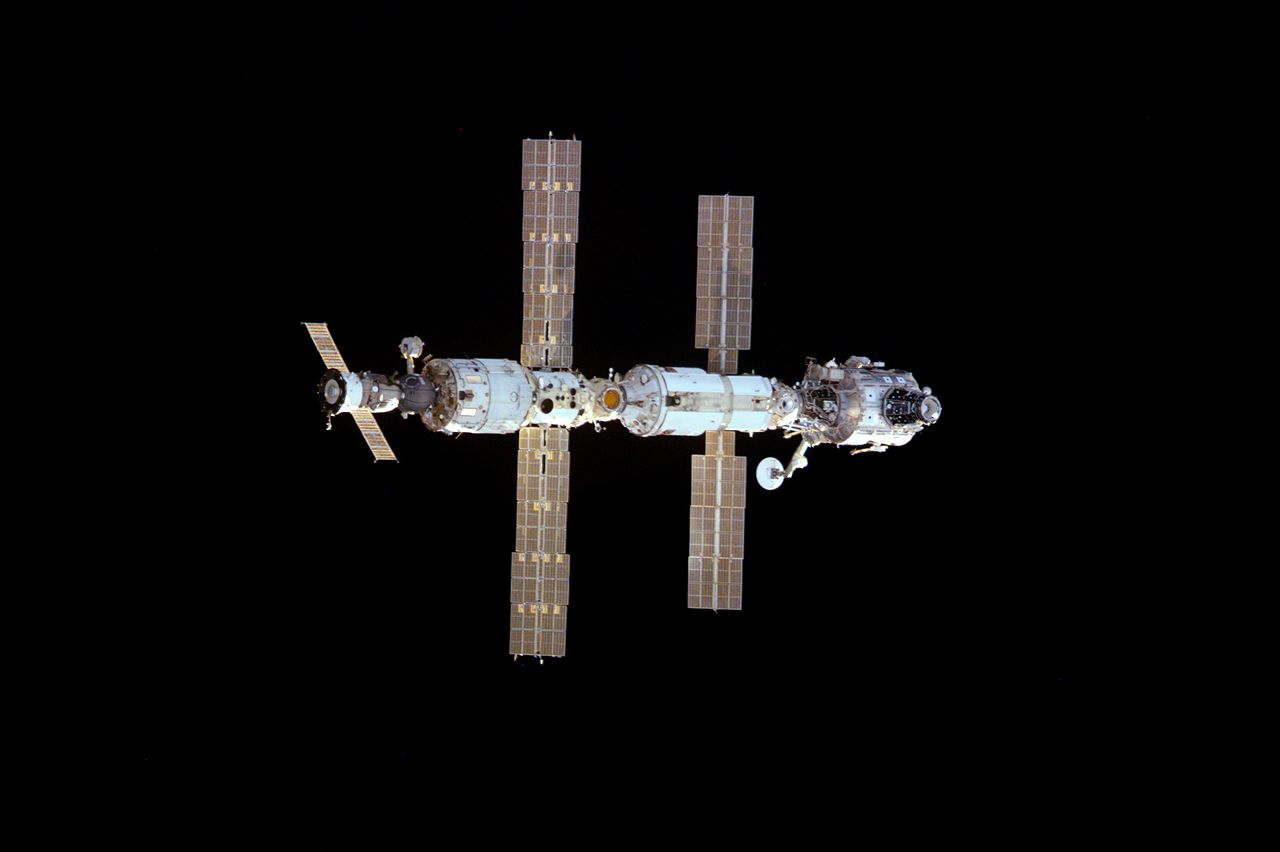
On 31 October 2000, a Soyuz rocket left the same Baikonur pad that had launched Yuri Gagarin, carrying an American naval officer and two Russian cosmonauts toward an empty station. Two days later, at 09:21 UTC on 2 November, Soyuz TM-31 docked with the International Space Station's Zvezda module. William Shepherd, Yuri Gidzenko, and Sergei Krikalev floated into a dark, silent outpost of just three modules and began switching it on. Ever since that morning, there has always been someone living off the Earth.
02 / 04
The first days were unglamorous plumbing. The priority list ran from the hot-water dispenser to the toilet to the carbon dioxide scrubbers, bringing the station to life one system at a time. Shepherd, a former Navy SEAL and the expedition's commander, radioed NASA Administrator Dan Goldin to request the call sign Alpha, and kept a ship's log in old naval tradition. Krikalev, famously aloft on Mir when the Soviet Union dissolved beneath him, was already among the most experienced humans in orbit and had helped open the very first ISS module in 1998.
03 / 04
Their four and a half months transformed the outpost. Shuttle Endeavour arrived in December 2000 with the giant P6 solar arrays that multiplied the station's power, and Atlantis followed in February 2001 with Destiny, the American laboratory. By the time Expedition 1 rode Discovery home on 21 March 2001, after 141 days, the ISS had become a working research station with its second crew already aboard.
04 / 04
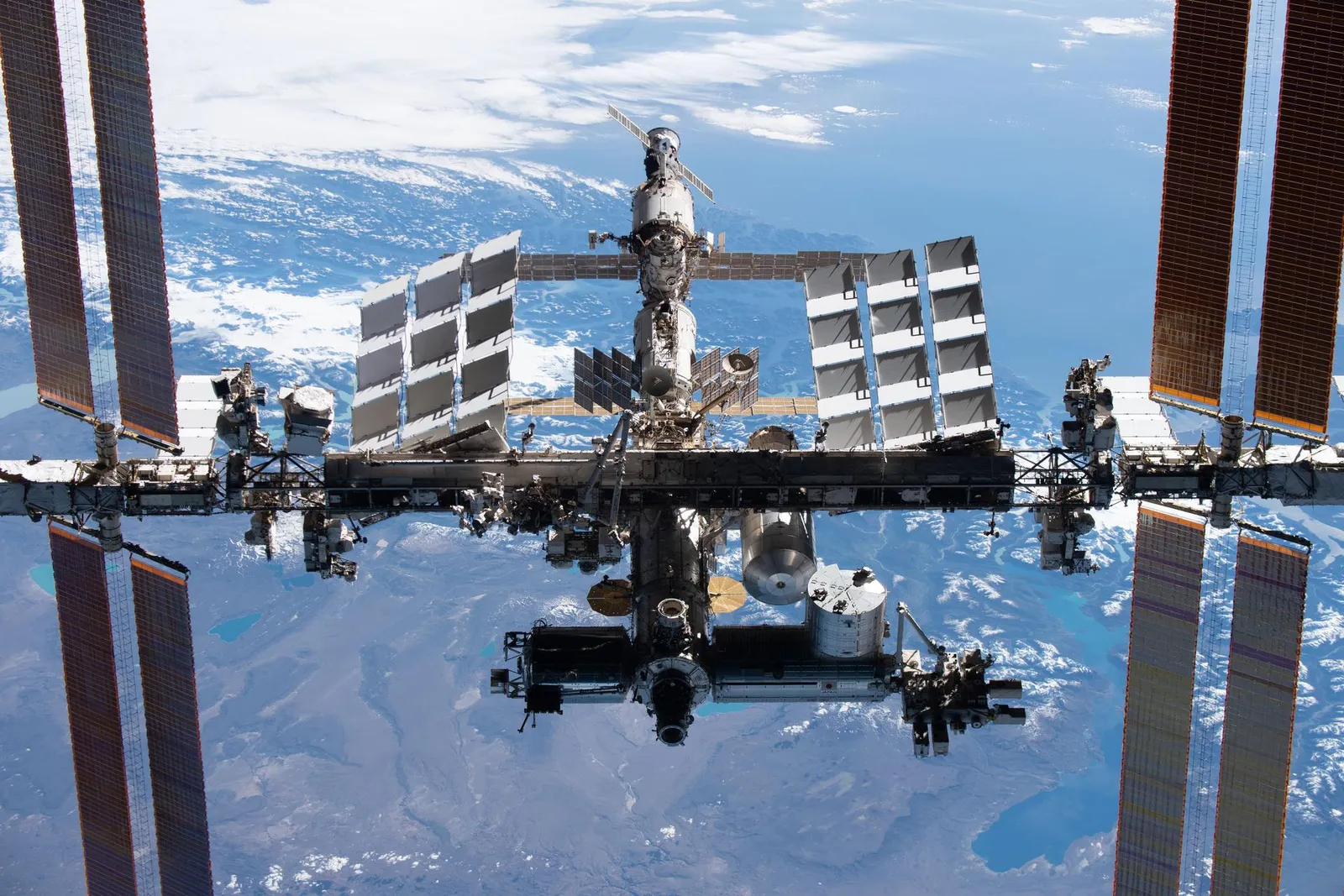
What began that November has never stopped. Crews have rotated continuously for more than a quarter of a century, through the Columbia grounding, geopolitical ruptures, and the arrival of commercial crew vehicles. More than 270 people from over 20 countries have visited the laboratory the first crew switched on, and the unbroken human presence in orbit that began on 2 November 2000 passed its 25th anniversary in November 2025, still counting.
“
The first expedition on the space station requests permission to take the radio call sign Alpha.
William Shepherd · Expedition 1 commander, radio call with NASA Administrator Dan Goldin, 2 November 2000
By the numbers
Launch
31 Oct 2000, 07:52 UTC (Soyuz TM-31, Baikonur)
Docking
2 Nov 2000, 09:21 UTC (Zvezda aft port)
ISS modules at arrival
3 (Zarya, Unity, Zvezda)
Mission duration
141 days (returned 21 Mar 2001 on STS-102)
Continuous habitation since
25+ years and counting
Why it mattered
Expedition 1 began the longest continuous human presence beyond Earth, a streak that passed a quarter century in November 2025 and continues today. It proved the delicate US-Russian partnership could genuinely live and work in one vessel, established the expedition rhythm every crew since has followed, and turned the ISS from a construction site into humanity's permanent address in orbit. Every experiment, spacewalk, and commercial crew flight since traces back to three men turning on the lights in November 2000.
▸Launched from Gagarin's Start, the same Baikonur pad used for the first human spaceflight in 1961.
▸Among the crew's first tasks aboard were activating the hot-water dispenser and the toilet.
▸Krikalev, nicknamed the last citizen of the USSR after watching his country dissolve from Mir, returned to open the ISS era nine years later.
▸Shepherd, a former Navy SEAL, kept a ship's log in naval tradition, and NASA's history office credits the crew with probably the first selfie of the ISS program.
▸The continuous human presence they began passed 25 unbroken years on 2 November 2025.