At 1:47 a.m. on 16 November 2022, night turned to day over the Florida coast. The Space Launch System, fifty years in spirit and eleven in development, finally left Launch Complex 39B on 8.8 million pounds of thrust, more than any rocket that had ever reached orbit. Getting there had taken everything: two scrubbed launch attempts, a rollback for Hurricane Ian, riding out Hurricane Nicole at the pad, and, that very night, a 'red crew' of three technicians sent into the blast danger zone to tighten fittings on a leaking hydrogen valve while the rocket stood fueled behind them.
02 / 03
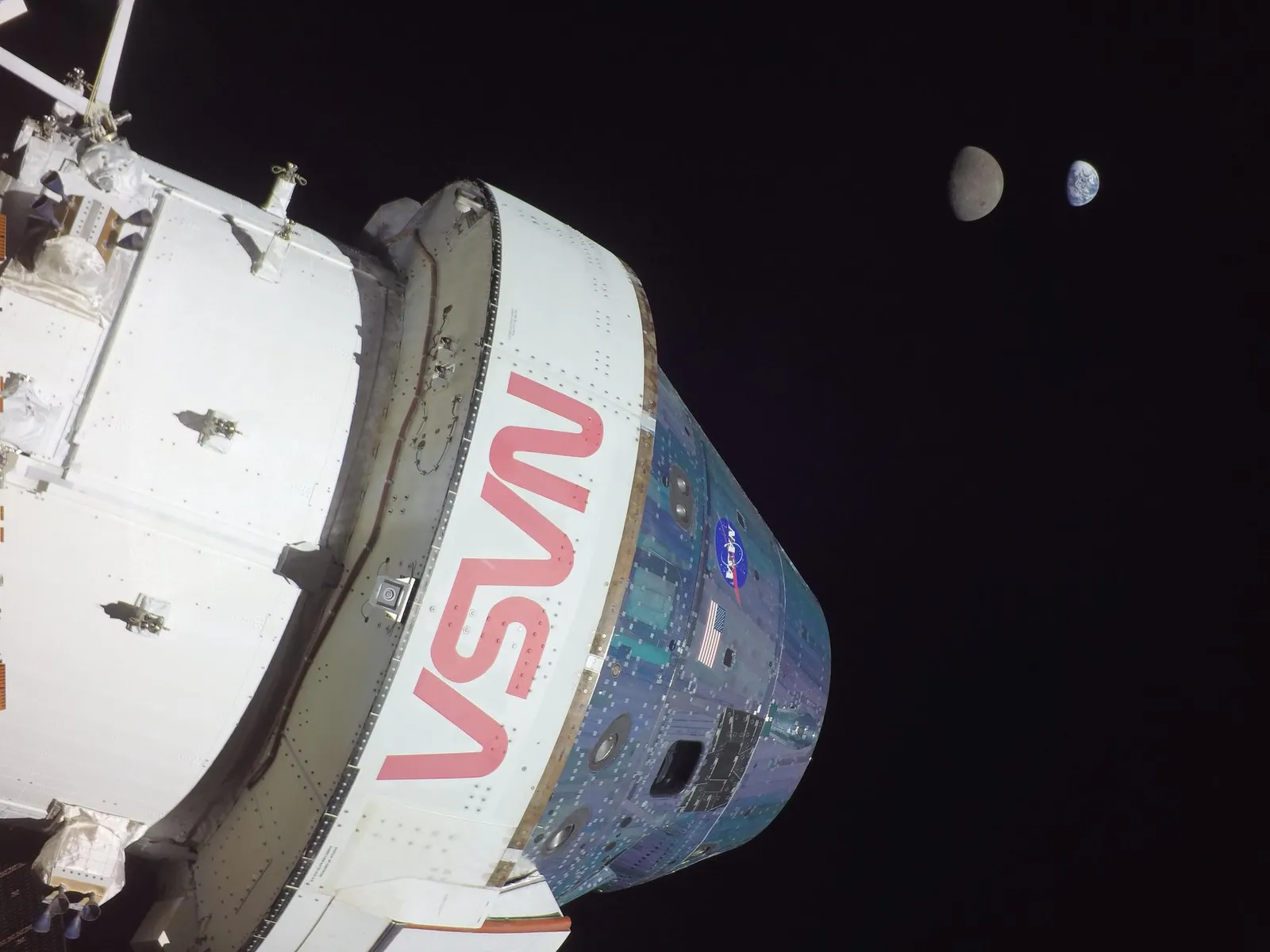
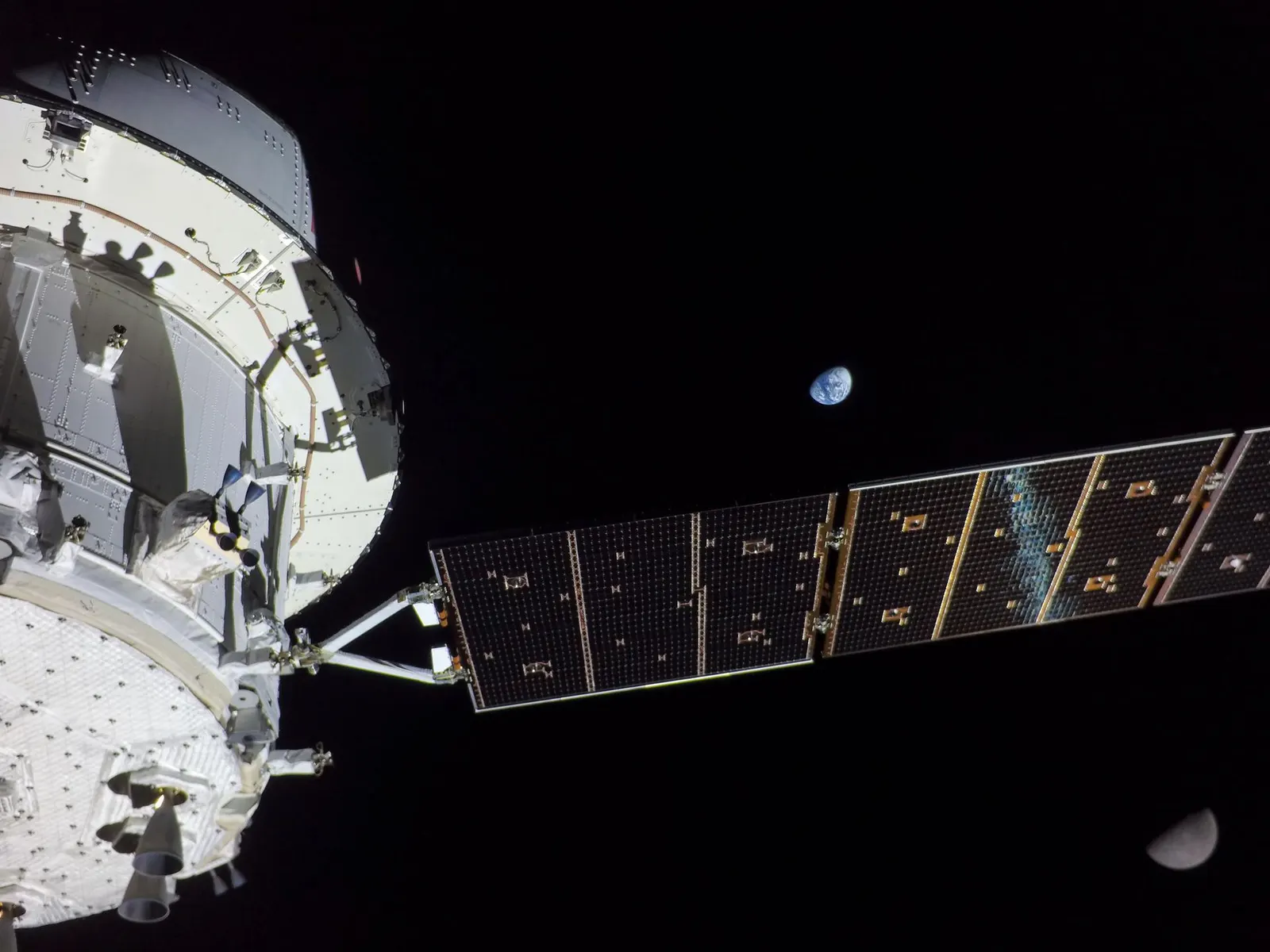
Atop the rocket flew Orion, paired with ESA's European Service Module, on the deepest shakedown cruise ever given to a human-rated spacecraft. Its crew was deliberately strange: Commander Moonikin Campos, a sensor-laden manikin named for Arturo Campos, the engineer who helped save Apollo 13; two radiation-measuring torsos called Helga and Zohar; and a Snoopy doll floating as the zero-gravity indicator. Orion swept about 130 kilometres above the lunar surface, swung out into a distant retrograde orbit, and on 28 November reached 268,563 miles from Earth, farther than any spacecraft built for humans had ever flown.
03 / 03
The return was the real test. On 11 December, fifty years to the day after Apollo 17 made humanity's last crewed Moon landing, Orion hit the atmosphere at nearly 25,000 miles per hour and performed the first skip entry ever flown by a crew-capable spacecraft, glancing off the upper atmosphere like a stone on water to ease the g-loads and steer toward its recovery zone. The heat shield endured temperatures near 5,000 degrees Fahrenheit. Twenty-five days, ten hours and 53 minutes after launch, with 1.4 million miles travelled, Orion bobbed in the Pacific off Baja California, intact.
“
I want you to look around, look around at this team, and know that you have earned it. You have earned your place in this room. You've earned this moment. You have earned your place in history.
Charlie Blackwell-Thompson · Artemis I Launch Director, NASA
By the numbers
Launch
16 Nov 2022, 01:47 EST (LC-39B, Kennedy Space Center)
Liftoff thrust
8.8 million lbf
Mission duration
25 d 10 h 53 min
Total distance
1.4 million miles
Farthest from Earth
268,563 mi (432,210 km)
Splashdown
11 Dec 2022, Pacific Ocean
Why it mattered
Artemis I proved the two machines on which NASA's entire lunar return depends. A first-flight success for a rocket of this scale is rare, and Orion's heat shield, despite unexpected charring that engineers spent months analysing, brought the capsule home safely from lunar-return velocity. The mission converted Artemis from a programme of renderings into a programme of flight-proven hardware, directly enabling the crewed Artemis II mission and the Artemis III landing attempt, and opened the second lunar age with Europe embedded in the spacecraft itself.
▸Orion broke Apollo 13's 52-year-old record for the farthest distance from Earth reached by a spacecraft designed to carry humans: 268,563 miles.
▸Splashdown came on 11 December 2022, exactly 50 years after Apollo 17's lunar landing, the last time humans walked on the Moon.
▸The manikin in the commander's seat was named for Arturo Campos, the NASA electrical engineer whose power procedures helped bring Apollo 13 home.
▸During the final countdown, a three-person 'red crew' walked to the base of the fully fueled rocket to tighten packing nuts on a leaking hydrogen valve.
▸With 8.8 million pounds of liftoff thrust, SLS flew about 15 percent harder than the Saturn V, the most powerful rocket ever to reach orbit at the time.