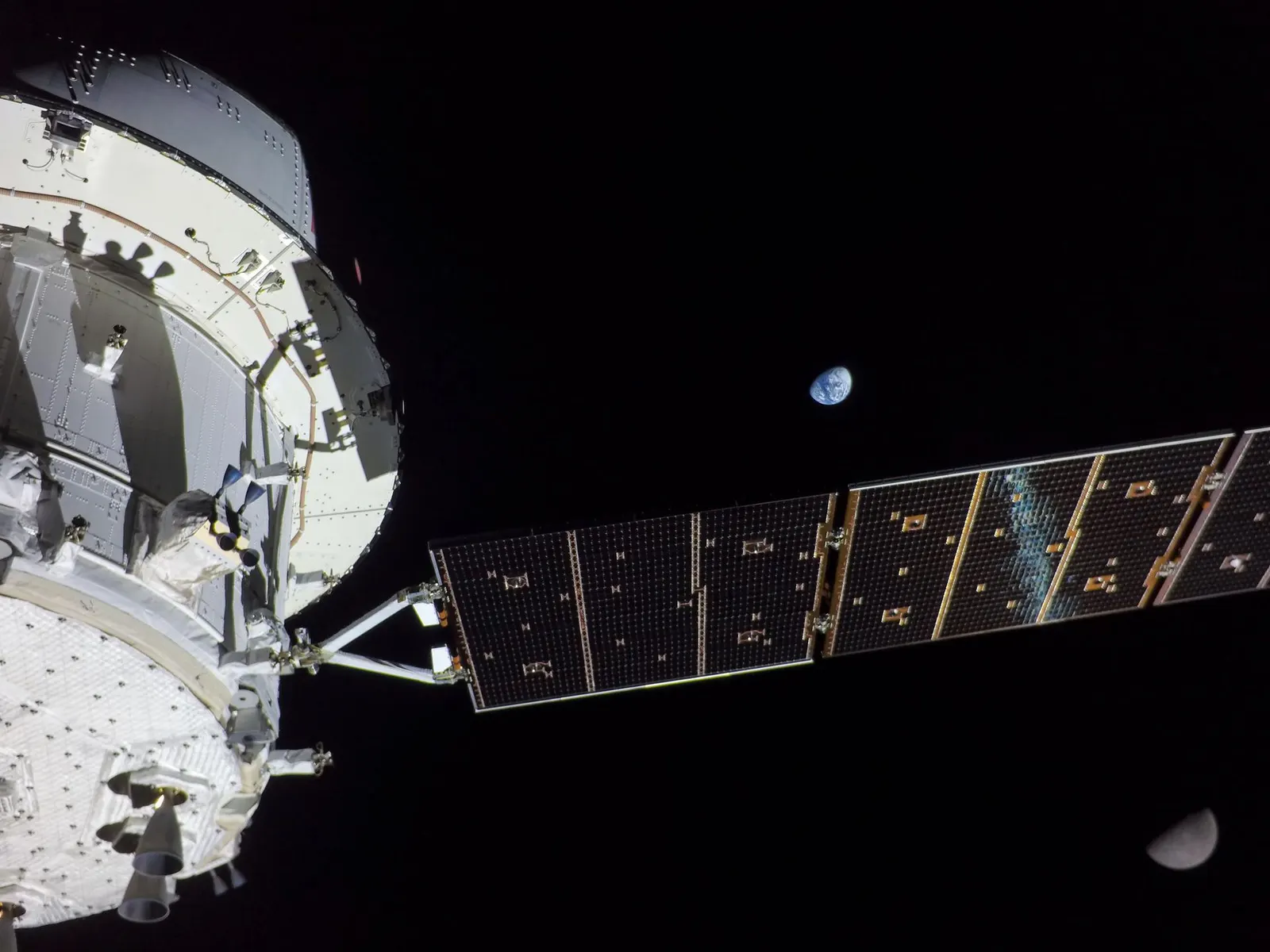
Image: NASA
Don't just read it — experience it
Relive Artemis I, chapter by chapter
25 days · 8 chapters · We Rise Together
Artemis I
Mission Profile
| Launch date | 2022-11-16 |
|---|---|
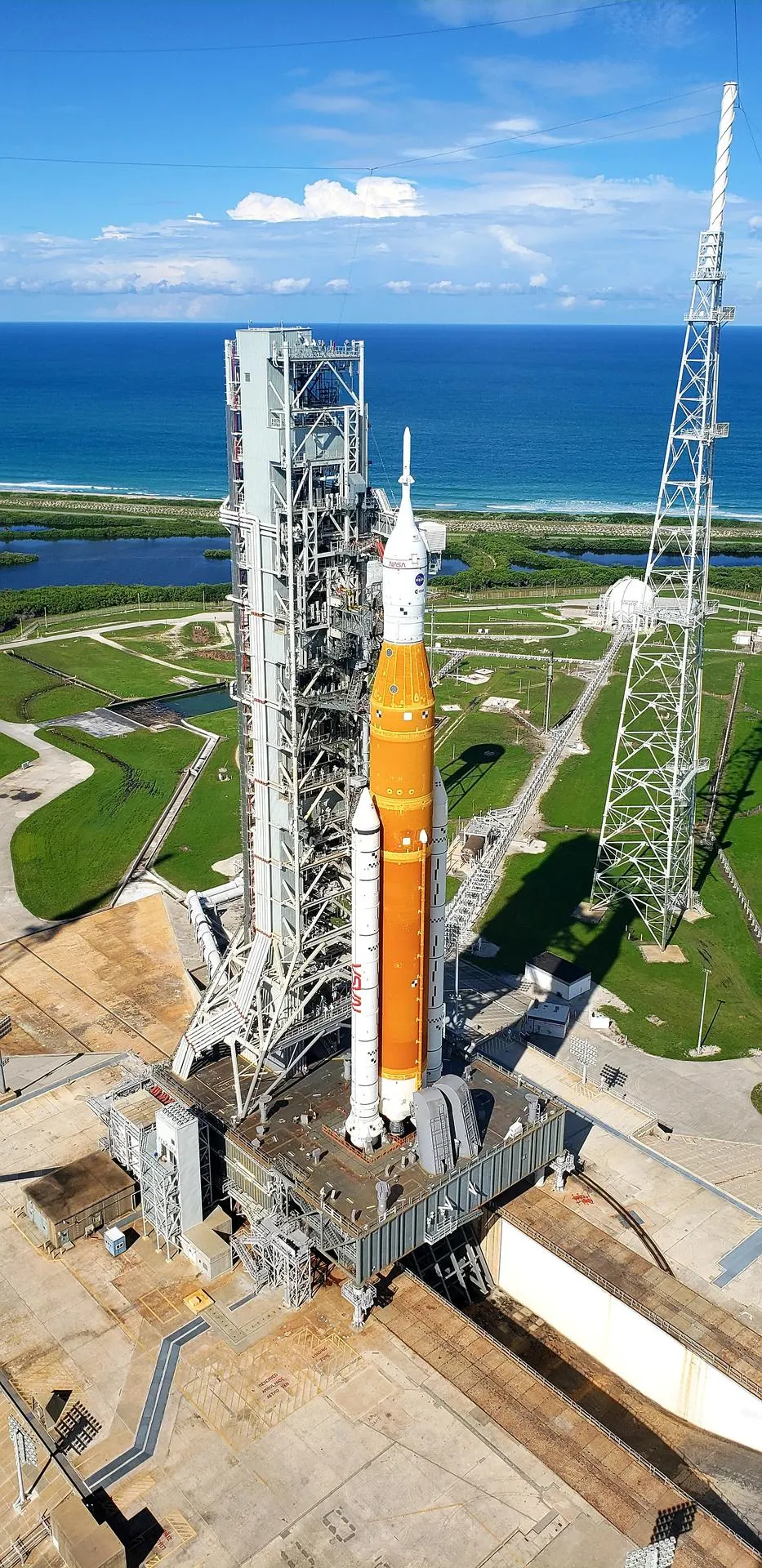
| Launch site | Kennedy Space Center, Launch Complex 39B, Florida |
| Launch vehicle | Space Launch System (SLS) Block 1 — first SLS flight |
| Spacecraft | Orion (CM-002 + ESM-1 European Service Module by ESA/Airbus) |
| Target | Moon |
| Type | Robotic |
| End date | 2022-12-11 |
| Recovery | USS Portland, Pacific Ocean west of Baja California near Guadalupe Island |
| Cost | SLS+Orion+EGS recurring cost ~$4.1B per launch (NASA OIG, November 2021) |
| Mass | ~26,500 kg (Orion stack) |
| Duration | 25 days, 10 hours, 53 minutes |
| Partners | Boeing (SLS Core Stage), Northrop Grumman (SLS solid rocket boosters), Aerojet Rocketdyne / L3Harris (RS-25 engines), Lockheed Martin (Orion CM), ESA / Airbus (European Service Module) |
| Instruments | 10 secondary CubeSat payloads (deployed from ICPS), Commander Moonikin Campos sensors, Helga & Zohar radiation phantoms, Callisto voice technology demo |
Overview
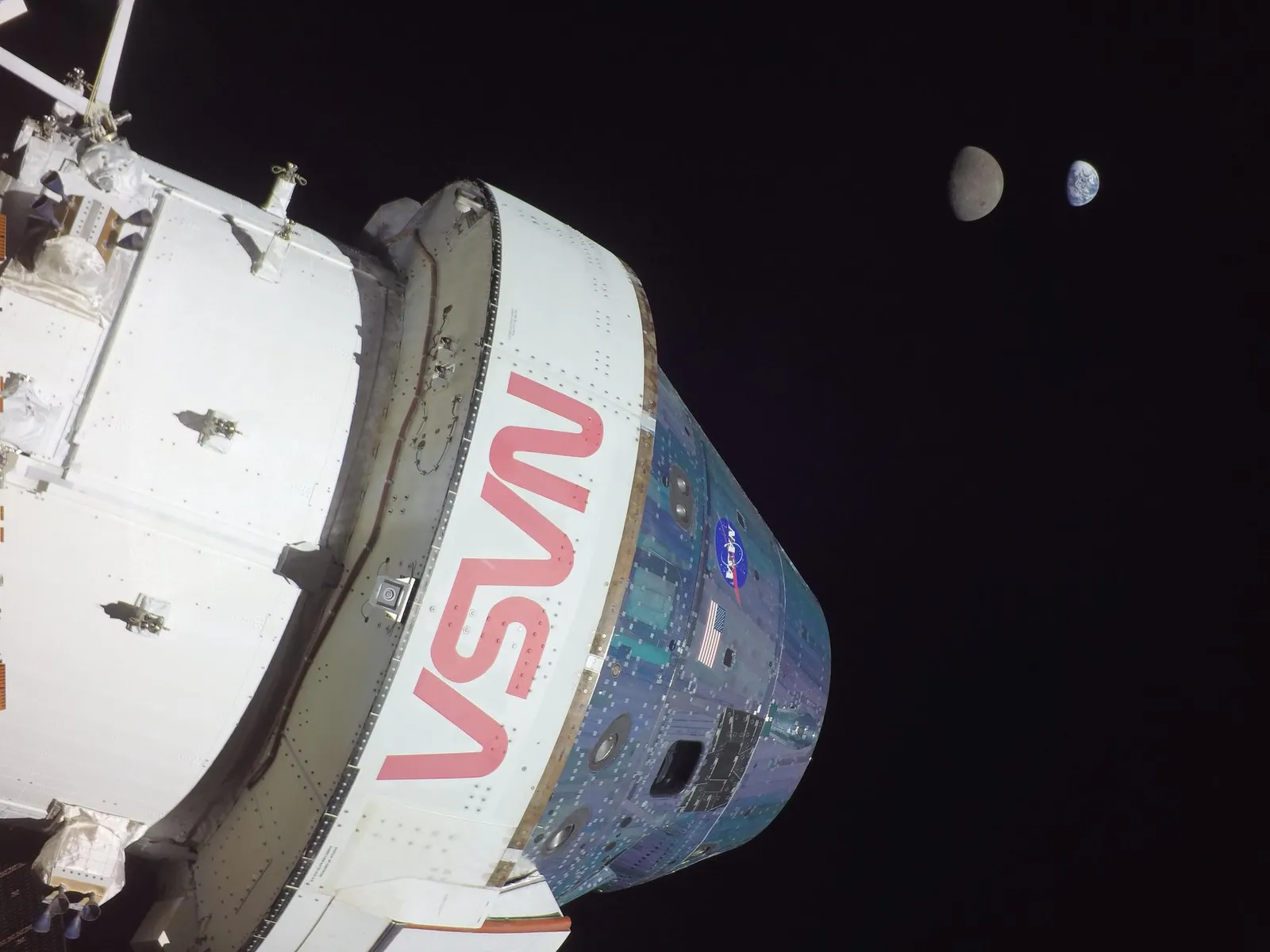
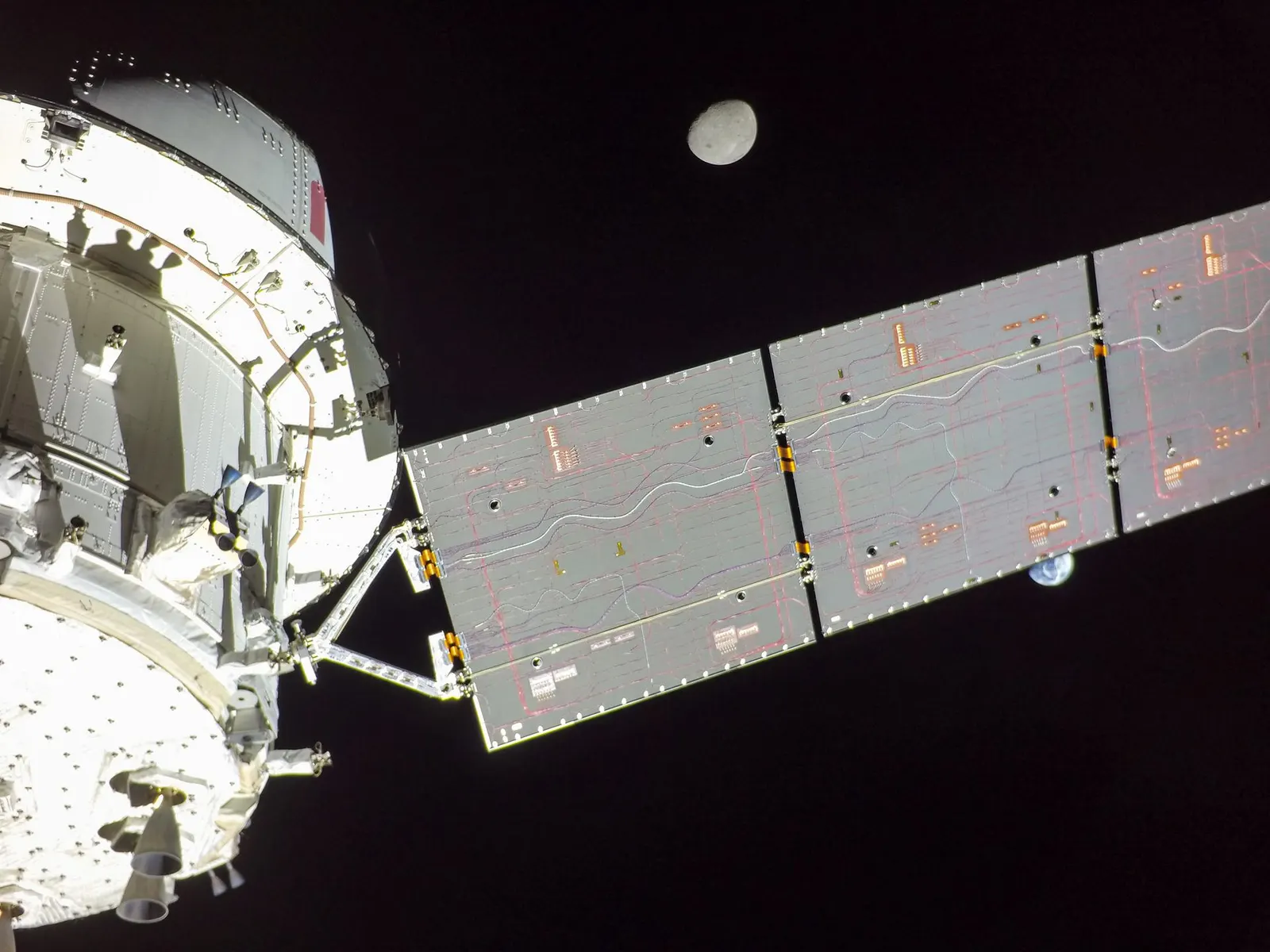
Artemis I was the first integrated flight test of NASA's Space Launch System, the Orion spacecraft, and the Exploration Ground Systems — the architecture that will return humans to the Moon. The uncrewed mission launched November 16, 2022 at 01:47:44 EST on the first SLS rocket, sending Orion on a 25.5-day flight that included an outbound lunar flyby at 81 miles altitude, six days in distant retrograde orbit (DRO), and a return lunar flyby before splashdown in the Pacific Ocean on December 11. Orion broke Apollo 13's 1970 distance-from-Earth record for a crew-rated spacecraft, reaching 268,563 miles (432,210 km). The most critical test of the mission was Orion's heat shield enduring lunar-return atmospheric reentry at ~24,500 mph (11 km/s) and ~5,000°F (2,760°C) using a first-of-its-kind "skip entry" maneuver. The uncrewed Orion cabin carried three radiation-dose-measuring manikins (Commander Moonikin Campos, Helga, and Zohar) and Snoopy as a zero-gravity indicator. Artemis II will carry four astronauts on the same trajectory in 2026.
Mission Objectives
First integrated flight test of SLS + Orion + Exploration Ground Systems
achieved
Demonstrate Orion heat shield at lunar-return velocity (~24,500 mph / 11 km/s) and ~5,000°F (2,760°C)
achieved
Validate trajectory, navigation, propulsion, and communications beyond Moon
achieved
Demonstrate crew-rated spacecraft systems in deep-space radiation environment
achieved
Crew
Commander Moonikin Campos
Suited manikin (commander seat)
Named for Arturo Campos, the NASA engineer who helped save Apollo 13. Wore Orion Crew Survival System suit; carried sensors recording acceleration, vibration, and radiation.
Helga & Zohar
DLR/ISA radiation-dose phantom torsos
Identical mannequins designed to measure deep-space radiation; Zohar wore an AstroRad protective vest. Result data informs Artemis II crew protection.
Snoopy
Zero-gravity indicator
Wore an Orion Crew Survival System suit; floated free at zero g to give Mission Control visual confirmation of microgravity.
Vehicle Specifications
Orion Crew Module (CM-002)
- Mass
- ~10,400 kg
- Dimensions
- 5.0 m diameter × 3.3 m height
First Orion to fly beyond Earth orbit. Avcoat heat shield.
European Service Module (ESM-1)
- Mass
- ~13,500 kg (with propellant)
Built by Airbus for ESA; provides propulsion, power, thermal control, and consumables.
Space Launch System (SLS) Block 1
- Mass
- ~2,600 t fully fueled
- Dimensions
- 98 m tall × 8.4 m diameter
8.8 million lbf (39,100 kN) thrust at liftoff — most powerful operational rocket. Two Shuttle-heritage 5-segment solid rocket boosters + four RS-25 engines (also Shuttle heritage) on core stage.
Key Milestones
2022-11-16
Launch from LC-39B at 06:47:44 UTC (01:47:44 EST)
2022-11-16
Trans-Lunar Injection burn (first stage / interim cryogenic stage)
2022-11-21
Outbound Powered Flyby at ~81 mi (130 km) lunar altitude
2022-11-25
Distant Retrograde Orbit (DRO) insertion
2022-11-28
Maximum distance from Earth: 268,563 mi (432,210 km) — record for human-rated vehicle
2022-12-01
DRO departure burn
2022-12-05
Return Powered Flyby at ~80.6 mi (130 km) lunar altitude
2022-12-11
Splashdown in Pacific Ocean at 17:40 UTC; recovered by USS Portland
Key Achievements
First flight of SLS — world's most powerful operational rocket (8.8M lbf thrust)
First Orion deep-space flight; first ESA European Service Module flight
First crew-rated heat shield test at lunar-return speed using skip-entry maneuver
Broke Apollo 13's distance-from-Earth record for crew-rated vehicle
Cleared the path for Artemis II crewed lunar flyby (April 2026)
Photo Gallery
Legacy & Significance
Artemis I inaugurated the Artemis era — the first end-to-end flight of America's return-to-the-Moon architecture. The mission validated SLS, Orion, the European Service Module, and the Exploration Ground Systems all in their first integrated test, clearing the path for Artemis II's crewed lunar flyby (flown April 2026) and Artemis III's planned lunar landing. Orion's heat shield post-flight inspection revealed unexpected ablation, triggering NASA's most thorough heat-shield investigation since the Apollo era — the findings informed crew safety decisions for subsequent missions.