The Sleeping Giant Wakes Up
Australia has always had an unusual relationship with space. The country was, remarkably, the third nation to launch a satellite from its own territory when the Weapons Research Establishment launched WRESAT aboard a modified Redstone rocket from Woomera in 1967. The vast tracking stations at Parkes, Tidbinbilla, and Honeysuckle Creek played critical roles in the Apollo program -- it was the Parkes radio telescope that received the television signal of Neil Armstrong's first steps on the Moon. Yet for decades after those early achievements, Australia essentially stepped back from space as a national priority.
That changed in 2018 when the Australian government established the Australian Space Agency, headquartered in Adelaide, South Australia. With a $700 million AUD civil space roadmap and a stated goal of tripling the size of the domestic space sector to $12 billion AUD and creating 20,000 new jobs by 2030, Australia declared that it was back in the game. What has followed is one of the most dynamic emerging space ecosystems in the world, driven by unique geographic advantages, a handful of ambitious startups, and a resource economy that stands to benefit enormously from space-based capabilities.
The Australian Space Agency: Building the Foundation
The Australian Space Agency was deliberately designed to be a different kind of space organization. Rather than pursuing large government-led programs in the mold of NASA or ESA, the agency positions itself as a coordinator and enabler of commercial space activity. Its budget is modest compared to the major space agencies, but its mandate is focused: create the regulatory framework, international partnerships, and industry support mechanisms that allow Australian companies to compete globally.
The agency has signed bilateral agreements with NASA, ESA, the UK Space Agency, and numerous other partners. Australia's signing of the Artemis Accords positioned it within the US-led coalition for lunar exploration, and the country has committed to contributing specific capabilities to the Artemis program, particularly in areas like robotics, automation, and remote resource management -- skills honed in Australia's mining industry that transfer directly to operations on the lunar surface.
Adelaide was chosen as the agency's headquarters partly because South Australia had already been cultivating a defense and space cluster, and partly as a deliberate strategy to build a space industry hub outside the traditional tech centers of Sydney and Melbourne. The Lot Fourteen innovation precinct in Adelaide now hosts the Space Agency alongside a growing community of space startups, defense contractors, and research organizations.
Gilmour Space Technologies: Australia's Orbital Ambitions
The company closest to delivering Australia's first domestically built orbital launch is Gilmour Space Technologies, based in Queensland. Founded in 2012 by brothers Adam and James Gilmour, the company has been developing the Eris rocket, a three-stage hybrid launch vehicle designed to place approximately 300 kilograms into low Earth orbit.
Eris uses a proprietary hybrid propulsion system that combines a solid fuel grain with a liquid oxidizer -- an approach that offers advantages in safety, cost, and manufacturing simplicity compared to traditional liquid or solid rockets. The company has conducted numerous engine tests and suborbital flights as it works toward its first orbital attempt.
Gilmour has raised over $180 million AUD in funding from investors including Main Sequence Ventures (backed by Australia's CSIRO), Blackbird Ventures, and international backers. The company has been targeting its first orbital launch for 2025, though rocket development timelines are notoriously optimistic and delays are common across the industry. If successful, Eris would make Australia only the twelfth country to achieve orbital launch capability from its own territory -- a milestone that would fundamentally change the nation's strategic posture in space.
The market Gilmour is targeting is the rapidly growing small satellite launch segment, where demand for dedicated rides to specific orbits has outpaced the capacity of existing providers. Australia's geographic position offers access to a wide range of orbital inclinations, making it an attractive launch origin.
Fleet Space Technologies: Mining the Cosmos for Minerals
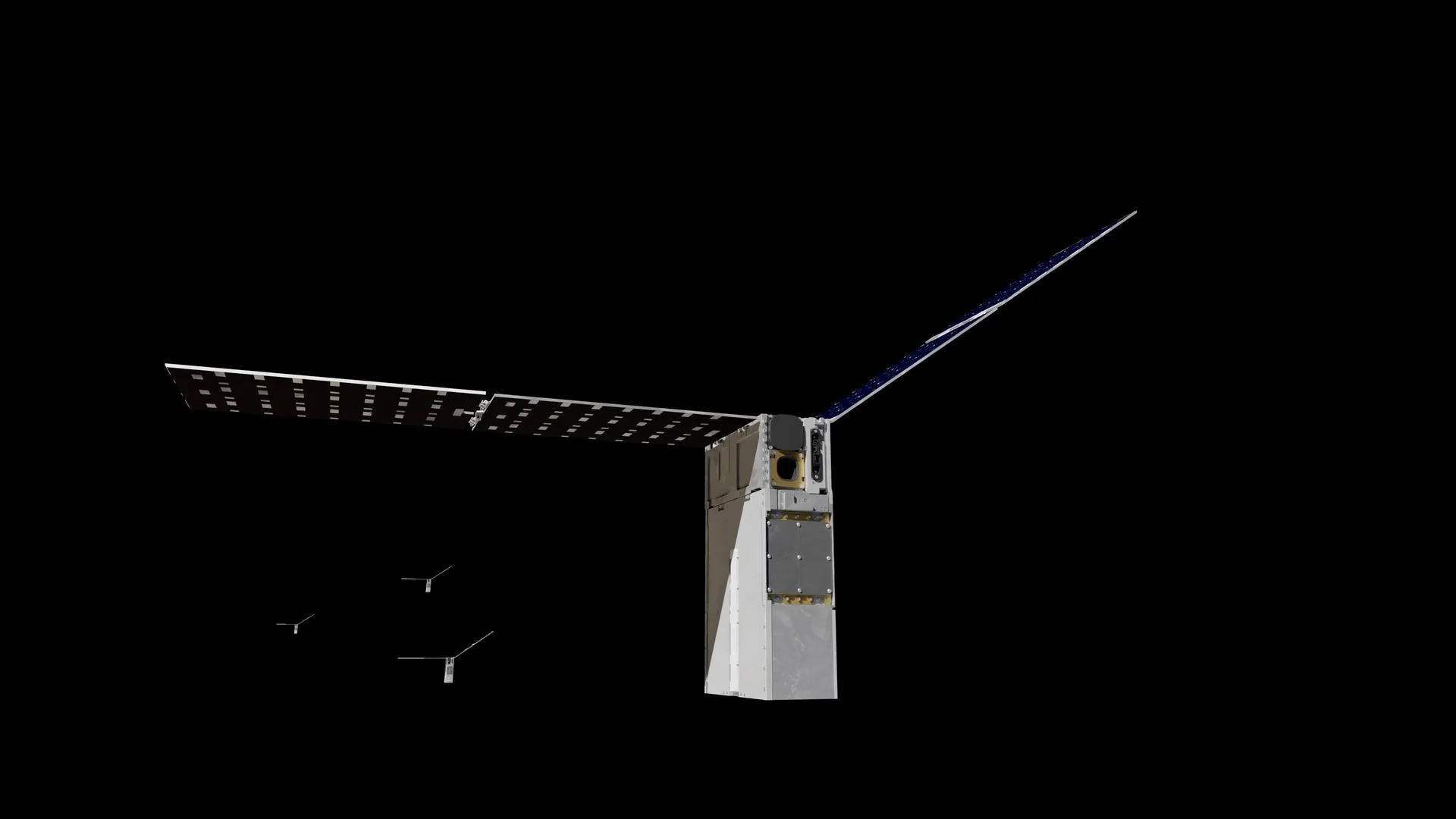
If Gilmour represents Australia's rocket ambitions, Fleet Space Technologies represents something arguably more transformative -- using space to revolutionize the discovery of resources on Earth. Founded in Adelaide in 2015 by Flavia Tata Nardini and Matthew Pearson, Fleet Space has developed the ExoSphere system, which combines a constellation of small satellites with ground-based geophysical sensors to create three-dimensional maps of subsurface mineral deposits.
The technology works by deploying arrays of ambient noise tomography sensors across a survey area. These sensors detect natural seismic vibrations passing through the Earth's crust, and the data is processed using machine learning algorithms running partly on Fleet's satellite constellation. The result is a detailed picture of geological structures beneath the surface, identifying potential deposits of critical minerals like copper, nickel, lithium, and rare earth elements -- without the need for extensive drilling.
For Australia, which is one of the world's largest mining nations, this technology addresses a critical challenge. The easily discoverable surface deposits have largely been found. The next generation of mineral wealth lies deeper underground, and traditional exploration methods -- drilling hundreds of boreholes and analyzing core samples -- are expensive, slow, and environmentally disruptive. Fleet Space's approach can survey vast areas in a fraction of the time and cost.
The company has raised significant venture capital and has signed contracts with major mining companies for exploration surveys in Australia and internationally. Fleet Space's satellite constellation, built in Adelaide, is one of the few examples globally of a vertically integrated space company that builds its own satellites to support a specific Earth-based commercial application.
Launch Sites: Australia's Geographic Advantage
One of Australia's most compelling assets in the space industry is geography. The country's northern regions are close to the equator, providing the rotational velocity boost that reduces fuel requirements for equatorial and low-inclination orbits. Its southern coastline faces open ocean toward Antarctica, making it ideal for polar and sun-synchronous orbit launches without overflying populated areas. And its vast, sparsely populated interior offers enormous safety margins for launch operations.
Equatorial Launch Australia operates the Arnhem Space Centre near Nhulunbuy in the Northern Territory, located at approximately 12 degrees south latitude. The site made history in June and July 2022 when NASA launched three sounding rockets from Arnhem as part of astrophysics research campaigns, marking the first NASA launches from Australian soil in 27 years. The Arnhem Space Centre is positioned to host a growing cadence of suborbital and potentially small orbital launches, leveraging its equatorial proximity and remote location.
The site operates on land owned by the Gumatj Aboriginal Corporation of the Yolngu people. The partnership with the traditional landowners is a distinctive feature of the venture, with the Gumatj Corporation holding a direct ownership stake in the launch facility. This model of Indigenous involvement in high-technology enterprise has attracted attention both within Australia and internationally.
Southern Launch operates the Whalers Way Orbital Launch Complex on the tip of the Eyre Peninsula in South Australia. The site is optimized for polar and sun-synchronous orbit launches, with a southward launch azimuth over open ocean. Southern Launch has conducted suborbital test flights and is developing the site's infrastructure for small orbital launch vehicles. The Whalers Way location offers a complementary capability to the equatorial site at Arnhem -- together, the two facilities give Australia the ability to serve virtually any orbital requirement.
The Five Eyes Factor and Defense Integration
Australia's space industry development cannot be separated from its strategic alliance network. As a member of the Five Eyes intelligence-sharing arrangement alongside the United States, United Kingdom, Canada, and New Zealand, Australia plays a specific role in the Western space surveillance and intelligence architecture. Australian ground stations have long supported American satellite operations, and the joint US-Australian facility at Pine Gap near Alice Springs is one of the most important signals intelligence stations in the world.
The AUKUS trilateral security partnership between Australia, the UK, and the US includes a space and electronic warfare component that is driving investment in satellite communications, space domain awareness, and resilient space architectures. For Australian space companies, this defense connection provides both funding opportunities and market access, though it also creates technology transfer and export control complexities.
The Australian Defence Force has been increasing its space capabilities, establishing a Defence Space Command in 2022 to coordinate military space operations. This military demand signal provides a domestic customer base for Australian space companies and creates career pathways that help retain technical talent in the country.
Challenges and the Road Ahead
Australia's space industry faces genuine challenges. The domestic market is relatively small, meaning companies must compete internationally from day one. The tyranny of distance makes supply chain management difficult and expensive. Australia's strict environmental regulations, while appropriate, add complexity to launch site development. And the country faces fierce competition for talent from the more established space industries in the United States and Europe.
Funding remains tighter than in countries like the United States, where government contracts and venture capital flow more freely into space ventures. The Australian Space Agency's budget, while growing, is a fraction of what agencies in comparable economies like Canada or South Korea invest in space.
Yet the fundamentals are strong. Australia sits on approximately $5 trillion worth of identified mineral resources, and the demand for space-based Earth observation and exploration technology will only grow as the energy transition drives demand for critical minerals. The country's geographic advantages for launch are permanent and irreplaceable. Its alliance relationships provide access to the most advanced space technology ecosystem in the world. And the caliber of its emerging space companies -- from Gilmour's rockets to Fleet Space's mineral exploration platform -- demonstrates that Australian ingenuity is fully capable of competing on the global stage.
The Australian Space Agency set a target of a $12 billion space industry by 2030. Whether it hits that number precisely matters less than the trajectory. Australia's space industry is real, growing, and increasingly impossible for the global space community to ignore. The sleeping giant of the Southern Hemisphere has woken up, and it is building rockets.