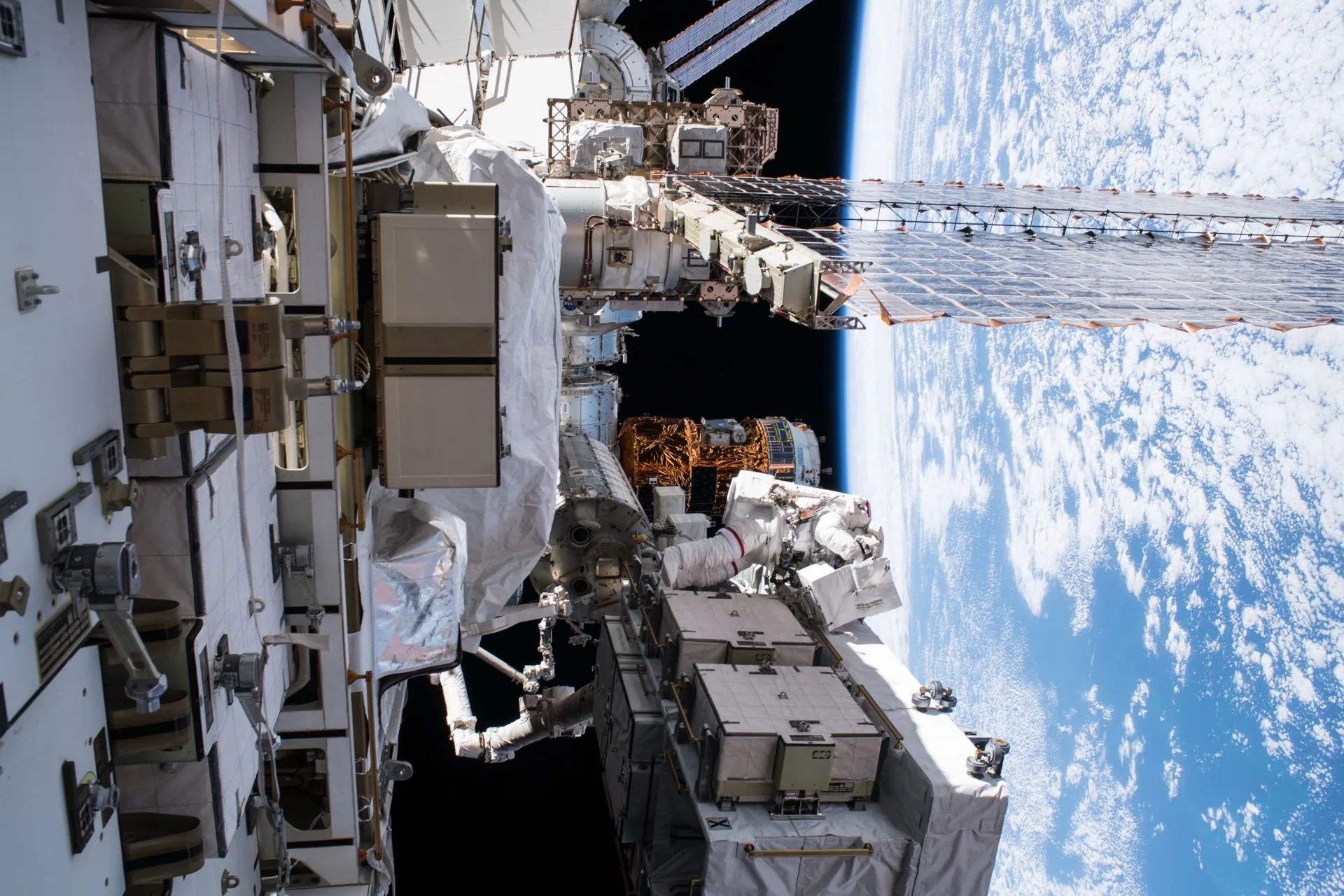
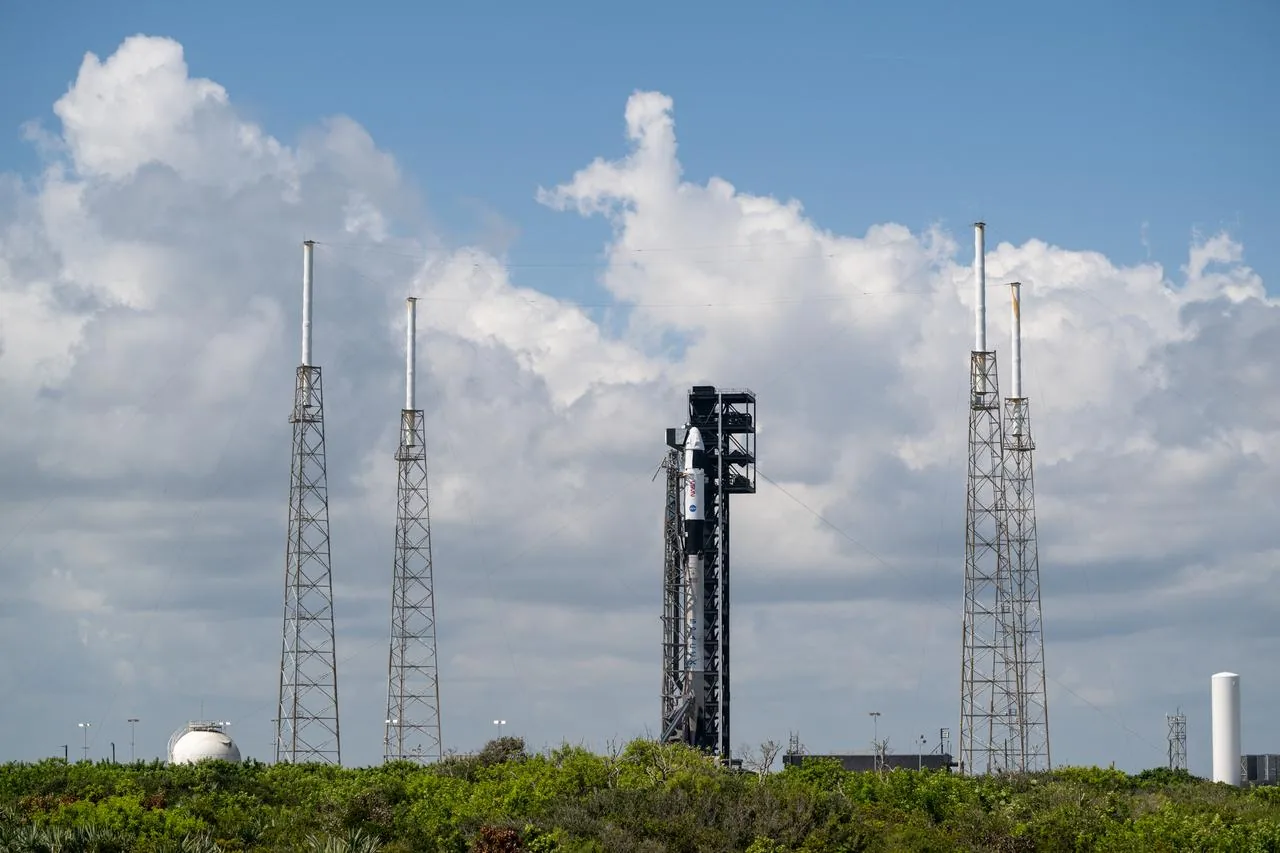
When most people think about investing in space, they think about rockets. Launches are dramatic, photogenic, and easy to understand. But here is the thing: launch services represent roughly 2-3% of the total space economy. The other 97% -- the parts most investors overlook -- is where the real money lives.
The global space economy reached approximately $700 billion in 2025, according to the Space Foundation and BryceTech, and it is projected to reach $1 trillion within the next decade. The vast majority of that value is generated not by the vehicles that get things to orbit, but by the services and applications that operate from orbit and the ground infrastructure that supports them.
This is a deep dive into the space economy sectors that most investors miss -- and why the "picks and shovels" approach to space investing may be the smartest strategy of all.
Space Economy by Sector (2026 Snapshot)
The table below breaks down the ~$700B space economy by sector. Figures are approximate consensus estimates synthesized from Space Foundation, BryceTech, Satellite Industry Association (SIA), and Euroconsult reporting; methodologies and sector definitions vary among these sources, so totals are best read as directional rather than precise.
| Sector | 2026 Revenue (approx.) | Share | Growth Trend | Leading Companies / Examples |
|---|---|---|---|---|
| Position, Navigation & Timing (PNT — GPS-enabled markets) | ~$160-180B | ~25% | Stable, GPS-dependent industries | GPS users (smartphones, autos), Garmin, Trimble, GNSS chipsets |
| Ground equipment (terminals, dishes, gateways) | ~$140-160B | ~22% | Steady | Many vendors across consumer + enterprise |
| Government civil + military space | ~$130-145B | ~20% | Modest growth | NASA ( |
| Satellite TV broadcasting | ~$60-75B | ~10% | Declining (cord-cutting) | DirecTV, Dish, Sky, Eutelsat, SES |
| Satellite broadband (consumer + enterprise) | ~$45-65B | ~9% | Strong growth | Starlink, OneWeb (Eutelsat), Viasat, HughesNet, Spacesail |
| Satellite manufacturing | ~$25-32B | ~4% | Mass-production shift | SpaceX, Airbus, Lockheed, Northrop, Thales Alenia, China Aerospace |
| Satellite mobile + IoT | ~$15-20B | ~2.5% | Growth (D2C catalysts) | Iridium, Globalstar, AST SpaceMobile, Inmarsat |
| Launch services (commercial + gov) | ~$15-20B | ~2.5% | Strong growth | SpaceX, ULA, Arianespace, Rocket Lab, CASC, Roscosmos, ISRO |
| Earth observation & geospatial | ~$8-12B | ~1.5% | Rapid growth (climate + defense + AI) | Planet, Maxar, BlackSky, Capella |
| In-flight + maritime connectivity | ~$5-7B | <1% | Strong growth | Viasat, Anuvu, Inmarsat |
| Space tourism + emerging (orbital + suborbital) | ~$1-2B | <0.5% | Volatile | Blue Origin, Virgin Galactic, Axiom Space |
| Total | ~$700B | 100% | — | — |
Caveat: Methodologies and sector definitions vary among Space Foundation, BryceTech, SIA, and Euroconsult — figures are approximate consensus and individual reports may differ by 10-20% per sector.
Satellite Communications: The $130 Billion Giant
Satellite communications is by far the largest sector of the space economy, generating over $130 billion annually in revenue. This includes direct-to-home television (still a massive market globally), satellite broadband (growing explosively thanks to Starlink and competitors), maritime and aviation connectivity, and enterprise VSAT services.
The transformation happening in satcom is the shift from a small number of expensive geostationary satellites to massive constellations of cheaper low-Earth orbit satellites. SpaceX's Starlink, with over 6,000 satellites in orbit and millions of subscribers, has demonstrated that LEO broadband can serve not just rural areas but also enterprise, maritime, aviation, and government markets.
Amazon's Project Kuiper, Eutelsat OneWeb, and Telesat Lightspeed are all building competing constellations, and the total addressable market for satellite broadband alone may exceed $40 billion annually within this decade.
For investors, the satcom sector offers multiple entry points: the constellation operators themselves, the ground terminal manufacturers, the chipmakers enabling user equipment, and the backhaul and networking companies that connect satellite systems to terrestrial internet infrastructure.
Earth Observation: The $6 Billion Data Goldmine
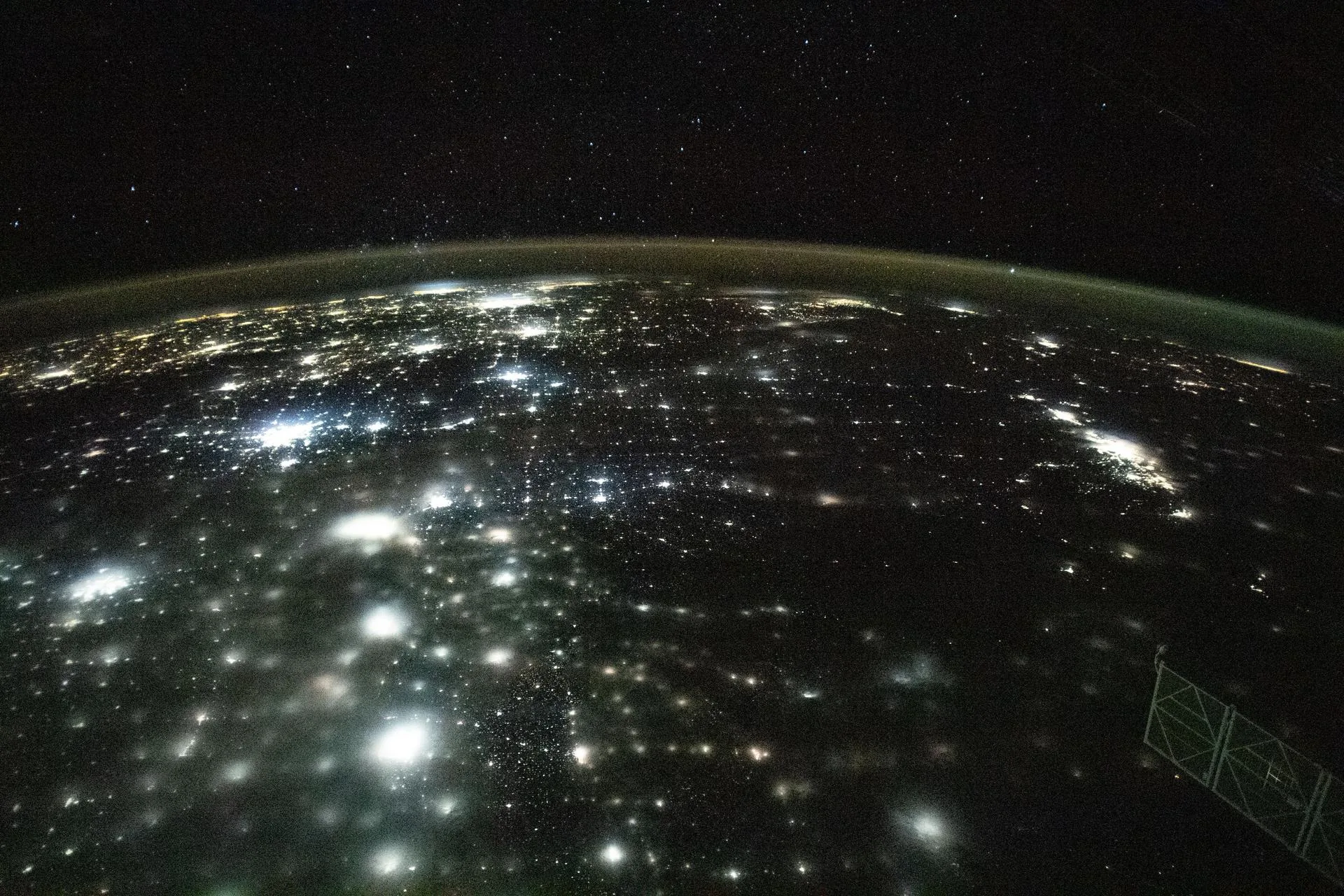
Earth observation -- imaging and sensing the planet from orbit -- has quietly become one of the most commercially vibrant sectors of the space economy, generating over $6 billion in annual revenue and growing at double-digit rates.
The applications are staggeringly diverse. Agricultural companies use satellite imagery to optimize planting, irrigation, and harvest timing. Insurance firms assess crop damage and natural disaster claims using before-and-after satellite photos. Financial analysts monitor retail parking lot traffic, oil storage tank levels, and shipping port activity as alternative economic indicators. Defense and intelligence agencies are among the largest customers, using satellite imagery for surveillance, targeting, and situational awareness.
Key companies include Planet Labs (PL), which operates the largest Earth imaging constellation with over 200 satellites capturing the entire landmass of Earth daily; Maxar Technologies (acquired by Advent International), which provides high-resolution imagery and geospatial analytics; and a new generation of startups pushing into synthetic aperture radar (SAR), which can image through clouds and at night, and hyperspectral imaging, which can identify materials and chemical compositions from orbit.
The data layer on top of raw imagery is where margins are highest. Companies that can ingest petabytes of satellite data and extract actionable intelligence using AI and machine learning -- answering questions like "how many cars are in this parking lot?" or "is this forest losing canopy cover?" -- command premium pricing. This analytics layer is the "picks and shovels" of the Earth observation sector.
Positioning, Navigation, and Timing (PNT): The Invisible Backbone
GPS and its international equivalents (Europe's Galileo, China's BeiDou, Russia's GLONASS) are so embedded in daily life that most people forget they are space-based services. The PNT sector generates enormous economic value, though much of it is indirect.
The European Commission has estimated that GPS-dependent services contribute over $1.4 trillion annually to the U.S. economy alone. Agriculture, aviation, shipping, logistics, financial trading (which relies on GPS timing for transaction synchronization), emergency services, and construction all depend critically on satellite-based PNT.
While the GPS satellites themselves are government-owned and operated, the downstream ecosystem -- receivers, chips, software, augmentation services -- is a massive commercial market. Companies like Trimble, Garmin, u-blox, and Qualcomm (which embeds GPS receivers in billions of smartphones) derive significant revenue from PNT applications. Precision agriculture companies like Deere & Company rely on centimeter-accurate GPS corrections to enable autonomous farming equipment.
Space-Based Solar Power: The Long Bet
Space-based solar power (SBSP) -- the concept of harvesting solar energy in orbit and beaming it to Earth via microwave or laser -- has been discussed since the 1970s but has never been economically viable. As of 2026, it remains firmly in the research and development phase, but activity is increasing.
Caltech's Space Solar Power Demonstrator (SSPAD) successfully tested wireless power transmission from orbit in 2023. The European Space Agency's SOLARIS initiative is conducting feasibility studies for an operational SBSP system. And several startups, including Virtus Solis and Space Solar, are developing commercial concepts.
The physics are straightforward: solar panels in geostationary orbit receive sunlight 24/7, with no atmospheric absorption or weather interference, generating roughly 5-10 times more energy per panel area than ground-based installations. The engineering and economic challenges, however, are immense. Launching the massive structures required, maintaining them in orbit, and efficiently transmitting power to Earth at scale remain unsolved problems at commercial price points.
SBSP is probably a 2030s-2040s opportunity at the earliest, but for investors with very long time horizons, the companies developing enabling technologies -- lightweight solar cells, wireless power transmission, in-space assembly robotics -- could become important holdings.
In-Space Manufacturing: Microgravity as a Factory Floor
One of the most surprising emerging sectors is in-space manufacturing -- using the microgravity environment of orbit to produce materials and products that cannot be made (or made as well) on Earth.
The leading example is Varda Space Industries, which has successfully manufactured pharmaceutical crystals in orbit and returned them to Earth. In microgravity, certain drugs crystallize in structures that are more uniform and potentially more bioavailable than Earth-manufactured versions. Given that a kilogram of a specialty pharmaceutical can be worth hundreds of thousands of dollars, the economics of launching raw materials to orbit, processing them, and returning the finished product can actually work.
ZBLAN fiber optics is another frequently cited opportunity. ZBLAN, a type of fluoride glass, can theoretically produce optical fibers with dramatically lower signal loss than conventional silica fibers when manufactured in microgravity. On Earth, gravity causes microcrystal formation that degrades fiber quality. Several companies and research groups are working to prove this concept at commercial scale.
Beyond pharmaceuticals and fiber optics, researchers are exploring microgravity manufacturing of semiconductors, advanced alloys, and bioprinted tissues. The sector is early -- probably comparable to where commercial spaceflight was in the early 2000s -- but the fundamental physics advantages are real, and falling launch costs are steadily improving the economics.
Debris Removal: A Service Whose Time Has Come
There are over 36,000 tracked objects larger than 10 centimeters in Earth orbit, along with millions of smaller fragments traveling at velocities where even a paint fleck can damage a satellite. The space debris problem is not theoretical -- it is operational and worsening.
Debris removal as a commercial service is emerging as a real market. Astroscale, a Japanese company, has conducted active debris removal demonstrations and has contracts with the Japan Aerospace Exploration Agency (JAXA) and the European Space Agency. ClearSpace, a Swiss startup, has an ESA contract to remove a defunct payload adapter from orbit.
The business model is nascent but logical. Space agencies and commercial operators have a growing interest in maintaining the usability of popular orbital regimes. As the number of satellites in orbit grows from roughly 10,000 today to potentially 100,000+ within a decade, the demand for debris monitoring, collision avoidance, and active removal services will only increase.
Regulatory pressure is also building. The FCC in the United States has implemented a 5-year post-mission disposal rule for LEO satellites, and other regulators are considering similar measures. Companies that can offer compliance-friendly deorbiting services to satellite operators have a natural market.
Space Tourism: Revenue Growing, Slowly
Space tourism generates outsized media attention relative to its current revenue, but it is a real and growing market.
Blue Origin's New Shepard has conducted multiple suborbital tourism flights, carrying paying customers on brief trips above the Karman line. SpaceX has flown private orbital missions, including Inspiration4 and Polaris Dawn, though these have been more demonstration and philanthropic in nature than routine commercial service. Axiom Space has conducted private astronaut missions to the International Space Station, charging approximately $55 million per seat.
The near-term revenue base is small -- probably in the low hundreds of millions annually -- but the long-term projections are more interesting. If Starship achieves its cost targets and commercial space stations become operational in the late 2020s, the price of an orbital experience could fall from tens of millions to low single-digit millions, dramatically expanding the addressable market.
Space tourism's investable angle is less about the tourism operators themselves (most are private) and more about the infrastructure they will need: life support systems, space habitats, medical monitoring equipment, and crew training services.
The "Picks and Shovels" Approach
In the California Gold Rush, the most reliable fortunes were made not by prospectors but by those who sold picks, shovels, and denim to the miners. The same principle applies to the space economy.
Rather than betting on which launch company or satellite operator will win, investors can target the companies that supply the entire sector:
- Satellite component manufacturers: Companies like HEICO, Mercury Systems, and Rocket Lab's own space systems division build the components that go into nearly every satellite.
- Ground station operators: Companies that operate the terrestrial infrastructure needed to communicate with satellites.
- RF and antenna companies: Firms building the phased array antennas and radio frequency systems that enable satellite broadband.
- Testing and simulation: Companies that provide thermal vacuum chambers, vibration testing, and mission simulation services.
- Space cybersecurity: An emerging niche as the attack surface of space-based systems grows.
These businesses tend to have more diversified customer bases, more predictable revenue streams, and less binary risk profiles than the headline-grabbing rocket and satellite companies. They may be less exciting to talk about at dinner parties, but they may also be more durable as investments.
The Bottom Line
The space economy is far larger and more diverse than most people realize. Rockets are the visible tip of an enormous economic iceberg that includes communications, Earth observation, navigation, manufacturing, insurance, debris removal, and a growing list of applications that did not exist a decade ago.
For investors willing to look beyond the launch pad, the space economy offers exposure to some of the most fundamental infrastructure trends of the coming decades. The key is to look where others are not -- at the data, the components, the services, and the ground systems that make everything in orbit possible.
The next trillion dollars in space will not all be made by rocket companies. Most of it will be made by the businesses that use space as a platform -- and the investors who understood that distinction early.
This article is not financial advice. Investment in space-related securities involves significant risk, including the potential loss of principal. Market data cited reflects estimates and projections that may not materialize. Always consult a qualified financial professional before making investment decisions.