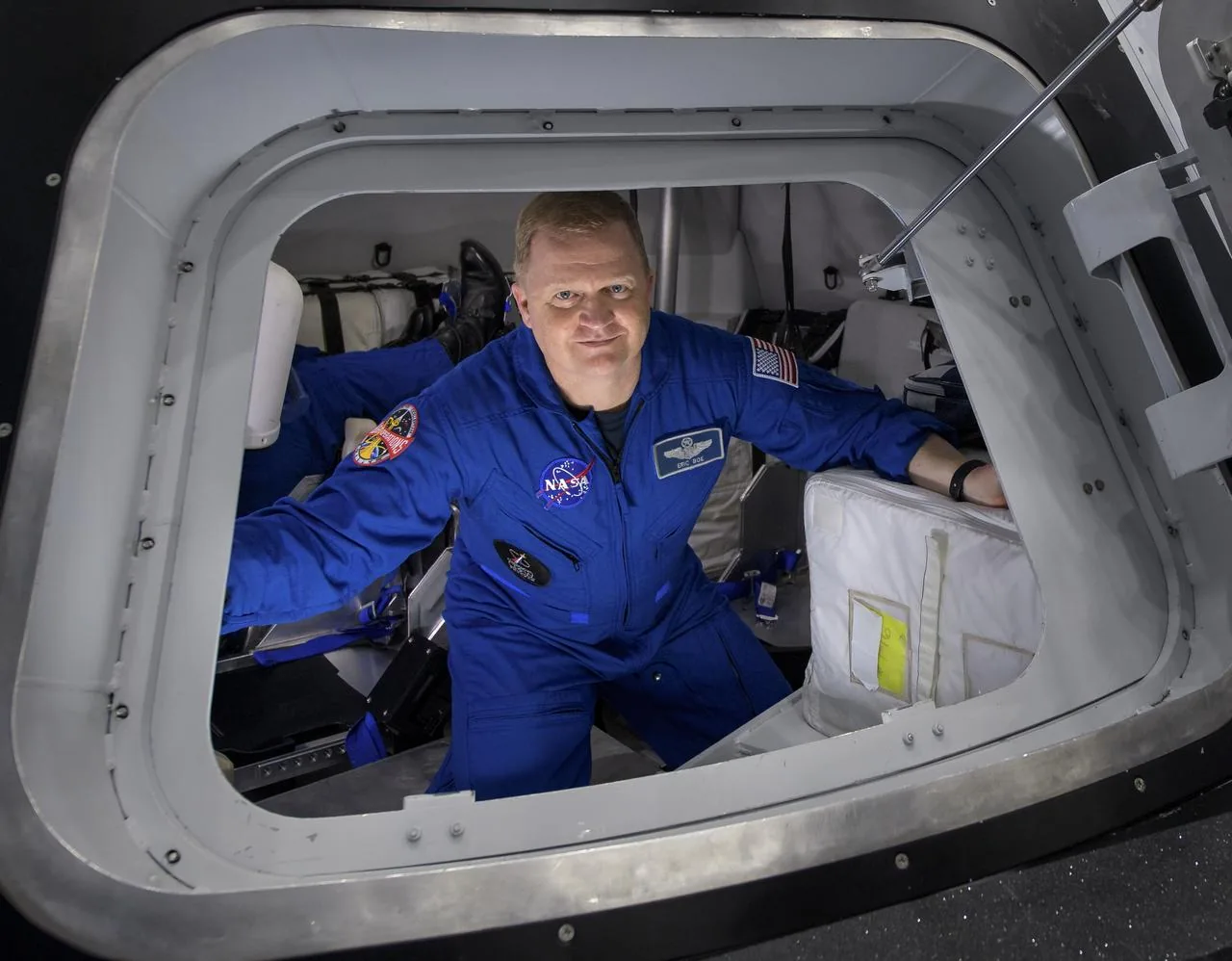
The public space economy is no longer a curiosity. As of May 2026, there are more than thirty publicly listed companies on US, European, Canadian, Israeli, Japanese, and Korean exchanges whose revenue is meaningfully derived from spaceflight, satellites, or space-services contracts. Their combined market capitalization is on the order of $500 billion when you include the defense primes whose space divisions are material — and roughly $80 billion if you restrict the universe to pure-plays.
For investors, this is the first time in history that "space" is something you can build a diversified equity portfolio around. It is also the first time the universe is large enough that "space stocks" describes three quite different industries that happen to share orbital mechanics: a reusable-launch revolution, a constellation-services build-out, and a half-century-old defense-aerospace establishment that is steadily re-branding around space.
This guide is for the investor who wants the full map. It catalogs every public space stock we track, sorts them by what they actually do, and lays out a framework for thinking about position sizing across the sector. It is current as of May 11, 2026, and it complements our deep dives on AST SpaceMobile (ASTS), Rocket Lab (RKLB), and Intuitive Machines (LUNR).
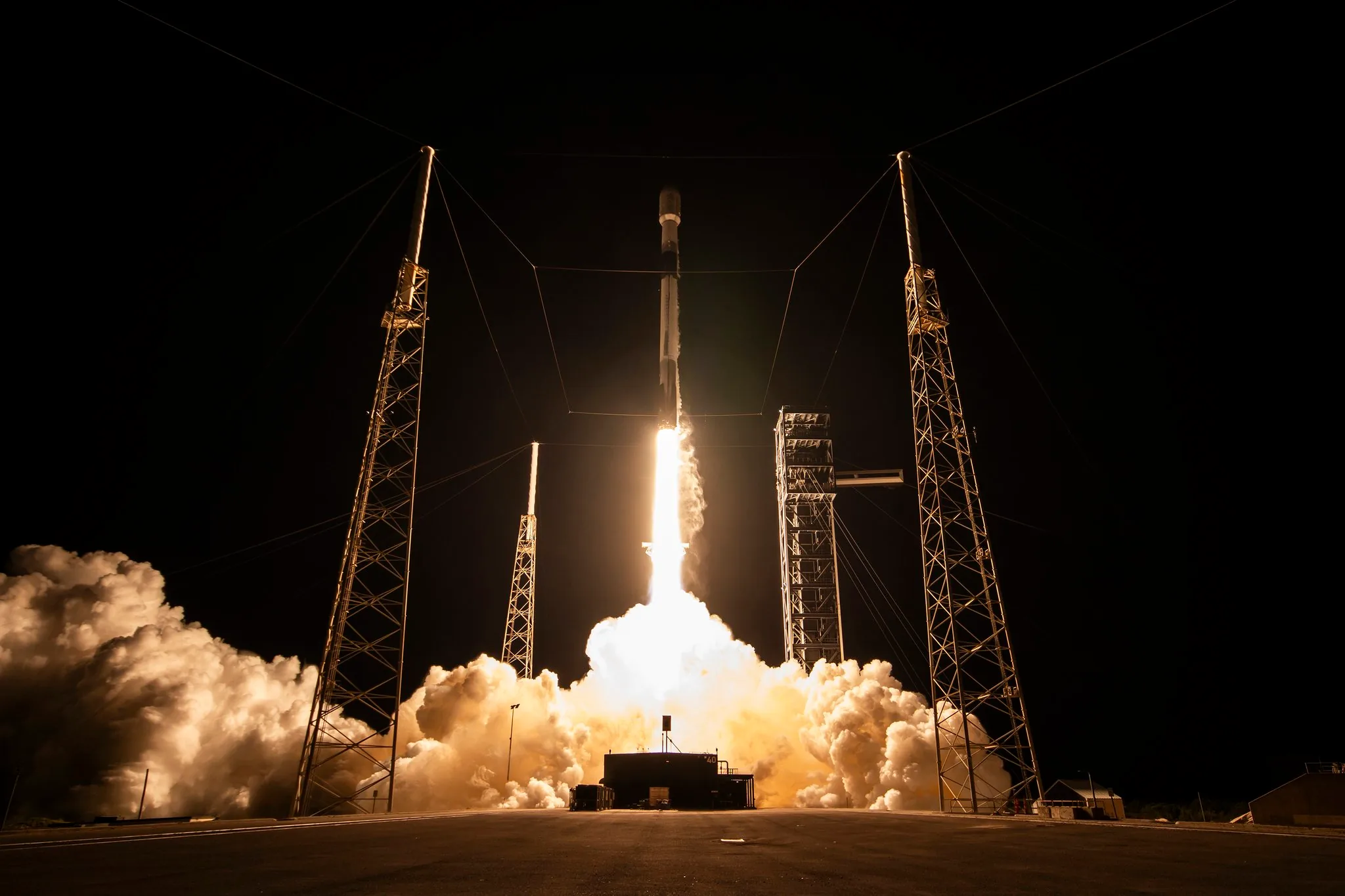 A Falcon 9 first stage descends to its drone-ship target. Reusable boost is the underlying economic shift that made every pure-play public space company of the 2021–2025 IPO wave investable. Image: SpaceX.
Key Takeaways

- 18 US-listed space stocks spanning pure-play launch (RKLB), constellation (ASTS, IRDM), Earth observation (PL, BKSY), lunar (LUNR), space stations (VOYG), and defense primes (LMT, NOC, RTX, BA, LHX, PLTR).
- ~$80B pure-play market cap in 2026 vs. ~$420B for primes — but pure-plays grew revenue ~4–6× faster.
- Three new IPOs in 2025 (VOYG July 2025, FLY August 2025) expanded the investable universe materially.
- Best-funded pure-plays: ASTS ($3.9B liquidity), RKLB ($1.85B contract backlog), PLTR (cash-flow positive at scale).
- Highest binary risk: ASTS (constellation cadence), SPCE (commercial viability), LUNR (single-mission concentration).
- Most defensive exposure: the primes — LMT, NOC, RTX — where space is 5–15% of revenue inside a much larger franchise.
Why "Space Stocks" Is Actually Three Industries
Before you build a portfolio, recognize that the listed space universe is three structurally different businesses that share an industry classifier.
1. Pure-play new space (~$80B combined). Companies whose entire business plan only works in 2026 economics — reusable launch, broadband-from-LEO, commercial lunar cargo, hyperspectral Earth observation. High beta, mostly pre-profitable, valuations are option-like and depend on milestone execution. RKLB, ASTS, LUNR, RDW, PL, BKSY, VOYG, FLY belong here.
2. The defense primes (~$420B combined). Lockheed Martin, Northrop Grumman, Raytheon (RTX), Boeing, L3Harris. These are not space companies — they are diversified defense and aerospace contractors with space divisions in the 5–25% revenue range. You buy them for stable cash flow, dividends, and government-contract durability, not for upside on the space-economy growth curve. Their space exposure is real but not the primary thesis.
3. The hybrid commercials (~$15B combined). Iridium (IRDM), Viasat (VSAT), Virgin Galactic (SPCE), Kratos (KTOS), Palantir (PLTR). Operating businesses with substantial space revenue but a longer commercial history. They are neither pre-revenue option plays nor classic defense names; they are mid-cycle commercial space operators with established cash flow profiles.
The investor mistake is treating these three groups as a single bucket. They have different volatility, different catalysts, and different roles in a portfolio.
The Pure-Play Universe: 11 Tickers
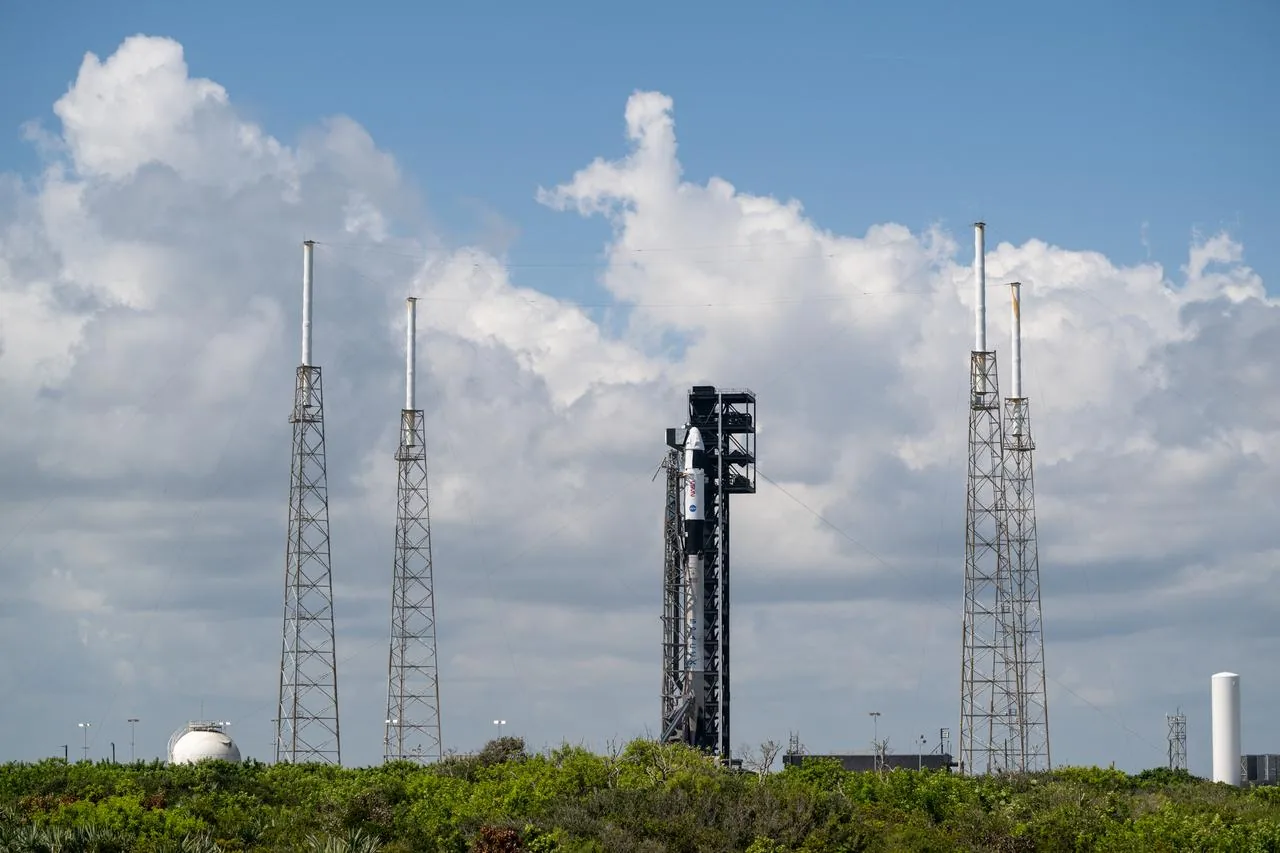
These are the companies where space is the business. As of May 2026:
| Ticker | Company | Exchange | What They Do | FY25 Revenue | Market Cap (approx.) |
|---|---|---|---|---|---|
| RKLB | Rocket Lab | NASDAQ | Small/medium launch (Electron, Neutron), space systems | $601.8M | ~$9.5B |
| ASTS | AST SpaceMobile | NASDAQ | Direct-to-cell satellite broadband | $70.9M | ~$21B |
| LUNR | Intuitive Machines | NASDAQ | Commercial lunar landers (NASA CLPS), lunar data | ~$220M | ~$1.5B |
| RDW | Redwire Space | NYSE | In-space manufacturing, structures, deployable arrays | ~$300M | ~$1.2B |
| PL | Planet Labs | NYSE | Hyperspectral / optical Earth observation constellation | ~$245M | ~$1.5B |
| BKSY | BlackSky | NYSE | High-revisit defense/intel optical EO | ~$120M | ~$400M |
| SPCE | Virgin Galactic | NYSE | Suborbital space tourism (Delta-class spaceplanes) | <$10M | ~$200M |
| VOYG | Voyager Technologies | NYSE | Defense + Starlab commercial space station | ~$140M | ~$1.4B |
| FLY | Firefly Aerospace | NASDAQ | Small launch (Alpha), Blue Ghost lunar lander, MLV | ~$60M | ~$2.7B (post-IPO) |
| IRDM | Iridium Communications | NASDAQ | LEO mobile satellite voice/data, IoT | ~$830M | ~$3B |
| KTOS | Kratos Defense | NASDAQ | Satellite ground systems, hypersonics, space C2 | ~$1.1B | ~$5B |
Notes: revenue and market cap figures are approximate as of Q1 2026 reporting and equity prices observed May 2026. For live quotes, see our space-stock tracker. Where exact figures are public, we cite the source filing.
A few observations worth internalizing before you go to the trade screen.
Rocket Lab is the most diversified pure-play. $1.85B contract backlog, ~30% revenue growth, vertical integration through SolAero/Sinclair acquisitions, and an upcoming Neutron rocket that — if it flies in 2026 — is the only credible non-SpaceX medium-lift vehicle on the market. RKLB is the closest thing the pure-play universe has to a quality compounder, and it trades like one.
AST SpaceMobile is the highest-conviction binary. $21B market cap on $71M of revenue is a constellation-execution bet, not a fundamentals bet. Either the BlueBird Block 2 build-out closes on cadence through 2027 and the $1B FY27 revenue target lands, or it doesn't. We cover the full thesis in our AST SpaceMobile deep dive.
Planet and BlackSky are pricing different EO architectures. PL bet on a many-cheap-satellites swarm model with hyperspectral expansion; BKSY bet on a smaller fleet of higher-revisit satellites optimized for defense customers. PL has scale; BKSY has unit-margin. The right answer for which architecture wins commercial EO is not yet obvious in the 2026 financials.
Voyager and Firefly are the 2025 IPOs to know. VOYG (July 2025) is the Starlab commercial-space-station builder plus a defense-systems franchise. FLY (August 2025) is the operator behind the Blue Ghost lunar lander that successfully delivered NASA CLPS payloads in early 2025, and is now scaling its Alpha rocket and a medium-lift vehicle. Both are early enough that fundamental analysis is short on history but long on optionality.
 Rocket Lab's Electron rocket on the pad at Launch Complex 1, Mahia, New Zealand. Rocket Lab is the only Western small-launch operator with a sustained commercial cadence and the only public-market alternative to SpaceX for medium-lift in 2026. Image: Rocket Lab.
The Defense Primes: 6 Tickers
These are not space companies. They are defense and aerospace conglomerates whose space divisions are in the 5–25% revenue range. You buy them for income, capital return, and exposure to space as part of a national-security book — not for pure-play growth.
| Ticker | Company | Exchange | Space Exposure | Why Investors Hold |
|---|---|---|---|---|
| LMT | Lockheed Martin | NYSE | GPS III, Orion, missile defense, classified space | Dividend (~2.5%), defense backbone |
| NOC | Northrop Grumman | NYSE | NGI interceptor, JWST heritage, classified space, launch | Dividend, missile defense growth |
| BA | Boeing | NYSE | Starliner, X-37B, SLS Core Stage, commercial satellites | Recovery play, commercial-airline core |
| RTX | RTX Corporation | NYSE | Pratt engines, Raytheon missiles, satellites via Collins | Largest US defense diversified |
| LHX | L3Harris | NYSE | Space sensors, payload integration, Aerojet engines | Mid-cap defense pure |
| PLTR | Palantir | NASDAQ | Foundry/AIP for space situational awareness, DoD analytics | AI-data growth, government franchise |
The primes are how serious institutional investors get sector-correlated space exposure without taking the volatility of a $5B–$20B pre-profit pure-play. RTX, LMT, and NOC are also the prime contractors on the Space Development Agency's Tranche 1 and 2 programs, which alone is a multi-decade revenue tail.
PLTR is the unusual entry on this list: it is not a defense prime in the traditional sense, but its Foundry and AIP platforms are now central to the US national-security space data architecture, and the company's published space-domain awareness contracts are large. Treat PLTR as a software prime rather than a hardware prime.
The International Plays: 8 Tickers
The non-US public space universe matters for two reasons. First, the regulatory and customer dynamics differ — European primes benefit from ESA institutional spend; Japanese and Korean firms benefit from domestic-content rules; Indian listings (when they arrive) will benefit from ISRO's commercial unbundling. Second, the dollar-equivalent valuations are often lower because retail money flows are smaller, which can create entry opportunities.
| Ticker | Company | Exchange | What They Do |
|---|---|---|---|
| MDA | MDA Space | Toronto TSX | Robotics (Canadarm heritage), satellite systems, Chorus EO constellation |
| TSAT | Telesat | NASDAQ / TSX | Lightspeed LEO broadband constellation (in build), GEO fleet |
| ISI | ImageSat International | Tel Aviv TASE | EROS commercial EO satellites, defense intel imagery |
| 186A | ispace Inc | Tokyo Growth (rebranded ticker) | Commercial lunar lander missions, payload services |
| 9348 | ispace (legacy ticker) | Tokyo Growth | (Same company, prior listing line) |
| 047810 | Korea Aerospace Industries (KAI) | KOSPI | KSLV-II Nuri rocket, Korean satellite systems |
| 462350 | Contec | KOSDAQ | Ground-segment-as-a-service, EO data platform |
| OHB | OHB SE | Frankfurt Xetra (ETR: OHB) | European satellite prime — Galileo, EUMETSAT, ESA programs |
| ETL | Eutelsat Group | Euronext Paris | OneWeb LEO + GEO broadband (post-merger) |
The single most consequential trade idea in this group for 2026 is probably Eutelsat (ETL): the post-merger combination of Eutelsat's GEO fleet and OneWeb's LEO constellation is the only European answer to Starlink, the only public-market vehicle that owns a deployed multi-orbit constellation, and trades at a deep discount to its US peers on revenue multiples. The thesis depends on whether OneWeb's commercial ramp gets to free cash flow before further capital is needed.
What Each Bet Actually Pays For
A practical framework: every space stock is some combination of these five wagers. Knowing which one your position is actually exposed to is more important than the ticker.
Wager 1: Reusability and launch cadence. RKLB, FLY, and (private but tradeable via SPACE SPACs in the past) SpaceX. The bet is that the cost-per-kilogram to orbit continues compressing and that the operator captures more of the surplus.
Wager 2: Constellation services. ASTS, IRDM, ETL, TSAT, PL, BKSY. The bet is that satellites become a recurring-revenue infrastructure layer for broadband, IoT, EO, and (newly) direct-to-cell.
Wager 3: Lunar and beyond-LEO economy. LUNR, FLY (Blue Ghost), ispace (186A/9348), RKLB (Photon and lunar Photon variants). The bet is that NASA CLPS, Artemis cargo, and commercial lunar services build into a real cargo-class market in 2026–2030.
Wager 4: In-space manufacturing and orbital infrastructure. RDW, VOYG (Starlab), Axiom (private), Vast (private), MDA. The bet is that microgravity manufacturing, commercial space stations, and orbital servicing become commercial businesses post-ISS.
Wager 5: National-security and dual-use space. LMT, NOC, RTX, BA, LHX, PLTR, KTOS, BKSY (defense customer side). The bet is that great-power competition keeps defense space spending on a multi-decade upward curve.
A diversified space portfolio probably wants exposure to at least three of these wagers. Concentration in any one (especially Wager 1 or 3) compounds operational risk.
 The IM-1 mission lifts off in February 2024 — the first commercial lunar lander launch and the founding moment of the public-market lunar-economy thesis. Image: NASA / SpaceX.
2026 Catalysts to Watch
Sector-wide events likely to move multiple tickers in 2026:
- Neutron first flight (RKLB) — likely mid- to late-2026. If successful, RKLB re-rates as the only credible Western medium-lift alternative to Falcon 9. If delayed past Q4, the narrative slips.
- AST SpaceMobile continuous US service — late 2026 target. Determines whether the $1B FY27 revenue target is achievable.
- Starliner certification and crew rotations (BA) — every successful flight rebuilds Boeing's commercial space credibility.
- NASA CLPS award cadence (LUNR, FLY, ispace) — the size and timing of CLPS-3 contracts will set the commercial-lunar growth curve.
- SDA Tranche 3 awards — multi-billion-dollar prime contracts; RKLB, NOC, LMT, LHX, and York Space are all in contention.
- Eutelsat/OneWeb consumer launch — first major commercial markets in 2026–2027 determine the European LEO thesis.
- Vast / Axiom / Orbital Reef first-station milestones — VOYG (Starlab) directly benefits; RDW indirectly via structures contracts.
- Chinese commercial-launch IPOs — LandSpace and GalaxySpace have filed for STAR Market listings; depending on US listing access rules, this could expand the investable universe.
Risk Register
The risks that matter most for the sector — not idiosyncratic to any one name:
| Risk | Affects | Mitigation Path |
|---|---|---|
| Launch failure / vehicle anomaly | All pure-plays | Multi-vehicle manifests; constellation redundancy |
| Government shutdowns / CR limbo | Primes + government-dependent pure-plays | Contract backlog provides revenue continuity |
| Constellation overcapacity (LEO broadband) | ASTS, ETL, IRDM, TSAT | Differentiated spectrum, partner stickiness |
| Macro risk-off rotation | Pre-profit pure-plays especially | Strong balance sheets reduce forced equity issuance |
| China entity-list / export controls | International plays with US component supply | Domestic supply substitution; multi-source procurement |
| Regulatory friction (FCC, ITU spectrum) | Constellation operators | Filed protections; spectrum diversification |
| Insurance market hardening | All operators | Self-insurance for mega-constellations; pooled risk |
The largest sector-wide risk for 2026 specifically is probably launch cadence concentration on SpaceX. The pure-plays that depend on Falcon 9 cadence as a single-supplier launch service (ASTS, BKSY, PL, RDW) are sensitive to any extended Falcon 9 grounding. The pure-plays with their own launch (RKLB, FLY) are partly hedged.
How To Build a Space Portfolio
A few principles that emerge from the data, not from gut feel:
1. Allocate by wager, not by ticker. Build coverage across at least three of the five wagers (reusability, constellation services, lunar, in-space infrastructure, national security). Within each wager, choose the operator with the strongest balance sheet, not the highest projected upside.
2. Treat the primes as your defensive ballast. A 40–60% allocation to LMT/NOC/RTX/PLTR-style positions gives sector beta with single-digit volatility and a real dividend yield. The pure-plays sit on top of that as the growth book.
3. Size pure-plays to binary risk tolerance. ASTS, SPCE, LUNR, FLY, RDW, BKSY are all stocks where a single mission outcome or commercial milestone can move the equity 20–40% in a week. Position-size accordingly. A typical institutional approach is no single pure-play above 5% of the space allocation; a typical retail approach should probably be stricter.
4. Watch the IPO calendar. The 2024–2025 wave (LUNR, ASTS, RDW, VOYG, FLY) is unlikely to be the last. Several pre-IPO names — SpaceX (rumored 2026–2027 Starlink carve-out), Axiom, Sierra Space, Stoke Space — would each be material additions to the universe. Position cash to participate.
5. International diversification is genuinely useful here. ETL (Eutelsat) and MDA in particular trade at significant multiple discounts to their US peers despite comparable revenue scale. Currency exposure is real but not dominant.
 Blue Origin's New Glenn — privately held but a structural force in the public launch market. Its cadence directly affects AST SpaceMobile, Amazon Leo (via Project Kuiper deployment), and the medium-lift competitive landscape that defines RKLB Neutron's revenue ceiling. Image: Blue Origin.
Bottom Line
The 2026 public space economy is the first one large enough to support genuine portfolio construction. The pure-plays have produced the volatility and the headlines; the primes have produced the cash flow; the international names have produced the value-multiple anomalies. A portfolio that touches all three groups, sized to the binary-risk profile of the pure-plays, is the closest thing to a coherent way to express a positive view on the space economy through the public markets.
The single most important thing to understand is that "space" is not a sector in the equity-research sense. It is a thematic exposure that maps onto five separate industrial bets, each of which has a different distribution of outcomes. The investor who treats those five bets as one is taking concentration risk they probably did not mean to take. The investor who sorts the universe by wager, allocates to operators with credible balance sheets, and sizes the binaries small is set up to participate in what is likely to be the highest-growth thematic of the late 2020s — without being run over by the cadence-driven drawdowns that punctuate every twelve months.
The next eighteen months — Neutron first flight, AST continuous service, Starliner crew rotations, CLPS-3, Tranche 3 awards — will resolve much of the current bull/bear gap across the universe. Investors who use that period to refine which wagers they actually believe in will compound better than investors who try to own everything.
This article is for informational and educational purposes only and does not constitute investment advice. Public space companies are predominantly pre-profit, high-volatility equities with concentrated single-mission risk; readers should do their own research, consult original SEC filings and disclosures, and speak with a licensed financial advisor before making investment decisions. Market caps and revenue figures cited are approximate and based on Q1 2026 disclosures; the company-data layer on our companies hub carries current values and primary sources.
Related Reading
- AST SpaceMobile (ASTS) Deep Dive: The $21B Bet on Direct-to-Cell
- Rocket Lab: From Electron to Neutron
- Intuitive Machines (LUNR) Deep Dive: Investor Analysis
- Amazon Buys Globalstar: The Direct-to-Device Race
- Launch Cost Comparison 2026: Falcon 9 vs Vulcan vs New Glenn vs Neutron
- The $630 Billion Space Economy
- How to Evaluate a Space Company