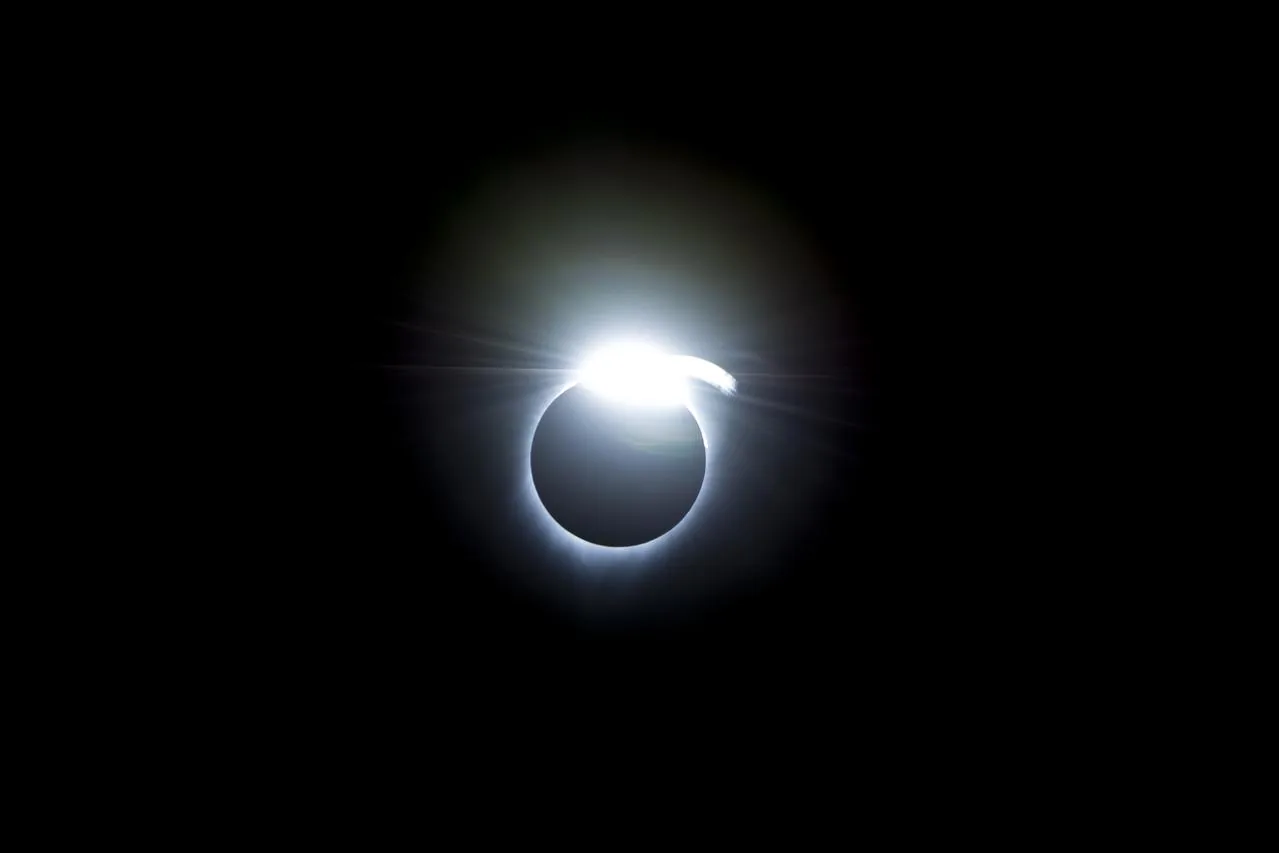
There is something primal about watching the Moon slide across the face of the Sun. Your hands get clammy, the temperature drops, and for a few minutes the universe reminds you just how small you really are. The August 12, 2026 total eclipse over Iceland, Spain, and Russia is now just months away — and it is the start of an extraordinary 18-month run that includes the longest land-totality eclipse of this century in August 2027. Below is the full calendar, the safety basics, the gear, and how to plan your trip.
Solar Eclipse Calendar 2026–2028
| Date | Type | Visibility / Path of Totality | Max Duration | Key Notes |
|---|---|---|---|---|
| Aug 12, 2026 | Total | Iceland, NW Spain (Asturias, Cantabria, La Rioja, Aragón), Russia | 2m 18s | First European totality since 1999 |
| Feb 6, 2027 | Annular | Argentina, Chile, S. Atlantic, S. Africa, Antarctica | 7m 51s | Long annularity over Patagonia |
| Aug 2, 2027 | Total | S. Spain, Gibraltar, Morocco, Algeria, Libya, Egypt (Luxor), Saudi Arabia, Yemen, Somalia | 6m 23s | Longest land totality 1991–2114 — once-in-lifetime |
| Jan 26, 2028 | Annular | Ecuador (Galapagos), Peru, Brazil, Suriname, Spain, Portugal | 10m 27s | Long annularity along central path |
| Jul 22, 2028 | Total | Christmas Island, Australia (NT, QLD, NSW — incl. Sydney), New Zealand | 5m 10s | Sydney inside totality at sunset |
The August 12, 2026 total eclipse was the original headline of this article and remains the single most accessible total eclipse for European viewers. The August 2, 2027 total is the rare event chasers travel the world for: at 6 minutes 23 seconds, it is the longest totality experienced on land in the entire 21st century until 2114.
Past Eclipses (2025)
For reference, the 2025 partial solar eclipses (March 29 over Europe and North Africa, September 21 over Antarctica and the southern Pacific) have already occurred. The 2026 calendar opened with the February 17, 2026 annular eclipse over Antarctica, visible only to a handful of researchers and seabirds.
The Eclipses Ahead — Detailed Guide
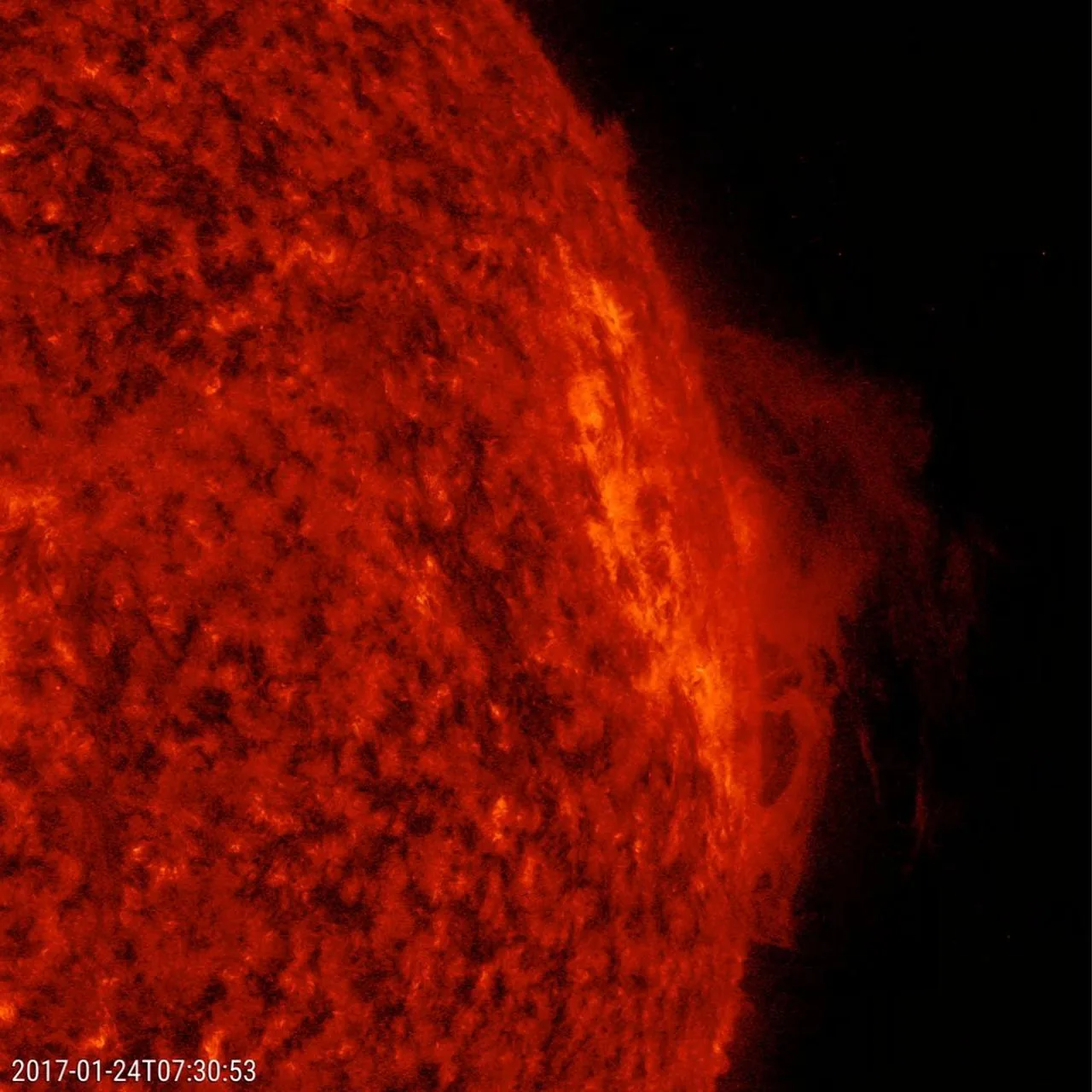
August 12, 2026 -- Total Solar Eclipse (Iceland, Spain, Russia) — 3 months away
This is the headline act. On August 12, 2026, the Moon's shadow will race across the North Atlantic and into Europe, delivering a total solar eclipse to parts of Iceland, Spain, and Russia. Totality will last up to two minutes and eighteen seconds along the center line.
The path of totality enters land in western Iceland, crosses the Arctic seas, clips a narrow corridor through northern Spain -- including parts of Asturias and the Basque Country -- and then sweeps across Russia. Spain is the crowd favorite for eclipse chasers because the weather statistics in mid-August are favorable, the infrastructure is excellent, and the local food and wine are reason enough to make the trip.
If you start planning now, you will beat the rush. Hotels along the path of totality in Spain are already largely booked through August 2026 — eclipse chasers reserved years in advance. Iceland offers a more dramatic landscape but also a higher chance of cloud cover. Backup mobility (a rental car, a flexible itinerary) is essential.
August 2, 2027 -- The Eclipse of the Century
If you can only see one total solar eclipse in your lifetime, make it this one. On August 2, 2027 the Moon's shadow will sweep from the Atlantic across southern Europe and North Africa, ending in the Indian Ocean. Maximum totality lasts 6 minutes and 23 seconds — the longest land-totality solar eclipse from 1991 until 2114.
The path crosses southern Spain (including the Strait of Gibraltar), Morocco, Algeria, Libya, Egypt (passing directly over Luxor and the Valley of the Kings), Saudi Arabia, Yemen, and Somalia. Egypt is the eclipse-chasing community's overwhelming favorite for this event due to near-zero August cloud cover, dramatic ancient backdrops, and infrastructure that can handle large tourist groups.
If you have any flexibility, start planning now. Lodging in Luxor for the eclipse week is being booked through 2026.
January 26, 2028 -- Annular Solar Eclipse (Spain, Portugal, S. America)
A long annular eclipse with the central path crossing the Galapagos Islands, Peru, Brazil, and ending across Spain and Portugal at sunset. Annularity lasts up to 10 minutes 27 seconds at sea — a "ring of fire" event rather than a true totality.
July 22, 2028 -- Total Solar Eclipse (Australia, New Zealand)
Sydney sits inside the path of totality, which is unusually convenient for a total eclipse. Maximum totality of 5 minutes 10 seconds. The Australian event will be the largest urban-area total solar eclipse since the great American eclipse of 2017.
How to Safely View a Solar Eclipse
Let me be blunt: looking at the Sun without proper protection can permanently damage your eyes in seconds. This applies to every phase of a partial eclipse and to every moment outside of totality during a total eclipse. The Sun does not have to feel bright to be destroying your retinal cells.
Approved Viewing Methods
- ISO 12312-2 certified eclipse glasses. These are not regular sunglasses, not welding goggles (unless shade 14), and definitely not stacked polarizing filters from your photography bag. Buy from a reputable vendor -- the American Astronomical Society maintains a list of trusted manufacturers.
- Handheld solar viewers and solar binoculars. Several companies make binoculars with built-in solar filters. They give you a magnified view of sunspots and the encroaching lunar limb.
- Pinhole projection. Poke a small hole in a piece of cardboard and let the Sun's image fall on a white surface behind it. Simple, free, and completely safe. During a partial eclipse, the projected image shows a beautiful crescent.
- Telescope or binocular projection. Aim your optics at the Sun (without looking through them!) and project the image onto a white card. This works brilliantly for group viewing.
What to Avoid
- Never look through an unfiltered telescope, binoculars, or camera viewfinder at the Sun.
- Homemade filters made from CDs, smoked glass, or exposed film are not safe.
- If your eclipse glasses are scratched, creased, or more than three years old, replace them.
Equipment for Eclipse Day

You do not need a truckload of gear to enjoy an eclipse, but a little preparation goes a long way.
The Essentials
- Eclipse glasses -- at least one pair per person, plus spares.
- A comfortable chair or blanket. Eclipses unfold over two to three hours from first contact to last. You will want to sit.
- A watch or phone alarm set for key contact times so you know when to look up.
- Layers of clothing. During totality the temperature can drop several degrees in minutes.
For the Prepared Observer
- Binoculars with solar filters. A pair of 10x50 binoculars fitted with Thousand Oaks or Baader solar film filters will reveal sunspot detail invisible to the naked eye.
- A small refractor telescope (70-80mm) with a white-light solar filter. This is enough to see prominences at the solar limb during the moments just before and after totality.
- A hydrogen-alpha solar telescope (such as the Coronado PST or Lunt LS50) if you want to watch solar prominences and chromospheric detail throughout the partial phases.
Eclipse Photography Tips
Photographing an eclipse is deeply rewarding, but I will give you the best advice I have ever received: do not let the camera steal the experience. If this is your first total eclipse, put the camera down during totality and just look. You will never forget it.
That said, here is how to capture stunning images if you are ready.
Camera Settings for Partial Phases
- Mount your camera on a sturdy tripod.
- Attach a proper solar filter (Baader AstroSolar film or a dedicated glass filter) to the front of your lens. Never use a rear-mounted filter -- the concentrated heat will destroy it.
- Shoot in RAW for maximum processing flexibility.
- Use a focal length of 300mm or longer to get a decent-sized Sun in the frame. A 500mm lens on a crop-sensor body gives you a beautiful disk.
- Start around ISO 100, f/8, and 1/1000s, then bracket widely.
During Totality
- Remove the solar filter the instant totality begins (and replace it the instant it ends).
- Bracket aggressively: the corona spans an enormous dynamic range. Shoot exposures from 1/2000s to 1 full second.
- A remote shutter release or intervalometer keeps vibrations to a minimum.
- Consider shooting a wide-angle timelapse on a second camera to capture the 360-degree sunset effect along the horizon.
Smartphone Photography
Modern smartphone cameras in night mode can actually produce surprisingly good totality shots. Use a tripod mount, tap to lock focus on the eclipsed Sun, and let the phone's computational photography do its thing. For the partial phases, hold a sheet of eclipse glass over the phone's lens.
Planning Your Eclipse Trip
For the August 2026 total eclipse, here is what I would do right now:
- Book accommodation in northern Spain. The Asturias and Cantabria regions offer totality with excellent August weather odds. Bilbao is another strong option.
- Have a backup location. Eclipse chasers live and die by cloud cover. Choose two or three potential viewing sites separated by at least 100 kilometers so you can chase clear skies on the morning of the event.
- Arrive early. Roads near the path of totality become gridlocked on eclipse day. Be at your viewing site by dawn.
- Join a local astronomy club event. Many clubs organize eclipse viewing parties with expert guidance, loaner equipment, and the camaraderie of fellow enthusiasts.
Why Eclipses Matter
Beyond the spectacle, solar eclipses have driven some of the most important discoveries in the history of science. It was during the total eclipse of 1919 that Arthur Eddington confirmed Einstein's prediction that gravity bends light, validating general relativity and changing our understanding of the universe forever.
Today, eclipses still provide unique opportunities for scientists to study the Sun's corona -- that ghostly halo of superheated plasma that is normally invisible against the blinding solar disk. During totality, the corona blazes into view, revealing streamers, loops, and structures that tell us about solar magnetic activity.
Mark Your Calendar
Eclipses are among the most awe-inspiring events nature has to offer, and the next 27 months hand us three total solar eclipses across three continents — one over Europe (August 2026), one along the Mediterranean and Egypt (August 2027, longest of the century), and one across Australia (July 2028). Whether you stand in the shadow of the Moon in Spain in three months or save for a lifetime trip to Luxor, you are participating in a tradition of skygazing that stretches back thousands of years.
Clear skies, and do not forget your eclipse glasses.