On April 14, 2026, Amazon announced it would acquire satellite operator Globalstar for $11.57 billion — instantly making Amazon the third major contender in one of the fastest-growing segments of the space economy: direct-to-device (D2D) satellite connectivity. The deal combines Globalstar's existing 200-satellite constellation, its mobile satellite services (MSS) spectrum, and a long-running partnership with Apple that powers satellite features on over a billion iPhones, with Amazon's aggressive Amazon Leo broadband constellation.
The acquisition comes at a pivotal moment. Amazon Leo — formerly Project Kuiper — has deployed 241 satellites as of April 2026 and plans to launch commercial service in mid-2026. Meanwhile, SpaceX's Starlink has over 9,000 satellites and a direct-to-cell partnership with T-Mobile, while AST SpaceMobile is expanding a constellation of enormous phased-array satellites with AT&T. The three-way race to connect ordinary smartphones directly to space is now fully joined.
Here is a comprehensive look at the deal, the technology, and how the D2D market is reshaping both space and telecom.
The Deal: $11.57 Billion and an Apple Bonus

Amazon's offer values Globalstar at $90 per share, payable in cash or 0.3210 Amazon shares, with cash capped at 40 percent of total consideration. The transaction is expected to close in 2027, pending regulatory approvals and the successful milestone completion of Globalstar's HIBLEO-4 replacement satellites — a new-generation constellation already under contract with MDA Space and Rocket Lab.
What Amazon Gets:
- Globalstar's operational satellite network — over 200 satellites providing voice, data, SOS, and asset-tracking services across 120 countries
- MSS spectrum licenses — globally authorized mobile satellite service frequencies in the L-band and S-band, some of the most valuable and scarce spectrum available for D2D applications
- Ground station infrastructure — a worldwide network of gateway earth stations already integrated with cellular carrier systems
- The Apple contract — a long-term agreement under which Amazon Leo will continue powering iPhone and Apple Watch satellite features (Emergency SOS via Satellite, Messages via Satellite, Find My via Satellite, and Roadside Assistance)
- ~$1.7B of pre-deal Apple investment — Apple had previously committed this amount to expand Globalstar's infrastructure; Amazon inherits the buildout
Why the Apple Piece Matters: Apple holds a 20 percent equity stake in Globalstar and has secured 85 percent of the network's capacity for its services. That relationship does not evaporate when Amazon closes the deal. Instead, Amazon effectively becomes the infrastructure provider for Apple's satellite features on over a billion active iPhones — a customer base that dwarfs any Starlink or AST SpaceMobile consumer agreement. For Apple, the arrangement continues without the need to build its own satellite constellation. For Amazon, it is the single largest ready-made enterprise contract in the D2D market.
The Direct-to-Device Market Explained
Traditional satellite phones require specialized hardware — bulky handsets with extendable antennas, priced at hundreds to thousands of dollars. Direct-to-device satellite service breaks that model. Ordinary smartphones with their built-in antennas connect directly to satellites overhead, typically using spectrum that telecom operators already license for terrestrial cellular service.
There are two fundamentally different approaches:
1. Use Existing Cellular Spectrum (Partner with Carriers): The satellite operator partners with a mobile network operator (MNO) and uses the MNO's existing licensed spectrum. The phone sees the satellite as just another cell tower. This approach maximizes device compatibility — every phone works without modification — but requires partnerships with individual carriers in each country.
- SpaceX Starlink + T-Mobile (USA): Uses T-Mobile's PCS band
- AST SpaceMobile + AT&T, Verizon, Vodafone, Rakuten, and others: Uses partner MNO spectrum
- Amazon Leo's future D2D service (post-Globalstar): Will be able to use both MSS spectrum and partner MNO spectrum
2. Use Dedicated MSS Spectrum: The operator uses its own licensed mobile satellite service spectrum (L-band, S-band). This avoids carrier dependency but requires a phone with a compatible modem. Apple's iPhone satellite features use this model.
- Apple + Globalstar: Uses Globalstar's 1.6 GHz L-band MSS spectrum
- Iridium: Operates globally on L-band MSS spectrum
- Amazon Leo (future): Inherits Globalstar's MSS spectrum holdings
Analyst firms estimate the D2D market could generate $12 billion to $18 billion in annual revenue by 2030, making it the fastest-growing segment of the satellite economy.
Amazon Leo: From Project Kuiper to D2D Powerhouse
Amazon's satellite story has accelerated dramatically in 2025–2026.
Current Status (as of April 2026):
- 241 satellites in orbit — two prototypes plus 239 production spacecraft
- 3,236 satellites planned for the initial constellation; FCC approved expansion to 7,727
- Commercial launch targeted for mid-2026
- Launch providers include ULA (Atlas V, Vulcan), Arianespace (Ariane 6), Blue Origin (New Glenn), and SpaceX (Falcon 9)
Recent Launches:
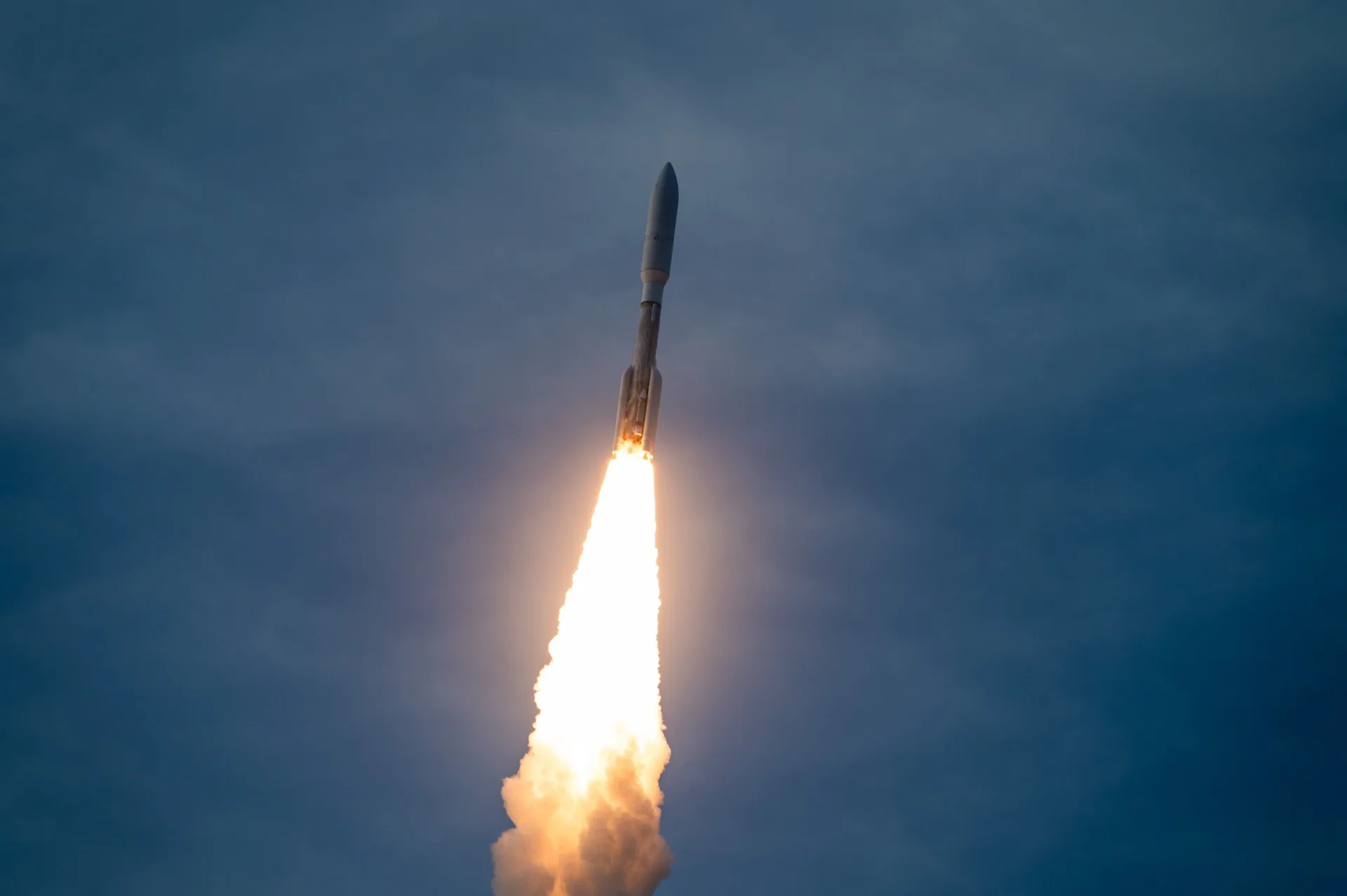
- February 12, 2026: Leo Europe 1 aboard Ariane 64 deployed 32 satellites from Kourou — Amazon's first European launch
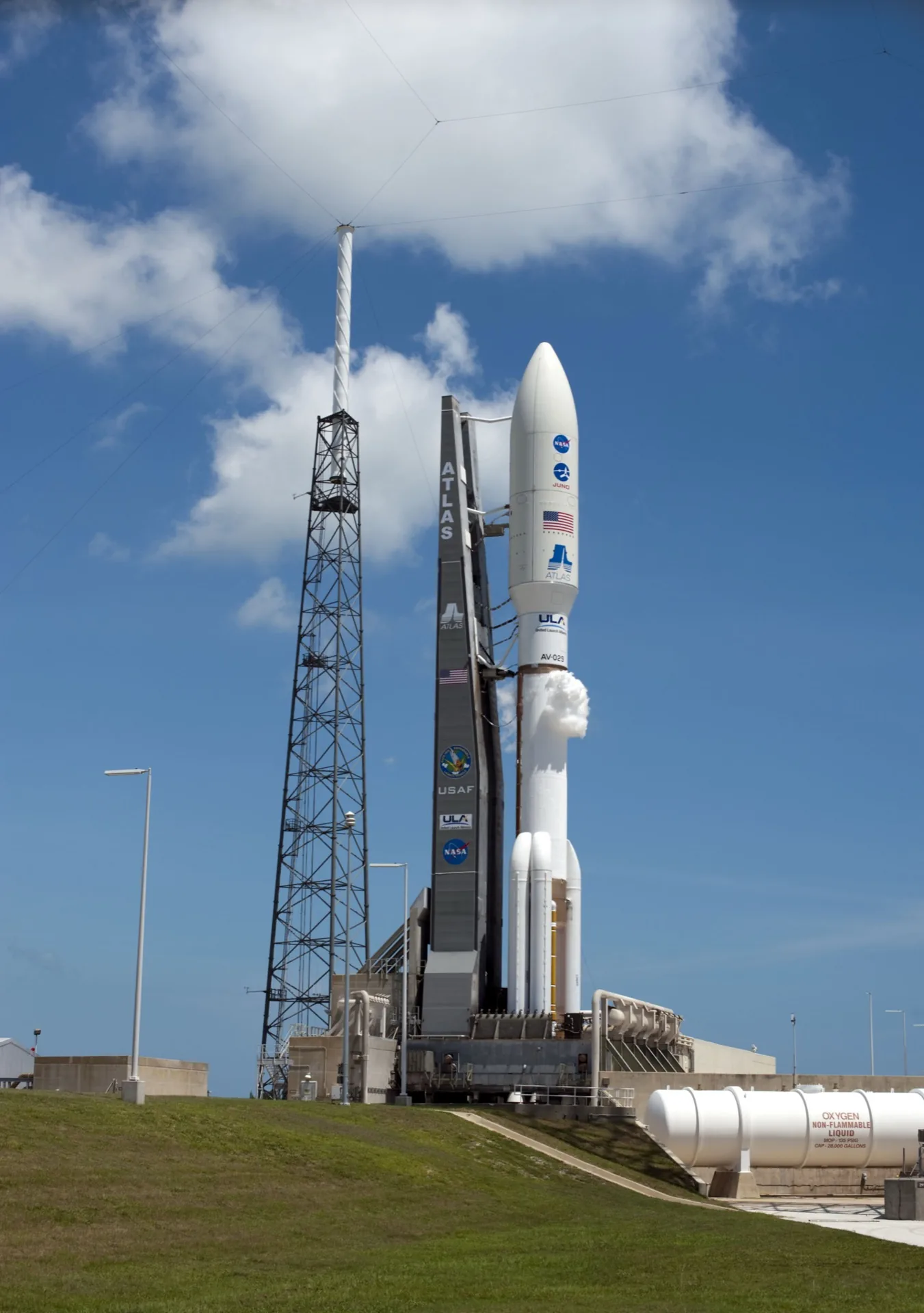
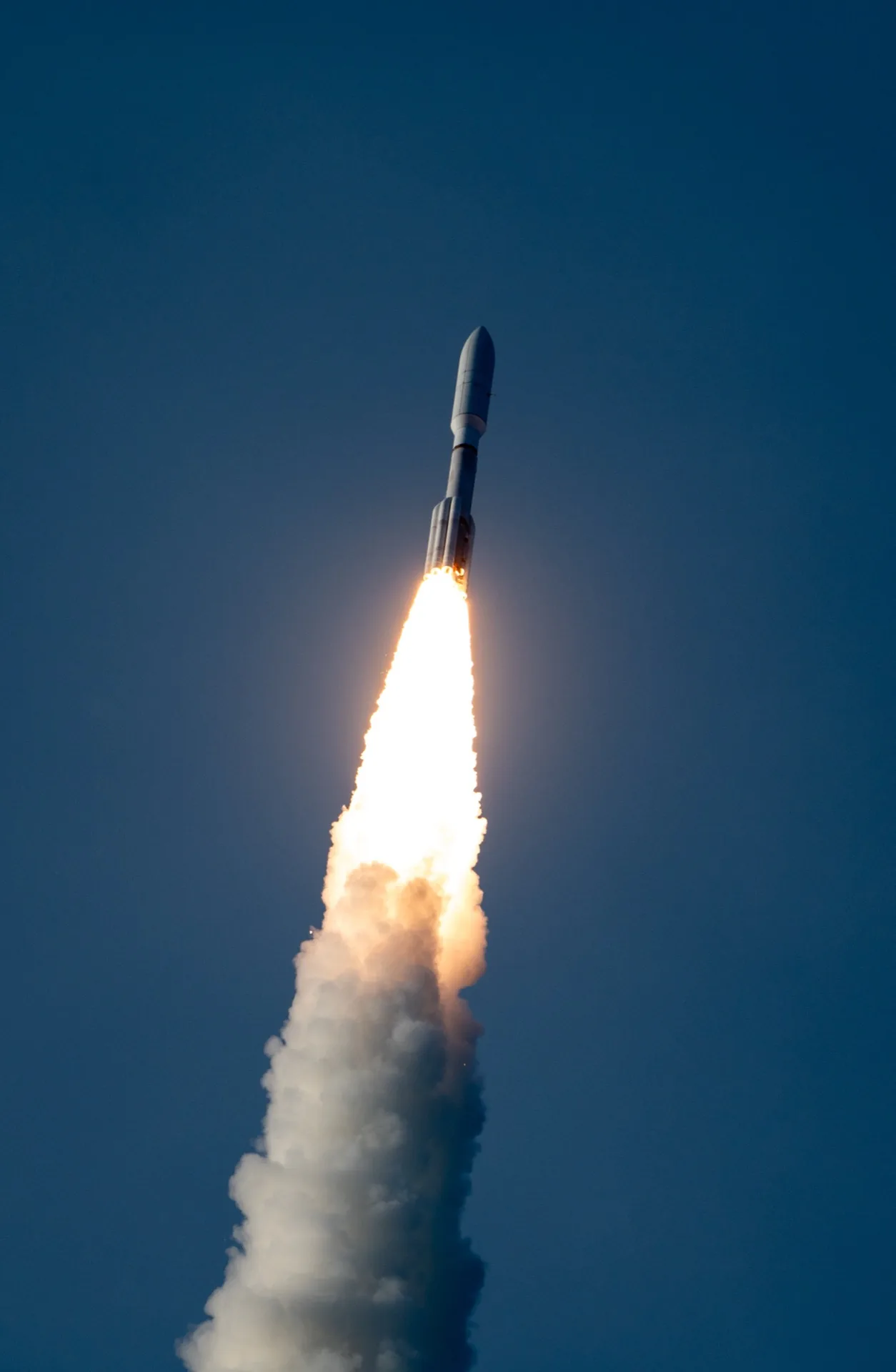
- April 4, 2026: LA-05 aboard Atlas V deployed 29 satellites — the largest Amazon Leo payload ever flown on Atlas V
FCC Pressure: The FCC originally required Amazon to have 1,600 satellites operational by July 2026. Amazon has requested an extension to 2028, estimating it will reach only about 700 satellites by the original deadline. The regulator has agreed to a modified milestone that allows for partial service launch while Amazon continues scaling.
Revenue Target: Amazon CEO Andy Jassy has publicly targeted $20 billion in annual Amazon Leo revenue, combining enterprise broadband, consumer internet service, government/defense contracts, and — following the Globalstar acquisition — D2D services.
The Globalstar deal transforms Amazon Leo from a broadband-only constellation (comparable to Starlink's original service) into a multi-service network that spans broadband, D2D, IoT, and asset tracking. It is a strategic leap that would have taken Amazon years and billions of dollars to build organically.

Head-to-Head: The Three Leaders Compared
| Dimension | SpaceX Starlink | AST SpaceMobile | Amazon Leo + Globalstar |
|---|---|---|---|
| Satellites in orbit | 9,000+ | 6 BlueBirds + prototypes | 241 Leo + ~200 Globalstar |
| Full constellation target | 42,000+ | 243 next-gen BlueBirds | 7,727 Leo + new HIBLEO-4 |
| D2D partner carriers | T-Mobile (US), others | AT&T, Verizon, Vodafone, Rakuten, 40+ MNOs | Apple (inherited); carrier deals TBD |
| D2D spectrum approach | MNO's cellular bands | MNO's cellular bands | MSS (L/S-band) + MNO bands |
| Device compatibility | Existing LTE phones | Existing LTE/5G phones | iPhone today; expansion TBD |
| D2D service status | Text live 2024; voice/data 2026 | Commercial beta 2025–2026 | D2D target 2027+ |
| Consumer broadband | Live globally | Not offered | Enterprise beta 2026 |
| Key partners | T-Mobile, US DoD | AT&T, Google, Vodafone | Apple, enterprise customers |
| Parent financial backing | SpaceX + private markets | Public (NASDAQ: ASTS) | Amazon ($3T+ parent) |
SpaceX Starlink Direct-to-Cell: Starlink's D2C service went live for emergency texting in 2024 and is progressing toward voice and full data in 2026. With 9,000+ satellites already in orbit — more than 60 percent of all active satellites — SpaceX has an unmatched constellation head-start. Starlink's approach reuses T-Mobile's existing PCS cellular spectrum, making the service work on any modern phone.
AST SpaceMobile: AST has taken the most technically ambitious path, building enormous phased-array satellites (BlueBird 6 is roughly three times larger than its predecessors and the biggest commercial satellite in Earth orbit). AST has secured partnerships with 40+ mobile network operators worldwide, including AT&T, Verizon, Vodafone, and Rakuten. The company plans 45–60 more next-generation satellites by the end of 2026.
Amazon Leo + Globalstar: Amazon enters the race with the deepest pockets and a turnkey customer in Apple. The combined company will have access to both MSS spectrum and (via future partnerships) terrestrial cellular bands. The downside: Amazon is behind SpaceX in satellite count and behind AST in D2D-to-smartphone technical demonstrations. Commercial D2D service is not expected until 2027 or later.

What About Iridium, OneWeb, and Others?
The D2D landscape extends beyond the big three.
Iridium: Operates 66 cross-linked satellites in LEO providing truly global L-band MSS coverage including poles. Iridium has partnerships with Garmin (inReach), Qualcomm (which terminated its consumer D2D partnership in 2023), and various defense customers. Iridium announced its Project Stardust in 2024 — a planned software upgrade to enable standard-compatible NB-IoT and 5G D2D service using existing Iridium satellites.
Eutelsat OneWeb: The merged Eutelsat-OneWeb entity has focused on enterprise and government broadband rather than consumer D2D. OneWeb's 648 satellites provide broadband to aircraft, maritime customers, and remote government sites. The company has announced hosted-payload deals with third parties but no flagship consumer D2D product.
Lynk Global: A smaller competitor that pioneered the concept of "cell towers in space" and has commercial D2D service in several African and Pacific nations. Lynk operates about 10 satellites with plans to scale significantly.
Chinese Competitors: China's Guowang (SatNet) and Qianfan (Thousand Sails) constellations are adding D2D capabilities. SpaceSail, the operator of Qianfan, has signed agreements for D2D service in Brazil, Malaysia, Thailand, and Kazakhstan, where Starlink faces political or regulatory resistance.
Why It Matters
The Amazon-Globalstar deal is not just another acquisition. It signals several structural shifts in the telecom and space industries.
Telecom is becoming a hybrid terrestrial-satellite business. Every major mobile network operator now has either a D2D satellite partner or is actively evaluating one. The old distinction between "cellular" and "satellite" communications is dissolving. Within five years, expect seamless handoffs between terrestrial cells and satellites to be a standard feature of premium smartphones globally.
Big Tech is vertically integrating into space. Amazon, Apple, and Google (via its Project Suncatcher and past Globalstar discussions) are all now direct participants in satellite infrastructure. Apple chose long-term partnership; Amazon chose acquisition. Google's direction remains to be seen. SpaceX, the only major D2D operator not attached to a hyperscaler, becomes an even more strategically important independent actor.
Coverage for the unconnected is finally achievable at scale. Roughly 2.6 billion people globally lack meaningful internet access, and vast land areas — oceans, mountains, polar regions — have no cellular coverage at all. D2D satellite service, combined with AST-style cellular broadband satellites, can close these gaps in ways that no terrestrial buildout could ever match economically. The social and economic implications are enormous.
Spectrum is the new scarce resource. Globalstar's MSS spectrum was arguably the most valuable asset in the deal — more so than the aging satellites themselves. Every D2D operator is fighting for spectrum rights at the ITU and in national regulators. The Amazon-Globalstar deal shows the premium the market now places on licensed global mobile satellite frequencies.
Regulatory complexity is exploding. D2D services cross multiple regulatory regimes — the FCC, ITU, individual country telecom regulators, and in some cases defense ministries (which control certain spectrum bands). Amazon's deal is expected to face rigorous review for antitrust, spectrum concentration, and national security concerns given its simultaneous defense contracts and consumer market dominance.
Looking Ahead
By 2030, the D2D market will likely feature three dominant global players — Amazon Leo, Starlink, and AST SpaceMobile — plus regional specialists (Chinese operators domestically, Iridium in specialized segments, national operators in specific markets). The winner of the mass consumer smartphone D2D market will almost certainly be the operator that can offer the best combination of:
- Device compatibility (works on existing phones without new hardware)
- Coverage (global, including ocean and polar regions)
- Capacity (enough bandwidth for voice, text, and basic data)
- Cost (bundled with existing cellular plans, not a premium surcharge)
- Partnerships (access through every major mobile network operator)
Amazon's Globalstar acquisition is a bold play to secure multiple pieces of that puzzle in a single transaction. It does not guarantee victory — SpaceX's constellation head-start and AST's technical demonstrations remain formidable advantages. But it instantly elevates Amazon from a distant third-place challenger to a full co-leader in what may become the largest single segment of the space economy.
The next year will be telling. Between Amazon Leo's commercial launch, AST's BlueBird deployments, Starlink's voice service rollout, and regulatory review of the Globalstar deal itself, the D2D market is entering its most consequential period of competition since the concept was first demonstrated. The phone in your pocket is about to talk directly to space — the only remaining question is which company's satellites it will be talking to.