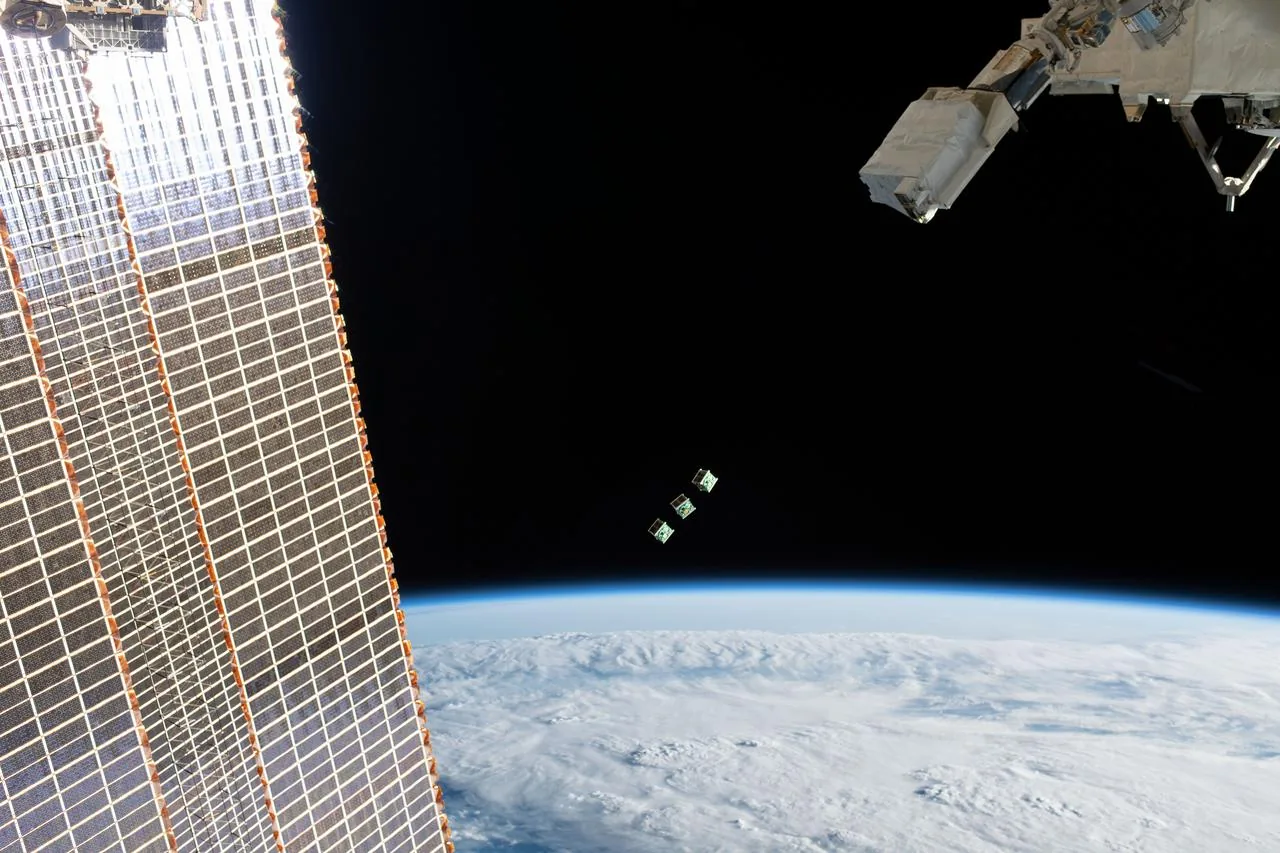
For most of the space age, operating a satellite required one thing above all others: a nation-state budget. The smallest operational satellites weighed hundreds of kilograms, cost hundreds of millions of dollars to build, and required custom launch vehicles with years of lead time. The barrier to orbit was so high that only governments, and later a handful of telecom giants, could clear it.
That world is over. A 1U CubeSat — a 10-centimeter cube weighing about 1.3 kilograms — can be built by a university team for under $100,000, launched as a rideshare passenger on a SpaceX Falcon 9 for $5,500/kg, and be operational within 18 months of project inception. Startup space companies routinely operate constellations of hundreds of satellites at costs that would have seemed impossible a decade ago.
This is not a niche technical trend. It is a structural shift in who gets to participate in the space economy, what services space can provide, and how quickly new capabilities can be developed. Small satellites are not a stepping stone to "real" satellites — they are the future of space commerce.
The Numbers Behind the Shift
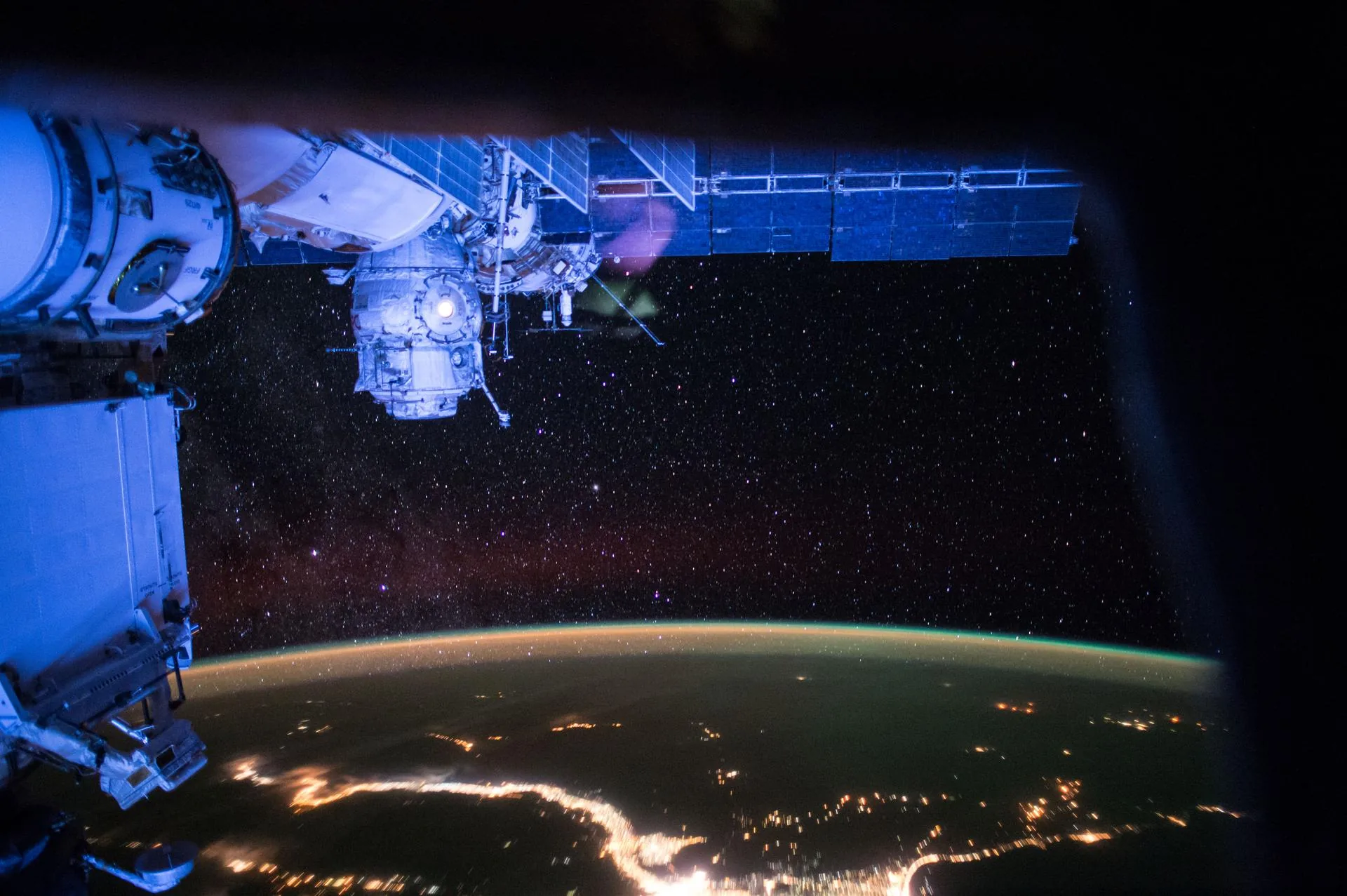
The smallsat market tells the story clearly. In 2012, fewer than 100 small satellites (under 500 kg) were launched annually. By 2024, that number exceeded 2,500 per year, and projections for 2030 range from 5,000 to 8,000 annual launches. The Morgan Stanley space economy report projects smallsats will account for more than $1 trillion in cumulative economic activity by 2040.
SpaceX's Starlink constellation — itself a smallsat megaconstellation — passed 6,000 operational satellites in early 2025 and continues growing toward a planned 12,000+. OneWeb, Planet Labs, Spire Global, HawkEye 360, and dozens of others operate constellations ranging from 15 to 500+ spacecraft. Amazon's Project Kuiper launched its first production satellites in 2024 and is building toward 3,236 spacecraft.
The defining characteristic of these systems is not just their size — it's their architecture. Rather than one expensive satellite doing everything, you build many cheap ones doing one thing well, with redundancy baked in. When a satellite fails, you replace it. When you need more capacity, you launch more. The constellation becomes a living, upgradeable network rather than a static asset depreciating in orbit.
Why Smallsats Win on Every Key Metric
Development Speed
A traditional geostationary communications satellite takes 8–12 years from contract to orbit. A smallsat constellation can go from concept to operational in 3–5 years. In fast-moving commercial markets, this is the difference between capturing an opportunity and missing it entirely.
Planet Labs exemplifies this philosophy. Their "Dove" satellites are intentionally designed to be replaced, not maintained. Rather than building one perfect Earth observation satellite, Planet operates 200+ satellites providing daily imaging of every point on Earth — something impossible with any traditional satellite architecture.
Cost Per Bit and Cost Per Image
The economics of smallsat constellations are brutal in a good way. Starlink's per-bit transmission cost is orders of magnitude lower than traditional geostationary satellite communications. Planet's per-square-kilometer imaging cost has dropped by more than 95% compared to traditional remote sensing satellites. As these constellations scale, the unit economics continue improving — a dynamic entirely absent from single large-satellite architectures.
Iteration and Innovation
Small satellites can incorporate the latest electronics, software, and sensor technology because they are built and launched in 12–24 month cycles rather than decade-long programs. A smallsat launched today can use chips, processors, and sensors that simply did not exist when a traditional large satellite was designed.
SpaceX iterates Starlink hardware at a pace that would be unrecognizable to legacy satellite manufacturers. Early Starlink satellites weighed 260 kg; the V2 Mini version launched in 2023 weighs 800 kg but delivers multiple times the throughput. Hardware generations turn over in 3–4 years.
Democratizing Access
Perhaps most importantly, smallsats have lowered the barrier to orbit to the point where universities, startups, and developing nations can participate in space. Kenya's first satellite, 1KUNS-PF, was a 1U CubeSat built by students at the University of Nairobi and launched in 2018. Bangladesh, Ecuador, Bolivia, and dozens of other countries have operated their first national satellites as smallsats.
This democratization matters beyond symbolism. Developing nations can now use satellite data — Earth observation, weather monitoring, agricultural analysis, communications — without paying Western monopolies for access to their own planet's data.
The Applications Driving Growth

Broadband Internet
This is the killer app of the current smallsat era. Starlink serves millions of customers globally, including maritime, aviation, and enterprise sectors. Project Kuiper is targeting a 2026 commercial launch. Amazon projects that Kuiper will generate tens of billions in revenue annually at maturity. Satellite internet is becoming a genuine competitor to terrestrial broadband, especially in underserved rural and maritime markets.
Earth Observation
Smallsat Earth observation has created entirely new business categories. Synthetic aperture radar satellites (Capella Space, ICEYE) can image through clouds and at night. Hyperspectral imaging satellites (HyperSat, Satellogic) detect crop health, mineral deposits, and pollution at frequencies invisible to traditional cameras. Automatic Identification System (AIS) tracking from orbit (SpireGlobal) monitors every large ship on Earth.
The combination of daily revisit rates and AI-powered analysis is enabling applications that simply did not exist five years ago: real-time deforestation monitoring, supply chain tracking via vessel and aircraft AIS, crop yield prediction for commodity markets.
Space-Based Weather and Climate Monitoring
Traditional weather satellites are massive, expensive, and few. Smallsat companies like PlanetiQ and Spire are deploying dozens of satellites to collect GPS radio occultation data — measurements of atmospheric conditions gathered by observing how GPS signals bend through the atmosphere. This data significantly improves weather forecast accuracy and is provided commercially to NOAA and other agencies.
Internet of Things and Machine-to-Machine Communication
Billions of IoT devices — sensors on shipping containers, agricultural monitors, remote industrial equipment — need connectivity in areas where cellular networks don't reach. Smallsat IoT constellations from companies like Kinéis (backed by CLS Group), Astrocast, and Sateliot provide low-bandwidth global connectivity for these devices at costs measured in dollars per device per year.
The Objections Worth Taking Seriously
The smallsat thesis is not without challenges. Orbital debris is a genuine concern. With thousands of satellites being launched annually, the risk of collision cascades — the Kessler Syndrome — increases. The FCC and ITU have strengthened deorbit requirements (satellites below 600 km must deorbit within 5 years), and responsible operators build deorbit capability into their designs. But not all operators are responsible, and international enforcement remains weak.
Radio frequency interference is another legitimate issue. Dense satellite constellations can interfere with ground-based astronomy. The International Astronomical Union has documented measurable impacts on optical and radio astronomy from Starlink and similar constellations. The industry is actively working on mitigations — anti-reflective coatings, scheduling gaps, sun-shading visors — but the tension between commercial satellite operators and the astronomy community is real and unresolved.
These are problems that require regulatory solutions and industry standards, not reasons to abandon smallsat development. The economic and social value created by smallsat constellations — global internet access, real-time Earth monitoring, precision navigation — clearly outweighs the costs when managed responsibly.
What the Next Decade Looks Like
The smallsat industry is moving up the value chain. The first generation of smallsat companies proved the architecture works. The second generation is proving the business models. The third generation — now being funded — is targeting capabilities that were previously only achievable with large satellites: high-throughput optical communications, space-to-space relay networks, in-orbit servicing, and eventually orbital manufacturing.
Launcher availability is no longer a bottleneck. SpaceX, Rocket Lab, ISRO's SSLV, and a dozen other providers offer regular rideshare opportunities. SpaceX's Transporter missions pack 100+ smallsats onto a single Falcon 9. The cost of access to orbit has structurally shifted.
The future of the space economy will be built on constellations, not cathedrals. Many affordable, rapidly iterable, purpose-built satellites rather than a few magnificent but inflexible ones. History is full of examples where democratizing access to a platform — the printing press, the internet, the smartphone — created more value than any centralized alternative could have imagined.
Bottom Line
Small satellites are not a budget version of the real thing. They are the right architecture for the commercial space age: fast to build, cheap to replace, scalable through constellation growth, and increasingly capable as electronics miniaturize and software sophistication grows.
The barriers that once made space the exclusive domain of superpowers are gone. A Nigerian agricultural tech startup can now access daily satellite imagery of its farming regions. A Pacific Island nation can provide broadband to its fishing fleet. A university team can conduct orbital science experiments. This is what democratization of orbit looks like — and it is only beginning.
The companies that bet on smallsats early have built some of the most valuable space businesses in history. The companies still waiting for the "right time" to engage with smallsat technology are the next Kodaks — watching a structural shift happen and choosing not to believe it.