Image: NASA
Skylab 3
Mission Profile
| Launch date | 1973-07-28 |
|---|---|
| Launch site | Kennedy Space Center, Launch Complex 39B |
| Launch vehicle | Saturn IB (SA-207) |
| Spacecraft | Apollo CSM-117 |
| Target | Low Earth Orbit |
| Type | Crewed |
| End date | 1973-09-25 |
| Recovery | USS New Orleans, Pacific Ocean |
| Duration | 59 days, 11 hours, 9 minutes |
Overview
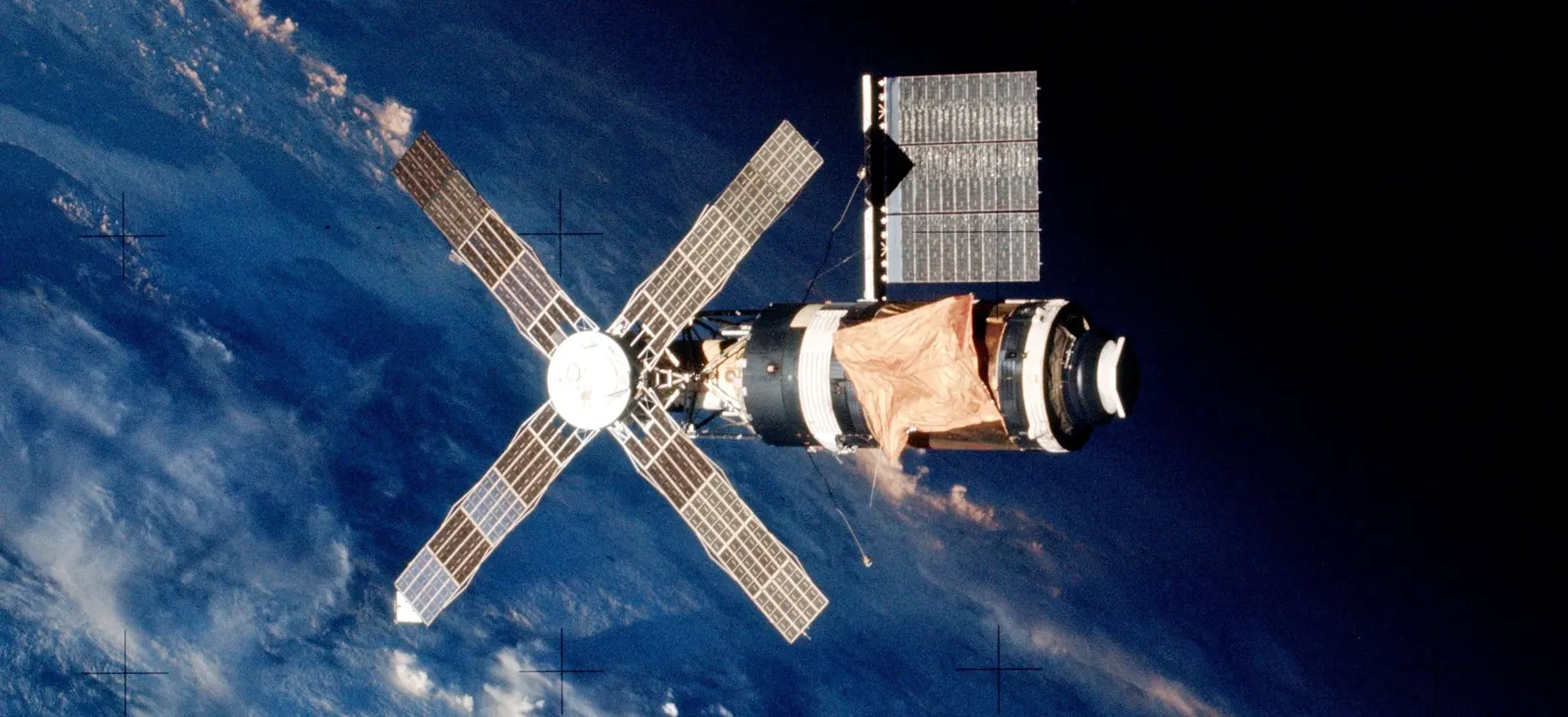
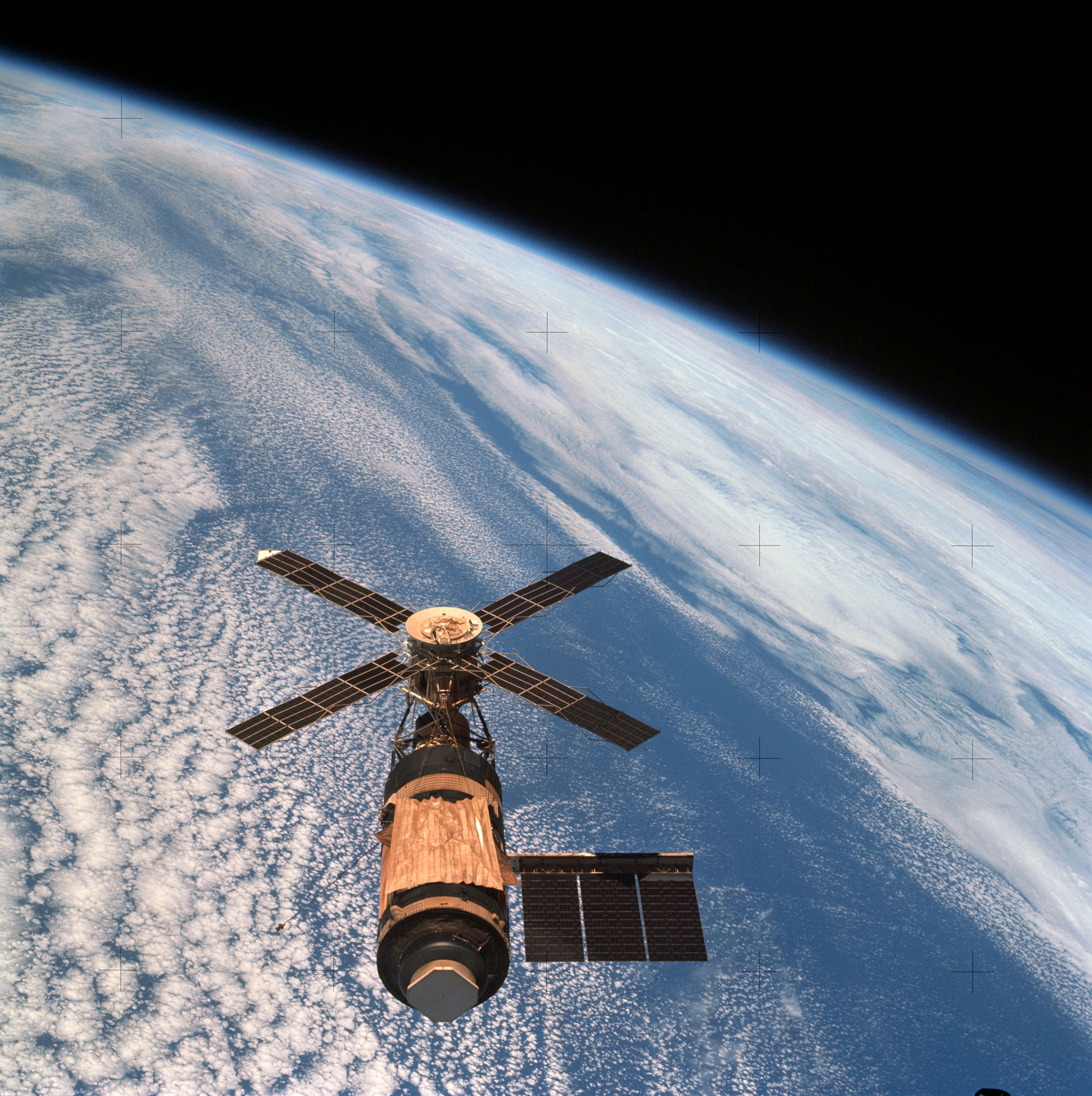
Skylab 3 stretched human endurance to two months — and nearly required history's first space rescue. Alan Bean, Owen Garriott and Jack Lousma launched on 28 July 1973 and docked with Skylab the same day, but a thruster quad on their service module sprang a leak during rendezvous; when a second quad failed days later, NASA readied a modified rescue Apollo that could launch with two pilots and bring five home. Engineers ultimately cleared the docked CSM to return on its remaining thrusters, and the mission pressed on. On 6 August, Garriott and Lousma spent six and a half hours outside erecting a twin-pole sunshade over the first crew's parasol, permanently stabilizing the station's thermal balance. Across 59 days and 858 orbits — some 39.4 million kilometres — the crew returned a vast harvest of Apollo Telescope Mount solar observations, Earth-resources imagery and biomedical data, exceeding pre-flight science targets. Student experiments flew too, most famously the orb-weaver spiders Arabella and Anita, which became the first spiders to spin webs in microgravity. The crew splashed down in the Pacific on 25 September 1973 and was recovered by USS New Orleans, having nearly doubled the spaceflight duration record set only months earlier.
Crew
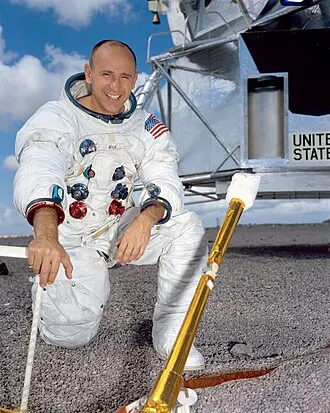
Alan Bean
Commander
Second spaceflight; Apollo 12 moonwalker
Owen K. Garriott
Science Pilot
First spaceflight; later flew STS-9/Spacelab 1
Jack R. Lousma
Pilot
First spaceflight; later commanded STS-3
Key Milestones
1973-07-28
Launch from LC-39B on Saturn IB SA-207; docking with Skylab the same day despite a leaking thruster quad
1973-08-02
A second thruster-quad leak prompts NASA to prepare a Skylab Rescue vehicle — the first operational space-rescue plan (never needed)
1973-08-06
Garriott and Lousma's 6.5-hour EVA erects the twin-pole sunshade, permanently fixing the station's thermal problems
1973-09-22
Final EVA retrieves film from the Apollo Telescope Mount
1973-09-25
Splashdown in the Pacific after 59 days; crew recovered by USS New Orleans
Key Achievements
Nearly doubled the world spaceflight endurance record to 59 days
Installed the twin-pole sunshade that permanently stabilized Skylab's temperature
Prompted preparation of the first operational space-rescue spacecraft after CSM thruster leaks
Flew the first spiders to spin webs in orbit (Arabella and Anita) among pioneering student experiments
Logged 858 orbits and ~39.4 million km with a record haul of solar and Earth-resources data
Legacy & Significance
Skylab 3 demonstrated that humans could remain healthy and productive in weightlessness for two months — the crew returned in better condition than their 28-day predecessors thanks to disciplined in-flight exercise, a finding that directly shaped every long-duration protocol since. The thruster crisis also forced NASA to build a real rescue capability for the first time, a concept that echoes today in lifeboat requirements for ISS crews, and its solar observations of the quiet and active Sun were foundational for heliophysics.