In the early hours of 14 July 2015, the operations room at the Johns Hopkins Applied Physics Laboratory in Maryland was crowded, but the spacecraft everyone had come for was utterly alone. Four and a half light-hours from Earth, New Horizons was executing its encounter entirely by stored command, too busy gathering data to call home. At 11:49 UTC it swept within about 12,500 kilometres of Pluto's surface at nearly 14 kilometres per second, a one-shot pass at a world three billion miles away. There would be no second chance and no orbit, only a day of furious observation.
The journey had begun nine and a half years earlier, on 19 January 2006, when an Atlas V threw the piano-sized, 478-kilogram probe away from Earth faster than any spacecraft before it; it crossed the Moon's orbit in about nine hours. Seven months later, astronomers reclassified Pluto as a dwarf planet. New Horizons had left for the ninth planet and would arrive at something the textbooks no longer agreed on, which made the encounter feel less like a footnote and more like a verdict.
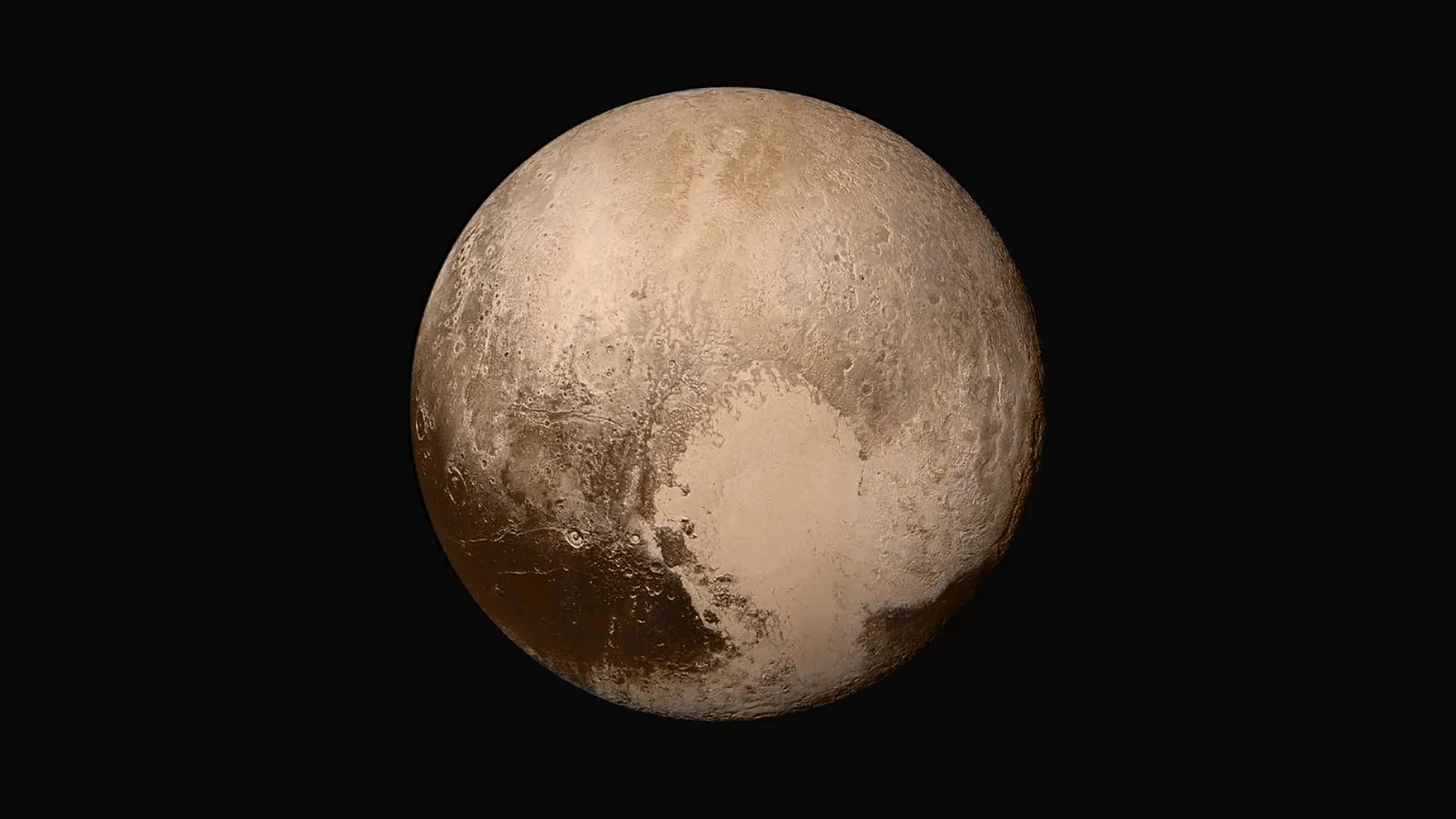
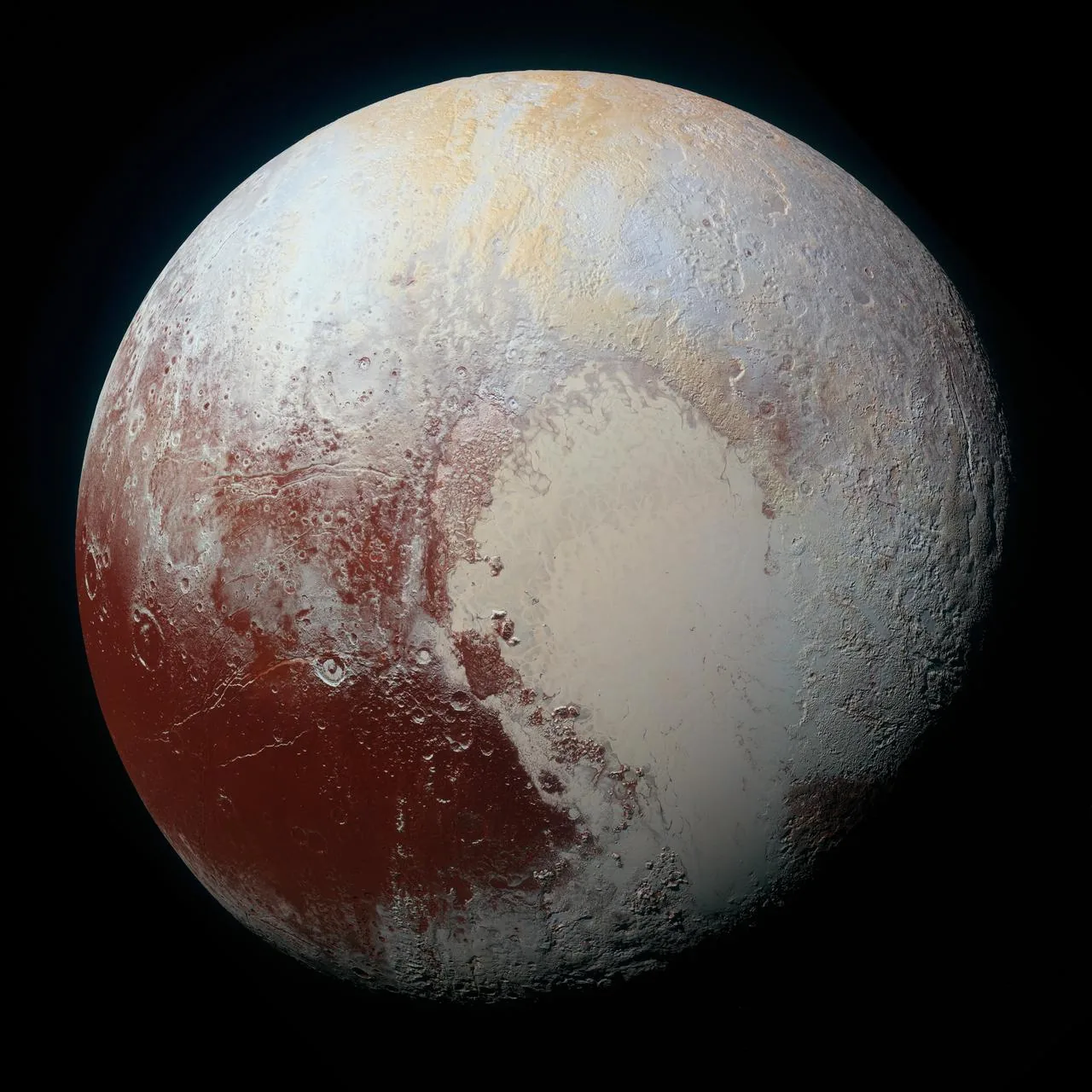
Just before 9 p.m. Eastern time that night, after an agonizing day of planned silence, a 15-minute status message arrived and the room erupted: the spacecraft had survived with its data intact. What followed astonished even the mission's veterans. Pluto's 'heart,' Tombaugh Regio, held Sputnik Planitia, a churning nitrogen-ice glacier roughly a thousand kilometres across, bordered by water-ice mountains rising as high as the Rockies. The supposed dead iceball was geologically alive.
The encounter's full harvest trickled home over 16 months through a radio link slower than an old dial-up modem, each image a small event in itself. New Horizons then flew on, and on 1 January 2019 it skimmed past the Kuiper Belt object Arrokoth, the most distant world ever explored up close. The spacecraft is still flying outward today, a working observatory in the Solar System's far suburbs.
“Following in the footsteps of planetary exploration missions such as Mariner, Pioneer and Voyager, New Horizons has triumphed at Pluto.”
Mission Data
Launch
19 Jan 2006, Atlas V 551
Closest approach
~12,500 km, 14 Jul 2015
Flyby speed
~13.8 km/s
Journey to Pluto
9.5 years, ~5 billion km
One-way signal time
4.5 hours
Full data downlink
16 months
Key Facts
New Horizons left Earth faster than any spacecraft before it, crossing the Moon's orbit in about nine hours; seven months after launch, Pluto was reclassified, so the probe departed for a planet and arrived at a dwarf planet.
It carries a portion of the ashes of Clyde Tombaugh, the Kansas-born astronomer who discovered Pluto in 1930, making the flyby a kind of homecoming 85 years in the making.
During the most critical hours of the encounter the spacecraft deliberately stayed silent, and the whole mission's fate rested on a single 15-minute 'phone home' message that arrived just before 9 p.m. Eastern that night.
Sputnik Planitia turned out to be a slowly churning glacier of nitrogen ice roughly 1,000 kilometres across, ringed by mountains of water ice as tall as the Rockies, on a world many expected to be geologically dead.
The probe runs on a plutonium power source producing less electricity than a pair of household light bulbs, and its flyby data took 16 months to fully transmit to Earth.
Why It Mattered
The Pluto flyby completed humanity's first reconnaissance of every classical planet of the Solar System, a project begun with Mariner 2 in 1962, and it did so on a comparatively lean budget with a spacecraft the size of a piano. Scientifically it was a shock: Pluto proved to be an active, varied world with glaciers, hazes and possibly an internal ocean, overturning assumptions about what small, distant bodies can do. The mission validated the Kuiper Belt as a frontier for direct exploration, set up the record-breaking Arrokoth encounter, and showed a new generation that first-time exploration of unknown worlds was not finished history but live television.
Continue your journey
Experience
New Horizons
Experience this mission
Mission
New Horizons
The mission behind this moment
✦
Moment
Philae lands on comet 67P/Churyumov–Gerasimenko
From the same era
✦
Moment
Hayabusa 2 launches to asteroid Ryugu
From the same era
✦
Moment
Falcon 9 first stage lands vertically after orbital launch
From the same era
✦
Moment
Juno enters Jupiter orbit
From the same era