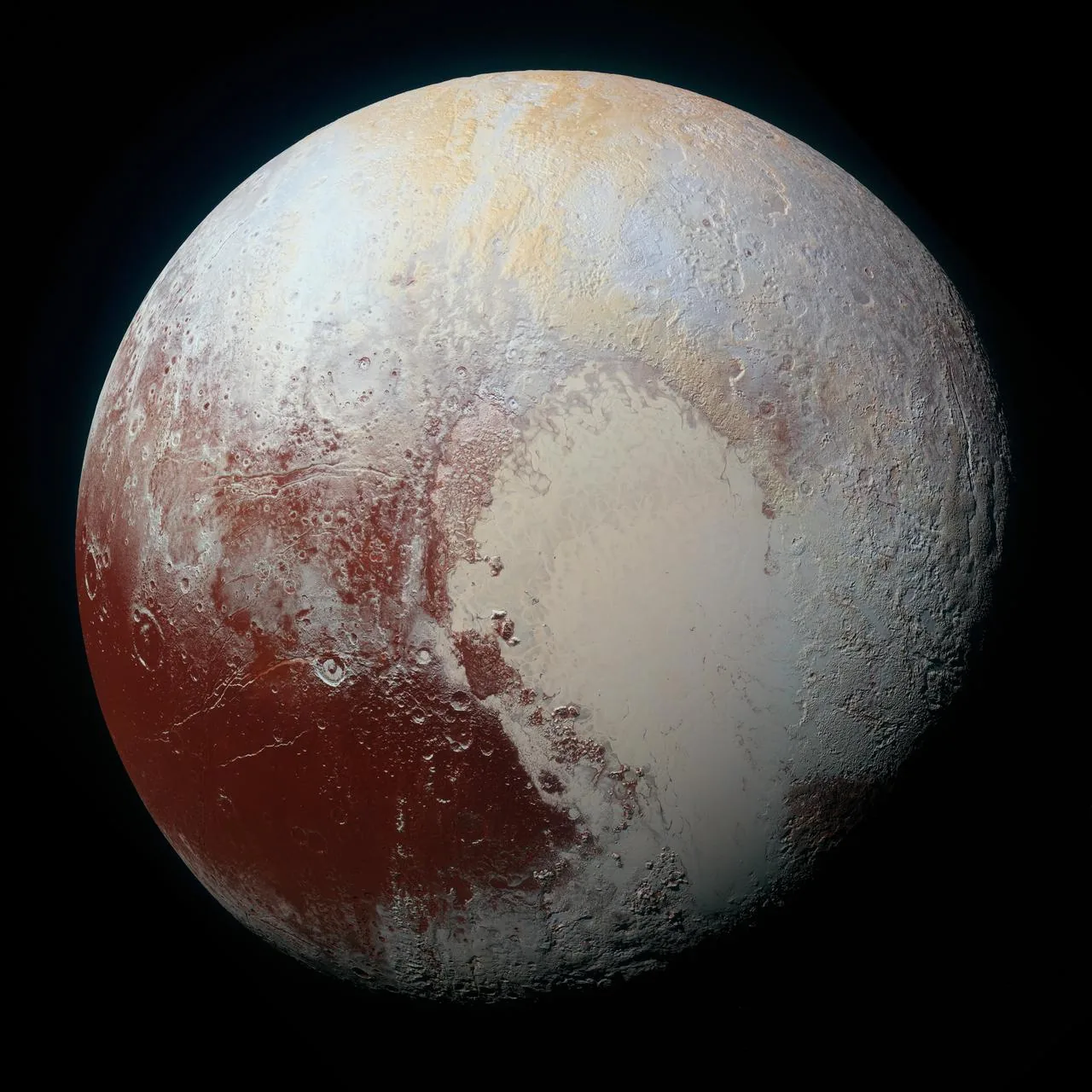
Image: NASA / Johns Hopkins APL / SwRI
Don't just read it — experience it
Relive New Horizons, chapter by chapter
9½ years to Pluto · 8 chapters · Nine Years to a Heartbeat
New Horizons
Mission Profile
| Launch date | 2006-01-19 |
|---|---|
| Launch vehicle | Atlas V 551 |
| Spacecraft | New Horizons |
| Target | Trans-Neptunian |
| Type | Robotic |
| Cost | $781M life-cycle |
| Mass | 478 kg |
| Duration | Primary mission to Pluto 2006-2016; now in second extended mission |
| Partners | Johns Hopkins APL (lead), Southwest Research Institute (PI) |
| Instruments | LORRI (telescopic imager), Ralph (color/IR), Alice (UV spectrometer), REX (radio science), SWAP (solar wind), PEPSSI (energetic particles), SDC (Student Dust Counter) |
Prime Contractors
Companies that built, launched, or operate this mission. Tickers link to their investor profile.
- Johns Hopkins APL
- Southwest Research Institute
- United Launch Alliance
- Northrop Grumman (heritage Thiokol/ATK)
Overview
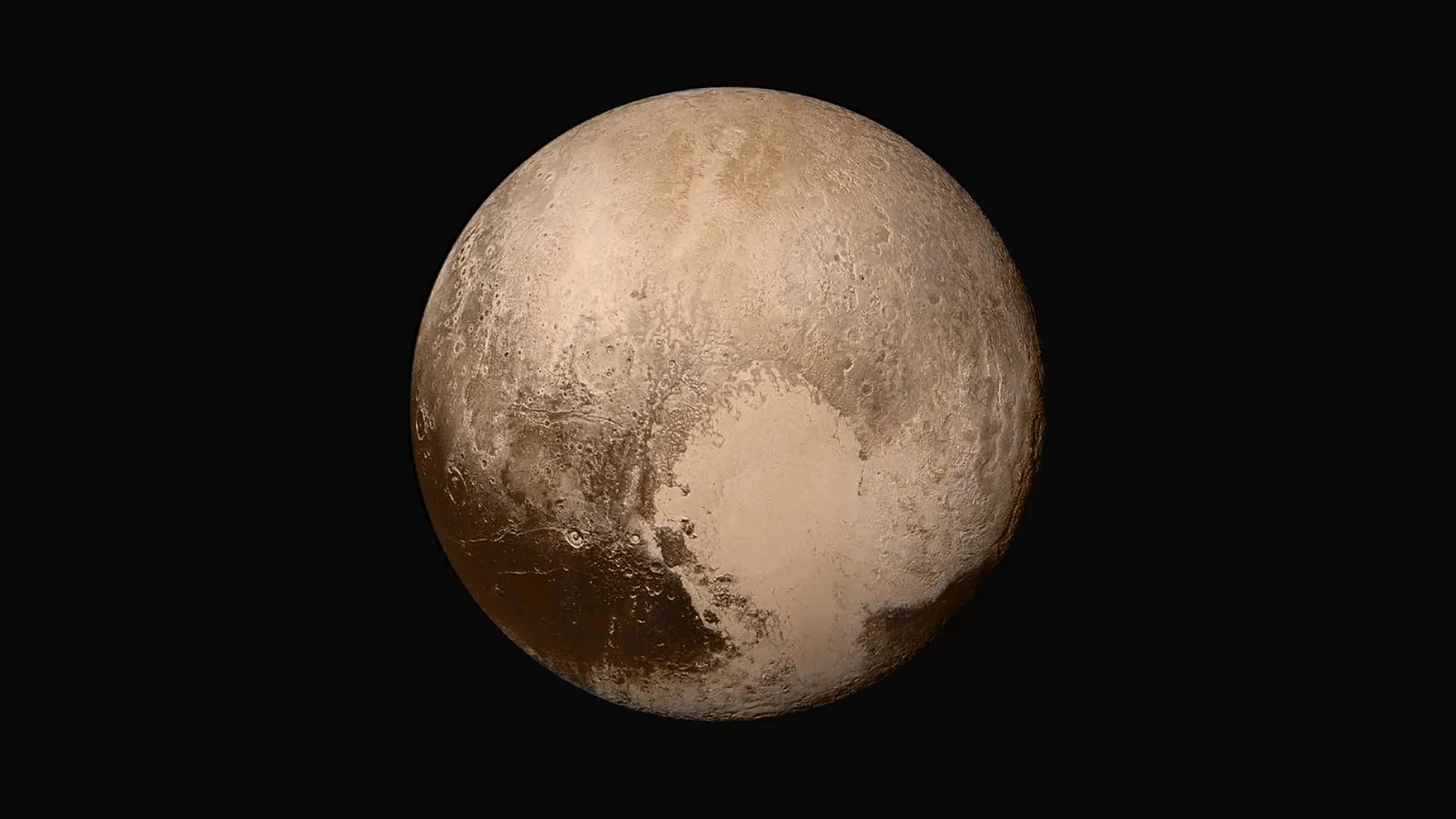
New Horizons is NASA's first mission to Pluto and the Kuiper Belt — the great frontier of the outer Solar System. Launched on 19 January 2006 on an Atlas V 551 (the most powerful Atlas ever flown) from Cape Canaveral, New Horizons used a Jupiter gravity-assist in 2007 to slingshot toward Pluto at speeds reaching 23 km/s. After a nine-and-a-half-year cruise the spacecraft executed a six-month, fully autonomous Pluto encounter in 2015, with closest approach on 14 July 2015 at a distance of just 12,500 km from the dwarf planet's surface. The encounter revealed Pluto as a geologically active world with nitrogen-ice glaciers, towering water-ice mountains, and an unexpectedly complex atmosphere — overturning decades of assumptions about small icy worlds. After Pluto, New Horizons was redirected to a small Kuiper Belt object, Arrokoth (formerly known as 2014 MU69), which it flew past on 1 January 2019 — the most distant flyby of a Solar System object in history at 6.6 billion km from Earth. Arrokoth turned out to be a contact-binary 'snowman' of two pristine planetesimals, providing the first close look at how planetary embryos formed in the early Solar System. As of April 2026 New Horizons is in extended mission, on a trajectory through the Kuiper Belt searching for a possible third flyby target while also studying the heliosphere as it heads toward interstellar space.
Key Milestones
2006-01-19
Launch on Atlas V 551 from Cape Canaveral
2007-02-28
Jupiter gravity-assist flyby
2015-07-14
Pluto closest approach (12,500 km)
2019-01-01
Arrokoth flyby (most distant Solar System encounter)
2024-09-30
NASA approves second extended mission