All Astronauts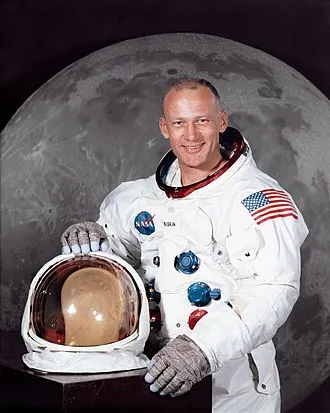 LEGENDRetiredNASA
LEGENDRetiredNASANASA·🇺🇸 United States·Born 1930
Buzz Aldrin
Magnificent desolation.
Hours in Space
2
Missions
4
EVAs
8h
EVA Time
Mars is there, waiting to be reached.
Exploration is wired into our brains. If we can see the horizon, we want to know what's beyond.
In this modern world, where so many seek security above all else, the space program is a glorious anachronism.
Inspirations
Charles LindberghEd White
What they aspire to
He has spent decades advocating that humanity establish a permanent human presence on Mars.
Biography
Second person to walk on the Moon. Lunar Module Pilot for Apollo 11, he pioneered spacewalk techniques during Gemini 12.
Before NASAU.S. Air Force fighter pilot who flew 66 combat missions in Korea before earning a Sc.D. in astronautics from MIT with a thesis on orbital rendezvous.
Life & career
Buzz Aldrin was born Edwin Eugene Aldrin Jr. on January 20, 1930, in Glen Ridge, New Jersey; the nickname 'Buzz' came from a younger sister's mispronunciation of 'brother,' and he made it his legal first name in 1988. He graduated third in his class from the U.S. Military Academy at West Point and became a U.S. Air Force fighter pilot, flying 66 combat missions in F-86 Sabres during the Korean War. Rather than pursue test-pilot school, Aldrin earned a doctorate in astronautics from MIT, writing a thesis on orbital rendezvous that would prove directly relevant to spaceflight and earn him the nickname 'Dr. Rendezvous.' NASA selected him in its third astronaut group in 1963.
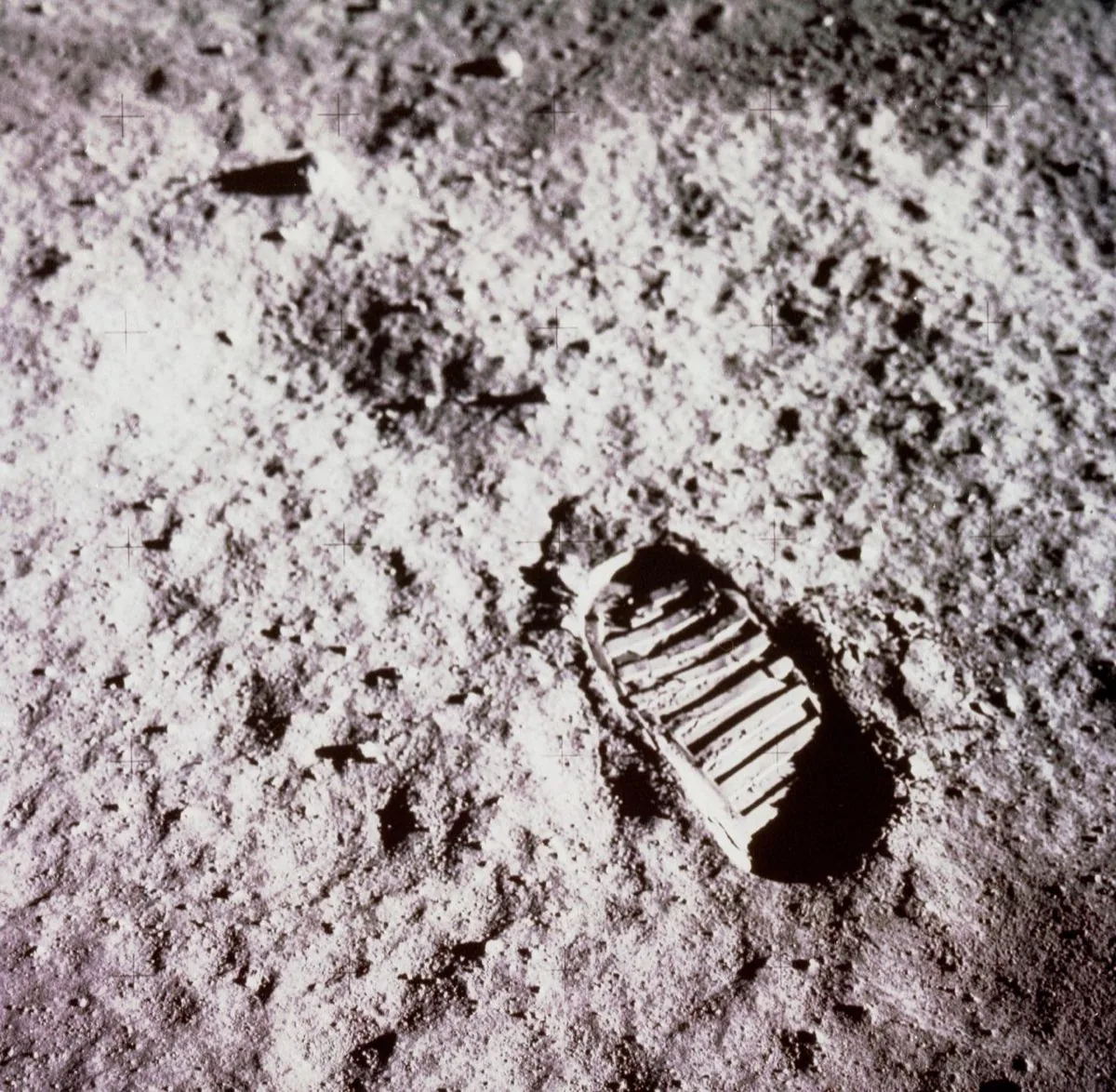
Aldrin flew two missions. On Gemini 12, launched November 11, 1966, he set a benchmark for productive spacewalking. Earlier Gemini extravehicular activities had left astronauts exhausted and overheated, but Aldrin, drawing on underwater training and careful body-positioning techniques, completed three EVAs totaling more than five hours without difficulty, demonstrating that useful work outside a spacecraft was possible and helping to make the Apollo program feasible. His second flight was Apollo 11, launched July 16, 1969, on which he served as lunar module pilot. On July 20 he followed Neil Armstrong onto the surface to become the second person to walk on the Moon, describing the stark lunar landscape as 'magnificent desolation.' Before leaving the module, he privately took communion, the first religious ceremony performed on another world. The two astronauts spent about two and a half hours walking on the surface, deploying experiments and collecting samples, while Michael Collins orbited overhead.
Across his career Aldrin logged roughly 290 hours in space, including some eight hours of spacewalking that reshaped how astronauts operate outside their craft. After leaving NASA and the Air Force, he wrote candidly about the depression and alcoholism he battled following the mission, an unusually honest account for an astronaut of his era, in memoirs including 'Return to Earth' and 'Magnificent Desolation.' He has spent decades as a tireless advocate for human exploration of Mars, promoting a low-energy 'Aldrin cycler' trajectory to shuttle crews between Earth and the red planet, and supporting STEM education through his ShareSpace Foundation. A recipient of the Presidential Medal of Freedom and the Congressional Gold Medal, Aldrin is now retired and, as one of the last surviving Apollo moonwalkers, remains among the most visible living witnesses to humanity's first journeys to another world.
Records & Firsts
Notable accomplishments by Buzz Aldrin
- Second person to walk on the Moon (July 20, 1969)
- First person to hold a religious ceremony on the Moon
Mission Timeline
- Pilot
Gemini
Gemini 12
Launch: Nov 11, 1966Landing: Nov 15, 1966Duration: 4 days- Three EVAs totaling over 5 hours
- Lunar Module Pilot
Apollo CSM/LM
Apollo 11
Launch: Jul 16, 1969Landing: Jul 24, 1969Duration: 8 days- Second person to walk on the Moon
Don't just read it — fly it
Relive Buzz's missions
Step into the missions Buzz Aldrin flew — chapter by chapter, from ignition to splashdown.
Beyond the Mission
Hobbies & Interests
scuba divingrunning
Causes They Champion
Human Mars exploration (Aldrin Cycler)STEM education through the ShareSpace Foundation
Languages
English
Awards & Honors
- Presidential Medal of Freedom
- Congressional Gold Medal
- NASA Distinguished Service Medal
- Legion of Merit
Authored
- Return to Earth(1973)
- Men from Earth(1989)
- Magnificent Desolation: The Long Journey Home from the Moon(2009)
- Mission to Mars: My Vision for Space Exploration(2013)
- No Dream Is Too High: Life Lessons From a Man Who Walked on the Moon(2016)
Fun fact
His nickname 'Buzz' came from his younger sister's mispronunciation of 'brother' as 'buzzer'; he legally changed his first name to Buzz in 1988.
Item flown to space
Communion bread and wine, which he privately consumed on the lunar surface inside Eagle.
Learn More
More Astronauts
Other space travelers from NASA