Full mission transcript
Every chapter of Hubble, in sequence.
Day 0
The Dream
April 24, 1990 · 12:33 UTC
In 1946 — eleven years before Sputnik — astrophysicist Lyman Spitzer wrote a RAND report arguing that a telescope above the atmosphere could see what no instrument on Earth ever would. He spent the next two decades championing the idea, won a National Academy of Sciences endorsement in 1962, and flew a precursor as principal investigator of the Copernicus observatory in 1972. The dream took 44 years to climb from paper to orbit.
On April 24, 1990, at 12:33:51 UTC, Space Shuttle Discovery lifted off from Launch Complex 39B on STS-31, carrying Loren Shriver, Charlie Bolden, Steve Hawley, Bruce McCandless, and Kathryn Sullivan — and, folded in the payload bay, the first large optical space telescope designed to be serviced by astronauts. Discovery climbed to roughly 612 kilometres, the highest shuttle orbit flown to date, to give the telescope every possible metre above the air.
Deployment day nearly demanded a spacewalk. On April 25, with Hawley flying the telescope on the robotic arm, the second solar array stuck. McCandless and Sullivan — who had already made history as the first American woman to walk in space, on a different flight in October 1984 — suited up in the airlock, prebreathe complete, before the ground freed the array by disabling a tension-monitoring software module. Hubble drifted free at 19:37:51 UTC — the official tape passes the moment in silence — and Charlie Bolden's later recollection captured the scramble aboard: 'Camera! Somebody get a camera!'
First light came on May 20, 1990: a 30-second exposure of a star cluster in Carina, 50 percent sharper than the same field from the ground. For a few weeks, everything looked like the beginning of a golden age.
Air-to-ground · NASA STS-31 mission tape - Apr 25 · FD2 Musgrave (CAPCOM): Good morning, Discovery. Good morning from Bill Reeves and the Orbit 1 team, and you've got a go for HST deploy ops.
- Deploy ops Mission Control (PAO): Our PDRS officer here in the flight control room confirms via telemetry that the Hubble Space Telescope has been grappled.
- ≈19:36 UTC Musgrave (CAPCOM): Discovery, go for Hubble release.
- ≈19:37 UTC Discovery (crew): Okay, we have a go for release.
Day 64
The Flaw
June 27, 1990 · 00:00 UTC
On June 27, 1990 — sixty-four days after launch — NASA stood before the press and announced that the Hubble Space Telescope could not focus. Engineers chasing the blur had found both cameras returning identically distorted star images, which pointed to the one component they shared: the 2.4-metre primary mirror itself.
The mirror was too flat at its edge by about 2.2 micrometres — roughly one-fiftieth the width of a human hair, but ten times outside tolerance. The cruelest detail: the polishing had been extraordinarily precise. The surface had been ground perfectly — to the wrong prescription. The Allen Commission, formed July 2, traced the fault to the test rig: a lens in Perkin-Elmer's reflective null corrector had been spaced 1.3 millimetres out of position, and the mirror had been figured faithfully against a flawed yardstick.
The world's most expensive telescope became a national punchline. David Letterman ran a Top Ten list. Congress held hearings, and Senator Barbara Mikulski branded it a 'techno-turkey'. But Hubble was blurred, not blind: astronomers learned to sharpen its images with computer deconvolution, and real science limped on while NASA worked the only question that mattered — could it be fixed in orbit?
Year 1
Eyeglasses for a Giant
October 1, 1990 · 00:00 UTC
The flaw was exquisitely well known — the Allen Commission could state the mirror's wrongness to fractions of a wavelength — and a mistake that precise can be corrected just as precisely. The question was how to get corrective optics into a telescope already in orbit.
The answer arrived in a hotel shower. At a Hubble-crisis meeting in Germany in 1990, STScI engineer Jim Crocker stood under a European shower head mounted on an adjustable, fold-down arm — and saw it: deployable arms that could reach into the telescope's light path and place small corrective mirrors precisely where they were needed. The idea became COSTAR, a roughly $50 million instrument carrying ten coin-sized mirrors. It would correct the three axial instruments — the Faint Object Camera, the Faint Object Spectrograph, and the Goddard High Resolution Spectrograph — at a price: the High Speed Photometer had to come out to make room.
The workhorse camera took a different cure. The replacement Wide Field and Planetary Camera 2, already in development, was rebuilt with relay optics figured to the exact inverse of the mirror's error — it would correct itself, independent of COSTAR. Eyeglasses for the spectrographs; corrective lenses built into the new eye.
Then NASA trained like the agency's life depended on it, because it did. Seven astronauts spent eleven months preparing, logged more than 230 hours underwater in the Neutral Buoyancy Simulator, and certified over 200 tools for a record five back-to-back spacewalks. Washington was explicit about the stakes: if NASA could not fix Hubble, nobody would trust it to build a space station.
Day 1,318
The Rescue
December 2, 1993 · 09:27 UTC
Endeavour launched on December 2, 1993, at 09:27 UTC, a day late after a scrub, carrying the most heavily trained shuttle crew ever flown. On December 4 at 08:48 UTC, ESA astronaut Claude Nicollier reached out with the robotic arm and captured the telescope. Commander Dick Covey called it down to Houston: 'Endeavour has a firm handshake with Mr. Hubble's telescope.'
Then came five spacewalks on five consecutive days — a record 35 hours 28 minutes of EVA. Story Musgrave and Jeffrey Hoffman replaced the failing gyroscopes on day one; Kathryn Thornton and Tom Akers swapped both solar arrays on day two. On day three, Musgrave and Hoffman slid the self-correcting WFPC2 into place. On day four, Thornton and Akers pulled the High Speed Photometer and installed COSTAR. On day five, Musgrave and Hoffman deployed the new arrays and replaced drive electronics. Eleven components in all, replaced or installed 600 kilometres up.
Endeavour boosted the telescope to a 596-by-594-kilometre orbit and, after a final round of telemetry troubleshooting, released it on December 10 at 10:26 UTC. The crew landed on December 13 having done everything asked of them. Now the world had to wait for the telescope to open its new eyes.
Day 1,360
Second Sight
January 13, 1994 · 00:00 UTC
On December 31, 1993 — three weeks after the rescue — the new WFPC2 stared into the core of M100, a spiral galaxy in the Virgo Cluster. The engineers and astronomers who saw the raw frames knew immediately. The stars were points again.
NASA waited for the right stage. On January 13, 1994, at the Goddard Space Flight Center — timed to the American Astronomical Society meeting — the before-and-after pairs went up on the screen, and the room understood that WFPC2 and COSTAR had fully compensated for the mirror. In M100's core, Hubble was now resolving structures only about 30 light-years across. The telescope wasn't merely fixed; it was performing to its original specification.
The verdict came from the telescope's fiercest critic. Senator Barbara Mikulski — the same senator who had branded Hubble a techno-turkey in 1990 — held up the images for the cameras and delivered the line the program had waited three and a half years to hear. It was Mikulski who would later coin the name that stuck: the People's Telescope. Thirty-four days separated Endeavour's departure from total vindication.
Day 2,064
Staring at Nothing
December 18, 1995 · 00:00 UTC
In 1995, Space Telescope Science Institute director Bob Williams decided to spend his most precious asset on nothing. A director controls roughly ten percent of Hubble's observing time at his own discretion, and Williams chose to pour ten consecutive days of it into a patch of sky in Ursa Major selected precisely because it appeared empty — one-thirtieth the width of the full Moon, with no known bright objects. Eminent colleagues thought it was a waste; astrophysicist John Bahcall urged him to drop the idea. The time allocation committee, Williams knew, would never have approved anything so long and so risky.
From December 18 to 28, 1995, Hubble took 342 exposures of the void. When the frames were stacked, the emptiness dissolved into roughly 3,000 galaxies — spirals, ellipticals, and ragged blue infant galaxies strewn back across billions of years of cosmic time. The Hubble Deep Field, released January 15, 1996, at the AAS meeting and credited to Williams and the whole Deep Field team, rewrote what 'empty' means. Earlier that same year, Hubble had photographed the Eagle Nebula's towering Pillars of Creation; together the two images became the decade's shorthand for what the repaired telescope could do.
The gamble became a franchise. The Ultra Deep Field of 2004 found about 10,000 galaxies in a similar speck of sky; the eXtreme Deep Field of 2012 stacked a decade of exposures to see 13.2 billion years back. Every deep field says the same staggering thing: point Hubble at nothing, and the universe answers with everything.
Day 6,957
The Long Service
May 11, 2009 · 18:01 UTC
The rescue of 1993 was only Servicing Mission 1. SM2 in February 1997 installed two new instruments, STIS and NICMOS. SM3A in December 1999 was an emergency: when a fourth gyroscope failed that November, Hubble dropped into safe mode, and a crew flew within weeks to replace all six. SM3B in March 2002 added the Advanced Camera for Surveys. Each visit left a better telescope than the one launched.
Then the program nearly died. After the Columbia accident, administrator Sean O'Keefe cancelled the final servicing mission on January 16, 2004, judging a shuttle flight to Hubble too dangerous. Astronomers and the public revolted; his successor Michael Griffin reinstated the mission on October 31, 2006.
Servicing Mission 4 — STS-125 — launched on May 11, 2009, at 18:01:56 UTC, and over five spacewalks totalling 36 hours 56 minutes the crew effectively rebuilt the observatory: Wide Field Camera 3 in, six fresh gyroscopes and a new battery in, the Cosmic Origins Spectrograph in — and COSTAR out, its work complete now that every instrument carried its own corrective optics. Spacewalkers even performed board-level surgery on STIS and ACS, repairs never designed to be done in orbit, and fitted a Soft Capture Mechanism so a future spacecraft could dock with the telescope.
On May 19, 2009, at 12:57 UTC, Megan McArthur — the last human to touch Hubble — released it from the arm for the final time. COSTAR and WFPC2, the eyeglasses and the eye of 1993, came home to the Smithsonian. The telescope flew on, better at age nineteen than the day it launched.
Day 12,470
Still Looking Up
June 14, 2024 · 00:00 UTC
On June 14, 2024, after one of its three remaining gyroscopes faltered, Hubble shifted to one-gyro operations — keeping a second in reserve. It was an act of thrift, not a death rattle: the telescope schedules about twelve percent fewer orbits than before, and NASA puts the odds of a working gyro lasting into the mid-2030s above 70 percent. The same month, NASA passed on a privately funded servicing mission proposed with SpaceX and Jared Isaacman's Polaris program, judging the risks not yet worth it.
The real deadline is not the hardware but the sky it falls through. With no shuttle to lift it since 2009, Hubble has sagged below 500 kilometres, and atmospheric drag is winning: reentry could come as early as 2028, with current estimates centring on 2033. No reboost mission has ever flown to Hubble. But on June 1, 2026, NASA astrophysics director Shawn Domagal-Goldman cracked the door open: 'We are open to a reboost of Hubble,' he told an advisory committee — if the agency can first bring down the telescope's $98.8 million annual operating cost. And the NASA Administrator who would approve such a mission is Jared Isaacman — the same man who proposed reboosting Hubble in 2022.
The telescope keeps producing while its fate is argued. Thirty-five years of observing — ~1.7 million observations of some 55,000 targets, more than 22,000 scientific papers, over 1.3 million citations — and a working partnership with JWST, whose infrared sight makes Hubble's ultraviolet and visible coverage more valuable, not less. On April 24, 2026, the People's Telescope marked 36 years in orbit.
Spitzer promised in 1946 that a telescope above the atmosphere would uncover phenomena not yet imagined. The flawed mirror, the shower-head fix, the five-spacewalk rescue, the 3,000 galaxies hiding in an empty patch of sky — none of it was imagined either. Whether Hubble's story ends in a fireball over an ocean or with a new engine pushing it higher is, right now, genuinely unwritten. It is still looking up. So are we.
Sources: NASA — STS-31 Mission Page · NASA — STS-61 Mission Page · NASA History — SP-4219, Chapter 16: The Hubble Space Telescope · NASA NTRS — The Hubble Space Telescope Optical Systems Failure Report (Allen Commission) · NASA Science — Hubble's 35th Year in Orbit · SpaceNews — NASA Interested in Hubble Reboost If Costs Can Be Reduced (June 2026)
Answers come only from the Hubble mission record above.
Continue your journey
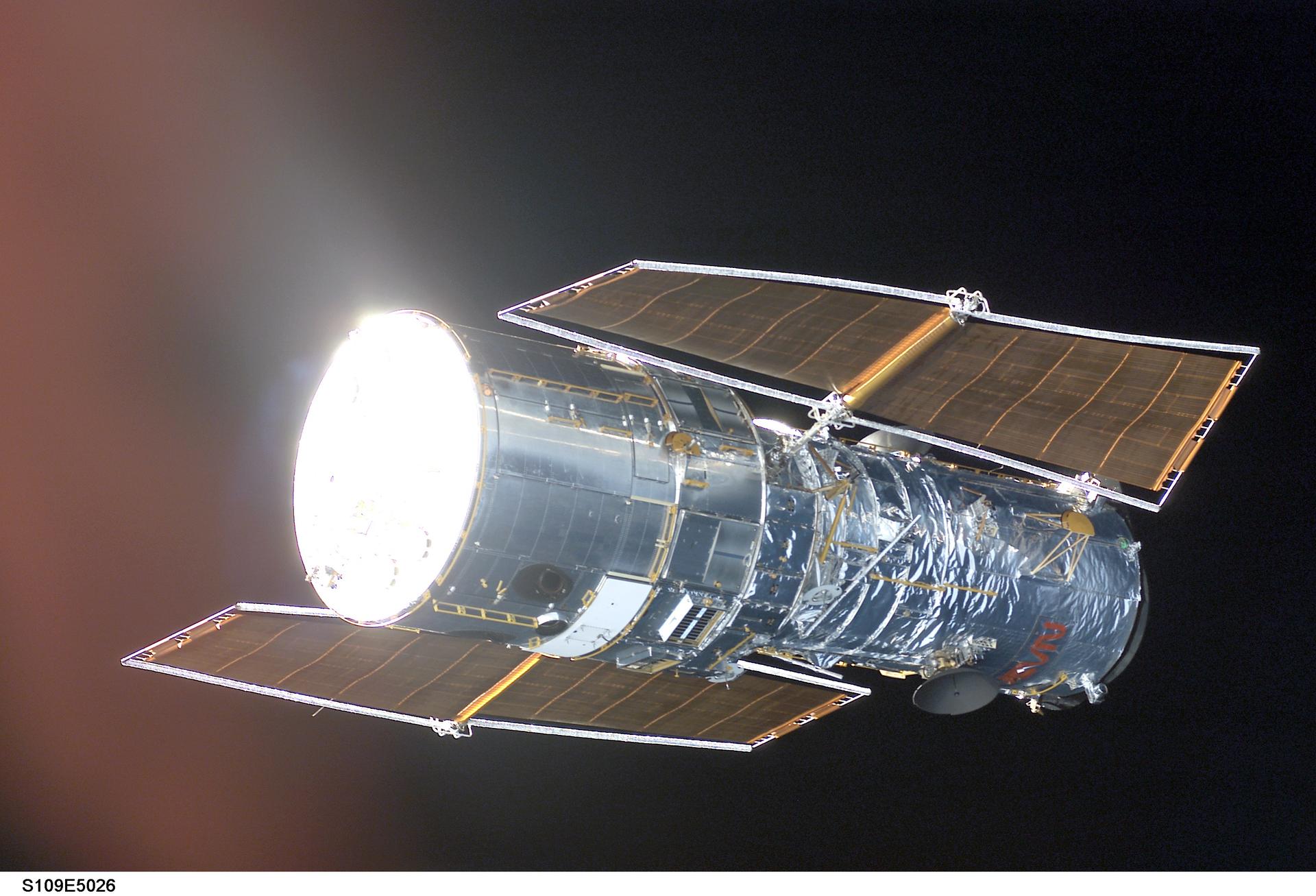
The moment in history
Moment
Hubble Space Telescope launched
The moment in history
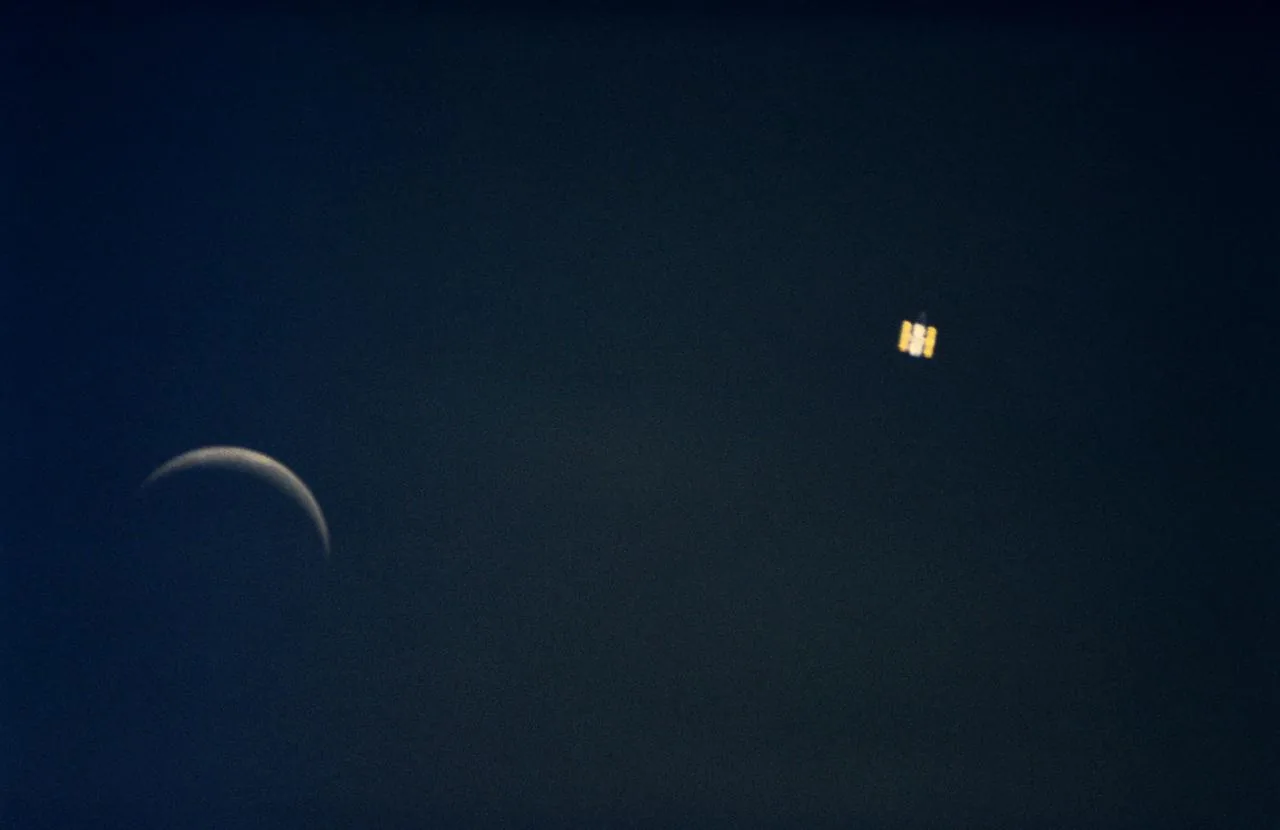
The mission file
Mission
Hubble Space Telescope
The mission file
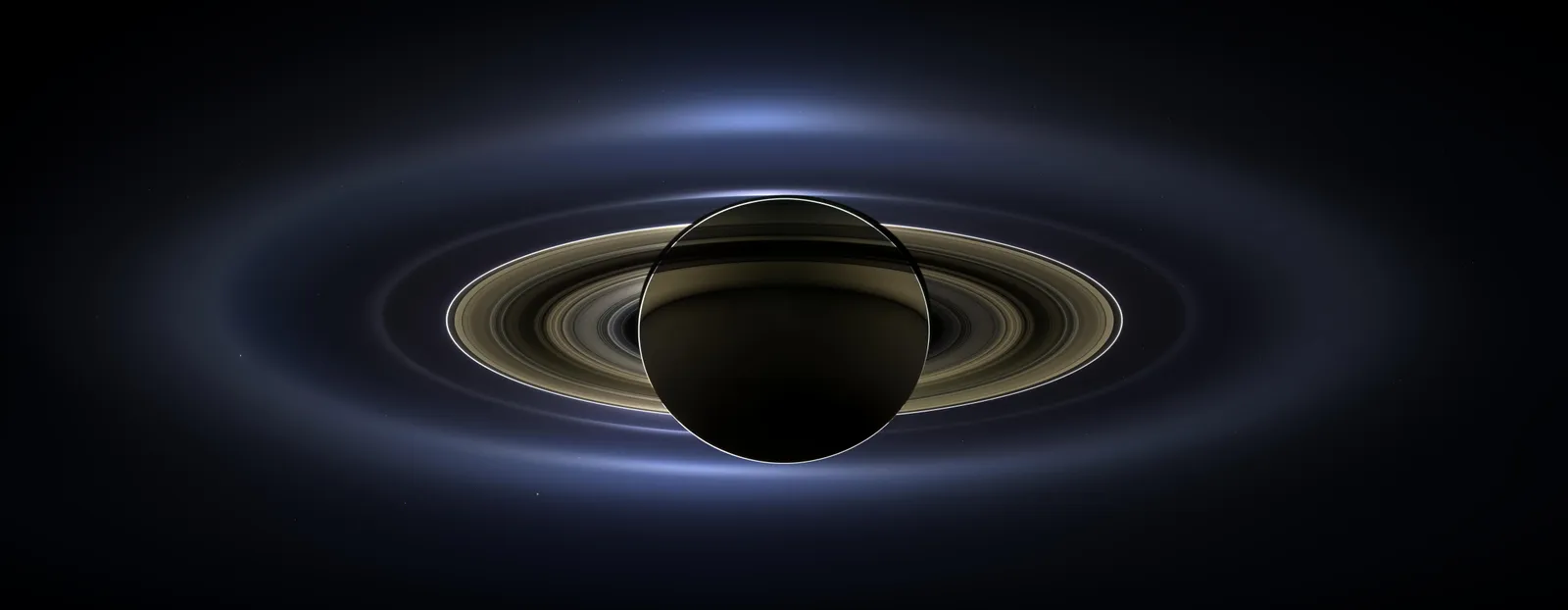
From the same era
Experience
Cassini
From the same era
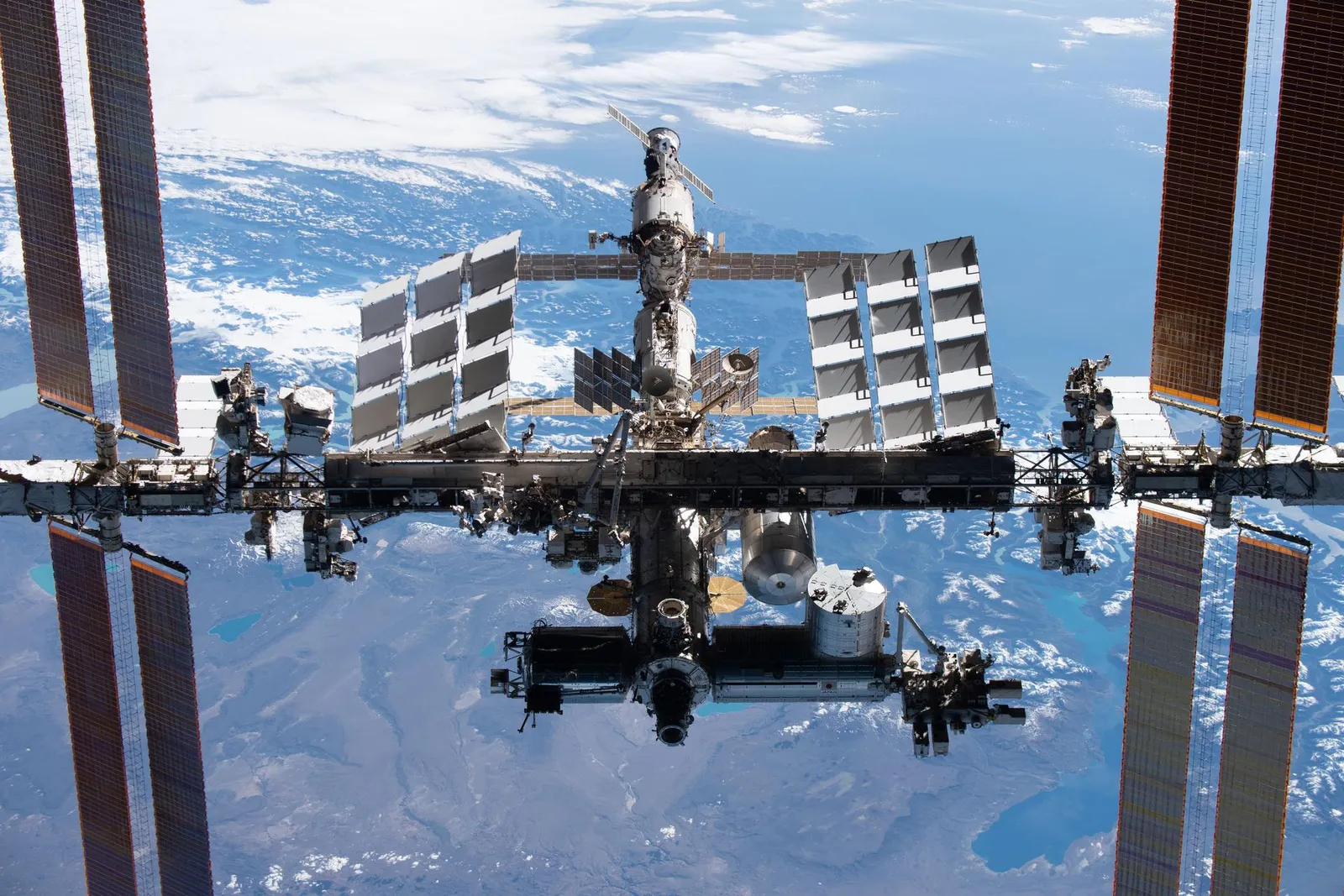
From the same era
Experience
Building the ISS
From the same era
From the same era
Experience
Voyager
From the same era